

Brisbane South Bank Walk (Self Guided), Brisbane
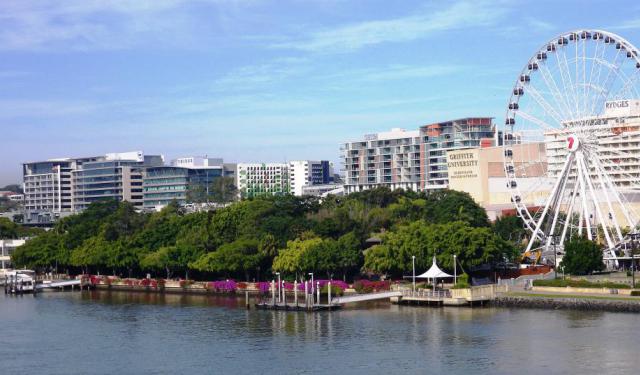
With an enviable location on the southern banks of the Brisbane River, the South Bank is a gorgeous place to spend some down time. Small wonder then that every year, around 11 million people come here to relax and to be entertained.
Unwind amidst the 17 hectares of verdant parkland, dine in world-class eateries, enjoy gorgeous river views and enjoy the fun and spectacle of year-round events. Start your visit with a stroll through extensive parklands that incorporate rainforest areas, a riverside promenade and Streets Beach. This beautiful beach in the middle of the city has white sand, palm trees, subtropical trees and a lagoon. Unlike some of the coastal areas, the water is calm, making it an ideal swim destination for kids. For added peace of mind, lifeguards are on patrol seven days a week.
Take a spin on the Wheel of Brisbane, a giant Ferris wheel that will take you almost 60 meters above the ground. Visit the Nepalese Peace Pagoda. This three-tiered wooden construction is a remarkable building, handcrafted in Nepal using the Terai Forest timbers from the country's southern jungles. Other highlights of the park, include restaurants, shops and fountains.
South Bank is a great place to spend a day to unwind and enjoy the beauty of Brisbane.
Unwind amidst the 17 hectares of verdant parkland, dine in world-class eateries, enjoy gorgeous river views and enjoy the fun and spectacle of year-round events. Start your visit with a stroll through extensive parklands that incorporate rainforest areas, a riverside promenade and Streets Beach. This beautiful beach in the middle of the city has white sand, palm trees, subtropical trees and a lagoon. Unlike some of the coastal areas, the water is calm, making it an ideal swim destination for kids. For added peace of mind, lifeguards are on patrol seven days a week.
Take a spin on the Wheel of Brisbane, a giant Ferris wheel that will take you almost 60 meters above the ground. Visit the Nepalese Peace Pagoda. This three-tiered wooden construction is a remarkable building, handcrafted in Nepal using the Terai Forest timbers from the country's southern jungles. Other highlights of the park, include restaurants, shops and fountains.
South Bank is a great place to spend a day to unwind and enjoy the beauty of Brisbane.
How it works: Download the app "GPSmyCity: Walks in 1K+ Cities" from Apple App Store or Google Play Store to your mobile phone or tablet. The app turns your mobile device into a personal tour guide and its built-in GPS navigation functions guide you from one tour stop to next. The app works offline, so no data plan is needed when traveling abroad.
Download The GPSmyCity App



Brisbane South Bank Walk Map
Guide Name: Brisbane South Bank Walk
Guide Location: Australia » Brisbane (See other walking tours in Brisbane)
Guide Type: Self-guided Walking Tour (Sightseeing)
# of Attractions: 12
Tour Duration: 2 Hour(s)
Travel Distance: 2.1 Km or 1.3 Miles
Author: gene
Sight(s) Featured in This Guide:
Guide Location: Australia » Brisbane (See other walking tours in Brisbane)
Guide Type: Self-guided Walking Tour (Sightseeing)
# of Attractions: 12
Tour Duration: 2 Hour(s)
Travel Distance: 2.1 Km or 1.3 Miles
Author: gene
Sight(s) Featured in This Guide:
- Goodwill Bridge
- Queensland Maritime Museum
- South Bank Grand Arbour
- South Bank Piazza
- Nepalese Peace Pagoda
- Wheel of Brisbane
- Queensland Performing Arts Centre
- Queensland Museum
- Queensland Art Gallery
- Queensland Gallery of Modern Art
- Kurilpa Bridge
- William Jolly Bridge
1) Goodwill Bridge
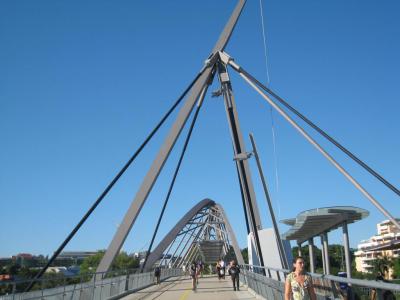
The Goodwill Bridge is one of Brisbane’s most recognizable pedestrian bridges. Opened in 2001, it was built to improve pedestrian and cycling access between the city centre and the growing arts and leisure precinct on the southern bank of the Brisbane River, particularly the popular South Bank area.
Funding for the project was partly supported through a public campaign associated with the Goodwill Games. Architecturally, the bridge stands out for its asymmetrical design, featuring a graceful curved steel structure supported by a central mast and cables. The structure functions both as an important transportation link and as a wonderful example of contemporary urban design.
Stretching roughly 450 metres, the Goodwill Bridge is used exclusively by pedestrians and cyclists, making it one of the city’s most pleasant routes across the river. In the middle of the bridge is a small seating area and a coffee cart, where visitors can pause to relax, watch boats passing along the river, or take in sweeping views of Brisbane’s skyline and waterfront.
The bridge is widely used by both locals and visitors. Some estimates suggest that around 40,000 people cross it each day, making it one of the busiest pedestrian crossings in the city. For tourists exploring central Brisbane, it offers one of the best vantage points for photographs, especially at sunset or in the evening when the city lights reflect on the water.
Funding for the project was partly supported through a public campaign associated with the Goodwill Games. Architecturally, the bridge stands out for its asymmetrical design, featuring a graceful curved steel structure supported by a central mast and cables. The structure functions both as an important transportation link and as a wonderful example of contemporary urban design.
Stretching roughly 450 metres, the Goodwill Bridge is used exclusively by pedestrians and cyclists, making it one of the city’s most pleasant routes across the river. In the middle of the bridge is a small seating area and a coffee cart, where visitors can pause to relax, watch boats passing along the river, or take in sweeping views of Brisbane’s skyline and waterfront.
The bridge is widely used by both locals and visitors. Some estimates suggest that around 40,000 people cross it each day, making it one of the busiest pedestrian crossings in the city. For tourists exploring central Brisbane, it offers one of the best vantage points for photographs, especially at sunset or in the evening when the city lights reflect on the water.
2) Queensland Maritime Museum
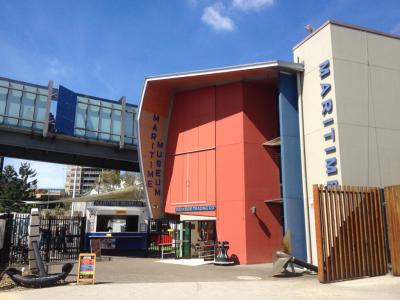
The Queensland Maritime Museum is located at the Kangaroo Point end of the Southbank Parklands and was opened in 1971. Located on the banks of the Brisbane River it is home to a vast collection of Queensland and Australian maritime historical documents and artifacts. Since Brisbane has always been a bustling port city, there is a lot of valuable historical information to be gleaned on a visit here. The museum is divided into different exhibitions that focus on: Navigation, Lighthouses, Ship Models, Marine Engines, Vessels, and the Dry Dock. The library onsite has extensive archived information relating to pearling, immigration, shipwrecks, commercial ships and yachts.
The Dry Dock at the museum is one of the most important signs of Queensland’s colonial past. It was proposed in 1870 and building began in 1875 by 1881 it was functioning. It was also of strategic importance during World War II when it was used by the major allied defense to service around 50 submarines amongst other navy vessels. Visitors also get to board the Diamantina, which was a Queensland built WWII vessel and you can see how navy officers lived and worked on deck. The Queensland Maritime Museum is open every day from 9:30am to 4:30pm.
The Dry Dock at the museum is one of the most important signs of Queensland’s colonial past. It was proposed in 1870 and building began in 1875 by 1881 it was functioning. It was also of strategic importance during World War II when it was used by the major allied defense to service around 50 submarines amongst other navy vessels. Visitors also get to board the Diamantina, which was a Queensland built WWII vessel and you can see how navy officers lived and worked on deck. The Queensland Maritime Museum is open every day from 9:30am to 4:30pm.
3) South Bank Grand Arbour
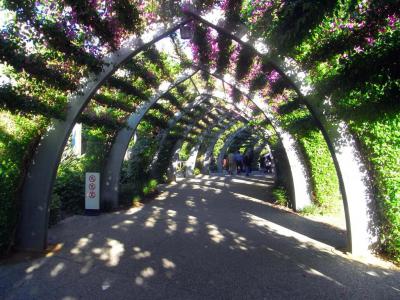
The South Bank Grand Arbour is one of the most recognizable features of Brisbane’s South Bank Parklands, a riverside recreational precinct created on the site of the former Expo 88 World Exposition. After the international exhibition closed, the area was redeveloped in the early 1990s into a major public park and cultural destination. The Grand Arbour became one of the key elements of this transformation, designed as a long, shaded walkway encouraging visitors to explore the parklands on foot.
Stretching for about one kilometre, the structure consists of 443 steel columns that curve overhead to form a continuous pergola-like pathway through the gardens. These columns support lush bougainvillea vines, whose bright pink flowers create a canopy above the walkway. Thanks to Brisbane’s warm climate, the bougainvillea bloom for much of the year.
The path connects several attractions within the South Bank precinct, including landscaped gardens, cafés, riverfront promenades, and nearby cultural institutions such as the Queensland Cultural Centre.
While the flowers are most impressive during the daylight hours, the arbour also becomes an atmospheric place to stroll after dark. Multicolored lights illuminate the structure at night, creating a safe and visually striking pathway that offers one of the most pleasant walking experiences along Brisbane’s riverfront.
Stretching for about one kilometre, the structure consists of 443 steel columns that curve overhead to form a continuous pergola-like pathway through the gardens. These columns support lush bougainvillea vines, whose bright pink flowers create a canopy above the walkway. Thanks to Brisbane’s warm climate, the bougainvillea bloom for much of the year.
The path connects several attractions within the South Bank precinct, including landscaped gardens, cafés, riverfront promenades, and nearby cultural institutions such as the Queensland Cultural Centre.
While the flowers are most impressive during the daylight hours, the arbour also becomes an atmospheric place to stroll after dark. Multicolored lights illuminate the structure at night, creating a safe and visually striking pathway that offers one of the most pleasant walking experiences along Brisbane’s riverfront.

4) South Bank Piazza
The South Bank Piazza is a versatile venue situated within the South Bank Parklands in Brisbane. It was previously sponsored by The Courier-Mail from 2013 and was known as the Suncorp Piazza before that, but it's currently referred to as the South Bank Piazza. This venue was originally built for Expo 88 and is conveniently located near the South Brisbane railway station and the Cultural Centre Busway Station. It hosts a variety of notable events, ranging from Regional Flavours to school holiday activities, appealing to a broad audience.
The amphitheatre at the South Bank Piazza is equipped with a sound shell, designed by the architectural firm Ark Atelier, and boasts a suspended screen measuring 5x4 meters. The seating capacity of the amphitheatre is 2,158 people, while the floor space covers 513 square meters and can accommodate either 750 people in a standing configuration or 532 people with temporary seating in place. In 2022, the Piazza served as the venue for the opening night of the Brisbane Festival. Furthermore, it has been selected to host the 3x3 Basketball event during the 2032 Olympic Games.
The amphitheatre at the South Bank Piazza is equipped with a sound shell, designed by the architectural firm Ark Atelier, and boasts a suspended screen measuring 5x4 meters. The seating capacity of the amphitheatre is 2,158 people, while the floor space covers 513 square meters and can accommodate either 750 people in a standing configuration or 532 people with temporary seating in place. In 2022, the Piazza served as the venue for the opening night of the Brisbane Festival. Furthermore, it has been selected to host the 3x3 Basketball event during the 2032 Olympic Games.
5) Nepalese Peace Pagoda
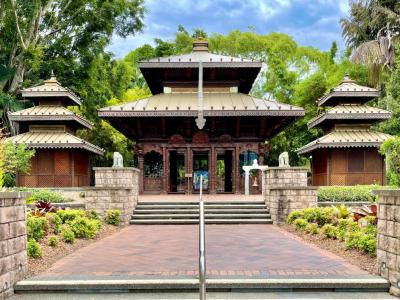
The Nepal Peace Pagoda holds a significant place in Brisbane's heritage, dating back to its participation in the Expo. It stands as the sole remaining international exhibit from that event. In 1986, during the United Nations International Year of Peace, the Kingdom of Nepal decided to take part in World Expo '88. The task of creating and managing the Pagoda during the Expo, as well as finding a new location for it afterward, was entrusted to the Association to Preserve Asian Culture.
The Peace Pagoda, designed by German architect Jochen Reier for Nepal, was built using 80 metric tons of Nepalese timber from the Terai jungle. Crafted by 160 Nepalese families over two years, its components were shipped to Australia in three containers (two 40 feet, one 20 feet) and assembled by Australian workers with Nepalese experts' supervision at the Expo site for World Expo 88 in Brisbane.
This Pagoda, one of only three outside Nepal (the others in Munich and Osaka), closely resembles the Pashupatinath Temple in Kathmandu. It features Hindu and Buddhist symbols, including representations of Shiva, meditating Buddhas, auspicious Buddhist symbols, and a statue of Avalokiteshvara. The Pagoda also has a Peace Bell, two side Pavilions, a Buddhist stupa, a Peace Post, and a message of world peace in four languages. Sanskrit prayer chants and the "om" symbol are inscribed on the roof eaves of the side Pavilions.
While not primarily used as a traditional Buddhist or Hindu center, the Pagoda occasionally hosts weddings, private events, book launches, and company functions. Many visitors also find solace and use the Pagoda's interior, which includes Church pews on the first level, for personal meditation.
The Peace Pagoda, designed by German architect Jochen Reier for Nepal, was built using 80 metric tons of Nepalese timber from the Terai jungle. Crafted by 160 Nepalese families over two years, its components were shipped to Australia in three containers (two 40 feet, one 20 feet) and assembled by Australian workers with Nepalese experts' supervision at the Expo site for World Expo 88 in Brisbane.
This Pagoda, one of only three outside Nepal (the others in Munich and Osaka), closely resembles the Pashupatinath Temple in Kathmandu. It features Hindu and Buddhist symbols, including representations of Shiva, meditating Buddhas, auspicious Buddhist symbols, and a statue of Avalokiteshvara. The Pagoda also has a Peace Bell, two side Pavilions, a Buddhist stupa, a Peace Post, and a message of world peace in four languages. Sanskrit prayer chants and the "om" symbol are inscribed on the roof eaves of the side Pavilions.
While not primarily used as a traditional Buddhist or Hindu center, the Pagoda occasionally hosts weddings, private events, book launches, and company functions. Many visitors also find solace and use the Pagoda's interior, which includes Church pews on the first level, for personal meditation.
6) Wheel of Brisbane
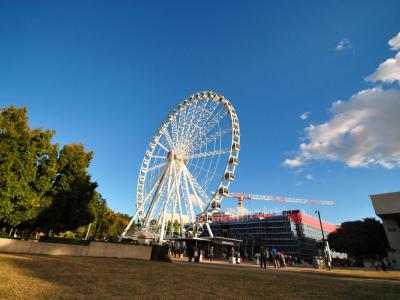
The Wheel of Brisbane is a 197-foot tall Ferris Wheel located in the South Bank Parklands. The Ferris wheel was built in 2008 in honor of the 150th anniversary of Queensland. It was also part of the celebration of the 20th anniversary of World Expo 88. Visitors can expect a 15-minute ride that offers exceptional views of Brisbane.
The wheel was built with 42 gondolas that seat up to six adults and two children. Each of the gondolas are enclosed and air conditioned. Tickets may be purchased at the wheel or in advance through the Wheel of Brisbane website. Visitors can choose standard tickets or they can have a VIP experience that consists of a double ride and a glass of wine to enjoy while riding.
The Wheel of Brisbane operates from 10 AM to 9 PM from Sunday to Thursday. It is open from 10 AM to 10 PM on Friday and Saturday. The wheel does not take reservations.
The wheel was built with 42 gondolas that seat up to six adults and two children. Each of the gondolas are enclosed and air conditioned. Tickets may be purchased at the wheel or in advance through the Wheel of Brisbane website. Visitors can choose standard tickets or they can have a VIP experience that consists of a double ride and a glass of wine to enjoy while riding.
The Wheel of Brisbane operates from 10 AM to 9 PM from Sunday to Thursday. It is open from 10 AM to 10 PM on Friday and Saturday. The wheel does not take reservations.
7) Queensland Performing Arts Centre
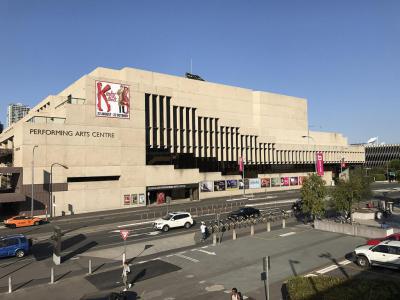
The Queensland Performing Arts Centre, often referred to as QPAC, is situated within the Queensland Cultural Centre. QPAC was created by a local architect named Robin Gibson during the mid-1970s. This decision came after the State Cabinet officially acknowledged in 1972 that there was a requirement for a new Queensland Art Gallery, a significant performing arts center, and a new site for the Queensland Museum and State Library. The venue was inaugurated in 1985 by the Duke of Kent.
In recent years, QPAC has hosted some of the world's most prominent artists and performance groups as part of the QPAC International Series. This series featured renowned acts such as the Paris Opera Ballet in 2020, the Bolshoi Ballet in 2019, La Scala Theatre Ballet in 2018, The Royal Ballet in 2017, the Bolshoi Ballet in 2013, as well as the Hamburg Ballet, Hamburg State Opera, and Hamburg Philharmonic in 2012. Additionally, the American Ballet Theatre graced the QPAC stage in 2014.
QPAC also takes pride in organizing the Out of the Box Festival, catering to children aged 8 and under. Moreover, the Clancestry program is an integral part of the QPAC First Nations Program, which acknowledges the significant contributions of First Nations Peoples to Queensland's historical, creative, and cultural heritage.
As the primary venue for Queensland's leading performing arts companies, QPAC hosts the Queensland Ballet, Queensland Theatre Company, Opera Queensland, Queensland Youth Orchestras, and Queensland Symphony Orchestra. Furthermore, QPAC frequently welcomes some of Australia's foremost performing arts companies, including The Australian Ballet, Sydney Dance Company, Australian Chamber Orchestra, and Bangarra Dance Theatre.
In recent years, QPAC has hosted some of the world's most prominent artists and performance groups as part of the QPAC International Series. This series featured renowned acts such as the Paris Opera Ballet in 2020, the Bolshoi Ballet in 2019, La Scala Theatre Ballet in 2018, The Royal Ballet in 2017, the Bolshoi Ballet in 2013, as well as the Hamburg Ballet, Hamburg State Opera, and Hamburg Philharmonic in 2012. Additionally, the American Ballet Theatre graced the QPAC stage in 2014.
QPAC also takes pride in organizing the Out of the Box Festival, catering to children aged 8 and under. Moreover, the Clancestry program is an integral part of the QPAC First Nations Program, which acknowledges the significant contributions of First Nations Peoples to Queensland's historical, creative, and cultural heritage.
As the primary venue for Queensland's leading performing arts companies, QPAC hosts the Queensland Ballet, Queensland Theatre Company, Opera Queensland, Queensland Youth Orchestras, and Queensland Symphony Orchestra. Furthermore, QPAC frequently welcomes some of Australia's foremost performing arts companies, including The Australian Ballet, Sydney Dance Company, Australian Chamber Orchestra, and Bangarra Dance Theatre.
8) Queensland Museum
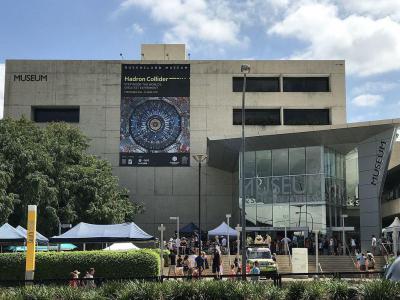
The Queensland Museum is part of the arts complex at Southbank just across the river from the CBD. The museum has been a part of the Queensland landscape for more than 150 years and has previously had homes at the Old Windmill, the Parliament Building, the Old Post Office and it was housed at the Exhibition Building for 86 years until it moved to its current site in 1985. To celebrate the museum’s 150th anniversary in 2012 it was extensively refurbished in order to provide Queenslanders with even better tangible access to their past and give visitors a clearer understanding of where the state has been and where it may go in the next 150 years.
There are more than one million artifacts in the museum’s collection, but popular permanent fixtures include: the dinosaur garden; a German AV7 tank; Captain Cook’s compass, Queensland aviator, Burt Hinkler’s aircraft from his solo flight from England to Australia in the 1920s and indigenous artifacts from the 19th century. The museum is open every day from 9.30 am - 5.00 pm. It is closed on Good Friday and Christmas Day and on ANZAC Day from 1.30 pm. General entry is free, but there may be some exhibitions that charge a small fee.
There are more than one million artifacts in the museum’s collection, but popular permanent fixtures include: the dinosaur garden; a German AV7 tank; Captain Cook’s compass, Queensland aviator, Burt Hinkler’s aircraft from his solo flight from England to Australia in the 1920s and indigenous artifacts from the 19th century. The museum is open every day from 9.30 am - 5.00 pm. It is closed on Good Friday and Christmas Day and on ANZAC Day from 1.30 pm. General entry is free, but there may be some exhibitions that charge a small fee.

9) Queensland Art Gallery
Brisbane is undergoing a true renaissance at the moment with more and more cultural activities garnering national and international attention. The Queensland Art Gallery is one of the frontrunners in providing Queenslanders and visitors with a range of art to see and enjoy. The gallery is located in the Queensland Performing Arts Complex, known locally as QPAC, just across the river from the CBD. The gallery was originally opened in 1895, but it shifted to its current location in 1982. In addition to its sizeable permanent collection, the gallery has a fine history of presenting impressive national and international visiting exhibitions.
The Queensland Art Gallery has always had the philosophy of connecting people through art and in this vein it has always had extensive indigenous art and children’s art programs and displays in place. The permanent collection features works by indigenous artists such as Albert Namatjira and Thanakupi. The Australian collection has works by Arthur Streeton and many other well known artists. There are also sizeable Asian and Pacific collections along with European works by Provost and Tintoretto. Combined with a visit to the Queensland Gallery of Modern Art (GOMA), right next door, the gallery is providing exciting and inspiring installations to artists and admirers of all ages.
The Queensland Art Gallery has always had the philosophy of connecting people through art and in this vein it has always had extensive indigenous art and children’s art programs and displays in place. The permanent collection features works by indigenous artists such as Albert Namatjira and Thanakupi. The Australian collection has works by Arthur Streeton and many other well known artists. There are also sizeable Asian and Pacific collections along with European works by Provost and Tintoretto. Combined with a visit to the Queensland Gallery of Modern Art (GOMA), right next door, the gallery is providing exciting and inspiring installations to artists and admirers of all ages.

10) Queensland Gallery of Modern Art
The Queensland Gallery of Modern Art is one of the newest and most exciting galleries in Australia only opening in 2006. In only a few short years the gallery has created quite a splash offering wide reaching installations for art lovers of all ages. Indeed, it has become internationally recognized for its innovation and the range of art that is offered to school aged children. It is also home to Australia’s only purpose built cinematheque – a film archive devoted to showing old or art house film reels. There is a regular program of silent, retro, classics, anime and art house films shown at the gallery each day.
Well received temporary installations at the GOMA have included Warhol, Picasso and Matisse exhibitions and there is always something exciting on the program to see and experience. Located within the Queensland Performing Arts Complex (QPAC) at Southbank, just across from the CBD, it is easily accessible by road, train, bus or ferry. It is open daily from 10am to 5pm. Within the premises there is a store and an excellent restaurant and café to stimulate your gastronomical senses as well as your aesthetic sense.
Well received temporary installations at the GOMA have included Warhol, Picasso and Matisse exhibitions and there is always something exciting on the program to see and experience. Located within the Queensland Performing Arts Complex (QPAC) at Southbank, just across from the CBD, it is easily accessible by road, train, bus or ferry. It is open daily from 10am to 5pm. Within the premises there is a store and an excellent restaurant and café to stimulate your gastronomical senses as well as your aesthetic sense.

11) Kurilpa Bridge
The Kurilpa Bridge (originally known as the Tank Street Bridge) is a pedestrian and bicycle overpass that spans the Brisbane River, connecting Kurilpa Point in South Brisbane to Tank Street in the Brisbane central business district. Its construction was part of a larger urban redevelopment project aimed at revitalizing the South Bank Parklands and promoting pedestrian and bicycle access across the river.
Designed by Cox Rayner Architects in collaboration with Arup Engineers, the bridge was completed in 2009 and opened to the public in October of that year. Since then, it has become a well-loved landmark in Brisbane and a symbol of the city's commitment to sustainability and public space.
The bridge – 470 meters long and 6 meters wide – is made of steel and concrete and has a unique design, featuring an undulating deck that rises and falls as it crosses the river. The design is intended to resemble the sinuous curves of a serpent or a river, and the name "Kurilpa" comes from the Australian Aboriginal (Turrbal) word for the area surrounding the bridge which means a "place for water rats".
At night, the bridge is illuminated by a series of LED lights that change color, providing a striking visual display that has become a popular attraction in the city.
In 2011, the Kurilpa Bridge was declared "World Transport Building of the Year" at the World Architecture Festival.
Designed by Cox Rayner Architects in collaboration with Arup Engineers, the bridge was completed in 2009 and opened to the public in October of that year. Since then, it has become a well-loved landmark in Brisbane and a symbol of the city's commitment to sustainability and public space.
The bridge – 470 meters long and 6 meters wide – is made of steel and concrete and has a unique design, featuring an undulating deck that rises and falls as it crosses the river. The design is intended to resemble the sinuous curves of a serpent or a river, and the name "Kurilpa" comes from the Australian Aboriginal (Turrbal) word for the area surrounding the bridge which means a "place for water rats".
At night, the bridge is illuminated by a series of LED lights that change color, providing a striking visual display that has become a popular attraction in the city.
In 2011, the Kurilpa Bridge was declared "World Transport Building of the Year" at the World Architecture Festival.
12) William Jolly Bridge
The William Jolly Bridge is an old road bridge that spans the Brisbane River, connecting North Quay in the Brisbane CBD to Grey Street in South Brisbane. It was designed by Harding Frew and constructed by MR Hornibrook Ltd. The bridge was built between 1928 and 1932 and is considered a heritage-listed structure.
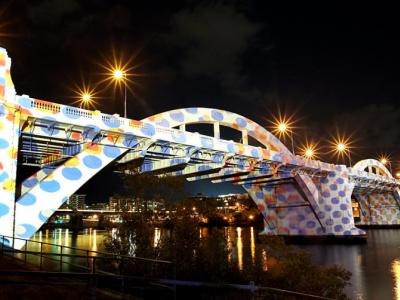
The design of the bridge reflects the Art Deco style that was in vogue during its construction period. It comprises two piers situated in the river and two pylons on the riverbanks, providing support for three elegant arches. These arches, often referred to as "rainbow arches," were a novel design and claimed to be the first of their kind in Australia. The bridge itself is made of steel with a unique concrete covering that gives it the appearance of "light-colored porphyry."
When it was first opened, back in the midst of the Great Depression, the bridge was initially known as the Grey Street Bridge. However, its name was changed to the William Jolly Bridge on July 5, 1955, in honor of William Jolly, who served as the first Lord Mayor of Greater Brisbane. The bridge was officially recognized for its historical significance and added to the Queensland Heritage Register on August 6, 1996. In 2003, the bridge served as a filming location for Inspector Gadget 2, adding to its cultural and cinematic history.
Since 2009, the bridge has been used as a canvas for artistic light displays. Two five-meter-tall towers are employed to project images onto the bridge, creating captivating visual experiences.
The design of the bridge reflects the Art Deco style that was in vogue during its construction period. It comprises two piers situated in the river and two pylons on the riverbanks, providing support for three elegant arches. These arches, often referred to as "rainbow arches," were a novel design and claimed to be the first of their kind in Australia. The bridge itself is made of steel with a unique concrete covering that gives it the appearance of "light-colored porphyry."
When it was first opened, back in the midst of the Great Depression, the bridge was initially known as the Grey Street Bridge. However, its name was changed to the William Jolly Bridge on July 5, 1955, in honor of William Jolly, who served as the first Lord Mayor of Greater Brisbane. The bridge was officially recognized for its historical significance and added to the Queensland Heritage Register on August 6, 1996. In 2003, the bridge served as a filming location for Inspector Gadget 2, adding to its cultural and cinematic history.
Since 2009, the bridge has been used as a canvas for artistic light displays. Two five-meter-tall towers are employed to project images onto the bridge, creating captivating visual experiences.
Walking Tours in Brisbane, Australia

Create Your Own Walk in Brisbane
Creating your own self-guided walk in Brisbane is easy and fun. Choose the city attractions that you want to see and a walk route map will be created just for you. You can even set your hotel as the start point of the walk.
Brisbane Heritage Architecture Tour
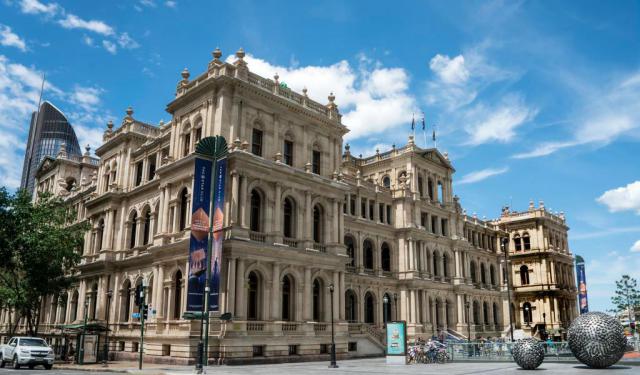
Brisbane, Australia, abounds in places where you can get a real sense of what it was like in colonial times. Featuring different types of architecture – Colonial, Gothic, or Neo-classic – today these exquisite buildings are used for all sorts of purposes, from cultural events to local administration. Together they make Brisbane a beautiful city while telling the story of its development over... view more
Tour Duration: 2 Hour(s)
Travel Distance: 3.5 Km or 2.2 Miles
Tour Duration: 2 Hour(s)
Travel Distance: 3.5 Km or 2.2 Miles
Historical Churches Tour
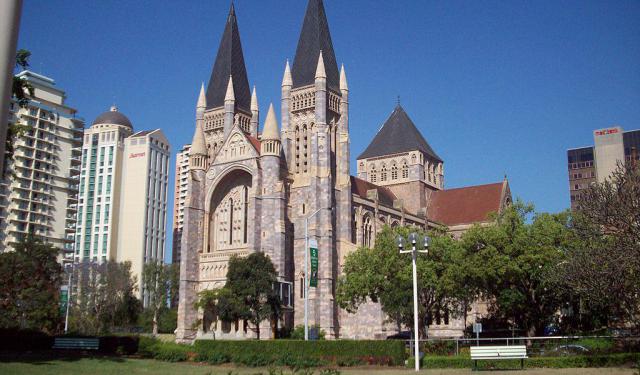
Brisbane has no shortage of religious sites among other things. Renowned for their beauty and cultural value, the historical churches of Brisbane hold a significant place in the city's architectural heritage and attract a huge number of visitors. Let's take a closer look at some of these notable temples.
Our first point of interest is Saint John's Cathedral, an iconic Anglican... view more
Tour Duration: 1 Hour(s)
Travel Distance: 1.8 Km or 1.1 Miles
Our first point of interest is Saint John's Cathedral, an iconic Anglican... view more
Tour Duration: 1 Hour(s)
Travel Distance: 1.8 Km or 1.1 Miles
Brisbane Introduction Walking Tour
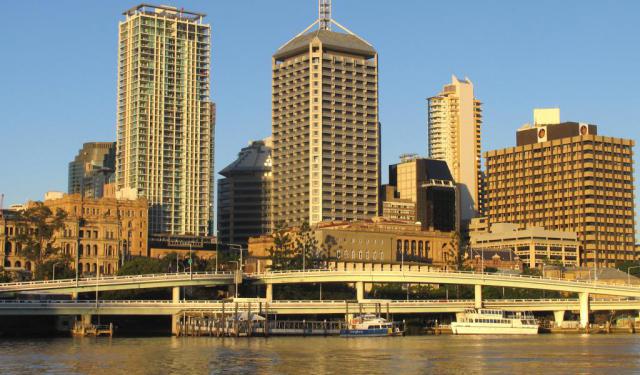
Brisbane, the capital of Queensland, is a large metropolis, the third-most populous in Australia after Sydney and Melbourne. Aboriginal Australians have inhabited this area for at least 22,000 years; their estimated population by the time the European settlers arrived in the 1820s had reached between 6,000 and 10,000.
The city is named for the Brisbane River that it straddles, which in turn was... view more
Tour Duration: 2 Hour(s)
Travel Distance: 3.5 Km or 2.2 Miles
The city is named for the Brisbane River that it straddles, which in turn was... view more
Tour Duration: 2 Hour(s)
Travel Distance: 3.5 Km or 2.2 Miles
The Most Popular Cities
/ view all