

Audio Guide: Acapulco Introduction Walking Tour (Self Guided), Acapulco
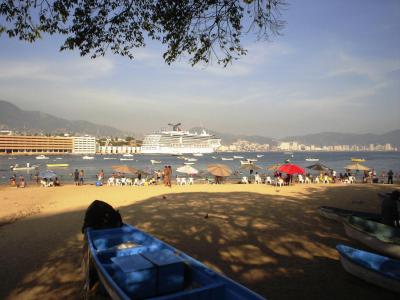
When the German geographer Alexander von Humboldt arrived in 1803, he called Acapulco “one of the most beautiful harbors in the world.”
Acapulco’s name comes from a Nahuatl word often translated as “place of reeds”, reflecting its early landscape. Long before it became a resort city, Acapulco was home to Nahua-speaking communities and formed part of pre-Hispanic trade networks along the Pacific coast. Its naturally sheltered bay, deep enough for large vessels, made it an ideal maritime hub even in pre-colonial times.
Spanish forces reached the area in the early 1530s, recognizing both its strategic location and its protected harbor. From the late 16th century onward, it served as the Mexican terminal of the Manila Galleon trade, linking Asia and the Americas across the Pacific. For over 250 years, luxury goods such as silk, porcelain, and spices flowed into New Spain, the colonial Spanish territories in North and Central America, the Caribbean and the Philippines.
Following Mexico’s independence in 1821, Acapulco remained an important maritime gateway, though the galleon trade had already ended. The city developed slowly through the 19th century, shaped by regional instability and conflicts during the Reform War and the French Intervention. Its economy relied on coastal commerce, fishing, and small-scale agriculture.
In the mid-20th century, new infrastructure-including a highway to Mexico City-opened Acapulco to tourism. By the 1940s and 1950s, the bay had become a magnet for international glamour, drawing film stars, politicians, and wealthy travelers.
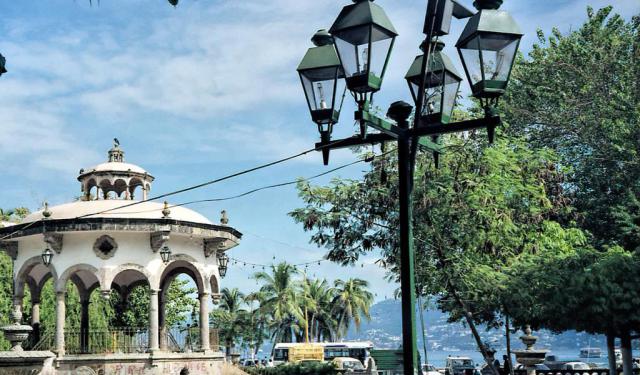
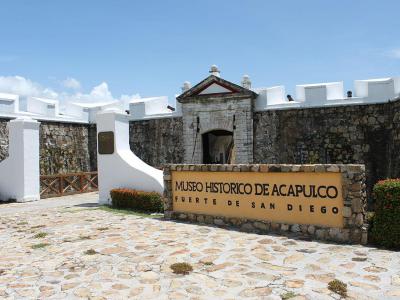
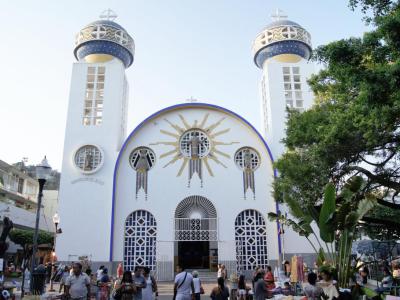
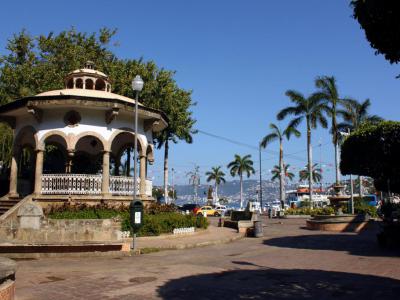
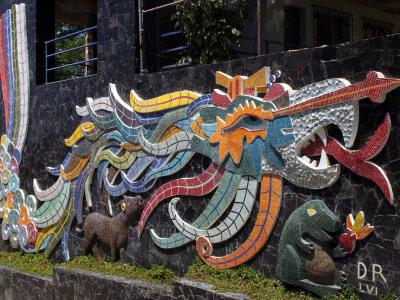
A walk through Acapulco’s historic center reveals a blend of colonial traces and coastal atmosphere. Visitors encounter the Plaza Álvarez, shaded by palms and lined with cafes, facing the Our Lady of Solitude Cathedral, with its domed, Byzantine-inspired towers. Nearby streets lead to market stalls, souvenir shops, and colorful murals capturing local culture. Not far away stands the star-shaped Fort of San Diego, overlooking the bay. The waterfront promenade offers sea views, passing boats, and echoes of Acapulco’s golden age.
And just as Humboldt once stood here in awe, you may find that Acapulco’s harbor still has the power to astonish-beautiful, storied, and ever alive with movement.
Acapulco’s name comes from a Nahuatl word often translated as “place of reeds”, reflecting its early landscape. Long before it became a resort city, Acapulco was home to Nahua-speaking communities and formed part of pre-Hispanic trade networks along the Pacific coast. Its naturally sheltered bay, deep enough for large vessels, made it an ideal maritime hub even in pre-colonial times.
Spanish forces reached the area in the early 1530s, recognizing both its strategic location and its protected harbor. From the late 16th century onward, it served as the Mexican terminal of the Manila Galleon trade, linking Asia and the Americas across the Pacific. For over 250 years, luxury goods such as silk, porcelain, and spices flowed into New Spain, the colonial Spanish territories in North and Central America, the Caribbean and the Philippines.
Following Mexico’s independence in 1821, Acapulco remained an important maritime gateway, though the galleon trade had already ended. The city developed slowly through the 19th century, shaped by regional instability and conflicts during the Reform War and the French Intervention. Its economy relied on coastal commerce, fishing, and small-scale agriculture.
In the mid-20th century, new infrastructure-including a highway to Mexico City-opened Acapulco to tourism. By the 1940s and 1950s, the bay had become a magnet for international glamour, drawing film stars, politicians, and wealthy travelers.
A walk through Acapulco’s historic center reveals a blend of colonial traces and coastal atmosphere. Visitors encounter the Plaza Álvarez, shaded by palms and lined with cafes, facing the Our Lady of Solitude Cathedral, with its domed, Byzantine-inspired towers. Nearby streets lead to market stalls, souvenir shops, and colorful murals capturing local culture. Not far away stands the star-shaped Fort of San Diego, overlooking the bay. The waterfront promenade offers sea views, passing boats, and echoes of Acapulco’s golden age.
And just as Humboldt once stood here in awe, you may find that Acapulco’s harbor still has the power to astonish-beautiful, storied, and ever alive with movement.
How it works: Download the app "GPSmyCity: Walks in 1K+ Cities" from Apple App Store or Google Play Store to your mobile phone or tablet. The app turns your mobile device into a personal tour guide. For US$14.99 per year (with a 3-day free trial), you get access to walking tours in 630+ cities worldwide for an entire year. In comparison, a guided tour often costs dozens of dollars per person for a single tour. The app works offline, so no data plan is needed when traveling abroad.
Download The GPSmyCity App



Acapulco Introduction Walking Tour Map
Guide Name: Acapulco Introduction Walking Tour
Guide Location: Mexico » Acapulco (See other walking tours in Acapulco)
Guide Type: Self-guided Walking Tour (Sightseeing)
Tour Duration: 2 Hour(s)
Travel Distance: 3.6 Km or 2.2 Miles
Guide Location: Mexico » Acapulco (See other walking tours in Acapulco)
Guide Type: Self-guided Walking Tour (Sightseeing)
Tour Duration: 2 Hour(s)
Travel Distance: 3.6 Km or 2.2 Miles
Sights Featured in This Walk


The Most Popular Cities
/ view all