


Audio Guide: Antoni Gaudí's Masterpieces Walking Tour (Self Guided), Barcelona
Antoni Gaudi, a seminal figure in the Catalan Modernism movement, is one of the top architects of the 20th century. The unique technique and use of natural forms in his works stand out from the pack and have left an indelible mark on the face of Barcelona.
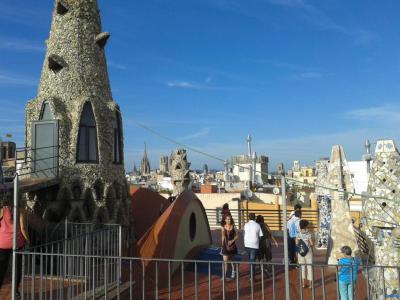
Our journey through Gaudi's Barcelona begins at the Güell Palace, by far the most budget-friendly of his projects. Located near La Rambla, this palace showcases Gaudi's blend of opulence and functionality, reflecting his Gothic influences and innovative structural solutions. Notably, its design allows much to be admired from the outside, including its façade and distinctive rooftop, without any visual barriers. Constructed in 1885, the mansion features a phoenix emblematic of the Catalan Renaissance and brightly colored ceramic and tile chimney stacks visible from the street.
Our next stop is the Calvet House. Built in 1899 for a textile manufacturer, it represents one of Gaudi's more conservative designs. Despite its symmetry and balance, essential for a business residence, the building incorporates distinctly modernist elements, hinting at the whimsical styles that would later become synonymous with Gaudi's architectural legacy.
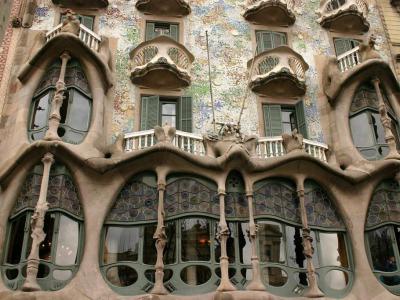
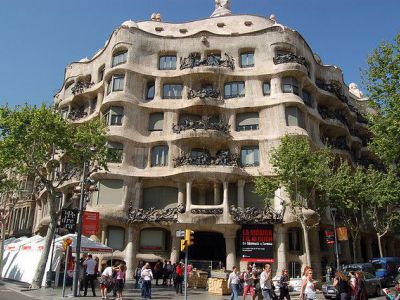
Other notable sites, the Batlló and Milà houses, exemplify Gaudi's unique style through their shared vocabulary. The Batlló House, with its façade resembling swirling colors and shapes evoking bones, creatively represents Saint George and the dragon, complete with a dragon-back-shaped roof. Meanwhile, the Milà House, colloquially known as “La Pedrera” (or Stone Quarry) for its rough exterior, features a striking undulating stone façade and twisted iron sculptures, celebrating Gaudi's pioneering use of organic forms.
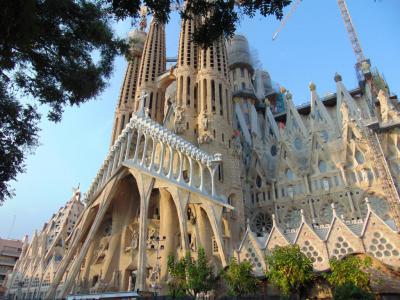
Finally, La Sagrada Familia, Antoni Gaudí's most famous masterwork, is a monumental basilica that has been under construction since 1882. Barcelona's premier attraction celebrated for its celestial-inspired architecture, it is slated for completion in 2026 to mark the centennial anniversary of Gaudi's death.
To fully appreciate the genius of Antoni Gaudi, one must experience his work firsthand. Follow this self-guided tour of Gaudi's Barcelona and let yourself be captivated by its architectural treasures. Each visit promises a glimpse into the mind of a visionary.
Our journey through Gaudi's Barcelona begins at the Güell Palace, by far the most budget-friendly of his projects. Located near La Rambla, this palace showcases Gaudi's blend of opulence and functionality, reflecting his Gothic influences and innovative structural solutions. Notably, its design allows much to be admired from the outside, including its façade and distinctive rooftop, without any visual barriers. Constructed in 1885, the mansion features a phoenix emblematic of the Catalan Renaissance and brightly colored ceramic and tile chimney stacks visible from the street.
Our next stop is the Calvet House. Built in 1899 for a textile manufacturer, it represents one of Gaudi's more conservative designs. Despite its symmetry and balance, essential for a business residence, the building incorporates distinctly modernist elements, hinting at the whimsical styles that would later become synonymous with Gaudi's architectural legacy.
Other notable sites, the Batlló and Milà houses, exemplify Gaudi's unique style through their shared vocabulary. The Batlló House, with its façade resembling swirling colors and shapes evoking bones, creatively represents Saint George and the dragon, complete with a dragon-back-shaped roof. Meanwhile, the Milà House, colloquially known as “La Pedrera” (or Stone Quarry) for its rough exterior, features a striking undulating stone façade and twisted iron sculptures, celebrating Gaudi's pioneering use of organic forms.
Finally, La Sagrada Familia, Antoni Gaudí's most famous masterwork, is a monumental basilica that has been under construction since 1882. Barcelona's premier attraction celebrated for its celestial-inspired architecture, it is slated for completion in 2026 to mark the centennial anniversary of Gaudi's death.
To fully appreciate the genius of Antoni Gaudi, one must experience his work firsthand. Follow this self-guided tour of Gaudi's Barcelona and let yourself be captivated by its architectural treasures. Each visit promises a glimpse into the mind of a visionary.
How it works: Download the app "GPSmyCity: Walks in 1K+ Cities" from Apple App Store or Google Play Store to your mobile phone or tablet. The app turns your mobile device into a personal tour guide and its built-in GPS navigation functions guide you from one tour stop to next. The app works offline, so no data plan is needed when traveling abroad.
Download The GPSmyCity App



Antoni Gaudí's Masterpieces Walking Tour Map
Guide Name: Antoni Gaudí's Masterpieces Walking Tour
Guide Location: Spain » Barcelona (See other walking tours in Barcelona)
Guide Type: Self-guided Walking Tour (Sightseeing)
Tour Duration: 2 Hour(s)
Travel Distance: 4.6 Km or 2.9 Miles
Tour Best Suited For: In-depth exploration
Guide Location: Spain » Barcelona (See other walking tours in Barcelona)
Guide Type: Self-guided Walking Tour (Sightseeing)
Tour Duration: 2 Hour(s)
Travel Distance: 4.6 Km or 2.9 Miles
Tour Best Suited For: In-depth exploration
Sights Featured in This Walk

4) Casa Mila (Mila House) (must see)
Walking Tours in Barcelona, Spain

Create Your Own Walk in Barcelona
Creating your own self-guided walk in Barcelona is easy and fun. Choose the city attractions that you want to see and a walk route map will be created just for you. You can even set your hotel as the start point of the walk.

Barcelona Introduction Walking Tour
According to legend, Barcelona was founded by the mythological Greek hero Hercules on one of his expeditions, when a storm hit his boats. The first eight boats managed to escape without damage, but the ninth was lost at sea. Hercules found his lost friends some days later on the coast, all safe and sound. The boat's crew, taken by the beauty of the coastal landscape, decided to stay. On that... view more
Tour Duration: 3 Hour(s)
Travel Distance: 5.7 Km or 3.5 Miles
Tour Duration: 3 Hour(s)
Travel Distance: 5.7 Km or 3.5 Miles

Gothic Quarter Walking Tour
A walk through the Gothic Quarter – Barcelona’s oldest part, dating from the Roman era – is like a journey through time. The typical Roman grid plan is still visible in the quarter's layout. Only a few roads are open for car traffic, so there is little in the way of enjoying the narrow, atmospheric streets filled with high-quality architecture, numerous boutiques, and coffee shops.... view more
Tour Duration: 2 Hour(s)
Travel Distance: 1.8 Km or 1.1 Miles
Tour Duration: 2 Hour(s)
Travel Distance: 1.8 Km or 1.1 Miles

La Rambla Walking Tour
One of the main streets in central Barcelona, La Rambla is popular with tourists and locals alike. Connecting the city’s old port with Plaça de Catalunya, it is filled with cultural and historic landmarks, as well as many terraces, restaurants, shops and street artists. Spanish poet, Federico García Lorca once said it was “the only street in the world which I wish never ended.”
Start... view more
Tour Duration: 1 Hour(s)
Travel Distance: 2.3 Km or 1.4 Miles
Start... view more
Tour Duration: 1 Hour(s)
Travel Distance: 2.3 Km or 1.4 Miles

La Ribera Walking Tour
La Ribera is a culturally rich, historic area of Barcelona’s Old Town; somewhat less touristy than the Gothic Quarter (which one should really visit as well) and quite unspoiled, authentic and pretty. Centuries ago, it was a very well-to-do neighborhood inhabited by aristocrats, merchants, wealthy sailors, and Jewish money-lenders. Today, it is regarded as the Soho of Barcelona – a popular... view more
Tour Duration: 2 Hour(s)
Travel Distance: 2.8 Km or 1.7 Miles
Tour Duration: 2 Hour(s)
Travel Distance: 2.8 Km or 1.7 Miles

Barcelona Food Tasting Walking Tour
No one should visit Barcelona without making an attempt to get acquainted with some of Spain’s best food – Catalan food. An abundance of fresh fish and superb meat, a plethora of great vegetables, plus local inventiveness, have produced a very diverse, distinctive and delicious cuisine, including the famous (and trendy) tapas dishes.
Follow this self-guided walk to treat your taste buds in... view more
Tour Duration: 2 Hour(s)
Travel Distance: 2.9 Km or 1.8 Miles
Follow this self-guided walk to treat your taste buds in... view more
Tour Duration: 2 Hour(s)
Travel Distance: 2.9 Km or 1.8 Miles

Montjuic Walking Tour
Montjuic is a hill in Barcelona which offers a variety of great attractions of historic, cultural, and architectural value. Here, you can watch a spectacular water show at the Magic Fountain of Montjuic, visit the place where matadors faced the bulls in the past, and explore the ancient Montjuic Castle with its breathtaking views.
A convenient start point, Placa d'Espanya is the second... view more
Tour Duration: 3 Hour(s)
Travel Distance: 5.0 Km or 3.1 Miles
A convenient start point, Placa d'Espanya is the second... view more
Tour Duration: 3 Hour(s)
Travel Distance: 5.0 Km or 3.1 Miles
Useful Travel Guides for Planning Your Trip

Barcelona Souvenir Shopping: 17 Uniquely Spanish Things to Buy
Spain, in general, and Barcelona, in particular, are a treasure trove of all things exciting. Set your foot in Barcelona and you'll be spoiled for the choice of things worth trying and taking home. Before your head starts spinning, check this guide out to put yourself in the right...

Top 10 Spanish Foods and Drinks to Try in Barcelona
In the countries like Spain, food is a national heritage and cultural attraction in its own right. The latter is even more true of Catalonia in general and Barcelona in particular. Presented here are the 10 staples of Catalan food tradition, missing which would be a gastronomical...
The Most Popular Cities
/ view all