


Audio Guide: Pest Introduction Walking Tour (Self Guided), Budapest
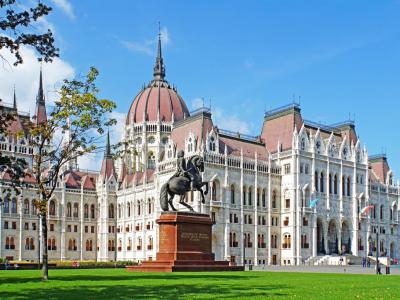
Separated from its western neighbor Buda by the wide sweep of the Danube, the eastern side of Budapest takes up almost two-thirds of the city. While Buda rises in hills and castle-topped cliffs, Pest spreads out across a flat plain, buzzing with energy and a rather bourgeois spirit. Some of Hungary’s most iconic landmarks call this side home, including the grand Parliament building itself. No wonder many locals skip the formalities and just call the whole capital “Pest.”
Originally a Roman settlement, the area saw frequent invasions and destruction throughout history, including by Mongols and Ottomans; however, after the expulsion of Ottoman forces in the late 17th century, it flourished under Habsburg rule. The 19th century was a golden era. Following the Austro-Hungarian Compromise in the 1860s, Pest rapidly industrialized and modernized, eventually merging with Buda and Óbuda in 1873 to form Budapest.
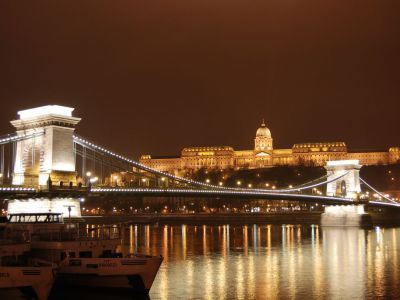
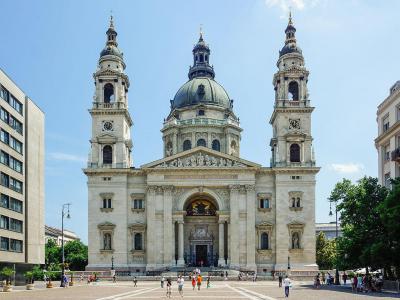
This self-guided walk is your invitation to dive right into the heart of it all, from the Parliament’s riverside grandeur all the way down to the Central Market Hall. A little farther ahead, you’ll catch the gleam of the Chain Bridge pulling you toward Saint Stephen’s Basilica just beyond. Head up to the basilica’s observation deck for sweeping views of the city, or simply relax with a drink at one of the cafés surrounding the square.
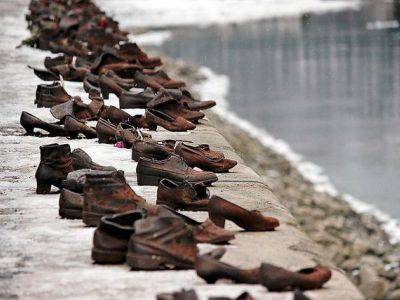
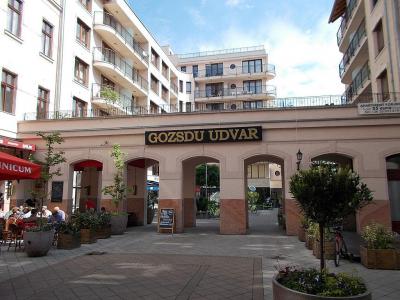
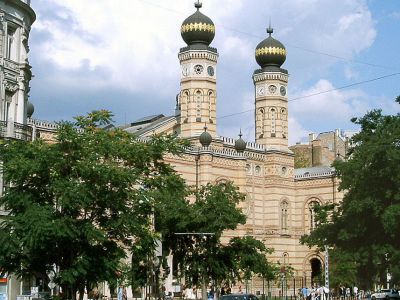
Not far from the main route lies the historic Jewish Quarter, very much worth visiting along the way. Take your time exploring Gozsdu Courtyard’s maze of cafés and galleries, and admire the beautiful Dohány Street Synagogue-a grand Byzantine-style masterpiece. Right beside it, you’ll find the Jewish Museum and the poignant Holocaust Memorial tucked into the rear courtyard.
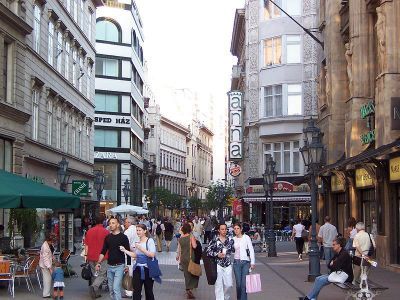
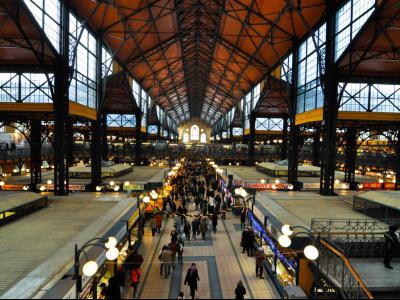
Meanwhile, the pedestrian-only Váci Street tempts with an endless array of restaurants, boutique shops, and inviting side streets. It’s the perfect place to sample local dishes or hunt for unique souvenirs. Then, of course, there’s the Great Market Hall, a feast for the senses with towers of paprika, pastries, and more local treats than you’ll know what to do with. A stroll across the nearby Liberty Bridge promises the perfect finale-taking in close-up views of the Danube and the city’s golden skyline.
In short, Pest was made for wandering on foot. So lace up, slow down, and let it unfold under your feet-one charming corner at a time.
Originally a Roman settlement, the area saw frequent invasions and destruction throughout history, including by Mongols and Ottomans; however, after the expulsion of Ottoman forces in the late 17th century, it flourished under Habsburg rule. The 19th century was a golden era. Following the Austro-Hungarian Compromise in the 1860s, Pest rapidly industrialized and modernized, eventually merging with Buda and Óbuda in 1873 to form Budapest.
This self-guided walk is your invitation to dive right into the heart of it all, from the Parliament’s riverside grandeur all the way down to the Central Market Hall. A little farther ahead, you’ll catch the gleam of the Chain Bridge pulling you toward Saint Stephen’s Basilica just beyond. Head up to the basilica’s observation deck for sweeping views of the city, or simply relax with a drink at one of the cafés surrounding the square.
Not far from the main route lies the historic Jewish Quarter, very much worth visiting along the way. Take your time exploring Gozsdu Courtyard’s maze of cafés and galleries, and admire the beautiful Dohány Street Synagogue-a grand Byzantine-style masterpiece. Right beside it, you’ll find the Jewish Museum and the poignant Holocaust Memorial tucked into the rear courtyard.
Meanwhile, the pedestrian-only Váci Street tempts with an endless array of restaurants, boutique shops, and inviting side streets. It’s the perfect place to sample local dishes or hunt for unique souvenirs. Then, of course, there’s the Great Market Hall, a feast for the senses with towers of paprika, pastries, and more local treats than you’ll know what to do with. A stroll across the nearby Liberty Bridge promises the perfect finale-taking in close-up views of the Danube and the city’s golden skyline.
In short, Pest was made for wandering on foot. So lace up, slow down, and let it unfold under your feet-one charming corner at a time.
How it works: Download the app "GPSmyCity: Walks in 1K+ Cities" from Apple App Store or Google Play Store to your mobile phone or tablet. The app turns your mobile device into a personal tour guide and its built-in GPS navigation functions guide you from one tour stop to next. The app works offline, so no data plan is needed when traveling abroad.
Download The GPSmyCity App



Pest Introduction Walking Tour Map
Guide Name: Pest Introduction Walking Tour
Guide Location: Hungary » Budapest (See other walking tours in Budapest)
Guide Type: Self-guided Walking Tour (Sightseeing)
Tour Duration: 2 Hour(s)
Travel Distance: 4.3 Km or 2.7 Miles
Guide Location: Hungary » Budapest (See other walking tours in Budapest)
Guide Type: Self-guided Walking Tour (Sightseeing)
Tour Duration: 2 Hour(s)
Travel Distance: 4.3 Km or 2.7 Miles
Sights Featured in This Walk
3) Chain Bridge (must see)
Walking Tours in Budapest, Hungary

Create Your Own Walk in Budapest
Creating your own self-guided walk in Budapest is easy and fun. Choose the city attractions that you want to see and a walk route map will be created just for you. You can even set your hotel as the start point of the walk.

Souvenir Shopping
It will definitely be a pity to leave Budapest without exploring local specialty shops and bringing home something authentically Hungarian. A large number of the city’s specialty shops are found on Váci Street, a pedestrian thoroughfare that parallels the Danube, extending for more than 15 blocks, with something for every taste and wallet. At its most southerly end, you will find Central Market... view more
Tour Duration: 1 Hour(s)
Travel Distance: 1.4 Km or 0.9 Miles
Tour Duration: 1 Hour(s)
Travel Distance: 1.4 Km or 0.9 Miles

Buda Introduction Walking Tour
Hungary’s capital is relatively young, having emerged in the late 19th century after the merger of two neighboring towns-Buda on the western bank of the Danube and Pest on the eastern side. Buda, with its hills and historic character, is home to the grand Hapsburg palace, still exuding the imperial charm of a time when wealth and power reigned.
From the heights of Castle Hill or Gellért Hill... view more
Tour Duration: 2 Hour(s)
Travel Distance: 3.8 Km or 2.4 Miles
From the heights of Castle Hill or Gellért Hill... view more
Tour Duration: 2 Hour(s)
Travel Distance: 3.8 Km or 2.4 Miles

Jewish Quarter Walking Tour
Jews were officially allowed to settle in Pest in the early 18th century. By the late 1700s, a small but growing community had taken root, and the 19th century brought rapid urbanization and expansion. The Jewish population soared, with many Jews becoming integral to Budapest’s economic and cultural life.
Following the Nazi occupation in March 1944, they were forced into a ghetto centered in... view more
Tour Duration: 1 Hour(s)
Travel Distance: 1.2 Km or 0.7 Miles
Following the Nazi occupation in March 1944, they were forced into a ghetto centered in... view more
Tour Duration: 1 Hour(s)
Travel Distance: 1.2 Km or 0.7 Miles

Margaret Island Walking Tour
Stretching for around 2.5 km, Margaret Island (“Margit-sziget”) on the river Danube is a popular green oasis / recreational area that serves as Budapest's playground since the 1870s. Flush with beautiful landscaped parks, ancient ruins and various sports facilities, the island can be accessed either by the historical Margaret Bridge on the south or the Arpad Bridge in the north, from... view more
Tour Duration: 1 Hour(s)
Travel Distance: 2.4 Km or 1.5 Miles
Tour Duration: 1 Hour(s)
Travel Distance: 2.4 Km or 1.5 Miles

Andrassy Avenue Walking Tour
Dating back to 1870 and recognized as a World Heritage site, Andrássy Avenue is a long, wide boulevard named after Prime Minister Gyula Andrássy (served 1867–71) that connects Budapest's downtown with the City Park. The entire stretch is lined with cafés, restaurants, luxury shops, as well as cultural institutions, elegant neo-Renaissance apartment blocks, mansions, and embassies with... view more
Tour Duration: 2 Hour(s)
Travel Distance: 2.8 Km or 1.7 Miles
Tour Duration: 2 Hour(s)
Travel Distance: 2.8 Km or 1.7 Miles
Useful Travel Guides for Planning Your Trip

15 Must Buy Hungarian Things in Budapest
Other than the standalone language and catchy Czardas tune, there's a lot more to memorize Hungary by. Here are some of the things you might want to carry from Budapest to your family and friends back...
The Most Popular Cities
/ view all