Valencia's Classical Architecture Tour (Self Guided), Valencia
Gazing upon the multitude of styles on the facades of Valencia – Renaissance, Baroque, Modernist, Beaux-Art, Art Nouveau, and more – makes one realize that this is more than just a Mediterranean coastal destination with beautiful beaches. Colorful and diverse, the “capital of Turia” boasts a wealth of architectural treasures that make it more contrasting and delicate than any other city in Spain. With beautiful buildings all around, particularly in the atmospheric Old Town, there's no shortage of sights to please the eye!
The galore of centuries-old and modern designs in Valencia is truly remarkable. Large and small, ancient (but well-preserved) and contemporary administrative, commercial, and religious edifices coexist here in constructional harmony.
To find one's way amid the vast amount of architectural artworks may be challenging. Below is a short list of some of the most representative of them:
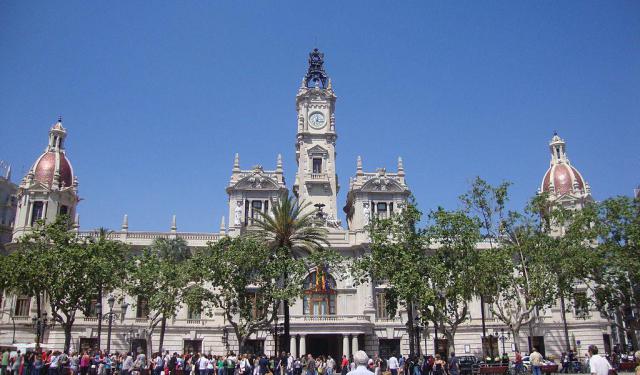
The City Hall – majestic building with an impressive clock tower and the 18th-century “Teaching House”.
Mercado Central – built in 1914, Valencia's Central Market is a showcase of local modernist architecture.
La Lonja de la Seda – Valencia's Silk Exchange is a listed UNESCO World Heritage Site, one of the most famous Gothic monuments in Europe.
La Catedral – Valencia Cathedral, probably the city’s most famous landmark, renowned for its lavish interior filled with treasures, including a chalice that’s said to be the Holy Grail itself.
El Miguelete – built in the 14th-15th centuries, Valencia Cathedral’s octagon Gothic bell tower hovers on the horizon at 167 feet (51 meters), offering some of the most amazing views over the city; prepare to climb 207 steps to the top.
To explore these and other jewels of the architectural paradise such as Valencia, take this self-guided walking tour.
The galore of centuries-old and modern designs in Valencia is truly remarkable. Large and small, ancient (but well-preserved) and contemporary administrative, commercial, and religious edifices coexist here in constructional harmony.
To find one's way amid the vast amount of architectural artworks may be challenging. Below is a short list of some of the most representative of them:
The City Hall – majestic building with an impressive clock tower and the 18th-century “Teaching House”.
Mercado Central – built in 1914, Valencia's Central Market is a showcase of local modernist architecture.
La Lonja de la Seda – Valencia's Silk Exchange is a listed UNESCO World Heritage Site, one of the most famous Gothic monuments in Europe.
La Catedral – Valencia Cathedral, probably the city’s most famous landmark, renowned for its lavish interior filled with treasures, including a chalice that’s said to be the Holy Grail itself.
El Miguelete – built in the 14th-15th centuries, Valencia Cathedral’s octagon Gothic bell tower hovers on the horizon at 167 feet (51 meters), offering some of the most amazing views over the city; prepare to climb 207 steps to the top.
To explore these and other jewels of the architectural paradise such as Valencia, take this self-guided walking tour.
How it works: Download the app "GPSmyCity: Walks in 1K+ Cities" from Apple App Store or Google Play Store to your mobile phone or tablet. The app turns your mobile device into a personal tour guide and its built-in GPS navigation functions guide you from one tour stop to next. The app works offline, so no data plan is needed when traveling abroad.
Download The GPSmyCity App



Valencia's Classical Architecture Tour Map
Guide Name: Valencia's Classical Architecture Tour
Guide Location: Spain » Valencia (See other walking tours in Valencia)
Guide Type: Self-guided Walking Tour (Sightseeing)
# of Attractions: 11
Tour Duration: 2 Hour(s)
Travel Distance: 3.3 Km or 2.1 Miles
Author: kane
Sight(s) Featured in This Guide:
Guide Location: Spain » Valencia (See other walking tours in Valencia)
Guide Type: Self-guided Walking Tour (Sightseeing)
# of Attractions: 11
Tour Duration: 2 Hour(s)
Travel Distance: 3.3 Km or 2.1 Miles
Author: kane
Sight(s) Featured in This Guide:
- Estacio del Nord (North Railway Station)
- City Hall
- Mercado Central (Central Market)
- Iglesia de los Santos Juanes
- La Lonja de la Seda (Silk Exchange)
- Iglesia y Torre de Santa Catalina (Santa Catalina Church and Tower)
- Miguelete Tower
- La Catedral (Valencia Cathedral)
- Palacio del Marques de Dos Aguas (Marques de Dos Aguas Palace)
- Iglesia de San Juan de la Cruz (Church of San Juan de la Cruz)
- Porta de la Mar (Sea Gate)
1) Estacio del Nord (North Railway Station) (must see)
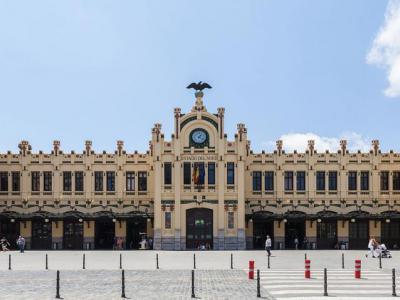
The North Railway Station is the main train terminal in Valencia. From here trains leave daily for several cities in Spain, such as Barcelona, Madrid, and the French boarder. The building is a beautiful example of a modernist architecture, constructed in the early 20th century. Architect Demetrio Ribes designed this majestic and well balanced building in the center of the city.
The outside of the building is decorated with elements that are representative of local architecture. There are also two lovely mosaics on the façade. Inside the station, the decor is also quite appealing. The modernist theme is carried out with more mosaics. The mood is bright, colorful, and the building is worth seeing even if train travel is not on the agenda. The entire first floor is open for public use, while the mezzanine is occupied by offices.
While visiting a train station may be a bit out of the ordinary, it is a nice attraction to see, especially when combined with the bullring next door. If train travel is on the agenda, be sure to arrive a bit early to explore the station before departure.
The outside of the building is decorated with elements that are representative of local architecture. There are also two lovely mosaics on the façade. Inside the station, the decor is also quite appealing. The modernist theme is carried out with more mosaics. The mood is bright, colorful, and the building is worth seeing even if train travel is not on the agenda. The entire first floor is open for public use, while the mezzanine is occupied by offices.
While visiting a train station may be a bit out of the ordinary, it is a nice attraction to see, especially when combined with the bullring next door. If train travel is on the agenda, be sure to arrive a bit early to explore the station before departure.
2) City Hall
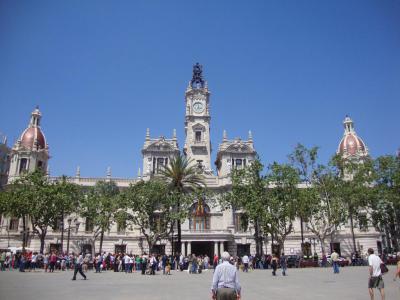
City Hall, known locally as Ayuntamiento, is the center of government in Valencia. Construction on the building began in 1758 but was not completed until the early 20th century. As such, the building features a number of architectural styles.
The architects who designed City Hall used Neoclassical, Neo-Baroque and Neo-Renaissance architectural styles. The interior includes fine paintings, nude reliefs and marble furnishings. The Crystal Room features large chandeliers, mirrors and painted ceilings.
Visitors to the City Hall will enjoy the Municipal Historical Archive and Museum. Tourists can also step out onto the balcony to see an impressive view of the city. Security is tight at the City Hall but that shouldn't stand in the way of experiencing this impressive building.
The building is located within the Town Hall Square. The City Hall is open from 8 AM to 3 PM, Monday through Friday. There is no entrance fee for the City Hall or its museum.
The architects who designed City Hall used Neoclassical, Neo-Baroque and Neo-Renaissance architectural styles. The interior includes fine paintings, nude reliefs and marble furnishings. The Crystal Room features large chandeliers, mirrors and painted ceilings.
Visitors to the City Hall will enjoy the Municipal Historical Archive and Museum. Tourists can also step out onto the balcony to see an impressive view of the city. Security is tight at the City Hall but that shouldn't stand in the way of experiencing this impressive building.
The building is located within the Town Hall Square. The City Hall is open from 8 AM to 3 PM, Monday through Friday. There is no entrance fee for the City Hall or its museum.
3) Mercado Central (Central Market) (must see)
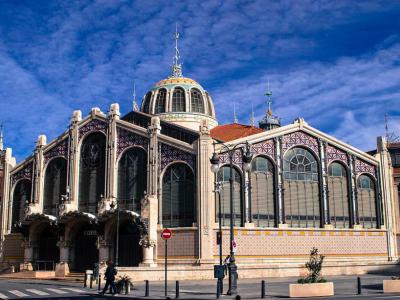
The Central Market, or Mercado Central, is a historic public market in the center of Valencia. This market is notable for being one of the largest in Europe. It also has an unusual design with a multi-layered roof and colorful window panels.
The location of the building was originally an open-air market called Mercat Nou. It dated to 1839. However, the city decided to enclose the market and used a contest to find an architect. The city chose a Valencian Art Nouveau design by Alexandre Soler March and Francesc Guàrdia Vidal to create the space. Groundbreaking on the building began in 1914. It was completed in 1928.
Most of the vendors at the Central Market sell food. Butchers might offer cuts of pork, mutton, beef, oxen and freshly prepared sausage. They also sell prepared foods like burgers and steak. Those wanting to find something less common can search for vendors who sell snails, sweetbreads and tripe.
Other foods available at the Mercado Central include cheeses, spices, fruits, vegetables, nuts, pastries and shellfish. Gourmet offerings include wine, beer, spirits, olive oil, honey, jams and much more.
There are a few vendors who sell souvenirs and non-food gift items. A lucky shopper may be able to find clothing, perfume, jewelry, accessories and ceramics at reasonable prices.
Mercado Central is a popular spot for locals to do their grocery shopping. It is also very popular with tourists who want to try local cuisine, have the experience of shopping in a historic market and find souvenirs to take home.
Why You Should Visit:
- To enjoy a few hours of shopping with locals
- To try local food you may not see anywhere else
- To pick up souvenirs to take home
Tips:
The market is open Monday through Saturday from 7:30 AM to 3 PM. A few vendors may be willing to negotiate prices, but most products are already marked at a reasonable rate.
The location of the building was originally an open-air market called Mercat Nou. It dated to 1839. However, the city decided to enclose the market and used a contest to find an architect. The city chose a Valencian Art Nouveau design by Alexandre Soler March and Francesc Guàrdia Vidal to create the space. Groundbreaking on the building began in 1914. It was completed in 1928.
Most of the vendors at the Central Market sell food. Butchers might offer cuts of pork, mutton, beef, oxen and freshly prepared sausage. They also sell prepared foods like burgers and steak. Those wanting to find something less common can search for vendors who sell snails, sweetbreads and tripe.
Other foods available at the Mercado Central include cheeses, spices, fruits, vegetables, nuts, pastries and shellfish. Gourmet offerings include wine, beer, spirits, olive oil, honey, jams and much more.
There are a few vendors who sell souvenirs and non-food gift items. A lucky shopper may be able to find clothing, perfume, jewelry, accessories and ceramics at reasonable prices.
Mercado Central is a popular spot for locals to do their grocery shopping. It is also very popular with tourists who want to try local cuisine, have the experience of shopping in a historic market and find souvenirs to take home.
Why You Should Visit:
- To enjoy a few hours of shopping with locals
- To try local food you may not see anywhere else
- To pick up souvenirs to take home
Tips:
The market is open Monday through Saturday from 7:30 AM to 3 PM. A few vendors may be willing to negotiate prices, but most products are already marked at a reasonable rate.
4) Iglesia de los Santos Juanes
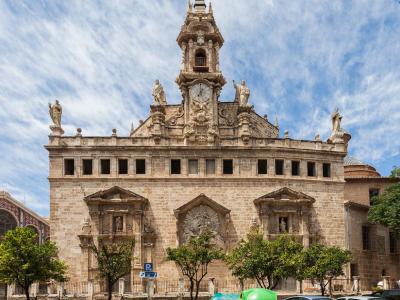
Santos Juanes is a Catholic church situated in the Mercat neighborhood of Valencia. It is referred to as the Royal Parish of Saint Johns or Saint John of the Market because it is located next to the Central Market and faces the Llotja de la Seda building.
In the 13th century, a mosque was replaced by a Gothic-style church. Fires in the 14th and 16th centuries led to reconstructions. The final Baroque-style reconstruction was completed in 1700. It was situated in the Boatella neighborhood, a working-class area outside the town walls, where some Morisco people lived.
The main facade of the church still retains a blocked-up circular window, which was part of the previous church's rose window. The square exterior of the apse, facing the square, features a central niche adorned with a stucco statuary group of the Virgin of the Rosary, attributed to Jacopo Bertesi. This group depicts the Virgin and Child, with the Child's hand on a globe, surrounded by rays, angels, and cherubs.
Other entrances display symbols representing John the Baptist (a lamb) and John the Evangelist (an eagle). In the center, there is a clock tower, and the roofline is adorned with statues of the Juanes: the Baptist, the Evangelist, and Saints Francesco Borgia and Luis Bertrán. This facade is rich in intricate iconography, including a lamb on top of a book with five seals.
The interior of the church features statues depicting the 12 tribes of Israel, also created by Bertesi, as well as large ceiling frescoes portraying various themes of the Church Triumphant, painted by Antonio Palomino. Unfortunately, the church interiors, including the frescoes, suffered damage from arson during the Spanish Civil War.
There are masses from Monday through Saturday at 5:00 a.m., 10:00 a.m., 11:00 a.m., noon and 6:30 p.m. On Sunday, the main worship times happen every hour, from 10:00 a.m. until 1:00 p.m., then again at 6:30 p.m.
In the 13th century, a mosque was replaced by a Gothic-style church. Fires in the 14th and 16th centuries led to reconstructions. The final Baroque-style reconstruction was completed in 1700. It was situated in the Boatella neighborhood, a working-class area outside the town walls, where some Morisco people lived.
The main facade of the church still retains a blocked-up circular window, which was part of the previous church's rose window. The square exterior of the apse, facing the square, features a central niche adorned with a stucco statuary group of the Virgin of the Rosary, attributed to Jacopo Bertesi. This group depicts the Virgin and Child, with the Child's hand on a globe, surrounded by rays, angels, and cherubs.
Other entrances display symbols representing John the Baptist (a lamb) and John the Evangelist (an eagle). In the center, there is a clock tower, and the roofline is adorned with statues of the Juanes: the Baptist, the Evangelist, and Saints Francesco Borgia and Luis Bertrán. This facade is rich in intricate iconography, including a lamb on top of a book with five seals.
The interior of the church features statues depicting the 12 tribes of Israel, also created by Bertesi, as well as large ceiling frescoes portraying various themes of the Church Triumphant, painted by Antonio Palomino. Unfortunately, the church interiors, including the frescoes, suffered damage from arson during the Spanish Civil War.
There are masses from Monday through Saturday at 5:00 a.m., 10:00 a.m., 11:00 a.m., noon and 6:30 p.m. On Sunday, the main worship times happen every hour, from 10:00 a.m. until 1:00 p.m., then again at 6:30 p.m.
5) La Lonja de la Seda (Silk Exchange) (must see)
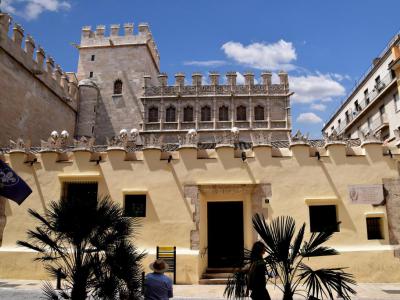
The Silk Exchange was built between 1482 and 1533 in Gothic style. There are incredible gargoyles both inside and outside the building. Some are fairly grotesque but still interesting. There are also coats of arms and other adornments throughout the building. Valencia was a prosperous commercial trading hub in the 14th century. This large building was utilized for trading, and stands as a testament to that fact, although it looks more like a garrison than a building for luxurious silks.
The inside of the building is just as impressive as the outside. The hall of columns is where the actual trading took place. Around the walls, an inscription announces the honesty of those who trade here, as well as welcoming traders of various religions and ethnicities. The columns themselves are a delight for the eye with their massive, twisting, yet graceful styling, reaching high to the roof. Chandeliers also add a touch of beauty, and rather counteract the imposing gargoyles.
The building is a beautiful representation of Gothic style and should not be missed. It is, in fact, a UNESCO world heritage site.
Why You Should Visit:
One of the best examples of Gothic civil architecture in Europe and it's worth going in just to see the ceilings! The courtyard with the orange trees is a pleasant place to sit in the shade and rest for a few minutes.
Tip:
The audio commentary is really worth getting – inexpensive and gives a great insight into the outside & inside of the building. On Sundays, you can take a look at the coins & stamps market right outside and get inside the building for free.
The inside of the building is just as impressive as the outside. The hall of columns is where the actual trading took place. Around the walls, an inscription announces the honesty of those who trade here, as well as welcoming traders of various religions and ethnicities. The columns themselves are a delight for the eye with their massive, twisting, yet graceful styling, reaching high to the roof. Chandeliers also add a touch of beauty, and rather counteract the imposing gargoyles.
The building is a beautiful representation of Gothic style and should not be missed. It is, in fact, a UNESCO world heritage site.
Why You Should Visit:
One of the best examples of Gothic civil architecture in Europe and it's worth going in just to see the ceilings! The courtyard with the orange trees is a pleasant place to sit in the shade and rest for a few minutes.
Tip:
The audio commentary is really worth getting – inexpensive and gives a great insight into the outside & inside of the building. On Sundays, you can take a look at the coins & stamps market right outside and get inside the building for free.
6) Iglesia y Torre de Santa Catalina (Santa Catalina Church and Tower)
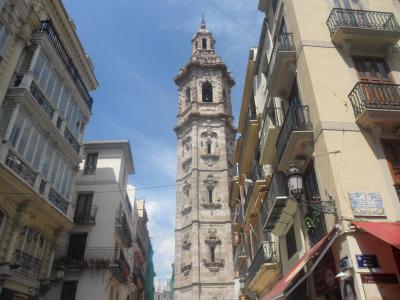
The Santa Catalina Church is located in a very architecturally beautiful part of Valencia, which is known as La Paz Street. Located very close to Queen Square, it is a rather stunning church that is beautiful both inside and out. Standing outside of the building, you will note the Baroque bell towers. These were not added to the church until 400 years after the construction of its original part was complete, so the style is quite different than the primarily Gothic style of the main building.
This church was built in the 14th Century, and the twin bell towers were added in the 18th Century. The towers, according to local legend, are called "husband and wife".
The inside of the church is very ornate, and shows some of the best religious art in the city. Much of the church construction was due to King Jaime I. With his approval, many similar churches were built across the city to prove to the world that the Christian church could dominate the Muslim Moors. At the time when the bell towers were added, the old Gothic church had also been renovated with Baroque elements.
This church was built in the 14th Century, and the twin bell towers were added in the 18th Century. The towers, according to local legend, are called "husband and wife".
The inside of the church is very ornate, and shows some of the best religious art in the city. Much of the church construction was due to King Jaime I. With his approval, many similar churches were built across the city to prove to the world that the Christian church could dominate the Muslim Moors. At the time when the bell towers were added, the old Gothic church had also been renovated with Baroque elements.
7) Miguelete Tower
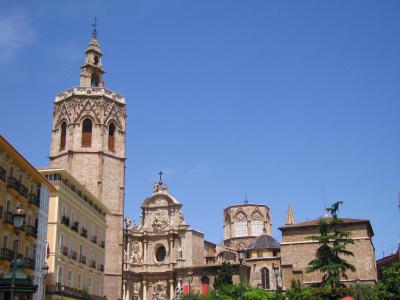
The Valencia Cathedral has the Miguelete Tower, a bell tower constructed in the Valencian Gothic style. Its construction started in 1381 and ended in 1429. It went through several master builders due to its intricate design. The tower stands at a height of 51 meters and reaches a total height of 63 meters. It has an octagonal prism shape and 207 steps.
Originally called the "New Bell," the tower became known as the Miguelete Tower after its prominent hour bell. It became connected to the Cathedral in the late 15th century. Access is granted through an angular portal with archivolts and a passage covered with ribbed turns. The tower has different levels, including a solid first level for the staircase, a second level that used to be a prison, and a third level called the "Home of the Bell-Ringer." The upper floor serves as the bell room.
The spire project was not completed, but plans for it are preserved in the Municipal Historical Museum. The belfry was added between 1660 and 1736. The terrace had a crown-like crest that was later demolished but restored in 1983. Visitors can explore the tower and view its rooms by obtaining a ticket from the cathedral. They can also witness performances by the Bell Ringers of the Cathedral.
Originally called the "New Bell," the tower became known as the Miguelete Tower after its prominent hour bell. It became connected to the Cathedral in the late 15th century. Access is granted through an angular portal with archivolts and a passage covered with ribbed turns. The tower has different levels, including a solid first level for the staircase, a second level that used to be a prison, and a third level called the "Home of the Bell-Ringer." The upper floor serves as the bell room.
The spire project was not completed, but plans for it are preserved in the Municipal Historical Museum. The belfry was added between 1660 and 1736. The terrace had a crown-like crest that was later demolished but restored in 1983. Visitors can explore the tower and view its rooms by obtaining a ticket from the cathedral. They can also witness performances by the Bell Ringers of the Cathedral.
8) La Catedral (Valencia Cathedral) (must see)
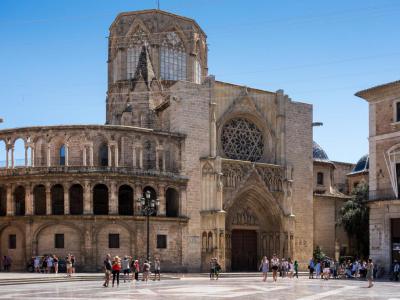
La Catedral is often referred to as Valencia Cathedral by tourists who are captivated by its rich history and beautiful Valencian Gothic architecture. However, the cathedral goes by many other names. It is officially the Metropolitan Cathedral-Basilica of the Assumption of Our Lady of Valencia. It is also referred to as Saint Mary's Cathedral.
Whatever you call it, Valencia Catedral is a must-see spot in Valencia. Construction began on the cathedral in 1262 but wasn't completed until around 1459. Still, additions and improvements continued on the cathedral for hundreds of years. A building was added to the church as late as 1970.
Thanks to many additions and renovations over the years, the cathedral features a variety of architectural styles. Valencian Gothic is largely represented, but architecture-lovers will find French Gothic, Romanesque, Renaissance, Baroque and Neoclassical influences. It also has numerous paintings from Spanish and Italian artists. Most of these paintings date to the 15th century.
Along with the beauty of the architecture and the decorative interior, the cathedral holds many secrets and mysteries. During excavations, remnants of Roman buildings were found within the cathedral. Likewise, a number of artifacts and relics are held inside. One of these relics is the Holy Chalice, which is thought by many to be the true Holy Grail. It can be seen in the Chapel of the Holy Chalice.
Tours are available from 10:30 AM to 5:30 PM Monday through Saturday. Visitors can tour the interior, the museum and the bell tower.
Why You Should Visit:
Valencia Cathedral is the most important religious building in the city. One can admire its numerous architectural styles and have a chance to see Holy Chalice.
Tips:
The cathedral is not open for tours on Sundays. Those visiting Valencia in the summer may find the tour hours extended through 6:30 on weekdays.
Whatever you call it, Valencia Catedral is a must-see spot in Valencia. Construction began on the cathedral in 1262 but wasn't completed until around 1459. Still, additions and improvements continued on the cathedral for hundreds of years. A building was added to the church as late as 1970.
Thanks to many additions and renovations over the years, the cathedral features a variety of architectural styles. Valencian Gothic is largely represented, but architecture-lovers will find French Gothic, Romanesque, Renaissance, Baroque and Neoclassical influences. It also has numerous paintings from Spanish and Italian artists. Most of these paintings date to the 15th century.
Along with the beauty of the architecture and the decorative interior, the cathedral holds many secrets and mysteries. During excavations, remnants of Roman buildings were found within the cathedral. Likewise, a number of artifacts and relics are held inside. One of these relics is the Holy Chalice, which is thought by many to be the true Holy Grail. It can be seen in the Chapel of the Holy Chalice.
Tours are available from 10:30 AM to 5:30 PM Monday through Saturday. Visitors can tour the interior, the museum and the bell tower.
Why You Should Visit:
Valencia Cathedral is the most important religious building in the city. One can admire its numerous architectural styles and have a chance to see Holy Chalice.
Tips:
The cathedral is not open for tours on Sundays. Those visiting Valencia in the summer may find the tour hours extended through 6:30 on weekdays.
9) Palacio del Marques de Dos Aguas (Marques de Dos Aguas Palace) (must see)
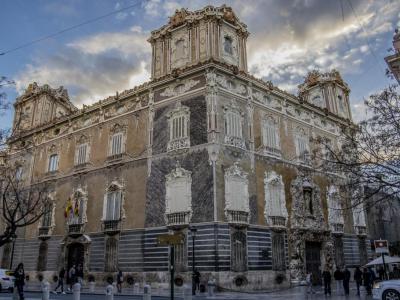
Considered as one of the best examples of Baroque architecture in Spain, the Marques de Dos Aguas Palace is an eclectic palace inside and out.
Built in the late 1490 in Gothic style, it was remade into the Baroque style in the 18th century. The outside of the building is an interesting blend of rococo and includes a Churrigueresque waterfall that gives the Palace its name. While this combination of architecture and decoration can be seen in several buildings around Valencia, the results here are breathtakingly beautiful.
The interesting blend of styles also continues on the inside. The Palace is home to the National Museum of Ceramics, as well as of famous people's caricatures in the in the Gallery of Humorists. That alone should be enough to merit a visit. The National Museum of Ceramics displays an interesting collection of ceramics that includes beautiful tile work that is recognized throughout the world. There is also a large and well decorated ballroom that is reflective of the grandeur of the period.
There is a small fee for visiting the palace. However, admission is free on Sundays and holidays. Also, children under the age of 18 and those on a pension get in free daily.
Why You Should Visit:
Stunningly beautiful façades, not to be missed even if you don't go into the museum. The interiors don't disappoint either – opulent and glitzy, with a 19th-century exuberance.
Built in the late 1490 in Gothic style, it was remade into the Baroque style in the 18th century. The outside of the building is an interesting blend of rococo and includes a Churrigueresque waterfall that gives the Palace its name. While this combination of architecture and decoration can be seen in several buildings around Valencia, the results here are breathtakingly beautiful.
The interesting blend of styles also continues on the inside. The Palace is home to the National Museum of Ceramics, as well as of famous people's caricatures in the in the Gallery of Humorists. That alone should be enough to merit a visit. The National Museum of Ceramics displays an interesting collection of ceramics that includes beautiful tile work that is recognized throughout the world. There is also a large and well decorated ballroom that is reflective of the grandeur of the period.
There is a small fee for visiting the palace. However, admission is free on Sundays and holidays. Also, children under the age of 18 and those on a pension get in free daily.
Why You Should Visit:
Stunningly beautiful façades, not to be missed even if you don't go into the museum. The interiors don't disappoint either – opulent and glitzy, with a 19th-century exuberance.
10) Iglesia de San Juan de la Cruz (Church of San Juan de la Cruz)
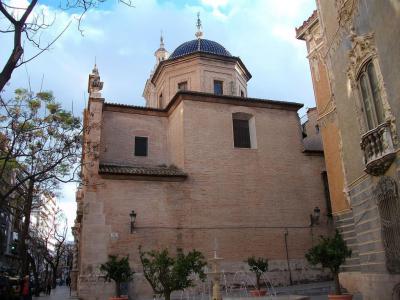
Church of San Juan de la Cruz is a beautiful example of a Renaissance church. While it may not at first have the visual impact of other imposing buildings, it should not be ignored. The architecture is simple and elegant. There is a large vaulted ceiling held up by spiral columns.
The church was built in the early 17th century with additional rococo interior embellishment added in the 18th century by Hipolito Rovira who studied in Italy and was influenced by the art work there. Hipolito Rovira also worked on several churches in Valencia, but his stucco work in this church is magnificent.
There are two side chapels in the church, one belonging to the Fisherman’s Guild of Valencia, and is really a must see. The paintings and other works of art alone are worth the visit, even for those not enamored with the religious or architectural aspects of the building.
Mass is held at 7:30 pm Monday-Saturday, and at noon on Sunday.
The church was built in the early 17th century with additional rococo interior embellishment added in the 18th century by Hipolito Rovira who studied in Italy and was influenced by the art work there. Hipolito Rovira also worked on several churches in Valencia, but his stucco work in this church is magnificent.
There are two side chapels in the church, one belonging to the Fisherman’s Guild of Valencia, and is really a must see. The paintings and other works of art alone are worth the visit, even for those not enamored with the religious or architectural aspects of the building.
Mass is held at 7:30 pm Monday-Saturday, and at noon on Sunday.
11) Porta de la Mar (Sea Gate)
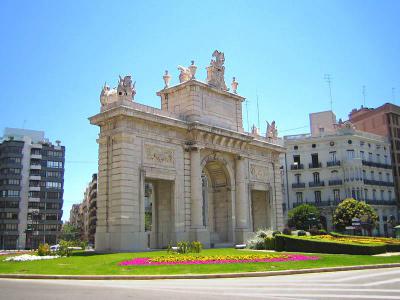
The Sea Gate, was constructed after the Spanish Civil War and is a memorial to those who perished during the fighting. The war began in 1936 and ended in April 1939. The monument consists of a central arch which is flanked by a lintel on either side. Under the arch is a large cross that serves as a stark reminder of the purpose of the monument. It stands at a high traffic area in Valencia.
On each corner of the monument, decorating the top, are reliefs. These are rather amazing works of art which were done by the sculpture Vicente Navarro Romero. The monument is also a tribute to the old Sea Gates which were destroyed in 1868. The original gates were unearthed but it was decided that they were best left buried. There are also gardens around the memorial that are periodically redesigned, so the looks of the grounds do change.
On each corner of the monument, decorating the top, are reliefs. These are rather amazing works of art which were done by the sculpture Vicente Navarro Romero. The monument is also a tribute to the old Sea Gates which were destroyed in 1868. The original gates were unearthed but it was decided that they were best left buried. There are also gardens around the memorial that are periodically redesigned, so the looks of the grounds do change.
Walking Tours in Valencia, Spain

Create Your Own Walk in Valencia
Creating your own self-guided walk in Valencia is easy and fun. Choose the city attractions that you want to see and a walk route map will be created just for you. You can even set your hotel as the start point of the walk.
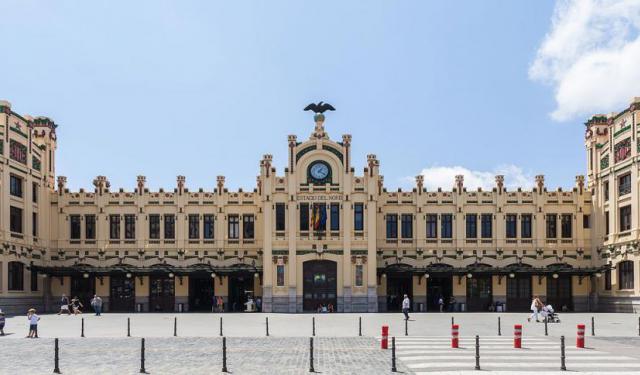
Valencia Introduction Walking Tour
Valencia, Spain's third-largest city, boasts an ancient lineage dating back to 138 BC when it was established as a colony for Roman war veterans. Originally christened "Valentia," which means valor, a tribute to the battle-hardened soldiers, it eventually evolved into Valencia through gradual phonetic changes.
In 75 BC, the city faced destruction at the hands of Pompey the Great,... view more
Tour Duration: 2 Hour(s)
Travel Distance: 3.2 Km or 2 Miles
In 75 BC, the city faced destruction at the hands of Pompey the Great,... view more
Tour Duration: 2 Hour(s)
Travel Distance: 3.2 Km or 2 Miles
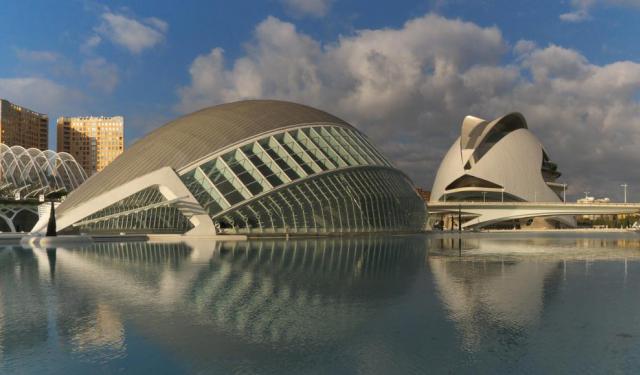
Contemporary Architecture Walk
With one foot in the past and the other one in the future, it is hard to find a European city more architecturally intriguing than Valencia. Among the multitude of styles, Valencia particularly excels at the cutting-edge contemporary architecture. She owes it to her own born and bred architect, Santiago Calatrava, renowned for his hyper-modern-surreal designs.
In the course of nearly two... view more
Tour Duration: 1 Hour(s)
Travel Distance: 1.4 Km or 0.9 Miles
In the course of nearly two... view more
Tour Duration: 1 Hour(s)
Travel Distance: 1.4 Km or 0.9 Miles
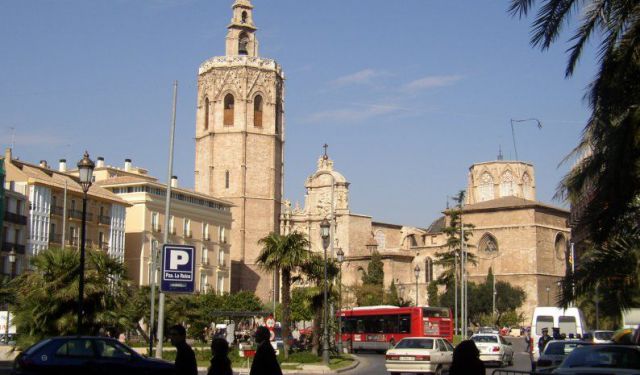
Old Town Walking Tour
Home to most of Valencia's main tourist attractions, the Ciutat Vella (Old Town) is undoubtedly the most charming part of the city, reflecting its history and retaining its star-shaped medieval layout. Formerly a walled town from the Roman period, this area saw its major development commence in the 14th-15th centuries, the most tangible remains of which now are Torres de Serranos (Serranos... view more
Tour Duration: 2 Hour(s)
Travel Distance: 3.0 Km or 1.9 Miles
Tour Duration: 2 Hour(s)
Travel Distance: 3.0 Km or 1.9 Miles
The Most Popular Cities
/ view all