French Quarter Historical Buildings Walking Tour (Self Guided), New Orleans
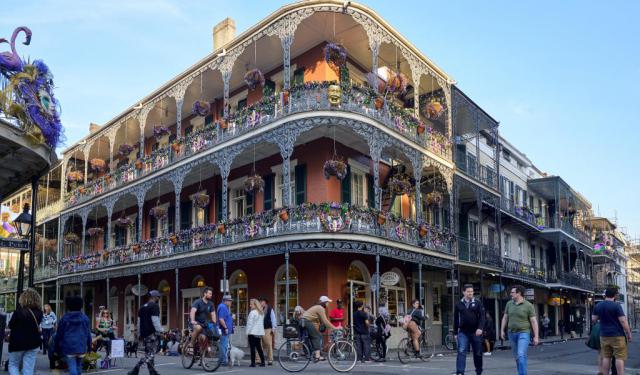
Widely known for its heritage sites with a variety of unique architectural styles, New Orleans has lots of beautiful buildings designed in the Greek Revival, American Colonial, or Victorian styles. Walking around the French Quarter, you'll enjoy these old historic buildings (some open to the public), their old ironwork gates and balcony railings, the antique brick- and stone-paved sidewalks taking you back generations...
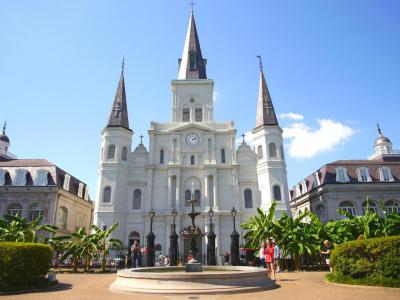
Some three centuries ago, on March 29, 1721, New Orleans founder and Governor Jean-Baptiste Le Moyne de Bienville selected the location for St. Louis Cathedral by drawing a mark in the soil with his sword while laying out the original city. The first church wouldn’t be built for several years, but the sacred spot was selected. Flanked by The Presbytère (circa 1797) and the Cabildo (circa 1799), with Jackson Square in the foreground, the iconic St. Louis Cathedral has been at the center of the city and embedded in the hearts of its New Orleanians everywhere.
While it may be difficult to decide which properties to visit next, the fascinating Hermann-Grima should not be missed. Located right in the French Quarter, this structure gives visitors a peak into the lives of the people who lived and worked within its walls.
New Orleans has no shortage of businesses or private residences that are reputed to be haunted, so if you’re interested in true life that’s definitely stranger than fiction, check out the LaLaurie Mansion. Also in the back of the Quarter, you will see the lovely Beauregard-Keyes House (1826) and adjacent Old Ursuline Convent (1734) – supposedly the oldest structure in the Mississippi River Valley.
To explore these and other places of most interest, follow our self-guided walking tour.
Some three centuries ago, on March 29, 1721, New Orleans founder and Governor Jean-Baptiste Le Moyne de Bienville selected the location for St. Louis Cathedral by drawing a mark in the soil with his sword while laying out the original city. The first church wouldn’t be built for several years, but the sacred spot was selected. Flanked by The Presbytère (circa 1797) and the Cabildo (circa 1799), with Jackson Square in the foreground, the iconic St. Louis Cathedral has been at the center of the city and embedded in the hearts of its New Orleanians everywhere.
While it may be difficult to decide which properties to visit next, the fascinating Hermann-Grima should not be missed. Located right in the French Quarter, this structure gives visitors a peak into the lives of the people who lived and worked within its walls.
New Orleans has no shortage of businesses or private residences that are reputed to be haunted, so if you’re interested in true life that’s definitely stranger than fiction, check out the LaLaurie Mansion. Also in the back of the Quarter, you will see the lovely Beauregard-Keyes House (1826) and adjacent Old Ursuline Convent (1734) – supposedly the oldest structure in the Mississippi River Valley.
To explore these and other places of most interest, follow our self-guided walking tour.
How it works: Download the app "GPSmyCity: Walks in 1K+ Cities" from Apple App Store or Google Play Store to your mobile phone or tablet. The app turns your mobile device into a personal tour guide and its built-in GPS navigation functions guide you from one tour stop to next. The app works offline, so no data plan is needed when traveling abroad.
Download The GPSmyCity App



French Quarter Historical Buildings Walking Tour Map
Guide Name: French Quarter Historical Buildings Walking Tour
Guide Location: USA » New Orleans (See other walking tours in New Orleans)
Guide Type: Self-guided Walking Tour (Sightseeing)
# of Attractions: 12
Tour Duration: 2 Hour(s)
Travel Distance: 2.5 Km or 1.6 Miles
Author: ann
Sight(s) Featured in This Guide:
Guide Location: USA » New Orleans (See other walking tours in New Orleans)
Guide Type: Self-guided Walking Tour (Sightseeing)
# of Attractions: 12
Tour Duration: 2 Hour(s)
Travel Distance: 2.5 Km or 1.6 Miles
Author: ann
Sight(s) Featured in This Guide:
- St. Louis Cathedral
- The Presbytere
- The Cabildo
- Historic New Orleans Collection
- Hermann-Grima House
- Old Absinthe House
- Lafitte's Blacksmith Shop Bar
- LaLaurie Mansion
- Gallier House
- Beauregard-Keyes House and Garden
- Old Ursuline Convent
- 1850 House
1) St. Louis Cathedral (must see)
Saint Louis Cathedral's triple spires are instantly recognizable to most tourists as the main symbol of the French Quarter. Many have taken photos of the gleaming white facade set against a clear blue sky from across the picturesque Jackson Square; however, relatively few have ventured inside to witness the glorious mural and statuary, transporting visitors nearly 300 years back in time to the cathedral's founding. Along the first floor, stained glass windows depict the life of King Louis IX, the French monarch who led two crusades.
Saint Louis proudly holds the title of the oldest continuously active Roman Catholic Cathedral in the United States. The existing structure, which replaced two previous buildings destroyed by fires, dates back to 1794, though it underwent remodeling and expansion in 1851. The influences of both Spanish and French cultures are readily apparent in both the artwork and the flags displayed near the chandeliers in the main aisle of the sanctuary.
Notably, Pope John Paul II conducted a prayer service for clergy here during his visit to New Orleans in 1987; in commemoration of the event, the nearby pedestrian mall was renamed in his honor. Of particular interest is his portrait in a Jackson Square setting, displayed on the cathedral's inner sidewall.
Visitors can often enjoy free tours conducted by docents, or they can opt for a self-guided tour using brochures when there are no church events taking place. A fine pipe organ is frequently played for the delight of guests, and there is also a small gift shop to explore.
Tip:
Take note of the sloping floor, a clever architectural design that somehow manages to keep the building upright even as the ground beneath it continues to sink.
Saint Louis proudly holds the title of the oldest continuously active Roman Catholic Cathedral in the United States. The existing structure, which replaced two previous buildings destroyed by fires, dates back to 1794, though it underwent remodeling and expansion in 1851. The influences of both Spanish and French cultures are readily apparent in both the artwork and the flags displayed near the chandeliers in the main aisle of the sanctuary.
Notably, Pope John Paul II conducted a prayer service for clergy here during his visit to New Orleans in 1987; in commemoration of the event, the nearby pedestrian mall was renamed in his honor. Of particular interest is his portrait in a Jackson Square setting, displayed on the cathedral's inner sidewall.
Visitors can often enjoy free tours conducted by docents, or they can opt for a self-guided tour using brochures when there are no church events taking place. A fine pipe organ is frequently played for the delight of guests, and there is also a small gift shop to explore.
Tip:
Take note of the sloping floor, a clever architectural design that somehow manages to keep the building upright even as the ground beneath it continues to sink.

2) The Presbytere
Constructed in 1797 originally as a residence for the clergy of the Saint Louis Cathedral, the two-story Presbytère on Jackson Square shares a structural resemblance with the Cabildo and stands as one of the nation's finest examples of formal Spanish Colonial architecture. Despite the rich array of Renaissance elements, it never served its intended purpose, as its financial backer, a wealthy Spaniard, passed away before its completion. Eventually, the newly formed U.S. government took charge of finishing the building and repurposed it to house the Louisiana state courts during the 19th century.
In 1911, the Presbytère became part of the Louisiana State Museum, and today, it hosts a vibrant permanent exhibit dedicated to the history of Mardi Gras traditions, both in the city of New Orleans and the state of Louisiana. The display delves into many lesser-known aspects of the celebration and is presented in a compelling and poignant manner, relying on first-person accounts, photographs, audio recordings, videos, and beautiful artifacts such as crowns, scepters, costumes, and accessories associated with the annual festivities, which have grown to become one of the most renowned festivals globally.
On the first floor, visitors will find the "Living with Hurricanes: Katrina and Beyond", a similarly poignant yet uplifting exploration of the history, science, and profound human experiences associated with one of nature's most devastating forces. The well-narrated presentation and visual depictions provide an immersive understanding of the events and the resilience of the people of New Orleans in the face of the Katrina disaster, making you feel as if you were part of that challenging period in the city's history.
Tip:
Consider buying a combo ticket that offers a 20% discount when visiting along with The Cabildo on the Cathedral's other side (or any other Louisiana State Museum site).
In 1911, the Presbytère became part of the Louisiana State Museum, and today, it hosts a vibrant permanent exhibit dedicated to the history of Mardi Gras traditions, both in the city of New Orleans and the state of Louisiana. The display delves into many lesser-known aspects of the celebration and is presented in a compelling and poignant manner, relying on first-person accounts, photographs, audio recordings, videos, and beautiful artifacts such as crowns, scepters, costumes, and accessories associated with the annual festivities, which have grown to become one of the most renowned festivals globally.
On the first floor, visitors will find the "Living with Hurricanes: Katrina and Beyond", a similarly poignant yet uplifting exploration of the history, science, and profound human experiences associated with one of nature's most devastating forces. The well-narrated presentation and visual depictions provide an immersive understanding of the events and the resilience of the people of New Orleans in the face of the Katrina disaster, making you feel as if you were part of that challenging period in the city's history.
Tip:
Consider buying a combo ticket that offers a 20% discount when visiting along with The Cabildo on the Cathedral's other side (or any other Louisiana State Museum site).
3) The Cabildo
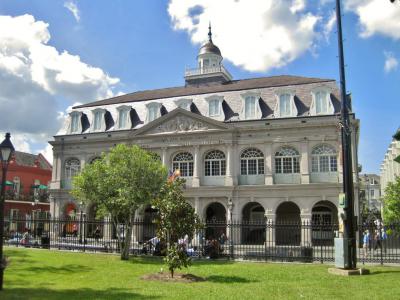
Erected in 1795 by the Spanish colonial government, The Cabildo witnessed some of the most pivotal events in American history, including the ceremonies for the Louisiana Purchase transfer, a momentous transaction that nearly doubled the size of the United States in 1803. Sitting on the opposite side of the Saint Louis Cathedral from The Presbytère, this landmark once functioned as the colonial government's headquarters and later housed the Louisiana Supreme Court.
The building's architecture is a testament to the Spanish influence on New Orleans, with its intricate ironwork balconies and distinctive Spanish flair, which contrast with the French colonial styles prevalent in the city.
Today, The Cabildo is a museum housing a premier collection of artifacts related to New Orleans and Louisiana history – spanning from the earliest explorers to encompass themes such as slavery, post-Civil War reconstruction, and statehood. The detailed narrative is presented from a multicultural perspective and touches on intriguing subjects like immigration, assimilation, antebellum music, mourning and burial customs, and the role of Southern women.
Throughout the museum, one can find portraits of historical figures and pivotal events. A standout exhibit is Napoleon's death mask made by Napoleon's personal physician shortly after the French leader's death in 1821 on the island of Saint Helena, where he was in exile.
Overall, an ideal place to explore the history of New Orleans and Louisiana. As an extra, the upstairs offers great views of Jackson Square.
Tip:
Consider buying a combo ticket that offers a 20% discount when visiting along with The Presbytère on the Cathedral's other side (or any other Louisiana State Museum site).
The building's architecture is a testament to the Spanish influence on New Orleans, with its intricate ironwork balconies and distinctive Spanish flair, which contrast with the French colonial styles prevalent in the city.
Today, The Cabildo is a museum housing a premier collection of artifacts related to New Orleans and Louisiana history – spanning from the earliest explorers to encompass themes such as slavery, post-Civil War reconstruction, and statehood. The detailed narrative is presented from a multicultural perspective and touches on intriguing subjects like immigration, assimilation, antebellum music, mourning and burial customs, and the role of Southern women.
Throughout the museum, one can find portraits of historical figures and pivotal events. A standout exhibit is Napoleon's death mask made by Napoleon's personal physician shortly after the French leader's death in 1821 on the island of Saint Helena, where he was in exile.
Overall, an ideal place to explore the history of New Orleans and Louisiana. As an extra, the upstairs offers great views of Jackson Square.
Tip:
Consider buying a combo ticket that offers a 20% discount when visiting along with The Presbytère on the Cathedral's other side (or any other Louisiana State Museum site).

4) Historic New Orleans Collection
Tucked away among the art galleries on Royal Street in the French Quarter is one of New Orleans' most underappreciated attractions. Established in 1966 by passionate collectors General L. Kemper Williams and his wife, Leila, this cluster of buildings is dedicated to the preservation of the history and culture of New Orleans and the Gulf South region.
Entry to the site is free and the first building you'll encounter is the elegant Merieult House, designed in the Greek Revival style. Built in 1792, the house now houses the Williams Gallery, where you can explore rotating history exhibitions, as well as the Louisiana History Galleries–a series of 13 chambers that delve into specific periods of the state's history, from the French colonial era to the 20th century, showcasing authentic maps, books, furniture, and artwork.
As you explore the courtyard, you'll spot several other buildings, including the Spanish colonial-style Counting House and the three-story Maisonette, which now serve as administrative offices. However, one exception is the Williams Residence, an Italianate townhouse from the 1880s that the museum's founders occupied until 1963.
Guided tours of the Williams Residence, led by knowledgeable docents, last 45 minutes and provide a room-by-room look at how an upscale early-20th-century home would have been furnished. This includes various antiques, watercolors, and vintage maps of New Orleans, making it a must-visit for design and decorative arts enthusiasts. You can also opt for a guided architectural tour of the Royal Street complex's buildings and courtyards.
Tip:
While you're here, consider visiting the courtyard café and spending time in the impressive shop located in the Merieult House, staffed by knowledgeable experts and offering a wide range of items, from local novels and history books to vintage maps and iconic jewelry. Additionally, music enthusiasts will be delighted to hear the Aeolian organ, completed in 1926 and recently restored. It's a rare treasure for organ music lovers, as only four working models exist in the U.S. Be sure to check if it's included in one of the tours during your visit.
Entry to the site is free and the first building you'll encounter is the elegant Merieult House, designed in the Greek Revival style. Built in 1792, the house now houses the Williams Gallery, where you can explore rotating history exhibitions, as well as the Louisiana History Galleries–a series of 13 chambers that delve into specific periods of the state's history, from the French colonial era to the 20th century, showcasing authentic maps, books, furniture, and artwork.
As you explore the courtyard, you'll spot several other buildings, including the Spanish colonial-style Counting House and the three-story Maisonette, which now serve as administrative offices. However, one exception is the Williams Residence, an Italianate townhouse from the 1880s that the museum's founders occupied until 1963.
Guided tours of the Williams Residence, led by knowledgeable docents, last 45 minutes and provide a room-by-room look at how an upscale early-20th-century home would have been furnished. This includes various antiques, watercolors, and vintage maps of New Orleans, making it a must-visit for design and decorative arts enthusiasts. You can also opt for a guided architectural tour of the Royal Street complex's buildings and courtyards.
Tip:
While you're here, consider visiting the courtyard café and spending time in the impressive shop located in the Merieult House, staffed by knowledgeable experts and offering a wide range of items, from local novels and history books to vintage maps and iconic jewelry. Additionally, music enthusiasts will be delighted to hear the Aeolian organ, completed in 1926 and recently restored. It's a rare treasure for organ music lovers, as only four working models exist in the U.S. Be sure to check if it's included in one of the tours during your visit.

5) Hermann-Grima House
A historic treasure nestled in the heart of the French Quarter, the Hermann-Grima House exudes the charm and elegance of the antebellum era. Its significance lies not only in its Federal-style architecture, which stands out among the predominantly Creole buildings of the quarter but also in its well-documented history of the city's social and domestic life.
Constructed in 1831 for Samuel Hermann, a German-Jewish immigrant who married into a prosperous French-Creole family, this stately mansion reflects the affluence and style of New Orleans' 19th-century mercantile elite. Featuring a charming bricked courtyard, the French Quarter's only surviving stable, and a fully functional outdoor kitchen from the 1830s, it is noted for its intact features, including the elaborate carriageways and preserved interior, which boasts period furnishings and intricate decor.
Now a museum, the house regularly hosts historically accurate special exhibitions, including presentations for holidays, displays of summer dresses, and a slightly spooky atmosphere in October. Additionally, by retaining your receipt, you can enjoy a discounted visit to the nearby Gallier House, interesting in its own right for the lovely period furniture, rotating exhibitions, and overall design.
Tip:
Don't miss a visit from October through May, as this is when cooking demonstrations take place in the open hearth of the Creole kitchen, using tools and techniques from the 19th century. Otherwise, be sure to explore the gift shop for a wealth of local crafts and books.
Constructed in 1831 for Samuel Hermann, a German-Jewish immigrant who married into a prosperous French-Creole family, this stately mansion reflects the affluence and style of New Orleans' 19th-century mercantile elite. Featuring a charming bricked courtyard, the French Quarter's only surviving stable, and a fully functional outdoor kitchen from the 1830s, it is noted for its intact features, including the elaborate carriageways and preserved interior, which boasts period furnishings and intricate decor.
Now a museum, the house regularly hosts historically accurate special exhibitions, including presentations for holidays, displays of summer dresses, and a slightly spooky atmosphere in October. Additionally, by retaining your receipt, you can enjoy a discounted visit to the nearby Gallier House, interesting in its own right for the lovely period furniture, rotating exhibitions, and overall design.
Tip:
Don't miss a visit from October through May, as this is when cooking demonstrations take place in the open hearth of the Creole kitchen, using tools and techniques from the 19th century. Otherwise, be sure to explore the gift shop for a wealth of local crafts and books.
6) Old Absinthe House
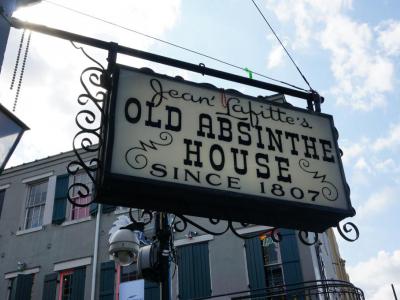
The Old Absinthe House, whose façade bears the grandeur of history, is a legendary bar on the corner of Bourbon and Bienville Streets in the French Quarter of New Orleans. Erected in 1807, the building originally housed a family-owned importing firm but transformed over the years into one of the city's most iconic drinking establishments.
Famed for introducing absinthe to America, the bar became a haven where the enchanting, anise-flavored spirit was served in the traditional Parisian style. It was Oscar Wilde who famously remarked about the effects of absinthe: "After the first glass [of absinthe], you see things as you wish they were. After the second, you see things as they are not. Finally, you see things as they are, and that is the most horrible thing in the world." Once banned in the United States, absinthe is now legal, and you can enjoy this infamous libation without any restrictions.
The Old Absinthe House has withstood the test of time, enduring events such as Prohibition, when it was forced to reinvent itself to maintain operations. Today, its storied walls are lined with memorabilia, photographs, and mementos that echo the countless conversations, deals, and debates that have transpired over its storied counters.
Visitors are immediately swept up in the ambiance of the past, surrounded by the original copper-topped bar, wooden fixtures, and marble fountains once used to drip water over sugar cubes into glasses of absinthe. The House's history as a rendezvous for politicians, pirates, artists, and celebrities throughout the centuries adds a rich, eclectic layer to the patron's experience.
Famed for introducing absinthe to America, the bar became a haven where the enchanting, anise-flavored spirit was served in the traditional Parisian style. It was Oscar Wilde who famously remarked about the effects of absinthe: "After the first glass [of absinthe], you see things as you wish they were. After the second, you see things as they are not. Finally, you see things as they are, and that is the most horrible thing in the world." Once banned in the United States, absinthe is now legal, and you can enjoy this infamous libation without any restrictions.
The Old Absinthe House has withstood the test of time, enduring events such as Prohibition, when it was forced to reinvent itself to maintain operations. Today, its storied walls are lined with memorabilia, photographs, and mementos that echo the countless conversations, deals, and debates that have transpired over its storied counters.
Visitors are immediately swept up in the ambiance of the past, surrounded by the original copper-topped bar, wooden fixtures, and marble fountains once used to drip water over sugar cubes into glasses of absinthe. The House's history as a rendezvous for politicians, pirates, artists, and celebrities throughout the centuries adds a rich, eclectic layer to the patron's experience.
7) Lafitte's Blacksmith Shop Bar (must see)
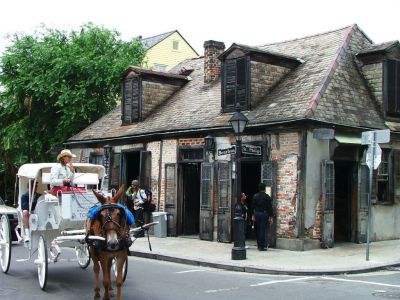
Lafitte's Blacksmith Shop Bar on Bourbon Street is one of the city's most storied landmarks, a tangible piece of history that doubles as a popular watering hole. Touted as one of the oldest surviving structures in New Orleans and reputed to be the oldest continuously operating bar in the United States, this building harks back to the early 18th century. The bar's namesake, Jean Lafitte, was a pirate and privateer who, along with his brother Pierre, purportedly used the location as a cover for their smuggling operations.
Constructed sometime between 1722 and 1732, the building is a rare example of French Colonial "briquette-entre-poteaux" architecture (brick between posts), surviving fires and battles that have reshaped the city over centuries. Its thick-walled, weather-beaten façade and dimly lit interior, with a fireplace and candlelight providing much of the illumination, offer an ambiance that seemingly transports patrons back to the era of pirates and privateers.
Frequented by locals and tourists alike, Lafitte's combines the allure of historical legend with the charm of Old New Orleans. The bar, aside from its drinks and unique atmosphere, is an informal museum of sorts, with its architecture and mystique speaking volumes of the past. It is this blending of lore and architecture, the promise of ghosts, and the glow of flickering lights that make Lafitte's a must-visit destination for anyone looking to experience the essence of the Crescent City's storied past.
Constructed sometime between 1722 and 1732, the building is a rare example of French Colonial "briquette-entre-poteaux" architecture (brick between posts), surviving fires and battles that have reshaped the city over centuries. Its thick-walled, weather-beaten façade and dimly lit interior, with a fireplace and candlelight providing much of the illumination, offer an ambiance that seemingly transports patrons back to the era of pirates and privateers.
Frequented by locals and tourists alike, Lafitte's combines the allure of historical legend with the charm of Old New Orleans. The bar, aside from its drinks and unique atmosphere, is an informal museum of sorts, with its architecture and mystique speaking volumes of the past. It is this blending of lore and architecture, the promise of ghosts, and the glow of flickering lights that make Lafitte's a must-visit destination for anyone looking to experience the essence of the Crescent City's storied past.

8) LaLaurie Mansion
If you're seeking thrills, a fan of "American Horror Story", or intrigued by dark and gruesome history, this place is a perfect fit. The only drawback is that you can't enter, but the exterior alone is enough to send shivers down your spine, whether it's day or night.
Part mansion and part nightmare, this dwelling is known as one of the most haunted locations in New Orleans. It most famous occupants were Madame LaLaurie and her husband, a doctor, both wealthy Creoles who committed unspeakable acts of cruelty against their slaves. Eventually, one desperate slave set fire to the house in a bid to escape the torment, and upon their sadistic acts being exposed, the LaLauries bribed the police and fled to New York and then France, leaving behind a trail of dead and dying former servants. When news of the abuse became widely known, a mob of local citizens attacked the residence and "demolished and destroyed everything upon which they could lay their hands". A sheriff and his officers were summoned, but by the time the mob departed, the property had sustained major damage, with "scarcely any thing remaining but the walls."
Nicolas Cage, the most eccentric actor of his generation, bought the house in 2007 for a rumored $3.4 million, having figured "it would be a good place in which to write the great American horror novel". He didn't get far with the novel and allegedly lost the house to the IRS.
Part mansion and part nightmare, this dwelling is known as one of the most haunted locations in New Orleans. It most famous occupants were Madame LaLaurie and her husband, a doctor, both wealthy Creoles who committed unspeakable acts of cruelty against their slaves. Eventually, one desperate slave set fire to the house in a bid to escape the torment, and upon their sadistic acts being exposed, the LaLauries bribed the police and fled to New York and then France, leaving behind a trail of dead and dying former servants. When news of the abuse became widely known, a mob of local citizens attacked the residence and "demolished and destroyed everything upon which they could lay their hands". A sheriff and his officers were summoned, but by the time the mob departed, the property had sustained major damage, with "scarcely any thing remaining but the walls."
Nicolas Cage, the most eccentric actor of his generation, bought the house in 2007 for a rumored $3.4 million, having figured "it would be a good place in which to write the great American horror novel". He didn't get far with the novel and allegedly lost the house to the IRS.

9) Gallier House
This mid-19th-century home, designed and owned by prominent New Orleans architect James Gallier Jr., is a fascinating glimpse into the past. Apparently, Gallier used it as an architectural testing ground for his innovative ideas before incorporating them into other people's homes. The house showcases various technological and architectural advancements for its time, offering insights into cutting-edge 19th-century design, including the luxury of indoor plumbing in a beautifully appointed bathroom. The presence of slave quarters and kitchens adds to the historical significance, but what steals the show is the master bedroom with its exquisite complete set of furniture, a rarity in today's homes (hardly anyone has ceilings that high!).
What adds depth to the tour is the insight into daily life during an era without electricity, central heating, or air-conditioning (they did somehow manage to provide a measure of airflow through the house during the hot summer months while also dealing with the stench from the street below, and the presence of insects). Visitors gain a realistic understanding of the challenges and hardships faced by both the homeowners and particularly their enslaved individuals.
Throughout the holiday season, the entire house is festively decorated for Christmas, and it also observes a distinctive tradition called "Summer Dress", wherein, in the summer months, furniture, rugs, and linens are either covered or substituted with lighter fabrics to maintain a cool and comfortable atmosphere.
Why You Should Visit:
A richly appointed house that feels very authentic: you can easily picture the family and slaves going about their daily routines. Guides are knowledgeable and keep visitors engaged with an inductive teaching approach, so you will learn a lot.
Tip:
Note that the Women's Exchange, which also manages the Hermann-Grima House, offers a discount when you visit both, so be sure to save your receipt, but remember that self-entry is not permitted, so check the tour schedules in advance.
Tour Times:
Wednesday through Monday: 10am, 11am, 1pm, 2pm, 3pm; reservations encouraged
What adds depth to the tour is the insight into daily life during an era without electricity, central heating, or air-conditioning (they did somehow manage to provide a measure of airflow through the house during the hot summer months while also dealing with the stench from the street below, and the presence of insects). Visitors gain a realistic understanding of the challenges and hardships faced by both the homeowners and particularly their enslaved individuals.
Throughout the holiday season, the entire house is festively decorated for Christmas, and it also observes a distinctive tradition called "Summer Dress", wherein, in the summer months, furniture, rugs, and linens are either covered or substituted with lighter fabrics to maintain a cool and comfortable atmosphere.
Why You Should Visit:
A richly appointed house that feels very authentic: you can easily picture the family and slaves going about their daily routines. Guides are knowledgeable and keep visitors engaged with an inductive teaching approach, so you will learn a lot.
Tip:
Note that the Women's Exchange, which also manages the Hermann-Grima House, offers a discount when you visit both, so be sure to save your receipt, but remember that self-entry is not permitted, so check the tour schedules in advance.
Tour Times:
Wednesday through Monday: 10am, 11am, 1pm, 2pm, 3pm; reservations encouraged

10) Beauregard-Keyes House and Garden
The Beauregard-Keyes House is significant and worth a tour for its Greek Revival architecture, lovely quaint garden, and for once having been the residence of Confederate General Pierre Gustave Toutant Beauregard, a prominent New Orleans native who ordered the first shots of the Civil War and remained a hero in the South long after the war's conclusion. The property had been used by Ursuline nuns from the early 1700s until the 1820s when the new house was designed, blending elements of a Creole cottage with Greek Revival characteristics, including a Palladian facade, curved twin staircases, a Tuscan portico, and a spacious dining room.
In 1945, author Frances Parkinson Keyes was searching for a place to write and reside in New Orleans when she stumbled upon this property. Over the next 25 years, she meticulously restored the historic gem to its Victorian origins and authored novels, one of which was set in the house and featured General Beauregard as a character. Another novel she wrote was based on Paul Morphy, the grandson of the original owner and one of the greatest modern chess masters. Keyes was already an avid collector, and the house showcases her extensive collection of veilleuses (teapots with cups and nightlights), the second-largest of its kind in the world. Visitors can also admire antique dolls, French sofas, rare porcelain teapots, and a wide array of fans and folk costumes on display.
Tip:
The tour concludes in a small but well-stocked gift shop (where admission fees are paid at the end). Even if you don't have time for a tour, take a moment to peer through the gates at the corner of Chartres and Ursulines streets to catch a glimpse of the beautiful walled garden, which blooms year-round and follows the same sun pattern as Jackson Square.
Guided Tours (~45min):
Monday through Saturday: 10 am to 3 pm (on the hour)
In 1945, author Frances Parkinson Keyes was searching for a place to write and reside in New Orleans when she stumbled upon this property. Over the next 25 years, she meticulously restored the historic gem to its Victorian origins and authored novels, one of which was set in the house and featured General Beauregard as a character. Another novel she wrote was based on Paul Morphy, the grandson of the original owner and one of the greatest modern chess masters. Keyes was already an avid collector, and the house showcases her extensive collection of veilleuses (teapots with cups and nightlights), the second-largest of its kind in the world. Visitors can also admire antique dolls, French sofas, rare porcelain teapots, and a wide array of fans and folk costumes on display.
Tip:
The tour concludes in a small but well-stocked gift shop (where admission fees are paid at the end). Even if you don't have time for a tour, take a moment to peer through the gates at the corner of Chartres and Ursulines streets to catch a glimpse of the beautiful walled garden, which blooms year-round and follows the same sun pattern as Jackson Square.
Guided Tours (~45min):
Monday through Saturday: 10 am to 3 pm (on the hour)
11) Old Ursuline Convent
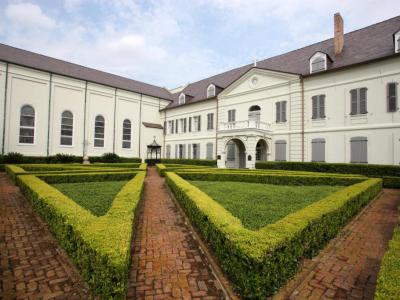
King Louis XV of France founded the Old Ursuline Convent in 1745 to provide accommodation for the Ursuline nuns who arrived in New Orleans in the late 1720s, making them the first nuns to establish a lasting presence in what is now the United States. The convent, their second home, was completed in 1753 and is believed to be the oldest French-colonial building in the Mississippi River Valley, having survived the devastating 18th-century fires that consumed much of the French Quarter.
During its early years, the convent provided shelter to a diverse array of individuals, including French orphans, injured British soldiers, exiled Acadians, and the city's impoverished population. The entire complex on Chartres Street, which encompasses the gardens, Saint Mary's Church, and various related outbuildings, is named in honor of Antoine Blanc, the first archbishop of New Orleans.
The Old Ursuline Convent is now open to the public, featuring well-designed exhibits that provide insight into the city's history as well as the convent's own historical significance. Visitors also have the opportunity to view the former bishop's chapel within the adjacent church (not typically accessible to the public) with its exquisite stained glass windows, Stations of the Cross, and statuary. Another beautiful feature is the intricately hand-carved cypress staircase.
During its early years, the convent provided shelter to a diverse array of individuals, including French orphans, injured British soldiers, exiled Acadians, and the city's impoverished population. The entire complex on Chartres Street, which encompasses the gardens, Saint Mary's Church, and various related outbuildings, is named in honor of Antoine Blanc, the first archbishop of New Orleans.
The Old Ursuline Convent is now open to the public, featuring well-designed exhibits that provide insight into the city's history as well as the convent's own historical significance. Visitors also have the opportunity to view the former bishop's chapel within the adjacent church (not typically accessible to the public) with its exquisite stained glass windows, Stations of the Cross, and statuary. Another beautiful feature is the intricately hand-carved cypress staircase.

12) 1850 House
The 1850 House is a meticulously preserved townhouse, complete with a courtyard that provides rare public access to the interior of the Pontalba Buildings beyond their storefronts. These buildings were commissioned by the wealthy Baroness de Pontalba in 1849, during a period when New Orleans was one of the largest cities in the United States, fueled by the prosperity of its thriving port.
Inspired by the imposing Parisian architecture the Baroness favored, the distinctive row houses were intended to serve as both elegant residences and fine retail establishments. Each building contained shops on the ground floors and sixteen separate apartments on the upper floors. The latter were considered the pinnacle of style among the prosperous middle class, particularly for their ornate iron balconies, admired as much today as they were in antebellum times.
The three-story residence, now run by the Louisiana State Museum, provides a glimpse into the life of a well-to-do family in the 1850s; a time considered the height of Southern prosperity. Faithfully furnished with domestic items, decorative arts, and innovations of the day (including walk-in closets), the interior displays several artworks and furniture inspired by Rococo, Gothic, and Classical styles.
The 1850 House does not depict a specific family as its residents were transient tenants, typically staying for only a few years. Instead, it offers a glimpse into the affluence, preferences, and daily life of mid-nineteenth-century life in New Orleans.
Tip:
Take time to visit the downstairs store run by the Friends of the Cabildo, where you can find handmade art, jewelry, pottery, and crafts by local artists, as well as an array of books on every local subject – from New Orleans history to food and even voodoo.
Inspired by the imposing Parisian architecture the Baroness favored, the distinctive row houses were intended to serve as both elegant residences and fine retail establishments. Each building contained shops on the ground floors and sixteen separate apartments on the upper floors. The latter were considered the pinnacle of style among the prosperous middle class, particularly for their ornate iron balconies, admired as much today as they were in antebellum times.
The three-story residence, now run by the Louisiana State Museum, provides a glimpse into the life of a well-to-do family in the 1850s; a time considered the height of Southern prosperity. Faithfully furnished with domestic items, decorative arts, and innovations of the day (including walk-in closets), the interior displays several artworks and furniture inspired by Rococo, Gothic, and Classical styles.
The 1850 House does not depict a specific family as its residents were transient tenants, typically staying for only a few years. Instead, it offers a glimpse into the affluence, preferences, and daily life of mid-nineteenth-century life in New Orleans.
Tip:
Take time to visit the downstairs store run by the Friends of the Cabildo, where you can find handmade art, jewelry, pottery, and crafts by local artists, as well as an array of books on every local subject – from New Orleans history to food and even voodoo.
Walking Tours in New Orleans, Louisiana

Create Your Own Walk in New Orleans
Creating your own self-guided walk in New Orleans is easy and fun. Choose the city attractions that you want to see and a walk route map will be created just for you. You can even set your hotel as the start point of the walk.

Voodoo Tour
Voodoo is an ancient ritualistic practice brought by enslaved West Africans onto the American soil upon their arrival in the 18th century. This form of religion was most prominent in New Orleans from the 1820s through the 1860s, when it was introduced by the “Voodoo Queens”. Of these, Marie Laveau became more prominent as she overthrew other queens to become the sole oracle.
Your best... view more
Tour Duration: 2 Hour(s)
Travel Distance: 2.6 Km or 1.6 Miles
Your best... view more
Tour Duration: 2 Hour(s)
Travel Distance: 2.6 Km or 1.6 Miles

French Quarter Walking Tour
The French Quarter, also known as the Old Square, is New Orleans' oldest and most popular neighborhood. Founded in 1718, it perfectly combines the tempting, noisy and nutty nightlife of Bourbon Street with important historical landmarks, art galleries, sophisticated cafés, and some of the city's oldest churches – all within walking distance, close to Mississippi River.
On this... view more
Tour Duration: 2 Hour(s)
Travel Distance: 3.4 Km or 2.1 Miles
On this... view more
Tour Duration: 2 Hour(s)
Travel Distance: 3.4 Km or 2.1 Miles

African American Heritage Walking Tour
For over 300 years, the African-American community has played an intrinsic role in creating authentic New Orleans that everyone loves today. The bedrock of the city's life is built on the African-American experience, a heritage both proud and tragic, yet strong enough to have preserved throughout centuries the many aspects of African culture, influencing everything from religion to vibrant... view more
Tour Duration: 2 Hour(s)
Travel Distance: 3.6 Km or 2.2 Miles
Tour Duration: 2 Hour(s)
Travel Distance: 3.6 Km or 2.2 Miles
Garden District Walking Tour
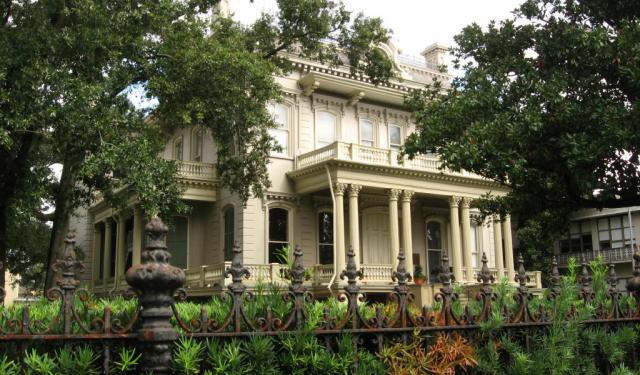
It may come as a surprise, but New Orleans’ Garden District is known for its architecture more than for its gardens. The city’s elite residential neighborhood since the 19th century, when wealthy newcomers built opulent structures, it is considered one of the best-preserved collections of historic mansions in the South, and certainly one of the most picturesque. You can see why this is the... view more
Tour Duration: 1 Hour(s)
Travel Distance: 1.9 Km or 1.2 Miles
Tour Duration: 1 Hour(s)
Travel Distance: 1.9 Km or 1.2 Miles
The Most Popular Cities
/ view all