

Audio Guide: Loop District Architecture Walking Tour (Self Guided), Chicago
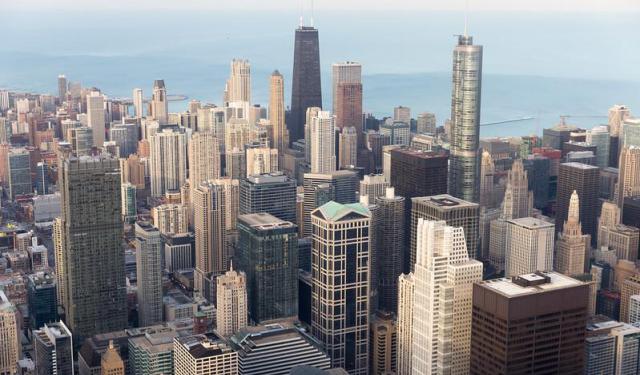
The Chicago Loop District-essentially the city’s historic downtown-has long been a stage for architectural innovation and an open-air museum of American architecture.
The construction boom started after the Great Chicago Fire of 1871, which destroyed much of the central business district, gave architects a blank canvas to rebuild the city from the ground up. What followed was a surge of creativity and experimentation that helped shape modern Chicago as we know it, from the old-school “stone and brick” into futuristic “steel and glass.”
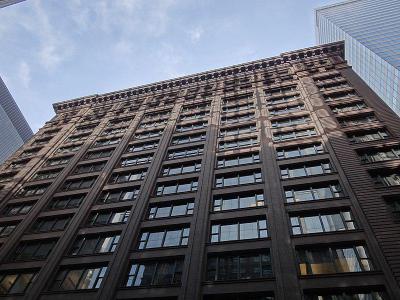
One of the most influential styles to emerge from this period was the Chicago School, which emphasized steel-frame construction, large plate-glass windows, and minimal ornamentation-an early version of the modern skyscraper. Architects like Louis Sullivan, Dankmar Adler, and Daniel Burnham helped define this movement, focusing on function, structure, and height. Sullivan’s mantra, “form follows function,” became a guiding principle for generations of architects to come.
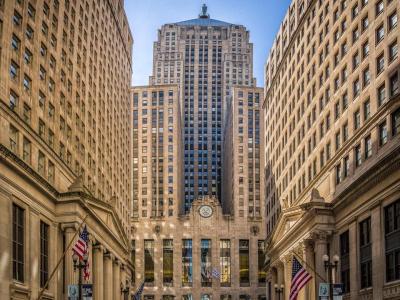
But the Loop doesn’t do just one style. It’s an eclectic architectural buffet, with Beaux-Arts grandeur seen in the Civic Opera House, the dark green and gold Carbide & Carbon Building screaming Art Deco glamour, the International Style clarity in Mies van der Rohe’s One Illinois Center, and bold Postmodernism in structures like the James R. Thompson Center.
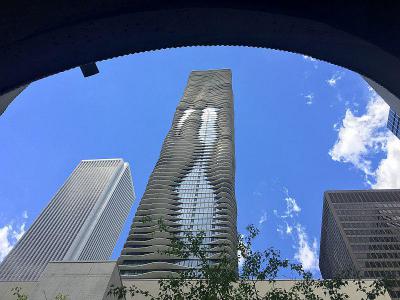
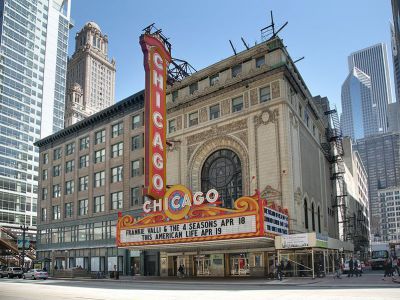
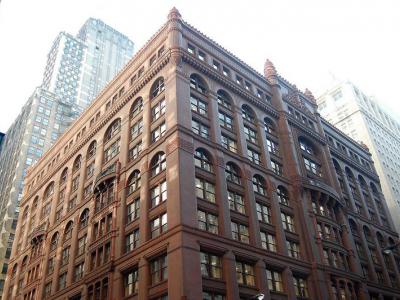
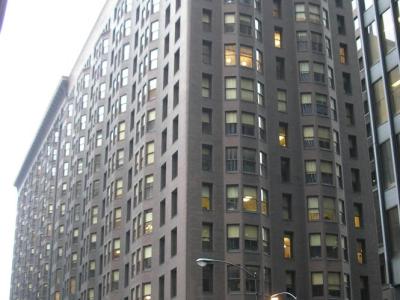
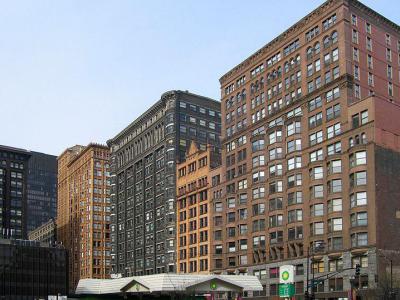
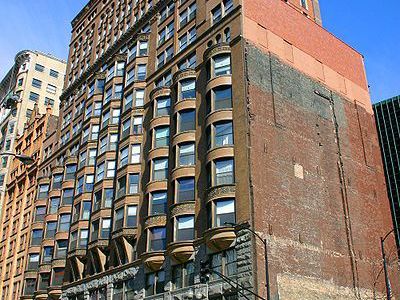
The Loop is also home to some of the country’s earliest and most iconic skyscrapers, including the Rookery and the Monadnock Building, each a case study in the transition from masonry to steel construction. There's also Aqua, a rippling skyscraper with balconies looking like water waves, designed by Jeanne Gang, one of the most famous women in contemporary architecture. Also, the twin towers of Marina City-those corncob-like structures-are instantly recognizable symbols of the 1960s experimental design. Meanwhile, the bright marquee of the Chicago Theatre adds some old Hollywood sparkle to the streets.
Today, the Loop is defined by this architectural layering-historic façades rubbing shoulders with shimmering glass high-risers. Rather than one unifying style, it’s Chicago’s willingness to mix eras, materials, and philosophies that sets the district apart. If there’s anything that defines the city, it’s not a look-it’s an attitude: bold, experimental, and always looking up. However, if you ever set foot in this part of Chicago, don't just look up-walk through, explore, and feel the timeline of architecture unfold in every block of the Loop.
The construction boom started after the Great Chicago Fire of 1871, which destroyed much of the central business district, gave architects a blank canvas to rebuild the city from the ground up. What followed was a surge of creativity and experimentation that helped shape modern Chicago as we know it, from the old-school “stone and brick” into futuristic “steel and glass.”
One of the most influential styles to emerge from this period was the Chicago School, which emphasized steel-frame construction, large plate-glass windows, and minimal ornamentation-an early version of the modern skyscraper. Architects like Louis Sullivan, Dankmar Adler, and Daniel Burnham helped define this movement, focusing on function, structure, and height. Sullivan’s mantra, “form follows function,” became a guiding principle for generations of architects to come.
But the Loop doesn’t do just one style. It’s an eclectic architectural buffet, with Beaux-Arts grandeur seen in the Civic Opera House, the dark green and gold Carbide & Carbon Building screaming Art Deco glamour, the International Style clarity in Mies van der Rohe’s One Illinois Center, and bold Postmodernism in structures like the James R. Thompson Center.
The Loop is also home to some of the country’s earliest and most iconic skyscrapers, including the Rookery and the Monadnock Building, each a case study in the transition from masonry to steel construction. There's also Aqua, a rippling skyscraper with balconies looking like water waves, designed by Jeanne Gang, one of the most famous women in contemporary architecture. Also, the twin towers of Marina City-those corncob-like structures-are instantly recognizable symbols of the 1960s experimental design. Meanwhile, the bright marquee of the Chicago Theatre adds some old Hollywood sparkle to the streets.
Today, the Loop is defined by this architectural layering-historic façades rubbing shoulders with shimmering glass high-risers. Rather than one unifying style, it’s Chicago’s willingness to mix eras, materials, and philosophies that sets the district apart. If there’s anything that defines the city, it’s not a look-it’s an attitude: bold, experimental, and always looking up. However, if you ever set foot in this part of Chicago, don't just look up-walk through, explore, and feel the timeline of architecture unfold in every block of the Loop.
How it works: Download the app "GPSmyCity: Walks in 1K+ Cities" from Apple App Store or Google Play Store to your mobile phone or tablet. The app turns your mobile device into a personal tour guide and its built-in GPS navigation functions guide you from one tour stop to next. The app works offline, so no data plan is needed when traveling abroad.
Download The GPSmyCity App



Loop District Architecture Walking Tour Map
Guide Name: Loop District Architecture Walking Tour
Guide Location: USA » Chicago (See other walking tours in Chicago)
Guide Type: Self-guided Walking Tour (Sightseeing)
Tour Duration: 3 Hour(s)
Travel Distance: 4.7 Km or 2.9 Miles
Guide Location: USA » Chicago (See other walking tours in Chicago)
Guide Type: Self-guided Walking Tour (Sightseeing)
Tour Duration: 3 Hour(s)
Travel Distance: 4.7 Km or 2.9 Miles
Sights Featured in This Walk







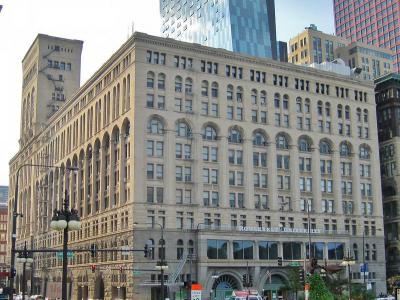
Walking Tours in Chicago, Illinois

Create Your Own Walk in Chicago
Creating your own self-guided walk in Chicago is easy and fun. Choose the city attractions that you want to see and a walk route map will be created just for you. You can even set your hotel as the start point of the walk.
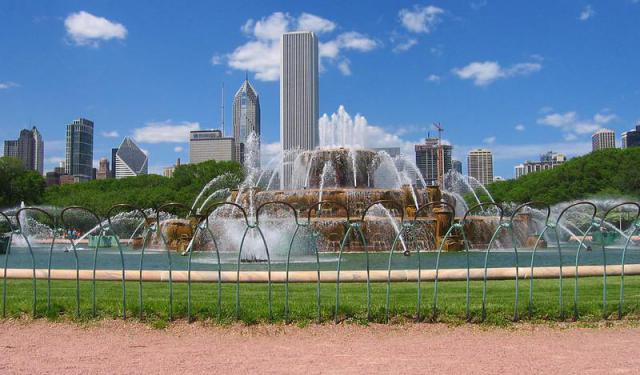
Millennium and Grant Parks Walking Tour
If Chicago had a living room, it would be Grant Park - and if it had a shiny new media room, that would definitely be Millennium Park. These two sprawling green spaces hug the lakeshore like the city’s favorite blanket, offering locals and tourists alike a perfect blend of nature, art, and architecture with a side of skyline.
Let’s start with the elder of the two - Grant Park, established... view more
Tour Duration: 2 Hour(s)
Travel Distance: 2.7 Km or 1.7 Miles
Let’s start with the elder of the two - Grant Park, established... view more
Tour Duration: 2 Hour(s)
Travel Distance: 2.7 Km or 1.7 Miles
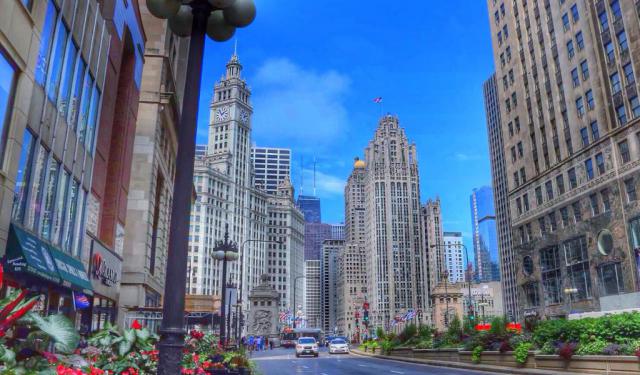
The Magnificent Mile Walking Tour
The stretch of Michigan Avenue from the Chicago River to Lake Shore Drive, otherwise known as the Magnificent Mile, is regarded as one of the world’s great avenues – or Chicago’s version of Fifth Avenue. Take this self-guided walk to explore its whole stretch and surrounding area, featuring a wide selection of amazing stores/malls, world-known museums, restaurants and spectacular... view more
Tour Duration: 3 Hour(s)
Travel Distance: 4.0 Km or 2.5 Miles
Tour Duration: 3 Hour(s)
Travel Distance: 4.0 Km or 2.5 Miles
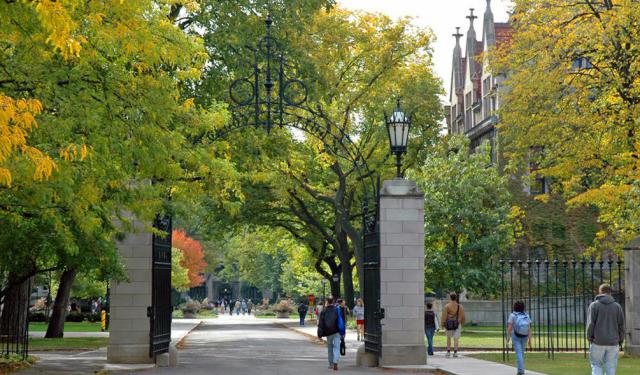
University of Chicago Walking Tour
Founded in 1890, the University of Chicago is among the world’s most prestigious educational institutions. As of 2020, the University’s students, faculty and staff have included 100 Nobel laureates, giving it the fourth-most affiliated Nobel laureates of any university.
Set in the heart of Chicago’s famous eclectic neighborhood, Hyde Park, the campus is worth a visit as it offers a... view more
Tour Duration: 2 Hour(s)
Travel Distance: 2.5 Km or 1.6 Miles
Set in the heart of Chicago’s famous eclectic neighborhood, Hyde Park, the campus is worth a visit as it offers a... view more
Tour Duration: 2 Hour(s)
Travel Distance: 2.5 Km or 1.6 Miles
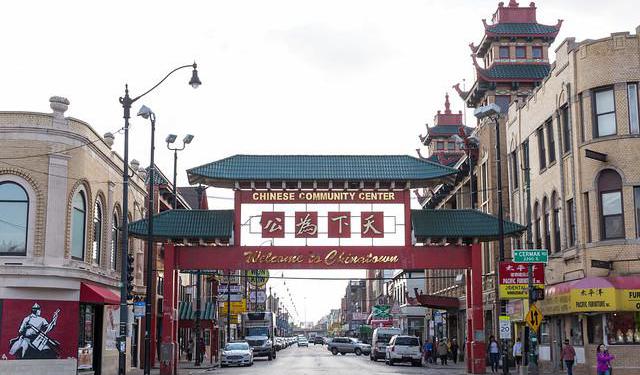
Chicago Chinatown Walking Tour
Tucked away just south of the Loop, the Chinatown of Chicago was established in 1912 and is considered one of the best examples of American Chinatown. While it may be one of Chicago’s smallest neighborhoods geographically, it is big on character, colors, sights, sounds, and flavors. Here, you’ll find a wide range of unique boutiques, specialty shops, religious sights, authentic Chinese... view more
Tour Duration: 1 Hour(s)
Travel Distance: 1.7 Km or 1.1 Miles
Tour Duration: 1 Hour(s)
Travel Distance: 1.7 Km or 1.1 Miles
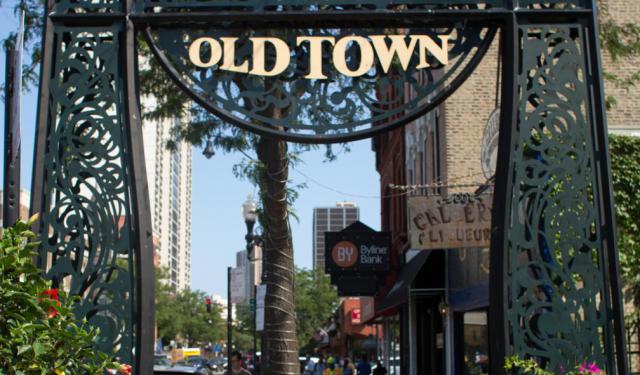
Chicago Old Town Walking Tour
Settled in 1850 by German immigrants, Chicago’s Old Town neighborhood is a popular destination for locals and visitors who cater to the entertainment venues, restaurants, pubs, coffee shops and boutiques – all of which have turned an area once referred to as the “Cabbage Patch” into an attraction that rivals Navy Pier, Wrigley Field and the Magnificent Mile.
Start your Old Town walking... view more
Tour Duration: 2 Hour(s)
Travel Distance: 2.6 Km or 1.6 Miles
Start your Old Town walking... view more
Tour Duration: 2 Hour(s)
Travel Distance: 2.6 Km or 1.6 Miles
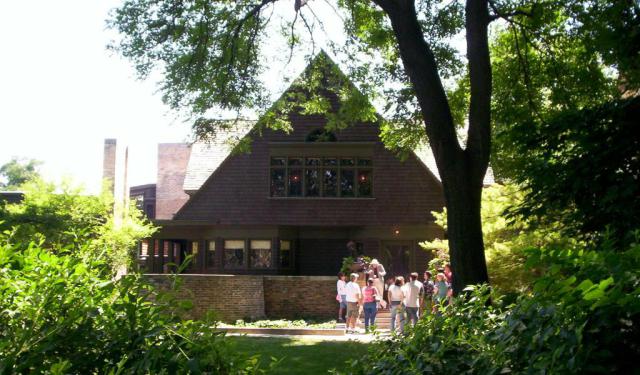
Frank Lloyd Wright Architecture Tour in Oak Park
Oak Park, located in Cook County, Illinois, just outside Chicago, made history in 1889 when Frank Lloyd Wright, one of America's most renowned architects, and his wife settled there, leaving a profound impact on the area's appearance. This village boasts the highest concentration of Wright-crafted buildings in the world - over a dozen! - making it a pivotal destination for enthusiasts to... view more
Tour Duration: 2 Hour(s)
Travel Distance: 3.2 Km or 2 Miles
Tour Duration: 2 Hour(s)
Travel Distance: 3.2 Km or 2 Miles
Useful Travel Guides for Planning Your Trip
Chicago Souvenirs: 15 Distinct Local Products to Bring Home
One of the most fascinating cities in the U.S., if not the whole world, Chicago has no shortage of things closely associated with it, often due to their direct origin (blues, gangstership, etc.), so one might literally be spoiled for choice as to what to choose as a "piece" of Chicago to...
The Most Popular Cities
/ view all