

Audio Guide: Historical Buildings Walking Tour (Self Guided), Kuala Lumpur
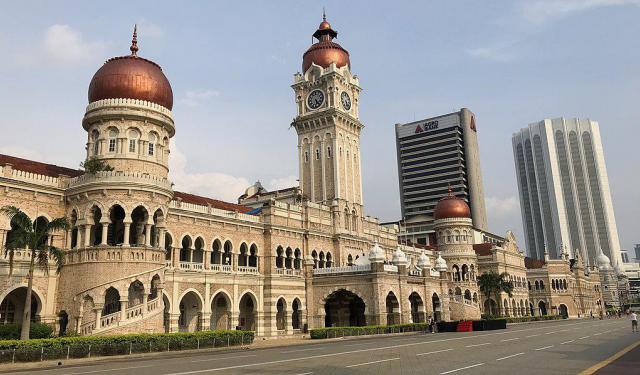
A city where even the buildings speak more than one language: look closely, and you’ll see it. Domes shaped by Islamic tradition, arches inspired by Mughal design, and symmetry rooted in European planning all stand side by side.
Kuala Lumpur’s historic buildings reflect the layered story of a city that grew from a rough tin-mining settlement into Malaysia’s capital. Founded in the mid-19th century at the meeting point of the Klang and Gombak rivers, the early town was shaped by Chinese miners, Malay traders, and later British colonial administrators. Frequent fires and floods destroyed many of the original wooden structures, prompting a shift toward brick and stone construction by the 1880s, particularly under British guidance.
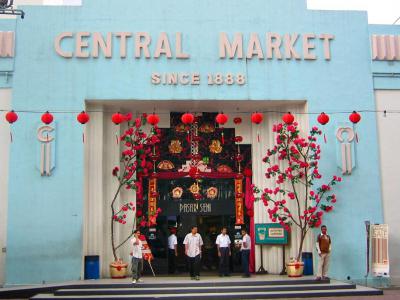
During the colonial period, architecture became a visual statement of authority and identity. The British introduced the Indo-Saracenic style, blending Mughal, Islamic, and European elements, which can still be seen in landmarks such as Jamek Mosque. Commercial and cultural life also developed alongside these administrative landmarks. Central Market, originally built in 1888 as a wet market, became a focal point for trade and daily life.
Nearby, buildings such as the Textile Museum, housed in a former colonial administrative structure, highlight the adaptation of historic spaces into cultural institutions. The Panggung Bandaraya DBKL Theatre, completed in the early 20th century, reflects a shift toward civic and artistic functions, hosting performances while preserving its neoclassical façade.
Education and religion also played key roles in shaping the cityscape. Saint John's Institution, founded in 1904, stands as one of the city’s oldest schools, its hilltop location and colonial-era architecture reinforcing its prominence. Today, these historical structures are not isolated relics but part of a living urban environment. Many have been restored and repurposed, allowing visitors to experience the city’s past while engaging with its present.
So as you continue, listen closely, not with your ears, but with your eyes. The domes, arches, and façades still carry the voices that built this city. And in Kuala Lumpur, they’re all still speaking at once.
Kuala Lumpur’s historic buildings reflect the layered story of a city that grew from a rough tin-mining settlement into Malaysia’s capital. Founded in the mid-19th century at the meeting point of the Klang and Gombak rivers, the early town was shaped by Chinese miners, Malay traders, and later British colonial administrators. Frequent fires and floods destroyed many of the original wooden structures, prompting a shift toward brick and stone construction by the 1880s, particularly under British guidance.
During the colonial period, architecture became a visual statement of authority and identity. The British introduced the Indo-Saracenic style, blending Mughal, Islamic, and European elements, which can still be seen in landmarks such as Jamek Mosque. Commercial and cultural life also developed alongside these administrative landmarks. Central Market, originally built in 1888 as a wet market, became a focal point for trade and daily life.
Nearby, buildings such as the Textile Museum, housed in a former colonial administrative structure, highlight the adaptation of historic spaces into cultural institutions. The Panggung Bandaraya DBKL Theatre, completed in the early 20th century, reflects a shift toward civic and artistic functions, hosting performances while preserving its neoclassical façade.
Education and religion also played key roles in shaping the cityscape. Saint John's Institution, founded in 1904, stands as one of the city’s oldest schools, its hilltop location and colonial-era architecture reinforcing its prominence. Today, these historical structures are not isolated relics but part of a living urban environment. Many have been restored and repurposed, allowing visitors to experience the city’s past while engaging with its present.
So as you continue, listen closely, not with your ears, but with your eyes. The domes, arches, and façades still carry the voices that built this city. And in Kuala Lumpur, they’re all still speaking at once.
How it works: Download the app "GPSmyCity: Walks in 1K+ Cities" from Apple App Store or Google Play Store to your mobile phone or tablet. The app turns your mobile device into a personal tour guide. For US$14.99 per year (with a 3-day free trial), you get access to walking tours in 630+ cities worldwide for an entire year. In comparison, a guided tour often costs dozens of dollars per person for a single tour. The app works offline, so no data plan is needed when traveling abroad.
Download The GPSmyCity App



Historical Buildings Walking Tour Map
Guide Name: Historical Buildings Walking Tour
Guide Location: Malaysia » Kuala Lumpur (See other walking tours in Kuala Lumpur)
Guide Type: Self-guided Walking Tour (Sightseeing)
Tour Duration: 2 Hour(s)
Travel Distance: 2.6 Km or 1.6 Miles
Guide Location: Malaysia » Kuala Lumpur (See other walking tours in Kuala Lumpur)
Guide Type: Self-guided Walking Tour (Sightseeing)
Tour Duration: 2 Hour(s)
Travel Distance: 2.6 Km or 1.6 Miles
Sights Featured in This Walk
1) Central Market (must see)




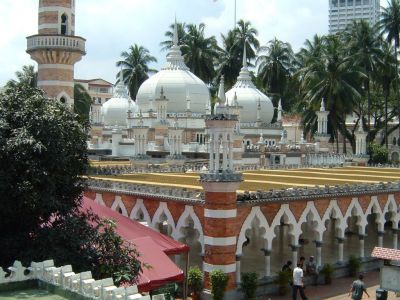

Walking Tours in Kuala Lumpur, Malaysia

Create Your Own Walk in Kuala Lumpur
Creating your own self-guided walk in Kuala Lumpur is easy and fun. Choose the city attractions that you want to see and a walk route map will be created just for you. You can even set your hotel as the start point of the walk.
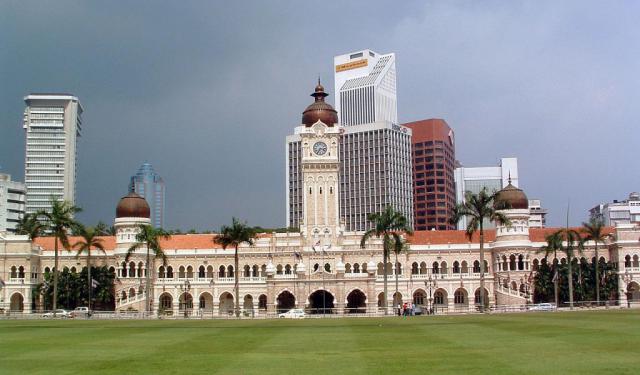
Kuala Lumpur Introduction Walking Tour
Kuala Lumpur, the capital of Malaysia, began as a modest frontier settlement shaped by geography and opportunity. Its name comes from the Malay words kuala and lumpur, together translating to “muddy confluence”, a reference to its location at the meeting point of the Klang and Gombak rivers.
The city’s origins date to the 1850s, when Chinese miners arrived in the area to exploit rich tin... view more
Tour Duration: 2 Hour(s)
Travel Distance: 4.0 Km or 2.5 Miles
The city’s origins date to the 1850s, when Chinese miners arrived in the area to exploit rich tin... view more
Tour Duration: 2 Hour(s)
Travel Distance: 4.0 Km or 2.5 Miles
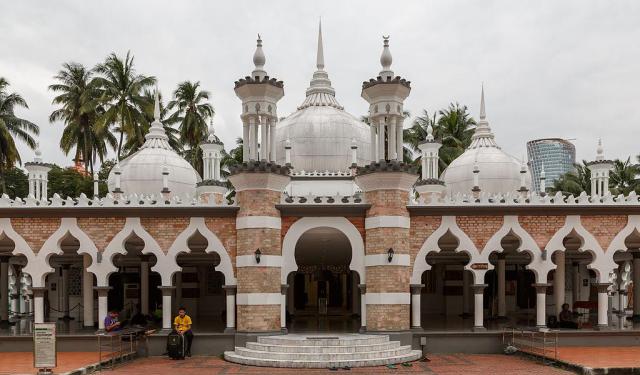
Historical Religious Buildings
Just as the whole of Malaysia, Kuala Lumpur is a culturally diverse and tolerant city where all of the world’s major religions coexist in perfect harmony. Back in the 1800s-early 1900s, along with the large influx of laborers and merchants of different backgrounds, brought in by the British colonization, came the unique sets of faiths and religious systems: Buddhism, Taoism, Hinduism,... view more
Tour Duration: 1 Hour(s)
Travel Distance: 2.0 Km or 1.2 Miles
Tour Duration: 1 Hour(s)
Travel Distance: 2.0 Km or 1.2 Miles
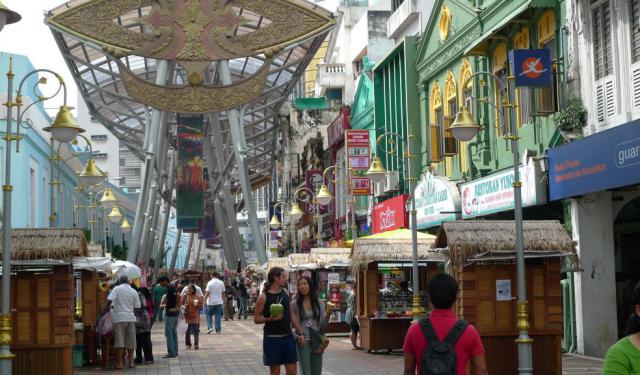
Kuala Lumpur Shopping Tour
Shopping is one of the top activities for those visiting Kuala Lumpur. In this vibrant city there’s something for every taste and budget, from high-end boutiques offering designer labels to the lively street markets drawing crowds with artsy finds and cheap reproductions, where cheap doesn’t necessarily mean a less enjoyable experience.
With a shopping scene as comprehensive as that of... view more
Tour Duration: 2 Hour(s)
Travel Distance: 3.6 Km or 2.2 Miles
With a shopping scene as comprehensive as that of... view more
Tour Duration: 2 Hour(s)
Travel Distance: 3.6 Km or 2.2 Miles
Useful Travel Guides for Planning Your Trip
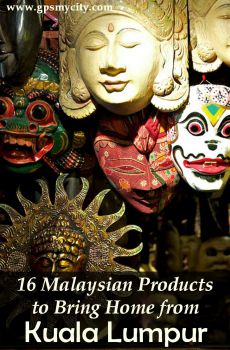
16 Malaysian Things to Buy as Souvenirs in Kuala Lumpur
"Malaysia, Truly Asia" is what you hear en route to Malaysia. Indeed, there's practically every bit of Asia to be found here, as the country's population is made up primarily of three groups: Malay, Chinese and Indians. Quite expectedly, the diversity of Malaysian handcrafts is...
The Most Popular Cities
/ view all