

Home City Search Auckland Auckland City Orientation Walking Tour
Auckland City Orientation Walking Tour, Auckland
Download iPhone Walking Tours Application for Auckland
iPhone Walking Tours Application for Auckland
Popular Cities in Australia and Oceania
Bookmark and Share
Auckland City Orientation Walking Tour
Guide Location: New Zealand » Auckland
Guide Type: Self-guided city tour
# of Attractions: 8
Tour Duration: 2 hour(s)
Transportation Mode: by foot
Travel Distance: 3.0 km
Image Courtesy of Wikimedia and Joerg Mueller
Author: leticia
Auckland is an interesting city which attracts a lot of tourists because of its fine landmarks and attractions. Its beautiful landscape is dominated by volcanic hills, green parks and gardens. This "city of sail" has some of the best beaches and water sports venues in the world. Check out the attractions in Auckland in the next self-guided tour.
Tour Stops and Attractions
New Zealand National Maritime Museum
1) New Zealand National Maritime Museum
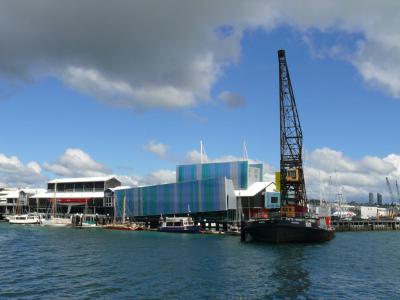
The New Zealand National Maritime Museum in Auckland is the largest of its kind in the country. The seas surrounding the archipelago have always held an important place in the hearts and minds of New Zealanders from the times of the earliest settlers. Located on Hobson Wharf, the museum charts the nation’s seafaring history from early Polynesian explorers to modern maritime moments such as involvement in the America’s Cup. There is a wide range of permanent and temporary exhibitions that are open to the public as well as theatrical performances of the Polynesian settlement of the New Zealand archipelago.

Permanent installations at the museum include: Landfalls, which explores the different explorations, settlements and trading in New Zealand from early to modern days; New Beginnings, where you learn about European migration during the 19th and 20th centuries; Blue Water Black Magic, which is a tribute to one of New Zealand’s modern heroes of the sea, Peter Blake, and Kiwis and the Coast where you will learn all about New Zealand’s love affair with its coastal regions. There are several ships at the museum to step aboard and explore, including the 19th century steam engine Puke and a floating steam crane from the early 20th century.
Image Courtesy of Wikimedia and Ingolfson
Viaduct Harbour
2) Viaduct Harbour
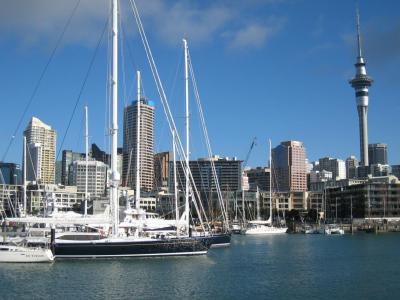
The Viaduct Harbour, also known as the Viaduct Basin, is a part of Auckland’s waterfront that was built in the early 20th century. In those days, as sea liners were getting bigger, they were having trouble entering the docks. In order to avoid having to build new wharves or dredge the harbour, the viaduct was built as a way of anchoring the ships out in the deeper waters and then ferrying the goods on smaller ships to the docks. The shipping companies didn’t cooperate and the scheme was a resounding failure. Times have changed and the formerly downtrodden area is now in demand real estate space.

Redevelopment of the Viaduct Harbour area has led to construction of waterfront view apartment buildings alongside a new dining precinct in the city. There is a prestigious marina in the viaduct that has space for smaller sailing vessels as well as plenty of super yachts. Throughout the year the marina is a focal point for many high class regattas and even Auckland fashion week events. Visiting the Viaduct Harbour is a wonderful opportunity to see the grand New Zealand maritime tradition in full swing in its modern incarnation, as well as to enjoy some exclusive dining and shopping.
Image Courtesy of Wikimedia and Uploader.
Sky Tower
3) Sky Tower
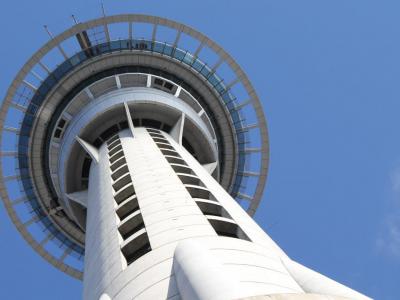
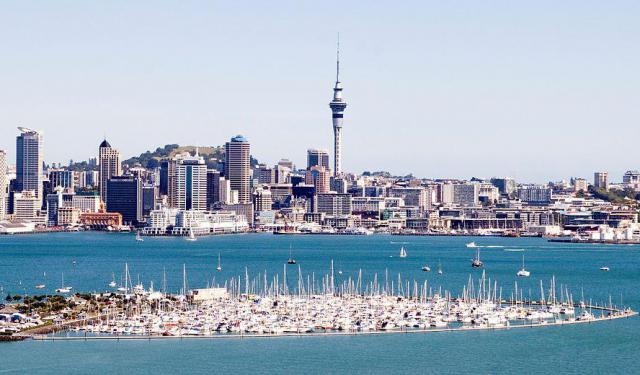
The Auckland Sky Tower provides some of the best views over the city and further afield. The structure extends 328 metres up into the air, making it the tallest construction in New Zealand. From your place at the top you can look over the city as well as out into the countryside for up to 80 km. Just getting to the top is an experience in itself as you zoom upwards in a glass-panelled lift. There are three different viewing platforms offering a bird’s eye view of Auckland. The Skywalk offers you the chance to take an adrenaline filled stroll around a 1.2 metre wide platform at 192 metres above the ground – you are safely strapped into the overhead safety lines, but it offers extreme exhilaration.

True adrenaline junkies will leap at the chance to try out a base jump from one of the tallest buildings in the Southern Hemisphere. The wire connected base jump is probably the closest experience to being a bird that there is as you descend 192 metres to the ground below. New Zealand has a reputation for being the world capital of extreme sports and your heart racing experience can begin in Auckland.
Image Courtesy of Wikimedia and Miguel A. Monjas
Albert Park
4) Albert Park
Albert Park is one of the many beautiful parks that have been set out in Auckland. The tranquil outdoors space is a labyrinth of walking paths leading up to well tended garden beds and memorials or public art works. The park was built upon the site of the Albert Barracks in the 1880s, but before European settlement the park had been where a Maori settlement lay. Around the park there are many interesting sites including Albert Park House and the Auckland Art Gallery. One of the most popular features of the park is the Victorian fountain, which is one of the oldest fixtures.

There is also a large statue of Queen Victoria, which was made to celebrate the monarch’s 60th jubilee in 1899. There are war memorials including one for the troops who fought in the Boer War of the late 19th century. There is also a floral clock, which was donated to celebrate Queen Elizabeth II’s visit to the country in 1953. Underneath the ground, the earth is hollowed out like Swiss cheese from the many intersecting tunnels that were built by US troops during World War II – these are now boarded up and cannot be entered. Albert Park is a great place to wander on a fine Auckland day to find relaxation as well as see some of the park’s outdoor features.
Image Courtesy of Wikimedia and Vitz-RS
Civic Theatre
5) Civic Theatre
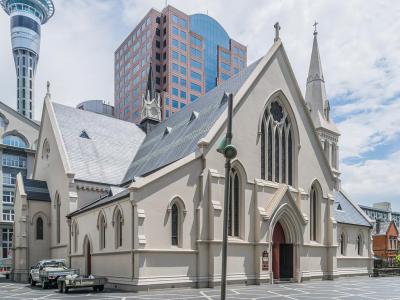
The Civic Theatre is one of Auckland’s best loved cultural landmarks. Originally built for the new talking movies to be played for captivated audiences, it opened in 1929 and was the first purpose built movie palace in New Zealand. The Rococo style architecture and interior decoration expresses the exuberance of the Jazz Age. It is packed to the rafters with plaster motifs of Indian and Asian inspiration and in the foyer area you will find little Buddhas underneath an impressive domed ceiling. Enter the main auditorium space and there is a blue twilight sky with minarets amid fluffy clouds and sparkling stars.

During World War II the theatre enjoyed a renaissance as a cabaret where risqué performers, such as Freda Stark, would wow the crowds. Down through the decades of the 20th century the theatre fell into disrepair and was threatened with condemnation. Thankfully it was lovingly restored and re-opened in 1999 for use during cultural events. While the renovations, were underway the original features of the décor were discovered, such as decorative tiles depicting flamingoes and elephants. Today many touring local and international musical acts take to the stage at the Civic Theatre and continue the vibrant story of the city’s most ornate building.
Image Courtesy of Wikimedia and Ingolfson
Town Hall
6) Town Hall
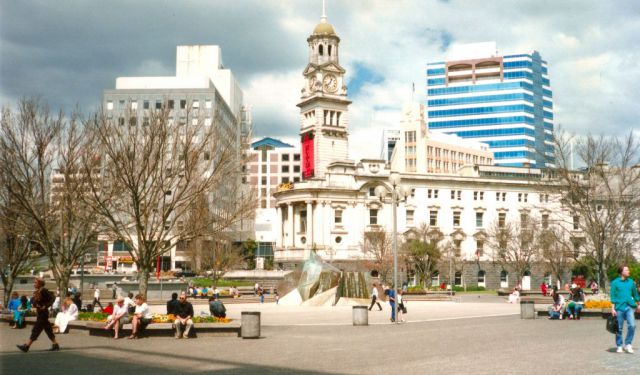
The Auckland Town Hall is one of the city’s best loved architectural masterpieces having served Auckland and its residents since it was inaugurated in 1911. The building was designed in an unusual layout in order to fit onto the wedge shaped land that had been put aside for the construction of a town hall. The neo-Baroque building is a five storey building that is constructed out of Omaru limestone and it was totally restored between 1994 and 1997 to ensure that the building continued to best serve the needs of the local population. During the restoration process the original stained glass windows and proscenium arch of the Concert Chamber were discovered and restored to their correct place.

The result of the renovations was a building that has stayed true to its original layout and design – with its kauri floors, ornate plasterwork, delicate stained windows and pressed metal ceiling. At the same time it is now able to offer world class concert halls and performance spaces. The Great Hall is able to seat around 1500 people on three levels and the Concert Chamber has seating for around 430 people on two levels. The pipe organ in the Town Hall is the largest musical instrument in the country.
Image Courtesy of Wikimedia and Ingolfson
Aotea Centre
7) Aotea Centre
The Aotea Centre is Auckland’s chief performance space for music, dance and theatre events. In fact, it is the largest cultural centre in New Zealand. The centre was opened in 1990 with a gala performance by one of New Zealand’s most famous performers, Dame Kiri Te Kanawa. It features hi-tech theatrical and architectural design to ensure a world class cultural experience whenever you visit. Within the centre there is the ASB Auditorium, which seats more than 2200 people; the Herald Theatre and a range of bars and meeting spaces.

The centre is built to complement Aotea Square, where it stands, and to create a cultural precinct along the square to City Hall nearby. The acclaimed design of the Aotea Centre was made by local architect Ewen Wainscott in 1974, but it took until the 1980s to get the funding underway to begin construction. Even if you are not visiting the centre to watch a scheduled performance, wandering through is a great experience in order to take in much of the art works that were commissioned by the centre in 1988. Past performers at the Aotea Centre include: Celine Dion, Shirley Bassey, Michael Buble and Alicia Keys.
Image Courtesy of Wikimedia and Uploader.
Myers Park
8) Myers Park
Myers Park is a large green space right in the centre of Auckland that was established in 1915 to serve as a thoroughfare connecting the Karangahape Road area and the CBD. There are steep grass-covered hills and slopes where you will also find a fascinating array of exotic flora growing alongside native New Zealand trees. Prior to being transformed into the stunning green, natural space that you see today, it was a large gully and for a time led down an open sewer. In fact, the area around today’s park was a dump and shanty town until a cash gift of £9000 was given by former Auckland mayor Arthur Myers for the purchase of the land.

Money was also pledged by Myers during the opening of the park in February 1915 to open a kindergarten in the park for the predominantly working class that lived around it. Eight months later the kindergarten opened and was later followed by a YWCA providing accommodation for young women working in the CBD. The kindergarten and a children’s playground are still operating today. Within the Myers Park there is also the historically significant caretakers building, over a century old and built from rare kauri.
Image Courtesy of Wikimedia and Ingolfson
Attractions Map
Visitor's Comments (0)
Visitor's Gallery (0)