

Home City Search Auckland Auckland Landmarks Walking Tour
Auckland Landmarks Walking Tour, Auckland
Download iPhone Walking Tours Application for Auckland
iPhone Walking Tours Application for Auckland
Popular Cities in Australia and Oceania
Bookmark and Share
Auckland Landmarks Walking Tour
Guide Location: New Zealand » Auckland
Guide Type: Self-guided city tour
# of Attractions: 6
Tour Duration: 2 hour(s)
Transportation Mode: by foot
Travel Distance: 4.5 km
Image Courtesy of Wikimedia and Lynda
Author: leticia
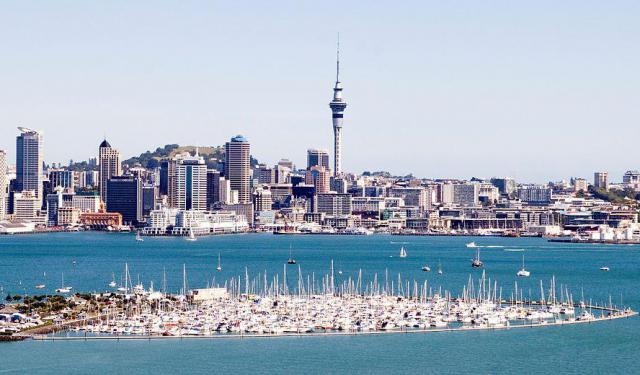
Auckland has numerous landmarks and attractions. The prominent Harbour Bridge is immediately recognizable and is the longest highway bridge in North Island. Auckland also has various fine squares and streets, which are home to important city buildings, beautiful fountains and sculptures. Check out the most popular landmarks in Auckland in the next walking tour.
Tour Stops and Attractions
Auckland Harbour Bridge
1) Auckland Harbour Bridge
Auckland Harbour Bridge is one of the city’s landmarks, connecting St. Mary’s Bay with Northcote, and it is the second longest road bridge in New Zealand. Since its completion in 1959 it has drawn some criticism from certain factions for resembling that other great harbour crossing bridge in Sydney, Australia rather too closely. For visitors to the city, one of the best views of Auckland is to be had from the top of the construction. The bridge climb is one of only three bridge climbs of its kind in the world and the only one in New Zealand. The exhilarating climbing experience takes around 1 ½ hours and guides you safely to the pinnacle of the bridge for stunning 360 degree views out over Auckland.

For those who don’t like their adrenaline shots in half measures, the bridge is also the location of the world’s first bridge bungee jumping opportunity. There are various packages and combinations available, but the most popular option is the “water touch” bungee jump. The extreme activities that are offered at the Auckland Harbour Bridge are amongst the most exciting on offer in the city and provide an experience that you will never forget.
Image Courtesy of Wikimedia and Stephen Witherden
Victoria Park
2) Victoria Park
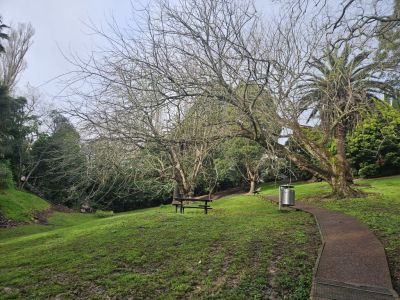
Victoria Park is one of Auckland’s largest open spaces and sporting grounds. The parklands were set aside on reclaimed bay land around the turn of the 20th century in Freeman’s Bay, which lies to the west of the city’s CBD. Sir John Logan Campbell, known as the “father of Auckland” was one of the main benefactors providing funds for the park’s development. One of the distinctive features of the park is the profusion of the London Plane Trees, which line the area and which were planted for the park’s opening in 1905. Victoria Park has long had a sporting tradition with a grandstand added to the park’s landscape a year after it opened and bowls, croquet and a playground added in the subsequent years.

Victoria Park was also the site of the very first New Zealand rugby league international, which was played against England. During World War II the park was used as a makeshift quarters for stationed US troops. Close by the park is the Victoria Park Market, which is a quaint handicraft and souvenir market, which is housed in an historic building. On weekends there is also a lot of live entertainment on offer and visiting the market is ideally combined with a picnic in Victoria Park.
Image Courtesy of Wikimedia and Uploader.
Queen Street
3) Queen Street
Queen Street in Auckland’s CBD is the city’s major commercial centre where you can find just about anything and shop ‘til you drop. The main thoroughfare begins down at the wharf area near the Ferry Terminal and extends around 3km up to Karangahape Road. Although the original town planners envisaged Shortland Street as the city’s main street, it was quickly superseded by Queen Street. Queen Street was surveyed and set down in 1841 immediately following settlement. The swampy area had to be heavily gravelled, but buildings began to pop up along the street almost immediately.

Queen Street further cemented its place as the city’s most important street following a fire along Shortland Street in 1858, which wiped out around 50 buildings. One of the earliest remaining examples of buildings from these times is the facade of the Bank of New Zealand building. In the 1880s horse drawn buses began taking passengers along the street and in 1902 it was the first street in New Zealand to have bitumen and electric trams. Recent refurbishments between 2006 and 2008 have revitalized the street and confirmed its place as one of New Zealand’s premier shopping streets.
Image Courtesy of Wikimedia and Ingolfson
Saint Patrick's Cathedral
4) Saint Patrick's Cathedral
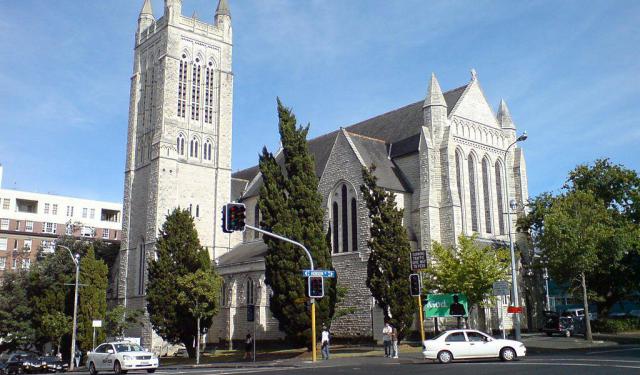
From modest beginnings in 1841 to the grand building you see before you today, St. Patrick’s Cathedral in Auckland has always been the centre of Catholicism in the city. The land that the cathedral is built on was granted by the crown to the city’s first bishop Jean Baptiste Pompallier on June 1st, 1841. A simple wooden structure was first built to serve the 300 odd strong congregation that was mainly made up of Irish immigrants. It was clear that a more substantial building would be required and in 1845 an architect was commissioned to design a stone church. When Auckland was made a diocese in 1848, it was clear that a grander building would be required.

In 1884 the foundation stone was laid for extensive expansions to be made to the church and the old stone church became the transept. A new nave was added that included a bell tower and bells were imported directly from Rome. The new cathedral was officially opened on March 15, 1885 – just before St. Patrick’s Day. Further expansions were carried out to make more space for the growing city’s congregation at the turn of the 20th century and the church that was completed in 1907 is the very same that you gaze upon today.
Image Courtesy of Wikimedia and Sicarr
Freyberg Place
5) Freyberg Place
Freyberg Place is a light, paved space that houses a beautiful fountain, the Lord Freyberg sculpture and fine gardens. Located in the heart of Auckland's high fashion district, it is surrounded by various designer boutiques, cafes, and restaurants.
Image Courtesy of Wikimedia and Uploader.
Aotea Square
6) Aotea Square
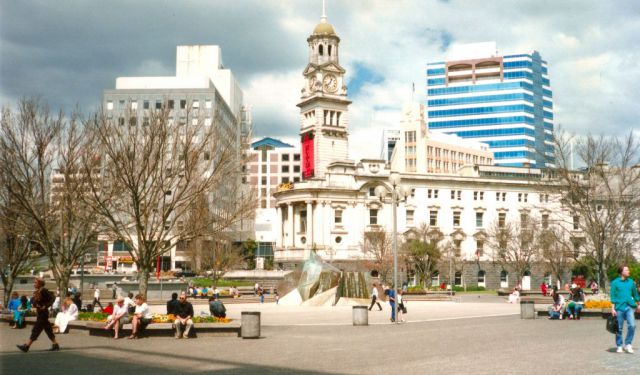
Aotea Square, located right in the centre of Auckland, just off Queen Street is the inner city’s premier open air space. The square was opened in 1979 by Sir Dove-Myer Robinson - its name refers to Great Barrier Island in the Maori language, which is the largest off shore island of the New Zealand archipelago. Recent expansion and redevelopment of Aotea Square has meant that the space is now able to be used by up to 20,000 people. Since it was opened the square has become a place where people come together for community events such as concerts as well as political rallies.

Each New Year there is large outdoor event held in the square and at other times throughout the year there are music festivals, markets and fairs held. Every Friday and Saturday there are handicrafts markets held. Around the square you can find several sculptures and other examples of public art including a Maori carved wooden gateway. At one end of the square is the Auckland Town Hall and at the other end the entrance to Myer Park. The square provides a transition space that connects many aspects of the Auckland CBD and ties them together in an appealing manner.
Image Courtesy of Wikimedia and Ingolfson
Attractions Map
Visitor's Comments (0)
Visitor's Gallery (0)