


Audio Guide: Gothic Quarter Walking Tour (Self Guided), Barcelona
A walk through the Gothic Quarter – Barcelona’s oldest part, dating from the Roman era – is like a journey through time. The typical Roman grid plan is still visible in the quarter's layout. Only a few roads are open for car traffic, so there is little in the way of enjoying the narrow, atmospheric streets filled with high-quality architecture, numerous boutiques, and coffee shops. Melding medieval charm with the vibrancy of modern life, this labyrinthine district is home to a multitude of landmarks.
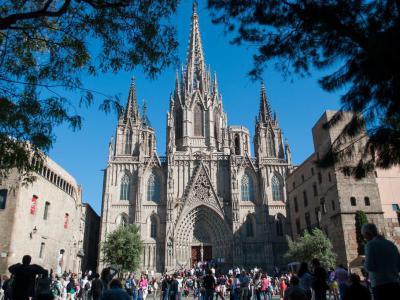
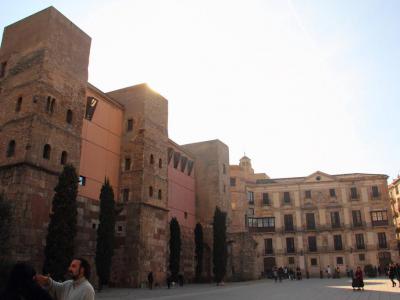
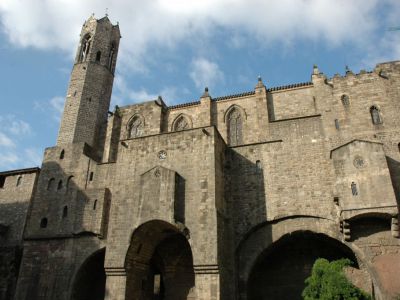
At the core of the Gothic Quarter stands the imposing Barcelona Cathedral, a beacon of Gothic architecture adorned with intricate spires that pierce the skyline. Nearby, the Archdeacon's House mesmerizes visitors with its tranquil courtyard and historical archives. A short stroll away, New Square serves as a gateway to the area's ancient roots, framed by the remnants of old Roman walls.
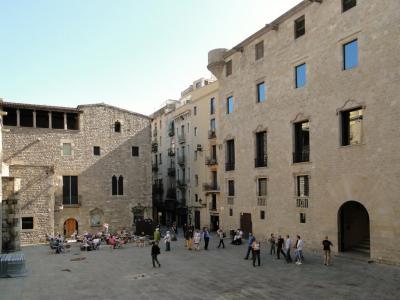
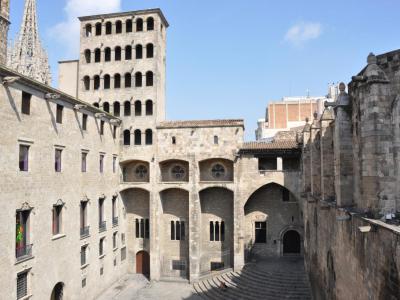
The Frederic Mares Museum, housed in the Lieutenant’s Palace, offers a deep dive into Spanish sculpture and decorative arts, showcasing collections that span centuries. King's Square, further ahead, is a historic ensemble that hosts the Grand Royal Palace, revealing layers of the city's Roman and medieval past.
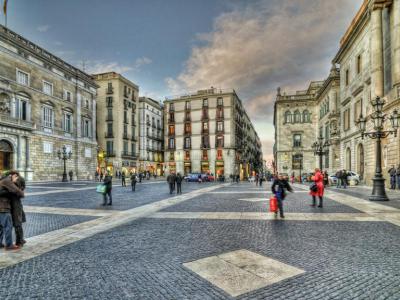
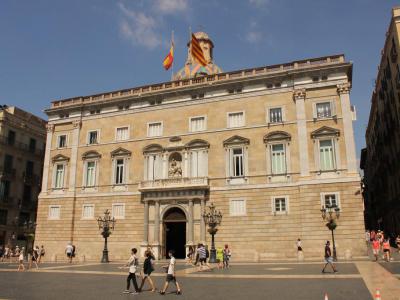
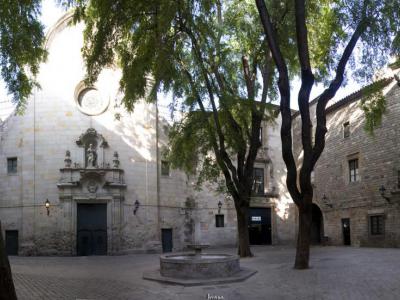
The Royal Chapel of Saint Agatha and the adjacent Saint Justus Square offer serene spots, steeped in the spiritual heritage of Barcelona. The bustling Saint James's Square contrasts sharply, lined with prominent buildings like the Palace of the Generalitat, housing Catalonia's government.
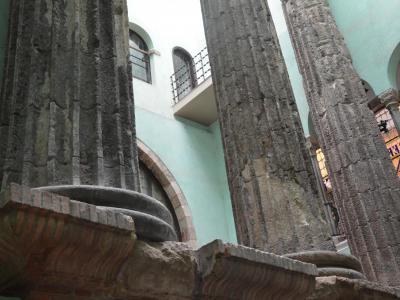
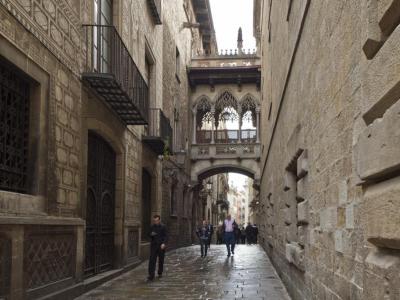
Not to be missed is the Temple of Augustus, where ancient Roman columns majestically complement the medieval setting. The enchanting Bishop's Bridge connects historic edifices with Gothic allure, while Saint Philip Neri Square offers a quiet refuge, shadowed by its tragic past and beautiful baroque church.
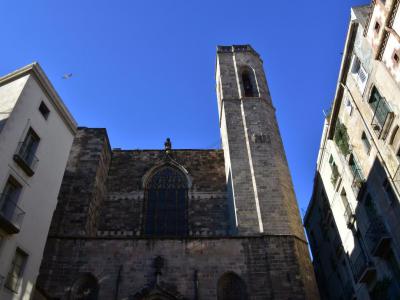
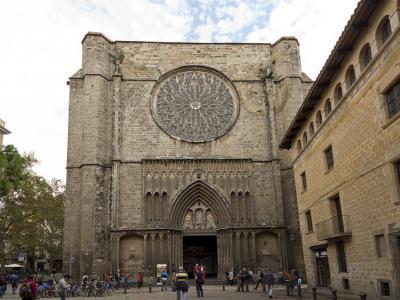
For those drawn to religious architecture, the Basilica of Saint Mary of the Pine showcases impressive Gothic masonry. At the same time, the inviting Saint Joseph Oriol Square comes alive with multiple artists and musicians.
The Gothic Quarter is more than just a district but the heartbeat of Barcelona, where every corner tells a story. This is one of those medieval urban landscapes where you can easily get lost. Follow our self-guided walk to appreciate the area's main landmarks and let it captivate your imagination – a nice way to “lose yourself” while staying on the right course.
At the core of the Gothic Quarter stands the imposing Barcelona Cathedral, a beacon of Gothic architecture adorned with intricate spires that pierce the skyline. Nearby, the Archdeacon's House mesmerizes visitors with its tranquil courtyard and historical archives. A short stroll away, New Square serves as a gateway to the area's ancient roots, framed by the remnants of old Roman walls.
The Frederic Mares Museum, housed in the Lieutenant’s Palace, offers a deep dive into Spanish sculpture and decorative arts, showcasing collections that span centuries. King's Square, further ahead, is a historic ensemble that hosts the Grand Royal Palace, revealing layers of the city's Roman and medieval past.
The Royal Chapel of Saint Agatha and the adjacent Saint Justus Square offer serene spots, steeped in the spiritual heritage of Barcelona. The bustling Saint James's Square contrasts sharply, lined with prominent buildings like the Palace of the Generalitat, housing Catalonia's government.
Not to be missed is the Temple of Augustus, where ancient Roman columns majestically complement the medieval setting. The enchanting Bishop's Bridge connects historic edifices with Gothic allure, while Saint Philip Neri Square offers a quiet refuge, shadowed by its tragic past and beautiful baroque church.
For those drawn to religious architecture, the Basilica of Saint Mary of the Pine showcases impressive Gothic masonry. At the same time, the inviting Saint Joseph Oriol Square comes alive with multiple artists and musicians.
The Gothic Quarter is more than just a district but the heartbeat of Barcelona, where every corner tells a story. This is one of those medieval urban landscapes where you can easily get lost. Follow our self-guided walk to appreciate the area's main landmarks and let it captivate your imagination – a nice way to “lose yourself” while staying on the right course.
How it works: Download the app "GPSmyCity: Walks in 1K+ Cities" from Apple App Store or Google Play Store to your mobile phone or tablet. The app turns your mobile device into a personal tour guide and its built-in GPS navigation functions guide you from one tour stop to next. The app works offline, so no data plan is needed when traveling abroad.
Download The GPSmyCity App



Gothic Quarter Walking Tour Map
Guide Name: Gothic Quarter Walking Tour
Guide Location: Spain » Barcelona (See other walking tours in Barcelona)
Guide Type: Self-guided Walking Tour (Sightseeing)
Tour Duration: 2 Hour(s)
Travel Distance: 1.8 Km or 1.1 Miles
Guide Location: Spain » Barcelona (See other walking tours in Barcelona)
Guide Type: Self-guided Walking Tour (Sightseeing)
Tour Duration: 2 Hour(s)
Travel Distance: 1.8 Km or 1.1 Miles
Sights Featured in This Walk



Walking Tours in Barcelona, Spain

Create Your Own Walk in Barcelona
Creating your own self-guided walk in Barcelona is easy and fun. Choose the city attractions that you want to see and a walk route map will be created just for you. You can even set your hotel as the start point of the walk.

Montjuic Walking Tour
Montjuic is a hill in Barcelona which offers a variety of great attractions of historic, cultural, and architectural value. Here, you can watch a spectacular water show at the Magic Fountain of Montjuic, visit the place where matadors faced the bulls in the past, and explore the ancient Montjuic Castle with its breathtaking views.
A convenient start point, Placa d'Espanya is the second... view more
Tour Duration: 3 Hour(s)
Travel Distance: 5.0 Km or 3.1 Miles
A convenient start point, Placa d'Espanya is the second... view more
Tour Duration: 3 Hour(s)
Travel Distance: 5.0 Km or 3.1 Miles

Antoni Gaudí's Masterpieces Walking Tour
Antoni Gaudi, a seminal figure in the Catalan Modernism movement, is one of the top architects of the 20th century. The unique technique and use of natural forms in his works stand out from the pack and have left an indelible mark on the face of Barcelona.
Our journey through Gaudi's Barcelona begins at the Güell Palace, by far the most budget-friendly of his projects. Located near La... view more
Tour Duration: 2 Hour(s)
Travel Distance: 4.6 Km or 2.9 Miles
Our journey through Gaudi's Barcelona begins at the Güell Palace, by far the most budget-friendly of his projects. Located near La... view more
Tour Duration: 2 Hour(s)
Travel Distance: 4.6 Km or 2.9 Miles

La Rambla Walking Tour
One of the main streets in central Barcelona, La Rambla is popular with tourists and locals alike. Connecting the city’s old port with Plaça de Catalunya, it is filled with cultural and historic landmarks, as well as many terraces, restaurants, shops and street artists. Spanish poet, Federico García Lorca once said it was “the only street in the world which I wish never ended.”
Start... view more
Tour Duration: 1 Hour(s)
Travel Distance: 2.3 Km or 1.4 Miles
Start... view more
Tour Duration: 1 Hour(s)
Travel Distance: 2.3 Km or 1.4 Miles

La Ribera Walking Tour
La Ribera is a culturally rich, historic area of Barcelona’s Old Town; somewhat less touristy than the Gothic Quarter (which one should really visit as well) and quite unspoiled, authentic and pretty. Centuries ago, it was a very well-to-do neighborhood inhabited by aristocrats, merchants, wealthy sailors, and Jewish money-lenders. Today, it is regarded as the Soho of Barcelona – a popular... view more
Tour Duration: 2 Hour(s)
Travel Distance: 2.8 Km or 1.7 Miles
Tour Duration: 2 Hour(s)
Travel Distance: 2.8 Km or 1.7 Miles

Picasso's Barcelona Walking Tour
Pablo Picasso – the great Spanish painter and sculptor – developed his style in Barcelona where he spent the formative years of his life, from the ages of 14 to 23. It is said that when the master spoke nostalgically of home, he actually meant the Catalonian capital, despite having been born in Malaga.
This self-guided walk will take you to the Picasso Museum, the bar-restaurant and the art... view more
Tour Duration: 2 Hour(s)
Travel Distance: 4.2 Km or 2.6 Miles
This self-guided walk will take you to the Picasso Museum, the bar-restaurant and the art... view more
Tour Duration: 2 Hour(s)
Travel Distance: 4.2 Km or 2.6 Miles

Barcelona Shopping Walk
A long-time prime cultural destination, Barcelona is also en route to becoming one of Europe's top shopping spots. Each new day, fashionable designer stores, from well-known international brands to local start-ups, are filling the city streets. If you're a fan of shopping, you're in for a treat when visiting this beautiful city. Here are some of the most popular shopping locations... view more
Tour Duration: 2 Hour(s)
Travel Distance: 3.4 Km or 2.1 Miles
Tour Duration: 2 Hour(s)
Travel Distance: 3.4 Km or 2.1 Miles
Useful Travel Guides for Planning Your Trip

Barcelona Souvenir Shopping: 17 Uniquely Spanish Things to Buy
Spain, in general, and Barcelona, in particular, are a treasure trove of all things exciting. Set your foot in Barcelona and you'll be spoiled for the choice of things worth trying and taking home. Before your head starts spinning, check this guide out to put yourself in the right...

Top 10 Spanish Foods and Drinks to Try in Barcelona
In the countries like Spain, food is a national heritage and cultural attraction in its own right. The latter is even more true of Catalonia in general and Barcelona in particular. Presented here are the 10 staples of Catalan food tradition, missing which would be a gastronomical...
The Most Popular Cities
/ view all