

Medici Landmarks Walking Tour (Self Guided), Florence
The Medici family helped to establish Florence as the single most important art capital of Renaissance Europe. In order to prove wealth and power, they built numerous palaces, libraries, churches, chapels and personal residences. The Medicis were big lovers of art and they acquired huge, expensive collections, as well as supporting many sculptors and painters of the time.
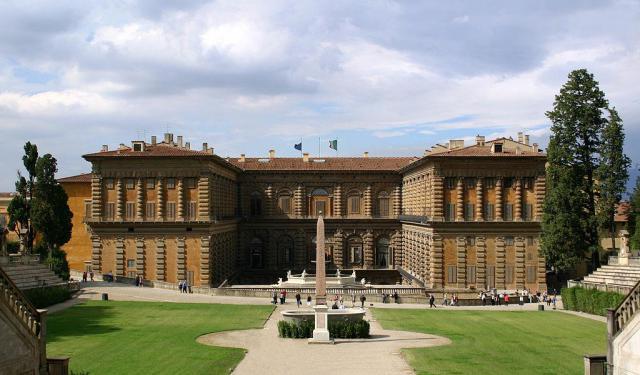
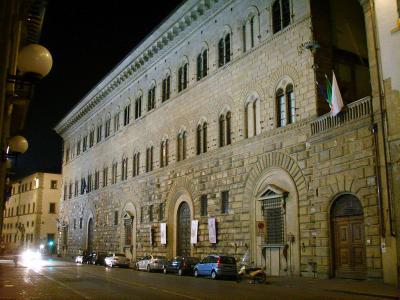
Designed by Michelozzo to accommodate the family’s banking business, Palazzo Medici Riccardi gives a great insight into the Medici way of life. Already in the 15th century, it included a private garden, protected from the town streets by a medieval wall. The historic building houses one of the most beautiful frescoes in the history of art – Cappella dei Magi, by Benozzo Gozzoli, located in a private family chapel which justifies travelling to Florence all by itself!
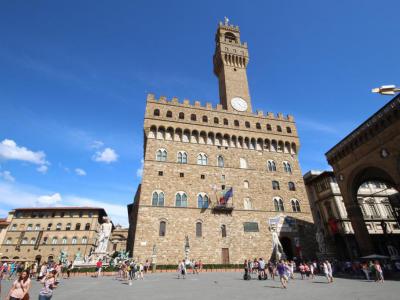
When the court of Medici was transferred to Palazzo Vecchio (from Palazzo Medici-Riccardi), it was transformed into a fascinating labyrinth of institutional chambers, apartments, terraces and courtyards. All of the rooms are magnificently decorated by artists such as Michelangelo, Giorgio Vasari and Donatello.
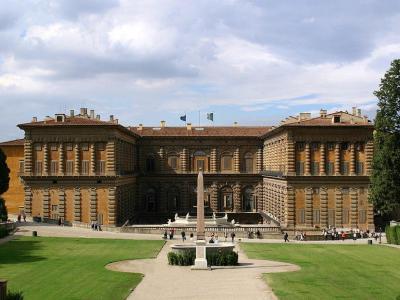
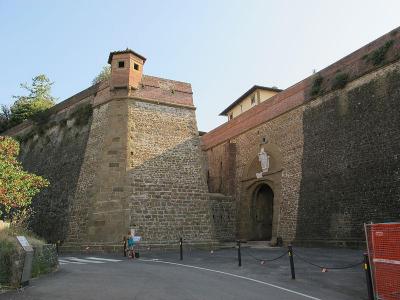
Continue with a visit to the Palazzo Pitti, which became home to the Medicis’ art collection, and Forte di Belvedere, later built to protect it. Both of these were, in fact, connected to the Palazzo Vecchio via a secret corridor visible on the Arno bridge (Ponte Vecchio).
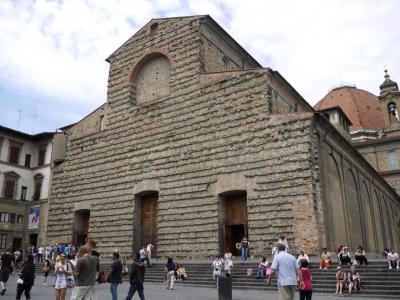
Still more history can be witnessed at the Basilica San Lorenzo – the first Florentine church built in a new, Renaissance style; a model for later construction. Later upgrades, such as the New Sacristy and Medici-Laurenziana Library, were designed by the ever-ingenious Michelangelo. Here you will find the resting place of Giovanni de' Bicci di Medici – founder of the Medici bank and, hence, the family's subsequent fortunes – who is buried along with his grandsons in a tomb by Verrocchio.
Most, if not all, the history of Renaissance Florence can be understood by visiting these Medici landmarks/residences and their amazing collections/decorations – so follow our self-guided walk to see the opulent lives of the Medici family that helped usher the world into a new era.
Designed by Michelozzo to accommodate the family’s banking business, Palazzo Medici Riccardi gives a great insight into the Medici way of life. Already in the 15th century, it included a private garden, protected from the town streets by a medieval wall. The historic building houses one of the most beautiful frescoes in the history of art – Cappella dei Magi, by Benozzo Gozzoli, located in a private family chapel which justifies travelling to Florence all by itself!
When the court of Medici was transferred to Palazzo Vecchio (from Palazzo Medici-Riccardi), it was transformed into a fascinating labyrinth of institutional chambers, apartments, terraces and courtyards. All of the rooms are magnificently decorated by artists such as Michelangelo, Giorgio Vasari and Donatello.
Continue with a visit to the Palazzo Pitti, which became home to the Medicis’ art collection, and Forte di Belvedere, later built to protect it. Both of these were, in fact, connected to the Palazzo Vecchio via a secret corridor visible on the Arno bridge (Ponte Vecchio).
Still more history can be witnessed at the Basilica San Lorenzo – the first Florentine church built in a new, Renaissance style; a model for later construction. Later upgrades, such as the New Sacristy and Medici-Laurenziana Library, were designed by the ever-ingenious Michelangelo. Here you will find the resting place of Giovanni de' Bicci di Medici – founder of the Medici bank and, hence, the family's subsequent fortunes – who is buried along with his grandsons in a tomb by Verrocchio.
Most, if not all, the history of Renaissance Florence can be understood by visiting these Medici landmarks/residences and their amazing collections/decorations – so follow our self-guided walk to see the opulent lives of the Medici family that helped usher the world into a new era.
How it works: Download the app "GPSmyCity: Walks in 1K+ Cities" from Apple App Store or Google Play Store to your mobile phone or tablet. The app turns your mobile device into a personal tour guide and its built-in GPS navigation functions guide you from one tour stop to next. The app works offline, so no data plan is needed when traveling abroad.
Download The GPSmyCity App



Medici Landmarks Walking Tour Map
Guide Name: Medici Landmarks Walking Tour
Guide Location: Italy » Florence (See other walking tours in Florence)
Guide Type: Self-guided Walking Tour (Sightseeing)
Tour Duration: 1 Hour(s)
Travel Distance: 2.7 Km or 1.7 Miles
Guide Location: Italy » Florence (See other walking tours in Florence)
Guide Type: Self-guided Walking Tour (Sightseeing)
Tour Duration: 1 Hour(s)
Travel Distance: 2.7 Km or 1.7 Miles
Sights Featured in This Walk
Walking Tours in Florence, Italy

Create Your Own Walk in Florence
Creating your own self-guided walk in Florence is easy and fun. Choose the city attractions that you want to see and a walk route map will be created just for you. You can even set your hotel as the start point of the walk.

In Galileo's Footsteps
Galileo Galilei-born in Pisa in 1564-spent much of his life in and around Florence, where some of the most defining moments of his revolutionary career unfolded. A genius of many talents-physicist, mathematician, astronomer, inventor-he helped usher in the scientific revolution and reshape humanity’s understanding of the universe. Florence, the cradle of the Renaissance, became a backdrop for... view more
Tour Duration: 2 Hour(s)
Travel Distance: 3.9 Km or 2.4 Miles
Tour Duration: 2 Hour(s)
Travel Distance: 3.9 Km or 2.4 Miles

Florence's Hidden Art Treasures
The “Cradle of the Renaissance,” Florence is one of Europe’s most beautiful and busiest destinations, home to some of the world's greatest pieces of art and architecture. The iconic masters like Giotto, Botticelli, Raphael and Michelangelo, as well as their somewhat less-known but equally talented counterparts, such as Ghirlandaio, Sangallo and Castagno, have blessed this city with... view more
Tour Duration: 2 Hour(s)
Travel Distance: 4.6 Km or 2.9 Miles
Tour Duration: 2 Hour(s)
Travel Distance: 4.6 Km or 2.9 Miles

Arno South Bank Walking Tour
The area south of the Arno River-known as Oltrarno, or “Beyond the Arno”-offers a quieter, more intimate side of Florence, but one that’s no less captivating. It’s here that you’ll find the grand Pitti Palace, home to a painting collection rivaled only by the Uffizi Gallery, and the expansive Boboli Gardens, once the private domain of the Medici and later, the royal family. As one of the... view more
Tour Duration: 2 Hour(s)
Travel Distance: 2.4 Km or 1.5 Miles
Tour Duration: 2 Hour(s)
Travel Distance: 2.4 Km or 1.5 Miles

Florence Food Tour
Food has long been central to Florentine life, shaped by local tradition, seasonal ingredients, and a strong regional identity. Tuscan cuisine is often described as simple, but that simplicity is intentional: dishes rely on quality raw materials and recipes refined over generations rather than on elaborate techniques.
Several foods closely associated with Florence have become known far beyond... view more
Tour Duration: 1 Hour(s)
Travel Distance: 1.7 Km or 1.1 Miles
Several foods closely associated with Florence have become known far beyond... view more
Tour Duration: 1 Hour(s)
Travel Distance: 1.7 Km or 1.1 Miles

Duomo Walking Tour
Right in the heart of historic Florence lies the Duomo district-the city's religious and civic core, and one of the most remarkable places in all of Italy. Between the Duomo and Signoria squares, Florence unfolds in layers of art, history, and architectural brilliance, offering a never-ending stream of things to see, do, and admire.
At the center of it all stands the Florence Cathedral, or... view more
Tour Duration: 2 Hour(s)
Travel Distance: 2.3 Km or 1.4 Miles
At the center of it all stands the Florence Cathedral, or... view more
Tour Duration: 2 Hour(s)
Travel Distance: 2.3 Km or 1.4 Miles

Michelangelo's Masterpieces Walking Tour
Though born in the small Tuscan town of Caprese, Michelangelo spent over two decades of his life in Florence-the heart of the Renaissance. It was here that he grew up, was educated, and began shaping his artistic voice, eventually creating some of the most iconic masterpieces the city has ever known.
His larger-than-life work-“David”-didn’t just reshape the image of biblical heroism-it... view more
Tour Duration: 2 Hour(s)
Travel Distance: 4.0 Km or 2.5 Miles
His larger-than-life work-“David”-didn’t just reshape the image of biblical heroism-it... view more
Tour Duration: 2 Hour(s)
Travel Distance: 4.0 Km or 2.5 Miles
Useful Travel Guides for Planning Your Trip

Souvenir Shopping Guide: 15 Unique Products to Buy in Florence
Compared to other Italian "grands" like Rome, Venice, or Milan, Florence is relatively less-known to an outsider for any local products, save, perhaps, Florentine mosaics and Fiorentina FC. Fortunately, there are tonnes of locally-originated things that this Italian city is rightfully...

Florence's Tasty Coffee Shop Guide
The caffe scene throughout Italy is an important factor of everyday life. People will pop in to their favorite bar on their way to work for a quick espresso breakfast with a pastry, they’ll grab a slice of pizza for lunch or drop by for an aperitivo before dining out and take a peaceful digestivo...

Top 13 Pubs in Florence
Florence, the city of art and beauty has no problem in mastering the art of the nightlife as well. Local pubs are very popular and appreciated among the Florentines and the tourists. Locals and native English speakers that study or live in the city cannot wait to welcome tourists in their cozy...
The Most Popular Cities
/ view all