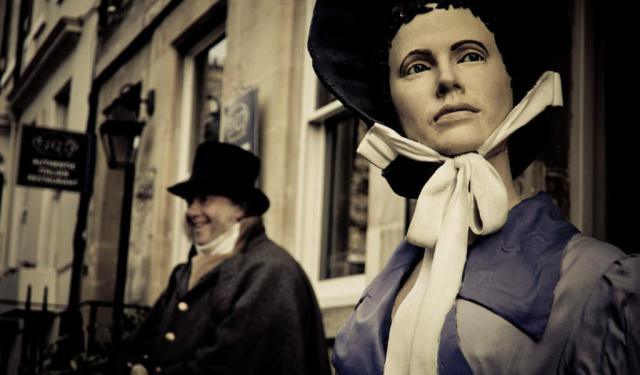


Jane Austen Walking Tour (Self Guided), Bath
Bath has a long history as a spa town, dating back to Roman times, when its natural hot springs made it a centre for bathing and healing. By the 18th century, it had transformed into one of Britain’s most fashionable destinations, known for its elegant Georgian architecture, social rituals, and a seasonal influx of wealthy visitors.
This was the Bath that shaped Jane Austen’s experience. Her connection to the city began early—her parents had married there, and she visited relatives before eventually moving permanently in 1801, at the age of 25, after her father retired. She lived in Bath until 1806, a period marked by personal upheaval, including her father’s sudden death and the family’s financial uncertainty.
At the time of her arrival, Bath was already past its peak as the unrivalled centre of high society, though it still functioned as a lively social hub—a place of assemblies, promenades, and carefully managed encounters between eligible men and women. This social environment deeply informed Austen’s writing. While she produced little during her years in Bath, the city later became a vivid setting in two of her novels, Northanger Abbey and Persuasion, where its streets, assembly rooms, and social codes are depicted with sharp observation.
Austen’s relationship with Bath was complex. On one hand, it offered stimulation, social variety, and material for her fiction. On the other, she appears to have found it overwhelming and, at times, stifling. In letters, she described her first impressions as “vapour, shadow, smoke & confusion,” and her time there coincided with a noticeable pause in her writing output. Yet distance sharpened her perspective. Once she left, Bath became fertile ground for satire—its polite society exposed as a place of vanity, gossip, and precarious reputations.
Despite her ambivalence, Bath remains central to Austen’s legacy. Many of its streets and buildings are little changed since her lifetime, allowing visitors to trace both her real footsteps and those of her fictional characters.
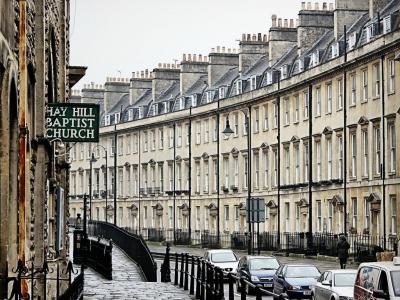
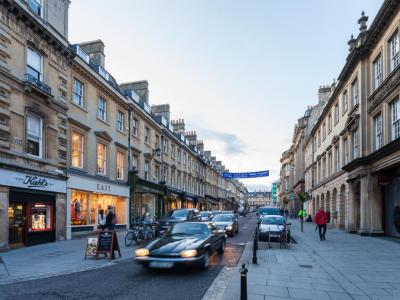
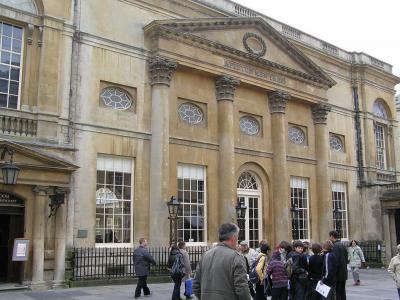
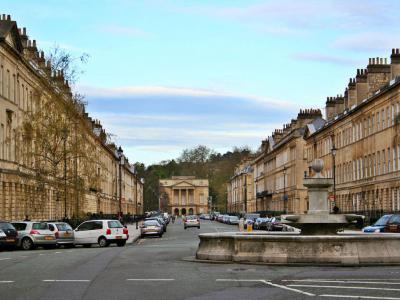
A walk through Austen’s Bath moves between lived history and literary setting. At the Jane Austen Centre, her life is introduced, while Queen Square and the Bath Assembly Rooms reflect the social world of balls and introductions. The Paragon and Milsom Street show fashionable life, while the Grand Pump Room evokes spa rituals. Great Pulteney Street and Sydney Gardens complete the setting—part elegant stage, part quiet retreat.
Today, the city embraces this connection, hosting festivals, museums, and walking routes dedicated to Austen's life and work. Walk it at your own pace, but stay attentive—Bath rewards observation more than speed. The blur of “vapour, shadow, smoke & confusion” lingers only at first glance; give it time, and the details begin to fall into place.
This was the Bath that shaped Jane Austen’s experience. Her connection to the city began early—her parents had married there, and she visited relatives before eventually moving permanently in 1801, at the age of 25, after her father retired. She lived in Bath until 1806, a period marked by personal upheaval, including her father’s sudden death and the family’s financial uncertainty.
At the time of her arrival, Bath was already past its peak as the unrivalled centre of high society, though it still functioned as a lively social hub—a place of assemblies, promenades, and carefully managed encounters between eligible men and women. This social environment deeply informed Austen’s writing. While she produced little during her years in Bath, the city later became a vivid setting in two of her novels, Northanger Abbey and Persuasion, where its streets, assembly rooms, and social codes are depicted with sharp observation.
Austen’s relationship with Bath was complex. On one hand, it offered stimulation, social variety, and material for her fiction. On the other, she appears to have found it overwhelming and, at times, stifling. In letters, she described her first impressions as “vapour, shadow, smoke & confusion,” and her time there coincided with a noticeable pause in her writing output. Yet distance sharpened her perspective. Once she left, Bath became fertile ground for satire—its polite society exposed as a place of vanity, gossip, and precarious reputations.
Despite her ambivalence, Bath remains central to Austen’s legacy. Many of its streets and buildings are little changed since her lifetime, allowing visitors to trace both her real footsteps and those of her fictional characters.
A walk through Austen’s Bath moves between lived history and literary setting. At the Jane Austen Centre, her life is introduced, while Queen Square and the Bath Assembly Rooms reflect the social world of balls and introductions. The Paragon and Milsom Street show fashionable life, while the Grand Pump Room evokes spa rituals. Great Pulteney Street and Sydney Gardens complete the setting—part elegant stage, part quiet retreat.
Today, the city embraces this connection, hosting festivals, museums, and walking routes dedicated to Austen's life and work. Walk it at your own pace, but stay attentive—Bath rewards observation more than speed. The blur of “vapour, shadow, smoke & confusion” lingers only at first glance; give it time, and the details begin to fall into place.
How it works: Download the app "GPSmyCity: Walks in 1K+ Cities" from Apple App Store or Google Play Store to your mobile phone or tablet. The app turns your mobile device into a personal tour guide and its built-in GPS navigation functions guide you from one tour stop to next. The app works offline, so no data plan is needed when traveling abroad.
Download The GPSmyCity App



Jane Austen Walking Tour Map
Guide Name: Jane Austen Walking Tour
Guide Location: England » Bath (See other walking tours in Bath)
Guide Type: Self-guided Walking Tour (Sightseeing)
Tour Duration: 2 Hour(s)
Travel Distance: 2.5 Km or 1.6 Miles
Guide Location: England » Bath (See other walking tours in Bath)
Guide Type: Self-guided Walking Tour (Sightseeing)
Tour Duration: 2 Hour(s)
Travel Distance: 2.5 Km or 1.6 Miles
Sights Featured in This Walk
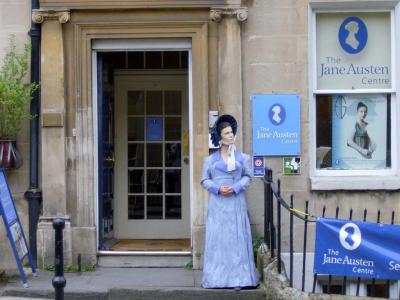
1) Jane Austen Centre (must see)

Walking Tours in Bath, England

Create Your Own Walk in Bath
Creating your own self-guided walk in Bath is easy and fun. Choose the city attractions that you want to see and a walk route map will be created just for you. You can even set your hotel as the start point of the walk.
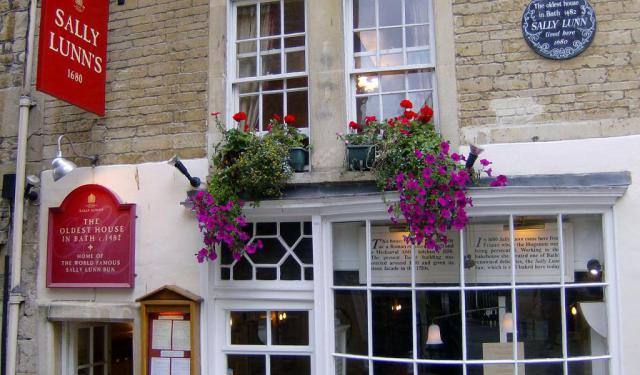
Historical Homes Walking Tour
Apart from its Roman thermae, the city of Bath is renowned for its prominent residents who used to live here a long time ago. Their former dwellings – historical monuments in their own right – now offer a captivating glimpse into the city's glorious past.
Among the most famous of them, undoubtedly, is the Jane Austen Centre. This charming Georgian townhouse provides a fascinating look... view more
Tour Duration: 1 Hour(s)
Travel Distance: 1.6 Km or 1 Miles
Among the most famous of them, undoubtedly, is the Jane Austen Centre. This charming Georgian townhouse provides a fascinating look... view more
Tour Duration: 1 Hour(s)
Travel Distance: 1.6 Km or 1 Miles
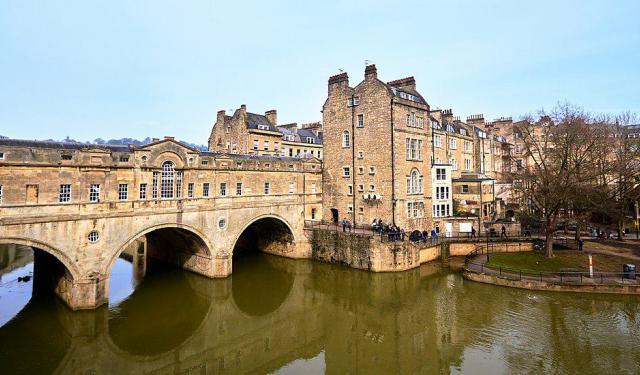
Bath Introduction Walking Tour
Bath, a city in southwest England, is one of the country’s most historically layered urban centres, shaped by Roman engineering, medieval religion, and Georgian elegance. Its name comes from the Old English word meaning “bath,” a direct reference to the natural hot springs that have defined the site for millennia. The surrounding hills reveal even earlier activity, with archaeological finds... view more
Tour Duration: 2 Hour(s)
Travel Distance: 2.2 Km or 1.4 Miles
Tour Duration: 2 Hour(s)
Travel Distance: 2.2 Km or 1.4 Miles
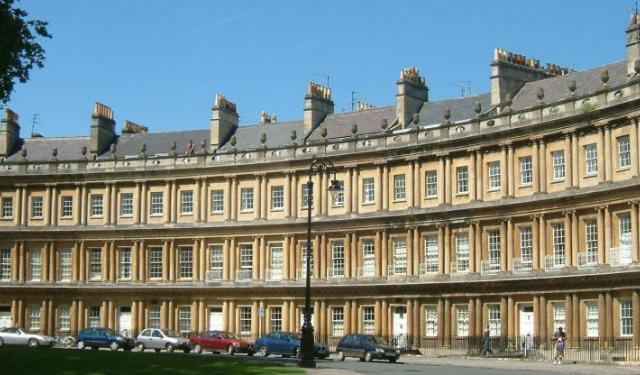
Georgian Architecture Walking Tour
Another prominent attraction of Bath is its wonderful Georgian architecture. Many a street and square here are richly adorned with distinctively stylish buildings. In large part, the city owes it to two architects – father and son: John Wood, the Elder, and John Wood, the Younger. Constructed mostly from Bath Stone, a creamy limestone obtained in Combe Down and Bathampton Down Miles, these... view more
Tour Duration: 1 Hour(s)
Travel Distance: 2.2 Km or 1.4 Miles
Tour Duration: 1 Hour(s)
Travel Distance: 2.2 Km or 1.4 Miles
The Most Popular Cities
/ view all