


Alexanderplatz Walking Tour (Self Guided), Berlin
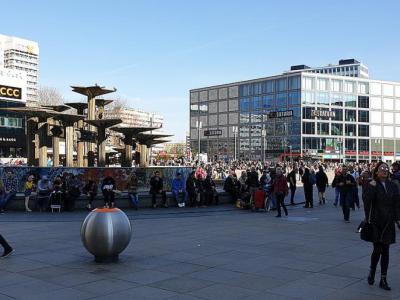
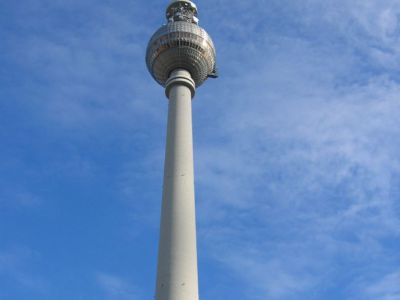
One of the most intriguing landmarks on the square, the continually rotating “World Clock” is central Berlin’s best-known meeting point and makes for some very cool photo ops. Conceived in the communist era and still in use after over 50 years of operation, it is a product of the same school responsible for the iconic TV Tower (Fernsehturm, also known as “The Toothpick”), which can be seen nearby and from almost anywhere in the city. While the tower features a revolving restaurant above, tucked at its foot is the Momotaro Tavern, excellent for a quick bite.
BODY WORLDS is a must-do if you’re interested in the science behind the human body. You can spend an hour or two reading the information, which is didactically more appealing than any biology book. Also enjoyable is the Little BIG City adjacent – a model city that entertains, bringing out the inner kid in ‘big’ visitors, too.
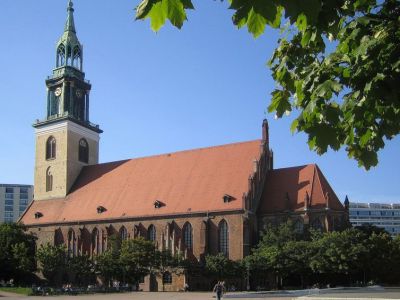
For the brave at heart, Marienkirche’s 234 steps await further along the way, leading to the top of the church’s mighty towers and viewing platform in between.
Take this self-guided walking tour to make your visit to Alexanderplatz & surroundings easier to navigate!
Download The GPSmyCity App



Alexanderplatz Walking Tour Map
Map Instructions: (1) Click the "Nearby Sights" button  to view the nearby attractions; (2) click a map pin to see sight information.
Guide Location: Germany » Berlin (See other walking tours in Berlin)
Guide Type: Self-guided Walking Tour (Sightseeing)
Tour Duration: 1 Hour(s)
Travel Distance: 1.6 Km or 1 Miles
Sights Featured in This Walk





WalkBuilder (customize this walk or build your own)Use the WalkBuilder tool below to customize this walk to suit your interests. Instructions: click at the upper right corner in the map above to view other sights in the city. To learn more about a sight, click a map pin. Click the "+" or "–" to add or remove a sight from the walk. To reorder the selected sights, simply drag and move them up or down the list in the left column.
|
||||||||
|
||||||||
Frequently Asked Questions1. How do I access my walking tour in Berlin? Save your walking tour on the website. Then download the GPSmyCity app from the Apple App Store or Google Play Store and sign in to your GPSmyCity account. Next, download "Berlin Map and Walking Tours" within the app. Your walk will appear on the Walks screen.
2. How do I view other attractions in Berlin?
3. How do I re-arrange the sight order?
4. Can I add my hotel to a walking tour?
5. Can I add my own sights to a walking tour?
6. How many sights can be included in a walking tour?
|
||||||||
Walking Tours in Berlin, Germany

Create Your Own Walk in Berlin

Tiergarten Walking Tour
Begin your exploration at Postdamer Platz, the historic central square of Berlin, once regarded in the same way as Piccadilly Circus... view more
Tour Duration: 2 Hour(s)
Travel Distance: 3.4 Km or 2.1 Miles

Berlin Food Walking Tour
Tour Duration: 1 Hour(s)
Travel Distance: 1.4 Km or 0.9 Miles

Berlin's Historical Churches Walking Tour
Tour Duration: 1 Hour(s)
Travel Distance: 2.7 Km or 1.7 Miles

Third Reich Walking Tour
For those visiting Berlin today, the events surrounding the Nazi regime and its surrender that brought... view more
Tour Duration: 2 Hour(s)
Travel Distance: 4.0 Km or 2.5 Miles

Berlin Introduction Walking Tour
The first written records of settlements in the present-day Berlin area date back to the late 12th century. In 1157, the region came under German rule as part of... view more
Tour Duration: 2 Hour(s)
Travel Distance: 4.0 Km or 2.5 Miles

Museum Island Walking Tour
Tour Duration: 1 Hour(s)
Travel Distance: 1.2 Km or 0.7 Miles
Useful Travel Guides for Planning Your Trip

Best Cafes in Kreuzberg, Berlin

Berlin Mementos: 18 Souvenir Shopping Ideas for Travelers

A Self-Guided Food Walk in Berlin

Best Cafés and Coffee Houses of Berlin

Best Bars in Kreuzberg, Berlin

Best Food in Kreuzberg, Berlin