


North End Food Tour (Self Guided), Boston
Boston’s North End is famous primarily for its Italian food. By far not as big as New York's Little Italy, this one-square-mile waterfront community is the oldest in the city, and is packed to the brim with a cornucopia of Italian eateries – restaurants, cafes, espresso bars, pizza and sandwich shops – lined next to each other within just a few short blocks to ensure visitors both a visual and a gastric treat.
Being at this historic, Italian-accented area – the densest dining neighborhood in all of New England – the biggest problem you’ll encounter is figuring out where to go, and realizing that you only have one stomach. While there are way too many places to recommend – from very casual/cheap to very expensive, there are a handful that rise to the top for various reasons.
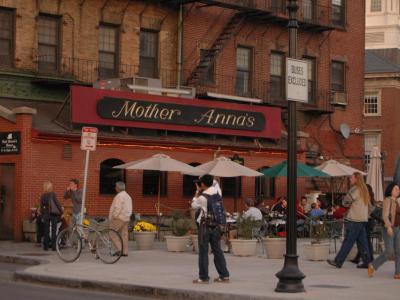
To enjoy the great views Hanover Street has to offer, start at Mother Anna’s, which is owned and operated by the same family since 1932. Not far away, the Modern Pastry Shop gives you the old world Italian feel with out-of-this-world Italian pastries, while Caffe Vittoria, opened in the late 1920s, serves really good lattes, espressos, macchiatos and cappuccinos in a relaxed atmosphere.
Not your typical restaurant, Mamma Maria is a tad more upscale and simply outstanding – so dine there to impress! Meanwhile, a huge selection of coffee beans, as well as a wonderful array of Italian food items await you at Polcari's Coffee.
To save yourself time making dozens of trips to savor what this food lovers' paradise has to offer, follow this guide and explore some of the most notable culinary spots of Boston’s “Little Italy.’’
Being at this historic, Italian-accented area – the densest dining neighborhood in all of New England – the biggest problem you’ll encounter is figuring out where to go, and realizing that you only have one stomach. While there are way too many places to recommend – from very casual/cheap to very expensive, there are a handful that rise to the top for various reasons.
To enjoy the great views Hanover Street has to offer, start at Mother Anna’s, which is owned and operated by the same family since 1932. Not far away, the Modern Pastry Shop gives you the old world Italian feel with out-of-this-world Italian pastries, while Caffe Vittoria, opened in the late 1920s, serves really good lattes, espressos, macchiatos and cappuccinos in a relaxed atmosphere.
Not your typical restaurant, Mamma Maria is a tad more upscale and simply outstanding – so dine there to impress! Meanwhile, a huge selection of coffee beans, as well as a wonderful array of Italian food items await you at Polcari's Coffee.
To save yourself time making dozens of trips to savor what this food lovers' paradise has to offer, follow this guide and explore some of the most notable culinary spots of Boston’s “Little Italy.’’
How it works: Download the app "GPSmyCity: Walks in 1K+ Cities" from Apple App Store or Google Play Store to your mobile phone or tablet. The app turns your mobile device into a personal tour guide and its built-in GPS navigation functions guide you from one tour stop to next. The app works offline, so no data plan is needed when traveling abroad.
Download The GPSmyCity App



North End Food Tour Map
Guide Name: North End Food Tour
Guide Location: USA » Boston (See other walking tours in Boston)
Guide Type: Self-guided Walking Tour (Sightseeing)
Tour Duration: 1 Hour(s)
Travel Distance: 0.8 Km or 0.5 Miles
Guide Location: USA » Boston (See other walking tours in Boston)
Guide Type: Self-guided Walking Tour (Sightseeing)
Tour Duration: 1 Hour(s)
Travel Distance: 0.8 Km or 0.5 Miles
Sights Featured in This Walk


Walking Tours in Boston, Massachusetts

Create Your Own Walk in Boston
Creating your own self-guided walk in Boston is easy and fun. Choose the city attractions that you want to see and a walk route map will be created just for you. You can even set your hotel as the start point of the walk.

Boston Shopping Areas
One of the top shopping destinations in the US northeast, Boston has a strong network of interesting stores, galleries and boutiques to visit along with its many high-class shops, some of which are nestled inside historical buildings. Shopping here in more than one way mirrors the city itself: an amalgamation of classic and vanguard, the handmade and the high-end, and both local and international... view more
Tour Duration: 2 Hour(s)
Travel Distance: 3.2 Km or 2 Miles
Tour Duration: 2 Hour(s)
Travel Distance: 3.2 Km or 2 Miles

Historical Churches Walking Tour
Boston's great churches are among the most precious of the city's numerous architectural jewels. What makes them special are their unique styles, elegant facades and long history.
Starting with the Old North Church, which towers in the city’s North End, this journey surely feels like taking a step back in time. Legend was made there, in the very place that Paul Revere waited for... view more
Tour Duration: 2 Hour(s)
Travel Distance: 3.6 Km or 2.2 Miles
Starting with the Old North Church, which towers in the city’s North End, this journey surely feels like taking a step back in time. Legend was made there, in the very place that Paul Revere waited for... view more
Tour Duration: 2 Hour(s)
Travel Distance: 3.6 Km or 2.2 Miles
North End Walking Tour
The North End is Boston’s oldest neighborhood, and for centuries it has played an outsized role in the city’s story. By the 1750s, this compact waterfront district had become a busy center of commercial, social, and intellectual life, filled with merchants, artisans, ship captains, printers, taverns, meeting places, and restless political energy.
Later, it came to be known as Boston’s... view more
Tour Duration: 1 Hour(s)
Travel Distance: 1.0 Km or 0.6 Miles
Later, it came to be known as Boston’s... view more
Tour Duration: 1 Hour(s)
Travel Distance: 1.0 Km or 0.6 Miles

Beacon Hill Historic Houses Tour
Boston’s historic neighborhood of Beacon Hill is quite a charm! One can spend hours here, admiring the elegant uniformity and restraint of the architecture; at times, perhaps, imagining people from the past in their horse-drawn carriages. Federal-style and Victorian row houses, narrow streets lit by antique gas lanterns, brick sidewalks and lavender-hued windows adorn the area, which is... view more
Tour Duration: 1 Hour(s)
Travel Distance: 2.1 Km or 1.3 Miles
Tour Duration: 1 Hour(s)
Travel Distance: 2.1 Km or 1.3 Miles

Historical Cambridge MA Walking Tour
Once a quiet New England farming village that briefly served as the capital of the Massachusetts Bay Colony, today’s Cambridge, Massachusetts, is a university town that dazzles visitors as the home of renowned Harvard University – alma mater to intellectuals, literary giants, Nobel Prize winners, celebrities, and political leaders. Many of America’s elite have spent time within Harvard’s... view more
Tour Duration: 2 Hour(s)
Travel Distance: 3.5 Km or 2.2 Miles
Tour Duration: 2 Hour(s)
Travel Distance: 3.5 Km or 2.2 Miles

Harvard University Walking Tour
The United States’ oldest institution of higher education—and one of its most prestigious—Harvard University was established in 1636. It was later named after Reverend John Harvard, who left the young college his library and half his estate. Over the years, Harvard has produced presidents, judges, diplomats, billionaires, Rhodes Scholars, and more Nobel Prize winners than most places could... view more
Tour Duration: 2 Hour(s)
Travel Distance: 2.3 Km or 1.4 Miles
Tour Duration: 2 Hour(s)
Travel Distance: 2.3 Km or 1.4 Miles
Useful Travel Guides for Planning Your Trip

Boston's Marblehead Eateries
With such a diverse variety of dining cuisines and styles, the little town of Marblehead has something to satisfy every budget and culinary palate. You won't find any neon here, none is allowed in town and there are no fast food or drive-thrus establishments either. Most are quaint and...
The Most Popular Cities
/ view all