


Audio Guide: Boston Introduction Walking Tour (Self Guided), Boston
The capital of the Commonwealth of Massachusetts, Boston is one of the oldest cities in the United States and it had played a key role in the country's struggle for independence. Founded in 1630 by Puritan settlers from England, it witnessed many events of the American Revolution, including the Boston Massacre, the Boston Tea Party, the Battle of Bunker Hill, and the Siege of Boston.
Before European colonization, the territory was inhabited by an indigenous tribe called Massachusett. Early European settlers had first called the area Trimountaine after its three mountains, only traces of which remain today. The city was later renamed after Boston, Lincolnshire, England, where several prominent colonists had originated from.
Boston has been a noted religious center since its earliest days. King's Chapel was the city's first Anglican church, founded in 1686. Other prominent local temples include Christ Church built in 1723 and better known as Old North Church, Park Street Church built in 1810, and many others.
Before the mid-18th century, the city had been the largest in the Thirteen Colonies and was home to many of America's firsts, such as the first public park (Boston Common in 1634), the first public school (Boston Latin School in 1635), the first subway system (Tremont Street subway in 1897), as well as numerous historical attractions, like the Faneuil Hall Marketplace.
Boston's oceanfront location made it a lively port, and the city primarily engaged in shipping and fishing during its colonial days. After the American Revolution, Boston's long seafaring tradition helped to make it one of the nation's busiest ports. It also thrived as a manufacturing hub.
In the 1800s, the local population grew rapidly amid the first wave of European immigrants, dominated by the Irish who fled the Great Famine back home. It established itself as the transportation hub for the New England region with its network of railroads, and even more importantly, the intellectual and educational center of the nation.
More immigrants came in the latter half of the 19th century. Chief among them were Germans, Lebanese, Syrians, French Canadians, and Russian and Polish Jewish settlers. The city's industrial base continued to expand well into the 20th century. In the 21st century, the city's economy is centered on education, medicine, financials, and high technology.
Nowadays, Boston's rich heritage lures history buffs and tourists in great numbers. Visitors from around the world come to see historical places like Paul Revere House and Old North Church, and learn the history of American Independence.
If you wish to follow in the footsteps of Boston's heroes, see memorials to the world-changing events, and generally make the most of your time in Boston, take this self-guided introduction walk to explore some of the city's most prominent sights!
Before European colonization, the territory was inhabited by an indigenous tribe called Massachusett. Early European settlers had first called the area Trimountaine after its three mountains, only traces of which remain today. The city was later renamed after Boston, Lincolnshire, England, where several prominent colonists had originated from.
Boston has been a noted religious center since its earliest days. King's Chapel was the city's first Anglican church, founded in 1686. Other prominent local temples include Christ Church built in 1723 and better known as Old North Church, Park Street Church built in 1810, and many others.
Before the mid-18th century, the city had been the largest in the Thirteen Colonies and was home to many of America's firsts, such as the first public park (Boston Common in 1634), the first public school (Boston Latin School in 1635), the first subway system (Tremont Street subway in 1897), as well as numerous historical attractions, like the Faneuil Hall Marketplace.
Boston's oceanfront location made it a lively port, and the city primarily engaged in shipping and fishing during its colonial days. After the American Revolution, Boston's long seafaring tradition helped to make it one of the nation's busiest ports. It also thrived as a manufacturing hub.
In the 1800s, the local population grew rapidly amid the first wave of European immigrants, dominated by the Irish who fled the Great Famine back home. It established itself as the transportation hub for the New England region with its network of railroads, and even more importantly, the intellectual and educational center of the nation.
More immigrants came in the latter half of the 19th century. Chief among them were Germans, Lebanese, Syrians, French Canadians, and Russian and Polish Jewish settlers. The city's industrial base continued to expand well into the 20th century. In the 21st century, the city's economy is centered on education, medicine, financials, and high technology.
Nowadays, Boston's rich heritage lures history buffs and tourists in great numbers. Visitors from around the world come to see historical places like Paul Revere House and Old North Church, and learn the history of American Independence.
If you wish to follow in the footsteps of Boston's heroes, see memorials to the world-changing events, and generally make the most of your time in Boston, take this self-guided introduction walk to explore some of the city's most prominent sights!
How it works: Download the app "GPSmyCity: Walks in 1K+ Cities" from Apple App Store or Google Play Store to your mobile phone or tablet. The app turns your mobile device into a personal tour guide and its built-in GPS navigation functions guide you from one tour stop to next. The app works offline, so no data plan is needed when traveling abroad.
Download The GPSmyCity App



Boston Introduction Walking Tour Map
Guide Name: Boston Introduction Walking Tour
Guide Location: USA » Boston (See other walking tours in Boston)
Guide Type: Self-guided Walking Tour (Sightseeing)
Tour Duration: 2 Hour(s)
Travel Distance: 2.3 Km or 1.4 Miles
Guide Location: USA » Boston (See other walking tours in Boston)
Guide Type: Self-guided Walking Tour (Sightseeing)
Tour Duration: 2 Hour(s)
Travel Distance: 2.3 Km or 1.4 Miles
Sights Featured in This Walk
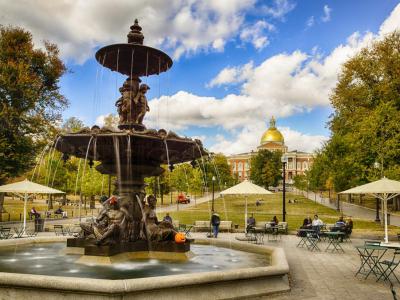
1) Boston Common (must see)


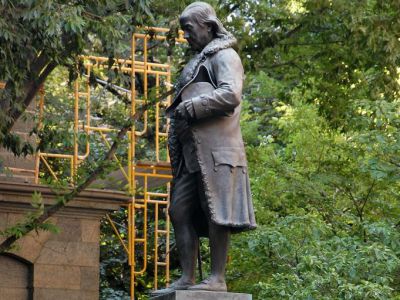

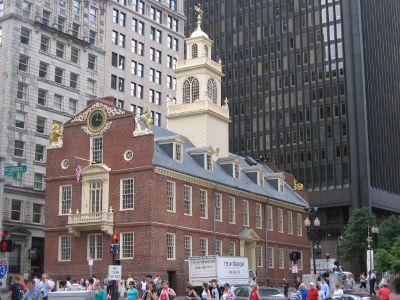
7) Old State House (must see)
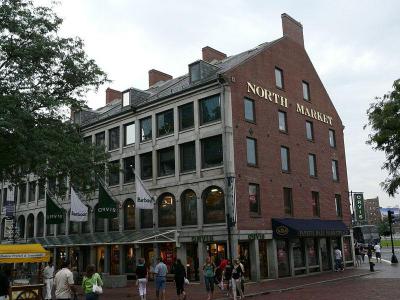
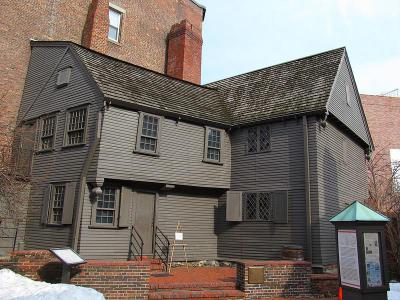
9) Paul Revere House (must see)
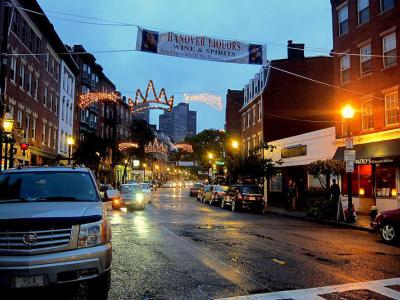
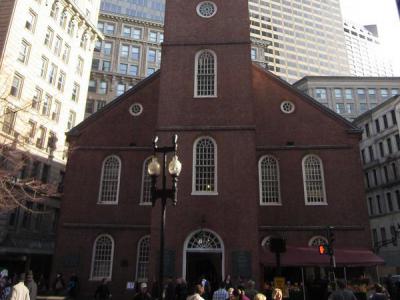
11) Old North Church (must see)
Walking Tours in Boston, Massachusetts

Create Your Own Walk in Boston
Creating your own self-guided walk in Boston is easy and fun. Choose the city attractions that you want to see and a walk route map will be created just for you. You can even set your hotel as the start point of the walk.

Historical Churches Walking Tour
Boston's great churches are among the most precious of the city's numerous architectural jewels. What makes them special are their unique styles, elegant facades and long history.
Starting with the Old North Church, which towers in the city’s North End, this journey surely feels like taking a step back in time. Legend was made there, in the very place that Paul Revere waited for... view more
Tour Duration: 2 Hour(s)
Travel Distance: 3.6 Km or 2.2 Miles
Starting with the Old North Church, which towers in the city’s North End, this journey surely feels like taking a step back in time. Legend was made there, in the very place that Paul Revere waited for... view more
Tour Duration: 2 Hour(s)
Travel Distance: 3.6 Km or 2.2 Miles

Beacon Hill Historic Houses Tour
Boston’s historic neighborhood of Beacon Hill is quite a charm! One can spend hours here, admiring the elegant uniformity and restraint of the architecture; at times, perhaps, imagining people from the past in their horse-drawn carriages. Federal-style and Victorian row houses, narrow streets lit by antique gas lanterns, brick sidewalks and lavender-hued windows adorn the area, which is... view more
Tour Duration: 1 Hour(s)
Travel Distance: 2.1 Km or 1.3 Miles
Tour Duration: 1 Hour(s)
Travel Distance: 2.1 Km or 1.3 Miles

Bunker Hill Walking Tour
Bunker Hill rises above the banks of the Charles River like a chapter of American history carved in stone. At the heart of it all stands the towering Bunker Hill Monument, a granite obelisk that marks one of the earliest and most defining clashes of the American Revolution. Indeed, it is really hard to miss, both physically and historically...
The battle fought here on June 17, 1775, was... view more
Tour Duration: 1 Hour(s)
Travel Distance: 1.5 Km or 0.9 Miles
The battle fought here on June 17, 1775, was... view more
Tour Duration: 1 Hour(s)
Travel Distance: 1.5 Km or 0.9 Miles

North End Food Tour
Boston’s North End is famous primarily for its Italian food. By far not as big as New York's Little Italy, this one-square-mile waterfront community is the oldest in the city, and is packed to the brim with a cornucopia of Italian eateries – restaurants, cafes, espresso bars, pizza and sandwich shops – lined next to each other within just a few short blocks to ensure visitors both a... view more
Tour Duration: 1 Hour(s)
Travel Distance: 0.8 Km or 0.5 Miles
Tour Duration: 1 Hour(s)
Travel Distance: 0.8 Km or 0.5 Miles

Historical Cambridge MA Walking Tour
Once a quiet New England farming village that briefly served as the capital of the Massachusetts Bay Colony, today’s Cambridge, Massachusetts, is a university town that dazzles visitors as the home of renowned Harvard University – alma mater to intellectuals, literary giants, Nobel Prize winners, celebrities, and political leaders. Many of America’s elite have spent time within Harvard’s... view more
Tour Duration: 2 Hour(s)
Travel Distance: 3.5 Km or 2.2 Miles
Tour Duration: 2 Hour(s)
Travel Distance: 3.5 Km or 2.2 Miles

Boston Shopping Areas
One of the top shopping destinations in the US northeast, Boston has a strong network of interesting stores, galleries and boutiques to visit along with its many high-class shops, some of which are nestled inside historical buildings. Shopping here in more than one way mirrors the city itself: an amalgamation of classic and vanguard, the handmade and the high-end, and both local and international... view more
Tour Duration: 2 Hour(s)
Travel Distance: 3.2 Km or 2 Miles
Tour Duration: 2 Hour(s)
Travel Distance: 3.2 Km or 2 Miles
Useful Travel Guides for Planning Your Trip

Boston's Marblehead Eateries
With such a diverse variety of dining cuisines and styles, the little town of Marblehead has something to satisfy every budget and culinary palate. You won't find any neon here, none is allowed in town and there are no fast food or drive-thrus establishments either. Most are quaint and...
The Most Popular Cities
/ view all