

Kowloon Walking Tour, Hong Kong

Kowloon Walking Tour (Self Guided), Hong Kong

Kowloon is the urban peninsula directly north of Victoria Harbor, forming one of Hong Kong’s most densely populated and historically significant districts. The name Kowloon translates to “Nine Dragons”. According to legend, the Song-dynasty Emperor Bing once observed eight surrounding hills and proclaimed them dragons; an attendant reminded him that the emperor himself counted as a dragon, bringing the total to nine. The term came to refer specifically to the peninsula north of Victoria Harbor, long before it was urbanized.

For centuries, Kowloon was home to Hakka villages, salt fields, fishing hamlets, and small agrarian communities spread across the foothills of Lion Rock and along the sheltered inlets of the peninsula. Its strategic position made it valuable to successive Chinese dynasties, but contact with foreign powers remained limited until the nineteenth century. After the First Opium War, the Treaty of Nanking ceded Hong Kong Island to Britain, while Kowloon remained under Qing rule. This changed in 1860, when the Convention of Peking transferred the Kowloon Peninsula south of Boundary Street to British control. In 1898, Britain leased the area north of Boundary Street—the New Territories—for ninety-nine years, further expanding colonial jurisdiction.

Kowloon rapidly evolved as a military and administrative outpost, with new roads, garrisons, and telegraph lines connecting it to the growing colony. Nathan Road, begun in the 1860s, became the spine of development as reclamation projects extended the shoreline and allowed construction of warehouses, piers, railway lines, and eventually the 1910s Kowloon–Canton Railway Terminus. By the early twentieth century, Kowloon had transformed into a dense urban district of shops, workshops, cinemas, and tenements that attracted new arrivals from mainland China.

After World War II, Kowloon experienced a dramatic population boom driven by migration, industry, and public-housing development. Areas like Tsim Sha Tsui became cultural and commercial districts filled with hotels, department stores, and entertainment venues. By the late twentieth century, major heritage structures—such as the Former Marine Police Headquarters and the 1915 Clock Tower—were preserved amid rapid modernization.

A walk through Kowloon reveals a concentrated mix of history and harborfront scenery. Visitors pass the Hong Kong Museum of History, continue to the Tsim Sha Tsui Promenade and the star-studded Avenue of Stars, and encounter the 1915 Clock Tower near the waterfront. Nearby stands the restored Former Marine Police Headquarters and the Peninsula Hotel. Heading inland brings walkers onto Nathan Road’s busy shopping corridor and, farther north, the lively Jade Market.

Today, Kowloon remains a mix of historic layers, urban energy, and cultural diversity, reflecting its long evolution from rural peninsula to one of Hong Kong’s most dynamic districts.
How it works: Download the app "GPSmyCity: Walks in 1K+ Cities" from Apple App Store or Google Play Store to your mobile phone or tablet. The app turns your mobile device into a personal tour guide and its built-in GPS navigation functions guide you from one tour stop to next. The app works offline, so no data plan is needed when traveling abroad.

Download The GPSmyCity App

Kowloon Walking Tour Map

Guide Name: Kowloon Walking Tour
Guide Location: Hong Kong » Hong Kong (See other walking tours in Hong Kong)
Guide Type: Self-guided Walking Tour (Sightseeing)
# of Attractions: 9
Tour Duration: 2 Hour(s)
Travel Distance: 4.6 Km or 2.9 Miles
Author: emma
Sight(s) Featured in This Guide:
  • Hong Kong Museum of History
  • Tsim Sha Tsui Promenade
  • Avenue of Stars
  • Clock Tower
  • Former Marine Police Headquarters
  • The Peninsula Hotel
  • Nathan Road
  • St. Andrew Church
  • Jade Market
1
Hong Kong Museum of History

1) Hong Kong Museum of History (must see)

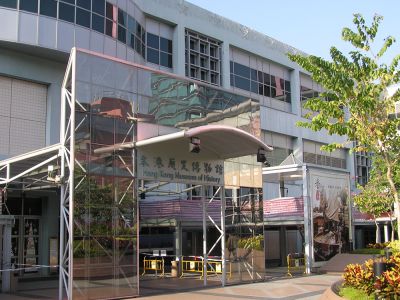
From prehistoric settlements to the late twentieth century, The Hong Kong Museum of History presents a detailed and engaging account of the all the city’s past. Created to preserve and interpret the region’s cultural heritage, it has become one of the most informative places to understand how Hong Kong evolved socially, economically, and politically. Its exhibitions examine the many forces that shaped the territory, from early coastal communities along the Pearl River Delta to the changing patterns of trade, migration, and colonial administration that later defined the city’s trajectory.

At the center of the museum is its permanent exhibition, The Hong Kong Story, which includes more than 4,000 objects displayed across eight galleries. This chronological journey combines prehistoric fossils, ancient pottery, colonial documents, archaeological finds, recreated village scenes. Traditional festival costumes, household items, and records from different eras show how local communities lived and adapted over time.

The exhibition also addresses crucial turning points, including the Opium Wars, the rise of Victoria City, and Hong Kong’s swift transformation in the twentieth century. Cultural life receives significant attention, with dedicated displays on Cantonese opera, festival traditions, and folk beliefs. They reveal how rituals, performances, and daily customs remain central to the city’s character.

The museum's origins go back to 1962, when the City Museum and Art Gallery was established. In 1975, it was divided into two institutions—the Hong Kong Museum of History and the Hong Kong Museum of Art—and the history branch moved between temporary sites before settling in its current Tsim Sha Tsui location in 1998. Today, the museum provides a well-structured introduction to the city’s past, making it a valuable stop for travelers who want to place modern Hong Kong within a wider historical and cultural context.
2
Tsim Sha Tsui Promenade

2) Tsim Sha Tsui Promenade (must see)

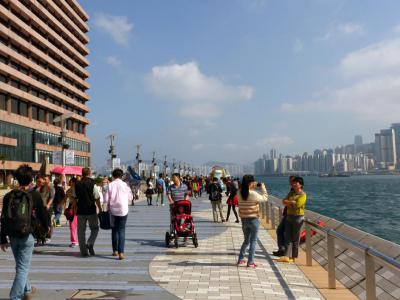
Tsim Sha Tsui, or TST as it is commonly known, is a major urban district in southern Kowloon and one of Hong Kong’s most visited neighborhoods. Its dense concentration of shops, restaurants, cultural venues, and waterfront attractions has made it a longstanding favorite among travelers. One of its features is the Tsim Sha Tsui Promenade, a scenic walkway that stretches approximately 1.6 kilometers along Victoria Harbor and offers uninterrupted views of Hong Kong Island’s skyline.

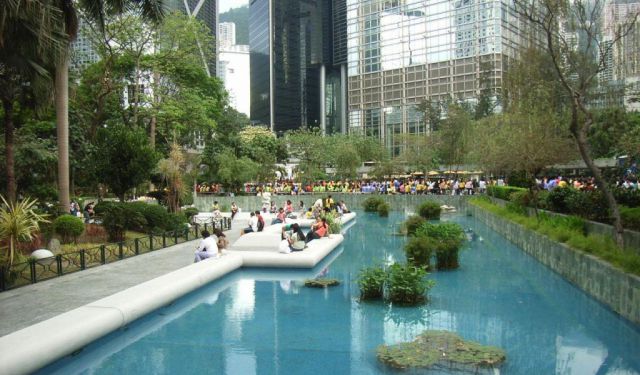
The promenade forms part of a waterfront area developed in phases throughout the late twentieth century, replacing earlier piers and cargo facilities along the shore. As visitors walk the route, they pass several well-known attractions. One of the attractions is Tsim Sha Tsui Waterfront Park, a public open space along the harbor where visitors can walk, rest on landscaped terraces, and enjoy uninterrupted views of Victoria Harbor. The park is freely accessible throughout the day and serves as a quieter extension of the busier promenade.

Major festivals add to the atmosphere: the Lunar New Year Fireworks over Victoria Harbor, the Mid-Autumn Festival lantern displays, and the Christmas light installations along the waterfront’s buildings are among the most anticipated. The Hong Kong Cultural Center frequently contributes additional programming, including outdoor performances and cultural showcases that extend activity onto the piazzas and waterfront spaces.

Returning after sunset provides an entirely different experience. This is when A Symphony of Lights, the nightly multimedia show launched in 2004, illuminates the skyline with coordinated beams, lasers, and music from more than 40 buildings on both sides of the harbor. Watching the performance from the promenade’s waterfront rail offers one of the most memorable night views in Hong Kong.
3
Avenue of Stars

3) Avenue of Stars

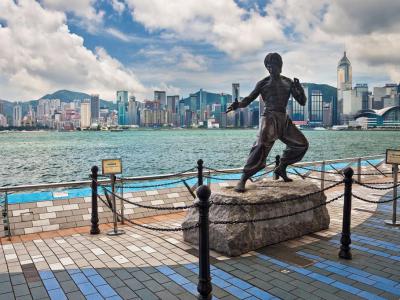
The Avenue of the Stars is Hong Kong’s tribute to the filmmakers, performers, and industry figures who have shaped its world-renowned entertainment scene, forming one of Tsim Sha Tsui’s most popular open-air attractions. The promenade features handprints, plaques, and sculptures that celebrate more than a century of local cinema. Among its most recognizable landmarks are the towering Hong Kong Film Awards statue, the bronze statue of Bruce Lee, a commemorative sculpture of the 2008 Olympic torch, and additional figures such as Anita Mui and the cartoon character McDull.

Starting at the center of the Avenue of Stars, the Bruce Lee statue stands directly facing the harbor, positioned to the right of the Starbucks entrance, with the water on the south side and the city skyline to the north. From this point, keep the harbor to your left and walk west along the waterfront. After a short stroll of just a few meters, you will reach the Anita Mui statue and the nearby seating terraces, located to the left of Starbucks. Further along the way, you'll encounter the small bronze figure of McDull.

The Bruce Lee statue itself is a 2.5-meter bronze sculpture by artist Cao Chong-en, depicting the star in a “ready to strike” pose inspired by the film Fist of Fury. It was funded by the Hong Kong Bruce Lee Club and unveiled in 2005 to mark what would have been Lee’s 65th birthday, and it has since become a pilgrimage point for fans worldwide. The two-meter bronze statue of Cantopop icon and actress Anita Mui stands on a base shaped with stylized flowing water, a nod to her song “Homecoming”, with an inscription reading “Daughter of Hong Kong” in the calligraphy of her friend Andy Lau.

The McDull statue, a small bronze of Hong Kong’s beloved cartoon pig, is set low to the ground so that children can easily pose with it; the character’s upraised finger points to the sky in a playful “wish-making” gesture. Together with the plaques honoring stars such as Jackie Chan, Bruce Lee, John Woo, Chow Yun-fat, and Jet Li, these sculptures turn the Avenue of Stars into a compact open-air museum of Hong Kong cinema.
4
Clock Tower

4) Clock Tower

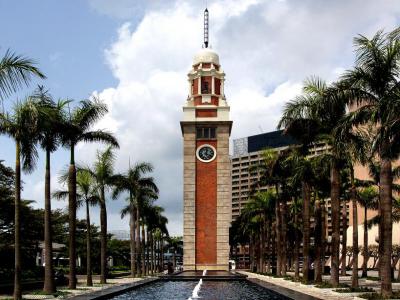
The Clock Tower is a 144-foot red-brick and granite landmark. Formerly known as the Kowloon–Canton Railway Clock Tower, it is the sole surviving remnant of the original Kowloon Station, which once stood on this waterfront site. For decades, the tower marked the southern terminus of the railway line that connected Hong Kong with Canton. Today, it stands just inland from the Tsim Sha Tsui Promenade, within easy reach of the Hong Kong Cultural Center and the Avenue of Stars.

Construction of the tower was completed in 1915. Its first clock face was salvaged from the Pedder Street Clock Tower in Central, demolished in 1913, allowing the new station to carry on the tradition of a public timepiece. The other three clock faces were installed later, in 1920, completing the four-sided design. The adjacent station building, built in a distinctive Edwardian Baroque style, stood until the late 1970s.

When the Kowloon–Canton Railway terminus was moved to Hung Hom in 1975, the entire Tsim Sha Tsui station complex was scheduled for demolition. The Heritage Society of Hong Kong campaigned vigorously to save the structure, but negotiations resulted in a compromise: although the station was removed, the Clock Tower was preserved as a symbol of the city’s railway heritage. It was officially declared a monument in 1990 under the Antiquities and Monuments Ordinance.

While the interior is not generally open to the public, limited access may occur during special maintenance or heritage events. Illuminated in the evening and framed by Victoria Harbor on one side and the Cultural Center on the other, it remains one of Tsim Sha Tsui’s most recognizable historic landmarks.
5
Former Marine Police Headquarters

5) Former Marine Police Headquarters

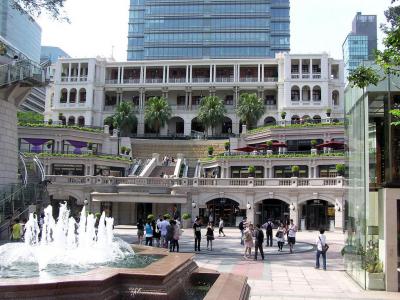
The Former Marine Police Headquarters is one of Hong Kong’s oldest surviving colonial compounds, dating back to 1884. For more than a century—until 1996—it served as the headquarters of the Marine Police, who patrolled Victoria Harbor and protected Hong Kong’s busy maritime trade routes. After the force relocated, the hilltop compound underwent extensive conservation and adaptive reuse, reopening in 2009 as 1881 Heritage, a cultural, commercial, and hospitality complex.

The compound originally consisted of five major structures arranged on a raised terrace overlooking Tsim Sha Tsui’s waterfront. The Main Building—now known as Hullett House—was a two-story colonial residence that housed married officers and the superintendent. Following restoration, it became a boutique hotel and later rebranded as the House 1881 hotel before ceasing hotel operations in 2021. Now it accommodates dining venues and event spaces. Other historic structures include the Stable Block, once used for police horses; the Signal Tower, built in 1885 to help ships set their marine chronometers by dropping a time ball daily at precisely 1 pm; the Old Kowloon Fire Station, which dates to 1920; and the adjacent Fire Station Accommodation Block that housed firefighters.

Approaching from Canton Road, you first encounter the Main Building centered at the top of the grand staircase, occupying the highest and most prominent position on the terrace. To your right, on the eastern side, stands the Stable Block, a long, lower structure set slightly behind the main facade. Moving westward across the courtyard from the Main Building, you reach the Old Kowloon Fire Station, distinguishable by its simple utilitarian form, with the Fire Station Accommodation Block positioned directly behind it on the northwestern edge of the compound. The Signal Tower sits on the southwestern corner.

Today, 1881 Heritage blends these restored buildings with landscaped terraces, courtyards, and new additions that respect the original architectural style. Luxury boutiques—such as Van Cleef & Arpels, Montblanc, and Mikimoto—occupy the arcaded ground floors, while restaurants serve a mix of Cantonese, Japanese, and Western fine dining. Seasonal displays, open-air events, and the atmospheric lighting of the historic facades make the complex a popular evening destination. And in the end, we observe a rare example of successful heritage conservation in Hong Kong.
6
The Peninsula Hotel

6) The Peninsula Hotel

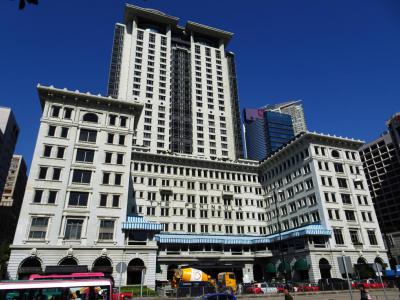
The Peninsula Hotel is one of Hong Kong’s most historic luxury hotels, often referred to as “The Grand Old Lady of the Far East”. Completed in 1928 and opened in 1929, it was built with the ambition of becoming the most elegant hotel in Asia, catering to travelers arriving by ocean liner at nearby Kowloon Wharf. Its founders, the Kadoorie family, developed the hotel into a social center. Nightly dinners, tea dances, Sunday concerts, and glamorous ballroom events made it a gathering place for Hong Kong’s elite, visiting dignitaries, and Hollywood celebrities passing through the city.

The hotel also played a notable role during World War II. On Christmas Day 1941, at the end of the Battle of Hong Kong, Governor Mark Aitchison Young surrendered to Japanese forces on the third floor of the building. During the occupation, the Peninsula was renamed the “Toa Hotel” and used as the Japanese military headquarters. After the war, the hotel returned to its original name and gradually re-established itself as one of Asia’s premier luxury properties.

In the decades since, the Peninsula has been expanded and modernized while maintaining its classic colonial facade. The 1994 addition of a 30-story tower brought new guest rooms, a rooftop restaurant, and panoramic harbor views. Among its features today is its fleet of signature green Rolls-Royces, chauffeuring guests in unmistakably Peninsula style. The hotel’s shopping arcade is another draw, housing some of the world’s most prestigious luxury brands, including Gucci, Prada, Cartier, Hermès, and Harry Winston.
7
Nathan Road

7) Nathan Road

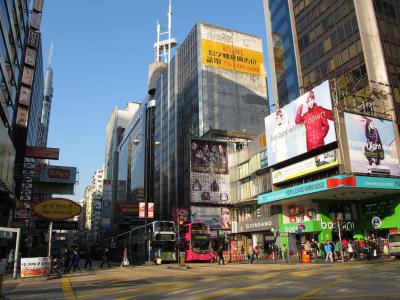
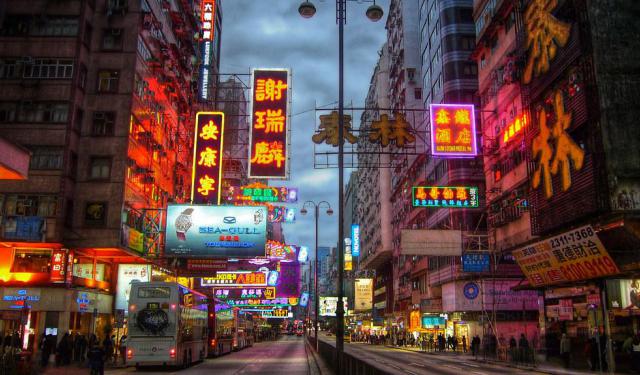
It is nearly impossible to visit the city without walking along at least part of Nathan Road, one of Hong Kong’s most famous thoroughfares, often referred to as the “Golden Mile”, it connects several of Kowloon’s busiest neighborhoods. It is lined with shops, hotels, neon signs, and cultural landmarks that make it a popular route for both tourists and locals.

Starting at the southern end of Nathan Road beside the Hong Kong Space Museum, face away from the harbor and walk north on the left-hand sidewalk. Within a minute you will see the white domes of the Kowloon Masjid and Islamic Center on your left; it is one of Hong Kong’s most important Islamic landmarks, known for its four minarets and large prayer hall that serves the city’s Muslim community.

A brief walk brings you to the broad steps of Kowloon Park’s main entrance, also on your left. Inside the gate, Kung Fu Corner occupies an open-air square where martial-arts demonstrations are held on weekends, showcasing traditional forms such as lion dancing and Wing Chun.

The origins of Nathan Road date back to 1861, when the first section—then called Robinson Road—was constructed by the British colonial administration. Because Hong Kong Island already had a Robinson Road, the Kowloon road was renamed Nathan Road in 1909 in honor of Sir Matthew Nathan, who served as Governor of Hong Kong from 1904 to 1907.

Today, Nathan Road is known for its dense concentration of shopping centers, electronics stores, jewelry shops, tailors, and eateries ranging from casual cafes to long-established Cantonese restaurants. Despite heavy vehicle traffic, the sidewalks are wide and offer enough space for strolling, browsing, and photography. Visitors planning to explore the street should allow extra time to enjoy its shops, side streets, and the lively atmosphere.
8
St. Andrew Church

8) St. Andrew Church

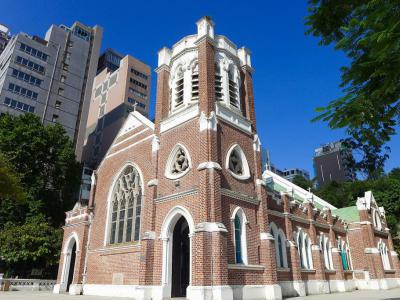
Saint Andrew’s Church is an Anglican Province, belonging to the Diocese of Western Kowloon and offers services in both English and Mandarin Chinese. It is also the oldest Anglican church in Kowloon, though not the oldest Protestant church in the entire region. Still, Saint Andrew’s remains one of the most historically significant Christian buildings in Kowloon.

In 1904, Sir Catchick Paul Chater—an influential British-Indian businessman of Armenian descent—donated HK$35,000 to fund the construction of a new Anglican church in Kowloon. Construction began in 1904 and was completed in 1906, establishing a permanent Anglican presence in what would soon become a rapidly developing urban district.

Architecturally, Saint Andrew’s is built in the Early English Gothic Revival style. The main structure features granite and red brick, with pointed arches, lancet windows, and a cruciform floor plan typical of English parish churches of the period. A distinctive square bell tower rises at the front of the building. The church interior retains much of its original character, including wooden trusses and stained-glass windows.

During the Japanese occupation of Hong Kong in World War II, Saint Andrew’s was converted into a Shinto shrine, though it returned to Christian use after the war. In 1979, the adjacent Saint Andrew’s Christian Center was completed to house various Christian organizations and ministries. Today, the church continues to serve a diverse congregation and remains an important religious and architectural landmark in Kowloon.
9
Jade Market

9) Jade Market

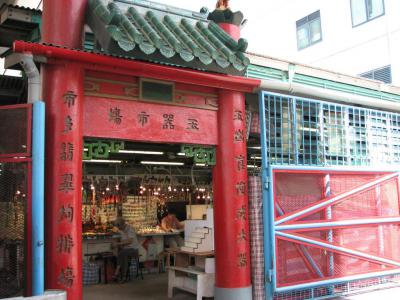
The Jade Market is an indoor marketplace known for its wide selection of jade, pearls, gemstones, and other semi-precious items. Popular with both tourists and locals, it offers a traditional street-market atmosphere while providing the convenience of an enclosed setting. Shoppers visit for everything from inexpensive souvenirs to higher-end jade pieces, making it one of Kowloon’s most distinctive markets.

The market contains more than 400 stalls, each offering items that suit a range of budgets. Prices are flexible, and bargaining is expected. Vendors may begin with high starting prices, but buyers can usually negotiate to about half the asking price—or even lower—depending on the item and the stallholder. This approach is part of the experience and often leads to a lively, friendly exchange.

Understanding jade quality can help visitors make more informed purchases. Top-grade jade is a vivid, pure green and can be extremely expensive. Many pieces have yellow or lighter green tones, but well-finished items should not show brown or gray patches. The most valuable jade is semi-transparent, while opaque stones with cloudy areas tend to be of lower quality. In Chinese culture, jade is associated with beauty, purity, and protection. It is traditionally believed to promote good health and longevity, and many people wear jade amulets as protective charms.

Walking Tours in Hong Kong, Hong Kong

Create Your Own Walk in Hong Kong

Create Your Own Walk in Hong Kong

Creating your own self-guided walk in Hong Kong is easy and fun. Choose the city attractions that you want to see and a walk route map will be created just for you. You can even set your hotel as the start point of the walk.
Colonial Buildings in Central Hong Kong

Colonial Buildings in Central Hong Kong

Hong Kong’s Central district is one of the rare places in Asia where traces of a colonial past stand visibly beside glass towers and global financial institutions. Moving through these streets reveals a network of buildings that once shaped governance, religion, trade, and everyday life during more than 150 years of British administration. Together, they chart Hong Kong’s evolution from a...  view more

Tour Duration: 2 Hour(s)
Travel Distance: 2.5 Km or 1.6 Miles
Downtown Introduction Walking Tour

Downtown Introduction Walking Tour

Hong Kong is a city defined by contrasts—towering glass skylines rising beside quiet temples and centuries of culture. Even its name, from the Cantonese Heung Gong, meaning “Fragrant Harbor”, hints at its early role as a trading point for incense woods and aromatic goods moving through the Pearl River Delta. What began as the name of a small village near the present-day Aberdeen area...  view more

Tour Duration: 2 Hour(s)
Travel Distance: 3.7 Km or 2.3 Miles
Causeway Bay Walking Tour

Causeway Bay Walking Tour

If you're looking for a taste of Hong Kong's energetic urban life, Causeway Bay is the place to be. Well known for its mega shopping malls and skyscrapers “rubbing shoulders” with rustic streets and picturesque corners, this bustling district is one of the city's most popular shopping and entertainment hubs.

The foremost among its landmarks is Times Square. Despite the name,...  view more

Tour Duration: 1 Hour(s)
Travel Distance: 2.8 Km or 1.7 Miles
Useful Travel Guides for Planning Your Trip

15 Hong Kong Products A Traveller Shouldn't Miss

15 Hong Kong Products A Traveller Shouldn't Miss

The image of Hong Kong has been much popular with tourists since the late 1960s-early 70s, in large part due to the Bruce Lee movies, and has remained so after the city was ceded back to China in 1997. Still, despite such popularity, there're quite a few things, originally made in Hong Kong,...
The Seafood Mile, Hong Kong

The Seafood Mile, Hong Kong

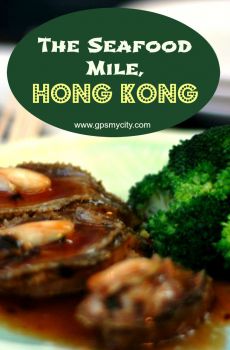
Cheung Chau is one of a cluster of Islands off the coast of Hong Kong. It has a fishing harbor to the front, which is lit up at night with tiny green, blue and white boat lights. The harbor is overlooked by many restaurants and street food can be bought from many vendors, who line up throwing an...