

Audio Guide: French Quarter Walking Tour (Self Guided), Charleston
Charleston’s French Quarter is a district with a long memory and a relatively new name. Once filled with French merchants trading goods and gossip, this neighborhood carries its legacy more in atmosphere than language. The name itself is a modern touch—coined in 1973, when locals decided these old warehouse-lined streets were worth saving. That same year, the area earned a spot on the National Register of Historic Places, confirming what the city already knew: this was no ordinary corner, but one of Charleston’s historic engines of commerce and culture.
The district's layout isn’t accidental. It follows the 1680 Grande Modell of Charles Towne, one of the earliest urban plans in colonial America. Think of it as a carefully drawn grid with natural edges: the Cooper River to the east, Broad Street to the south, Meeting Street to the west, and Market Street to the north. Within these boundaries, the streets stay compact, but the stories stack up quickly.
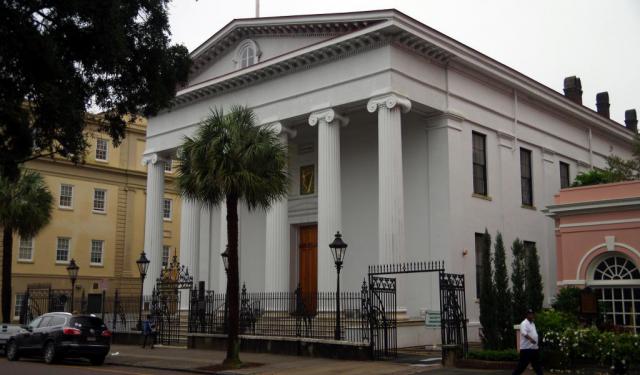
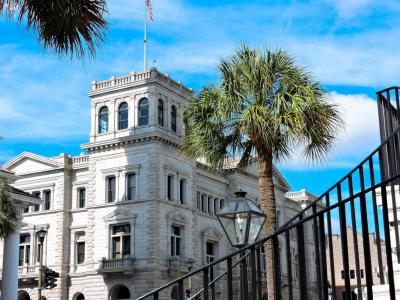
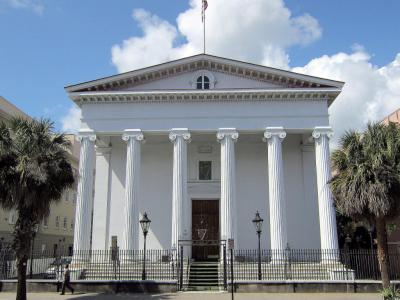
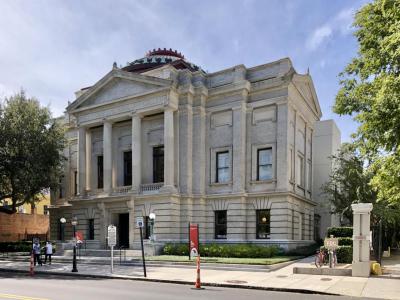
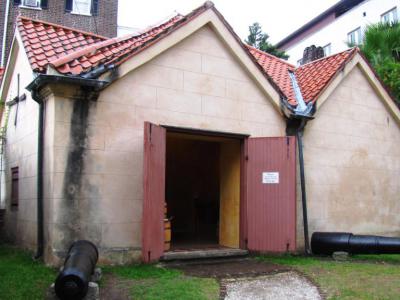
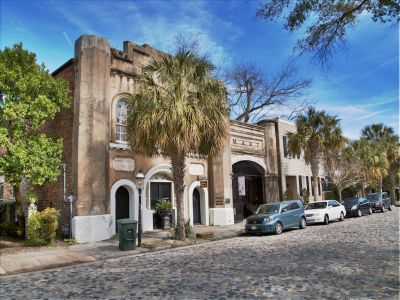
You’ll notice that variety almost immediately. The Charleston County Courthouse stands with quiet authority, while Hibernian Hall adds a touch of 19th-century elegance shaped by the city’s Irish community. A few steps away, the Gibbes Museum of Art shifts the mood toward creativity, housing a strong collection of American works. Then the tone deepens. The Powder Magazine, Charleston’s oldest public building, speaks of defense and survival, while the Old Slave Mart confronts a far more difficult chapter, offering a direct look at the city’s role in the slave trade.
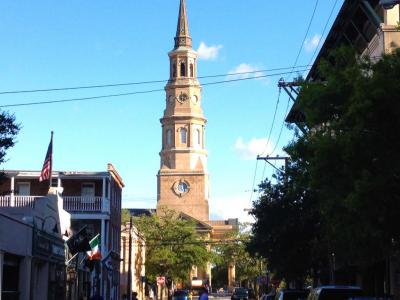
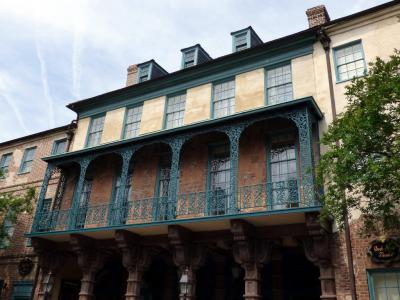
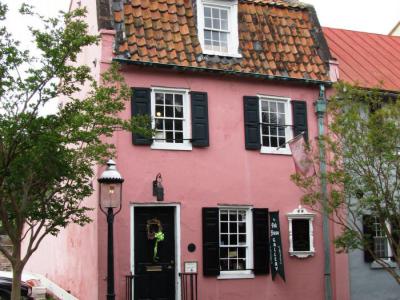
History continues to unfold as you move along. The Pink House Tavern, dating back to around 1712, has watched centuries pass from its small but sturdy frame. Not far from it, the Dock Street Theatre marks one of the earliest chapters in American performance. And then there’s St. Philip’s Episcopal Church, completed in 1835, anchoring the district both visually and historically. Its graveyard connects you to figures like Edward Rutledge and John C. Calhoun—names that echo far beyond Charleston.
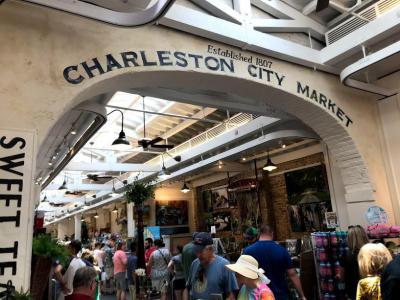
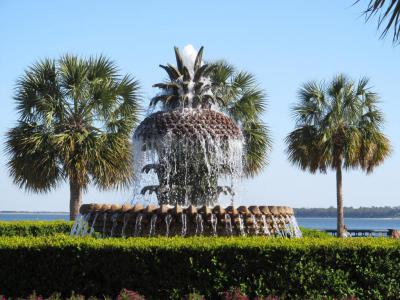
Today, the French Quarter keeps its rhythm. The Charleston City Market buzzes with crafts and local goods, while Waterfront Park opens the space toward the river and the horizon. And if you’re ready to take it all in from above, The Rooftop at The Vendue offers a clear reminder that this district isn’t frozen in time—it simply knows how to carry it well.
If you’re curious to see how all these layers fit together, our self-guided tour will guide you through them, step by step. So, go ahead, let each stop on this walk add another piece to the story, and see how much of the French Quarter you can uncover on your own terms.
The district's layout isn’t accidental. It follows the 1680 Grande Modell of Charles Towne, one of the earliest urban plans in colonial America. Think of it as a carefully drawn grid with natural edges: the Cooper River to the east, Broad Street to the south, Meeting Street to the west, and Market Street to the north. Within these boundaries, the streets stay compact, but the stories stack up quickly.
You’ll notice that variety almost immediately. The Charleston County Courthouse stands with quiet authority, while Hibernian Hall adds a touch of 19th-century elegance shaped by the city’s Irish community. A few steps away, the Gibbes Museum of Art shifts the mood toward creativity, housing a strong collection of American works. Then the tone deepens. The Powder Magazine, Charleston’s oldest public building, speaks of defense and survival, while the Old Slave Mart confronts a far more difficult chapter, offering a direct look at the city’s role in the slave trade.
History continues to unfold as you move along. The Pink House Tavern, dating back to around 1712, has watched centuries pass from its small but sturdy frame. Not far from it, the Dock Street Theatre marks one of the earliest chapters in American performance. And then there’s St. Philip’s Episcopal Church, completed in 1835, anchoring the district both visually and historically. Its graveyard connects you to figures like Edward Rutledge and John C. Calhoun—names that echo far beyond Charleston.
Today, the French Quarter keeps its rhythm. The Charleston City Market buzzes with crafts and local goods, while Waterfront Park opens the space toward the river and the horizon. And if you’re ready to take it all in from above, The Rooftop at The Vendue offers a clear reminder that this district isn’t frozen in time—it simply knows how to carry it well.
If you’re curious to see how all these layers fit together, our self-guided tour will guide you through them, step by step. So, go ahead, let each stop on this walk add another piece to the story, and see how much of the French Quarter you can uncover on your own terms.
How it works: Download the app "GPSmyCity: Walks in 1K+ Cities" from Apple App Store or Google Play Store to your mobile phone or tablet. The app turns your mobile device into a personal tour guide and its built-in GPS navigation functions guide you from one tour stop to next. The app works offline, so no data plan is needed when traveling abroad.
Download The GPSmyCity App



French Quarter Walking Tour Map
Guide Name: French Quarter Walking Tour
Guide Location: USA » Charleston (See other walking tours in Charleston)
Guide Type: Self-guided Walking Tour (Sightseeing)
Tour Duration: 1 Hour(s)
Travel Distance: 1.7 Km or 1.1 Miles
Guide Location: USA » Charleston (See other walking tours in Charleston)
Guide Type: Self-guided Walking Tour (Sightseeing)
Tour Duration: 1 Hour(s)
Travel Distance: 1.7 Km or 1.1 Miles
Sights Featured in This Walk

11) Joe Riley Waterfront Park (must see)
Walking Tours in Charleston, South Carolina

Create Your Own Walk in Charleston
Creating your own self-guided walk in Charleston is easy and fun. Choose the city attractions that you want to see and a walk route map will be created just for you. You can even set your hotel as the start point of the walk.
Harleston Village Walking Tour
Founded in the 18th century, the historic Harleston Village is a charming neighborhood in Charleston, South Carolina. The rich past and vibrant present of this area make it a popular destination for tourists.
At the heart of Harleston Village lies the College of Charleston, an esteemed institution of higher learning, established in 1770, adding a great deal of academic flair to the... view more
Tour Duration: 2 Hour(s)
Travel Distance: 2.3 Km or 1.4 Miles
At the heart of Harleston Village lies the College of Charleston, an esteemed institution of higher learning, established in 1770, adding a great deal of academic flair to the... view more
Tour Duration: 2 Hour(s)
Travel Distance: 2.3 Km or 1.4 Miles
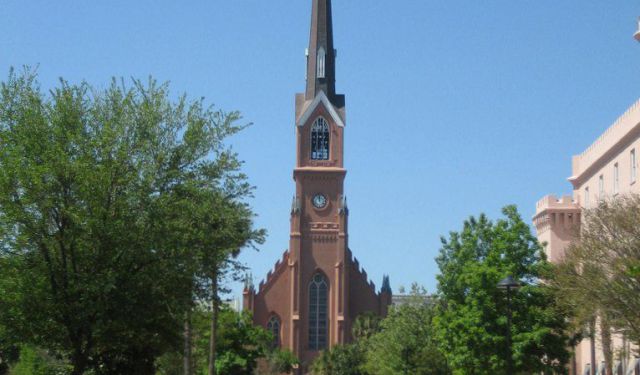
Downtown Historical Churches Tour
Charleston, South Carolina, is also sometimes called the “Holy City.” This is due to the large number of churches found here. Needless to say, the most fascinating of them are concentrated in the Downtown area, each with its unique charm and significance.
Among such temples of distinction is Saint Matthew's Church, an enduring symbol of Charleston's German Lutheran community. Its... view more
Tour Duration: 1 Hour(s)
Travel Distance: 1.3 Km or 0.8 Miles
Among such temples of distinction is Saint Matthew's Church, an enduring symbol of Charleston's German Lutheran community. Its... view more
Tour Duration: 1 Hour(s)
Travel Distance: 1.3 Km or 0.8 Miles
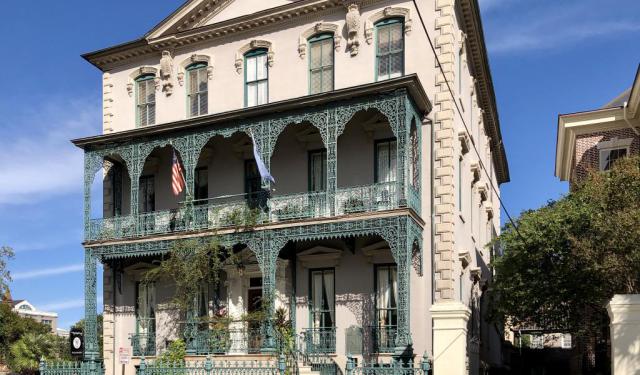
Historical Houses Tour
To say that Charleston has history is an understatement, to say the least—it practically drips with it. Walk the city's narrow cobblestone streets, framed by pastel façades and intricate wrought iron of the carefully preserved colonial homes, and you get the sense that the past hasn’t gone anywhere—it’s simply waiting on cue at the next corner.
As one of America’s oldest cities,... view more
Tour Duration: 2 Hour(s)
Travel Distance: 4.3 Km or 2.7 Miles
As one of America’s oldest cities,... view more
Tour Duration: 2 Hour(s)
Travel Distance: 4.3 Km or 2.7 Miles
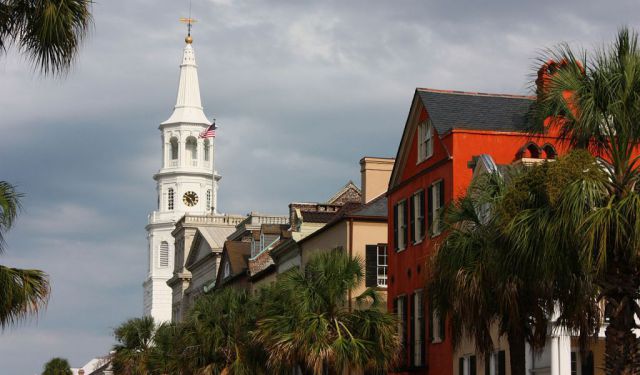
Charleston Introduction Walking Tour
A major port on the South Carolina coast and a favorite stop for travelers, Charleston is the kind of place that knows how to make an entrance—with its Southern charm, easygoing friendliness, and a long, layered history. Founded in 1670 as Charles Town, named so after King Charles II of England, it also holds an important distinction as the first comprehensively planned town in what would later... view more
Tour Duration: 2 Hour(s)
Travel Distance: 2.8 Km or 1.7 Miles
Tour Duration: 2 Hour(s)
Travel Distance: 2.8 Km or 1.7 Miles
The Most Popular Cities
/ view all