

Audio Guide: NYC's Chinatown and Little Italy Walking Tour (Self Guided), New York
If New York were a giant cookbook, Chinatown and Little Italy would definitely be the chapters where flavors go wild. These two neighbors on Manhattan’s Lower East Side started as modest immigrant enclaves and somehow ended up becoming two of the city’s most recognizable cultural districts. Their stories mirror the bigger tale of New York itself: arrivals from faraway places, tight-knit communities, and a whole lot of adaptation.
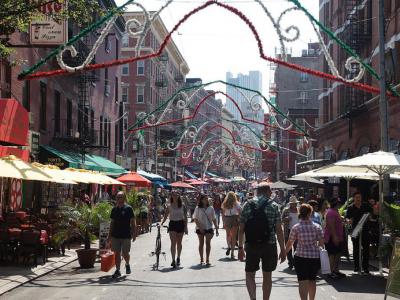
Little Italy took shape in the mid-19th century, when waves of Italians-mostly from Southern Italy and Sicily-landed in New York seeking economic opportunity and relief from political instability back home. By the 1880s and '90s, Mulberry Street had become their unofficial headquarters, surrounded by churches, mutual-aid societies, and family-run shops that seemed to operate on equal parts tradition and espresso. At its height, Little Italy stretched far beyond the few blocks you see today, housing tens of thousands of immigrants. But as Italian-Americans prospered, many moved to other parts of New York, and urban renewal projects shrank the district into the compact, charmingly symbolic slice it is now-especially lively during events like the Feast of San Gennaro.
Chinatown emerged slightly later but wasted no time growing as Chinese immigrants, initially drawn to the American West, faced harsh discriminatory laws such as the Chinese Exclusion Act of 1882. Many of them resettled in New York, forming a concentrated community around Mott, Pell, and Doyers Streets. Clan associations and benevolent societies helped keep the neighborhood steady through decades of restrictive policies. Then came 1965, when immigration reforms opened the gates, and Chinatown expanded quickly. By the 1970s and '80s, as Italian immigration slowed, Chinese immigration increased, and Chinatown surged south and east, eventually overtaking Little Italy in both population and physical size.
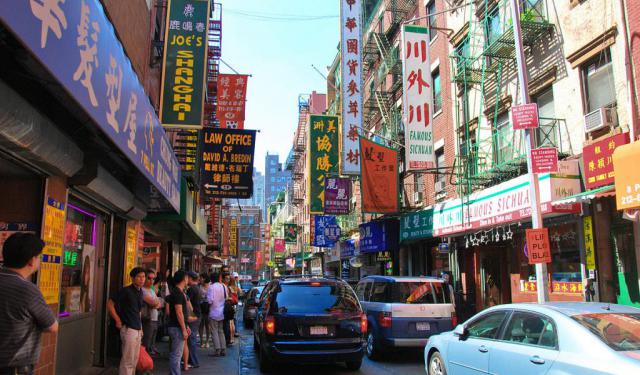
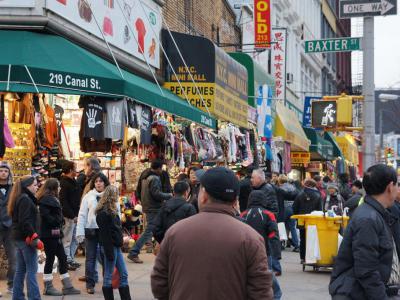
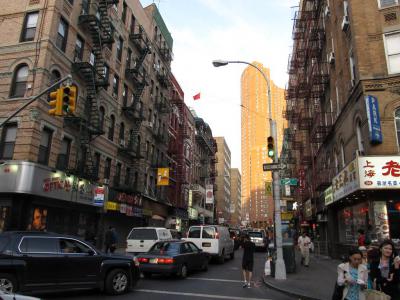
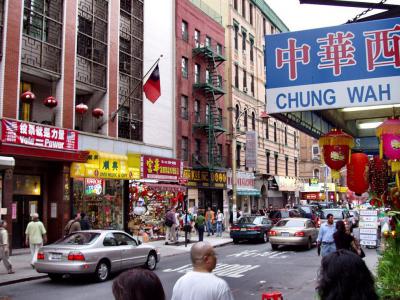
Today, the two neighborhoods sit shoulder to shoulder as living reminders of New York’s immigrant heritage. Walk from Mulberry Street to Canal Street and then up to Mott Street, and you'll encounter historic buildings, including one of the area’s quiet treasures with a rare wooden pagoda roof. Moving from cannoli and cafés of Little Italy to the vibrant and often crowded Chinatown, you'll see markets piled high with produce, noodle shops, and restaurants showing off their roasted ducks in the window.
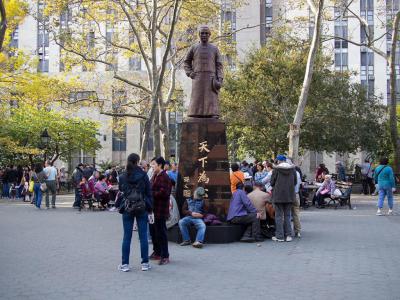
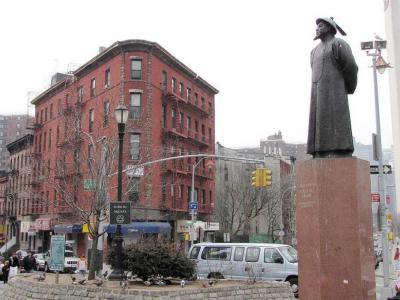
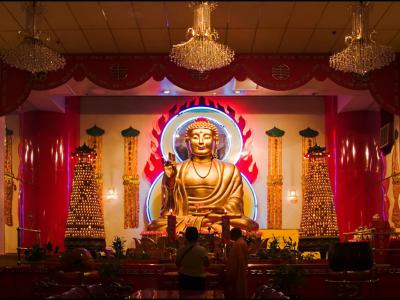
Places like Kimlau Square, the Memorial Arch dedicated to Chinese Americans who died in WWII, Confucius Plaza, and the Mahayana Buddhist Temple add more depth to the journey. Together, these side-by-side communities remind you that New York’s landscape isn’t just built of stone and steel-it’s built of stories that traveled across oceans and never stopped growing.
Little Italy took shape in the mid-19th century, when waves of Italians-mostly from Southern Italy and Sicily-landed in New York seeking economic opportunity and relief from political instability back home. By the 1880s and '90s, Mulberry Street had become their unofficial headquarters, surrounded by churches, mutual-aid societies, and family-run shops that seemed to operate on equal parts tradition and espresso. At its height, Little Italy stretched far beyond the few blocks you see today, housing tens of thousands of immigrants. But as Italian-Americans prospered, many moved to other parts of New York, and urban renewal projects shrank the district into the compact, charmingly symbolic slice it is now-especially lively during events like the Feast of San Gennaro.
Chinatown emerged slightly later but wasted no time growing as Chinese immigrants, initially drawn to the American West, faced harsh discriminatory laws such as the Chinese Exclusion Act of 1882. Many of them resettled in New York, forming a concentrated community around Mott, Pell, and Doyers Streets. Clan associations and benevolent societies helped keep the neighborhood steady through decades of restrictive policies. Then came 1965, when immigration reforms opened the gates, and Chinatown expanded quickly. By the 1970s and '80s, as Italian immigration slowed, Chinese immigration increased, and Chinatown surged south and east, eventually overtaking Little Italy in both population and physical size.
Today, the two neighborhoods sit shoulder to shoulder as living reminders of New York’s immigrant heritage. Walk from Mulberry Street to Canal Street and then up to Mott Street, and you'll encounter historic buildings, including one of the area’s quiet treasures with a rare wooden pagoda roof. Moving from cannoli and cafés of Little Italy to the vibrant and often crowded Chinatown, you'll see markets piled high with produce, noodle shops, and restaurants showing off their roasted ducks in the window.
Places like Kimlau Square, the Memorial Arch dedicated to Chinese Americans who died in WWII, Confucius Plaza, and the Mahayana Buddhist Temple add more depth to the journey. Together, these side-by-side communities remind you that New York’s landscape isn’t just built of stone and steel-it’s built of stories that traveled across oceans and never stopped growing.
How it works: Download the app "GPSmyCity: Walks in 1K+ Cities" from Apple App Store or Google Play Store to your mobile phone or tablet. The app turns your mobile device into a personal tour guide and its built-in GPS navigation functions guide you from one tour stop to next. The app works offline, so no data plan is needed when traveling abroad.
Download The GPSmyCity App



NYC's Chinatown and Little Italy Walking Tour Map
Guide Name: NYC's Chinatown and Little Italy Walking Tour
Guide Location: USA » New York (See other walking tours in New York)
Guide Type: Self-guided Walking Tour (Sightseeing)
Tour Duration: 1 Hour(s)
Travel Distance: 1.6 Km or 1 Miles
Guide Location: USA » New York (See other walking tours in New York)
Guide Type: Self-guided Walking Tour (Sightseeing)
Tour Duration: 1 Hour(s)
Travel Distance: 1.6 Km or 1 Miles
Sights Featured in This Walk
Walking Tours in New York, New York

Create Your Own Walk in New York
Creating your own self-guided walk in New York is easy and fun. Choose the city attractions that you want to see and a walk route map will be created just for you. You can even set your hotel as the start point of the walk.
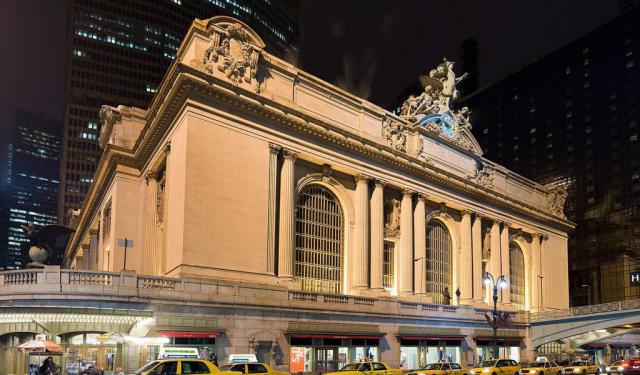
Grand Central Station to Union Square
Despite being smaller than almost everything around it, including the humongous MetLife Building that dwarfs it from behind, the Grand Central Terminal is just so gorgeous and palatial-looking that it still manages to be the centerpiece of the whole East Side of Midtown Manhattan. Passing from here to Union Square, our self-guided tour is bound to introduce you to some of New York City’s most... view more
Tour Duration: 2 Hour(s)
Travel Distance: 3.8 Km or 2.4 Miles
Tour Duration: 2 Hour(s)
Travel Distance: 3.8 Km or 2.4 Miles
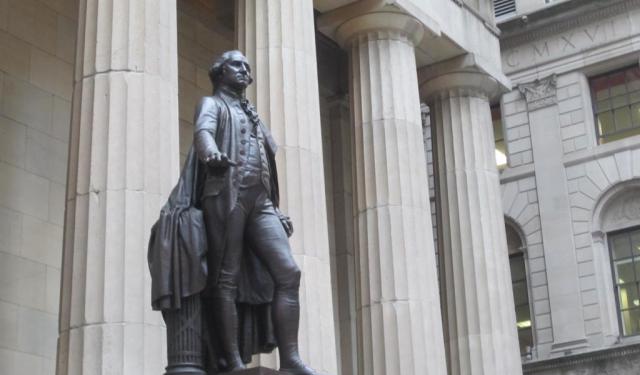
George Washington's New York
New York City hasn’t always been the all-steel, glass, and sky-high ambition metropolis it is today. In the late 18th century, it was a compact, strategic port where the future of a young nation was still uncertain—and where George Washington faced some of his most defining moments. While not really a New York fan himself, Washington held the city in high esteem, calling it “a post of... view more
Tour Duration: 1 Hour(s)
Travel Distance: 1.6 Km or 1 Miles
Tour Duration: 1 Hour(s)
Travel Distance: 1.6 Km or 1 Miles

Midtown Manhattan Shopping Tour
Midtown Manhattan, alongside other things, is also the shopping hub for New York City. Attesting to this are the ever-busy Times Square and Rockefeller Center areas replete with designer goods offerings and street vendors at every corner.
The famed Fifth Avenue has long been synonymous with a shopper's paradise where you can find every kind of store imaginable, ranging from the affordable... view more
Tour Duration: 2 Hour(s)
Travel Distance: 3.0 Km or 1.9 Miles
The famed Fifth Avenue has long been synonymous with a shopper's paradise where you can find every kind of store imaginable, ranging from the affordable... view more
Tour Duration: 2 Hour(s)
Travel Distance: 3.0 Km or 1.9 Miles
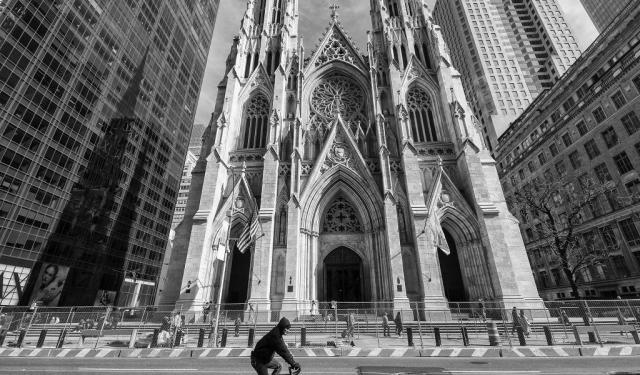
NYC Top Religious Sites Walking Tour
Other than high-risers, New York City is also famous for the variety of beautiful places of worship renowned for their architectural splendor. After 1830, inspired by a love for all things medieval imported from England, the Gothic style developed in the metropolis, as first illustrated by the Grace Church (1846). The best example of this style, however, remains St Patrick’s Cathedral, which... view more
Tour Duration: 3 Hour(s)
Travel Distance: 7.0 Km or 4.3 Miles
Tour Duration: 3 Hour(s)
Travel Distance: 7.0 Km or 4.3 Miles
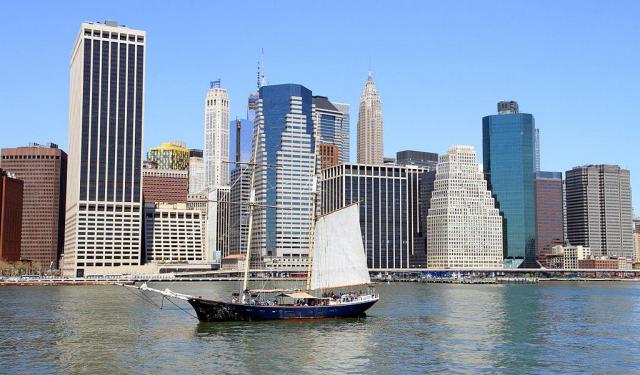
Best of Lower Manhattan Walking Tour
Every part of Manhattan is terrific, but if you are looking for one that showcases the best overview of New York City’s history and architectural styles, it’s Lower Manhattan. This is where it all started, where New Amsterdam was founded, where Canal Street used to be a canal, and where Wall Street used to be a wall marking the end of town. It’s also where the city has seen the most tragedy,... view more
Tour Duration: 2 Hour(s)
Travel Distance: 3.1 Km or 1.9 Miles
Tour Duration: 2 Hour(s)
Travel Distance: 3.1 Km or 1.9 Miles
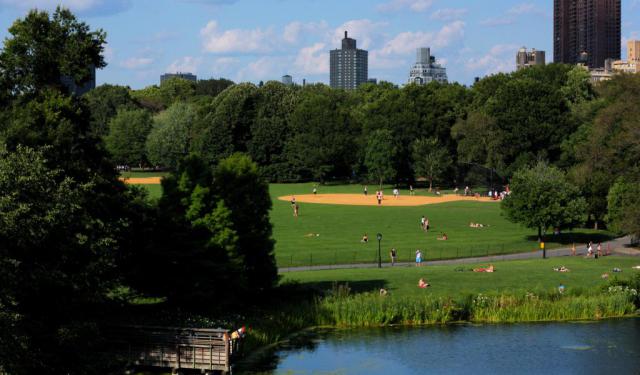
Times Square to Central Park
A leisurely self-guided stroll from Times Square to Central Park will take you to some of NYC’s prominent locations, each worth visiting in their own right.
At 49th Street, Fifth Avenue lives up to its lofty reputation with the Rockefeller Center, one of the world’s biggest business and entertainment complexes, and a triumph of Art Deco architecture. Like the neighboring Times Square, the... view more
Tour Duration: 2 Hour(s)
Travel Distance: 3.2 Km or 2 Miles
At 49th Street, Fifth Avenue lives up to its lofty reputation with the Rockefeller Center, one of the world’s biggest business and entertainment complexes, and a triumph of Art Deco architecture. Like the neighboring Times Square, the... view more
Tour Duration: 2 Hour(s)
Travel Distance: 3.2 Km or 2 Miles
Useful Travel Guides for Planning Your Trip

Bar Tour of Lower East Side, New York City
The Lower East Side has been described the most livable neighborhood in NYC. Unique and dynamic, LES has boutique shops, cafes and restaurants alongside great bars and museums.In this historic neighborhood, residents strive to preserve its roots. Here, you can find young professionals who challenge...
NYC Beer Tour
There are many great places to drink in New York City. Still, discerning connoisseurs are likely to find themselves awash in a sea of mediocre beer without first gaining a proper lay of the beer land. For those whose curiosity and taste buds urge them to venture beyond ubiquitious draft staples like...

7 Best Drinking Places in Upper West Side, NY
With “Bar Tour of the Upper West Side” sample a cross section from NYC’s great gamut of drinking establishments, including a Belgian Brasserie, a wine bar, Irish pubs, and one dive — just for fun! These spots offer something a little extra, like craft beers, inspirational artwork, a chance...
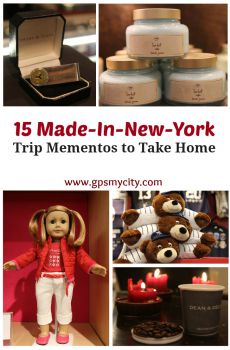
NYC Souvenir Guide: 15 Authentic New York City Products to Take Home
In keeping with the song, one might think that, if they can make it in New York City, they can make it anywhere. Well, not always... Some of the things made in New York City aren't made anywhere else, and you'll definitely want to try or keep at least some of them to prolong your NYC...

NY Villages Best Tea and Coffee
This is a guide to the best tea and coffee shops and houses in the East, West, Washington Square and Greenwich Villages of Manhattan. None of these are chains, so tourists looking to avoid Starbucks can find sanctuary in this app. All of these run the gamut between W and E 14th Streets, and down 1st...
The Most Popular Cities
/ view all