


Chinatown Walking Tour (Self Guided), Bangkok
Bangkok's Chinatown is one of the largest Chinatowns in the world. Founded in 1782, the core of it lies along Yaowarat Road, which serves as the main artery and sometimes lends its name to the whole area.
The district has been the center for trading by the Thai Chinese community for almost 200 years, progressively evolving from a vast wilderness outside the city walls to a major commercial and cultural hub throughout the late 19th-early 20th centuries. Presently, despite gradual assimilation of the Chinese population's into Thai society, Chinatown still remains a home base for Chinese cuisine, crafts and religion.
Yaowarat Road, well known for its variety of foodstuffs, at night turns into a large "food street", stretching for 1.5 kilometers, starting from the Odeon Circle near Wat Traimit, or Temple of Golden Buddha. Definitely one of the best places to eat in Bangkok, this bustling thoroughfare never sleeps, filled with a vibrant mix of colours, scents and flavours coming from the roadside restaurants and all-day markets, and surrounded by neon lights after sunset.
Venturing a little further from the main road, you escape the crowds and discover a totally different world of daily life in its purest form. The latter, in part, is manifested in the hidden shrines, tucked away from the chaos, such as the Leng Buai Ia and Wat Mangkon Kamalawat (Dragon Lotus Temple).
If you wish to explore one of Bangkok's brightest, most vibrant and interesting districts in its entirety, complete with its top tourist spots, amazing temples and colonial-style architecture, the best way to do it is on foot and with the help of this self-guided tour of Chinatown. Just don't forget to take small bills and an umbrella while embarking on it!
The district has been the center for trading by the Thai Chinese community for almost 200 years, progressively evolving from a vast wilderness outside the city walls to a major commercial and cultural hub throughout the late 19th-early 20th centuries. Presently, despite gradual assimilation of the Chinese population's into Thai society, Chinatown still remains a home base for Chinese cuisine, crafts and religion.
Yaowarat Road, well known for its variety of foodstuffs, at night turns into a large "food street", stretching for 1.5 kilometers, starting from the Odeon Circle near Wat Traimit, or Temple of Golden Buddha. Definitely one of the best places to eat in Bangkok, this bustling thoroughfare never sleeps, filled with a vibrant mix of colours, scents and flavours coming from the roadside restaurants and all-day markets, and surrounded by neon lights after sunset.
Venturing a little further from the main road, you escape the crowds and discover a totally different world of daily life in its purest form. The latter, in part, is manifested in the hidden shrines, tucked away from the chaos, such as the Leng Buai Ia and Wat Mangkon Kamalawat (Dragon Lotus Temple).
If you wish to explore one of Bangkok's brightest, most vibrant and interesting districts in its entirety, complete with its top tourist spots, amazing temples and colonial-style architecture, the best way to do it is on foot and with the help of this self-guided tour of Chinatown. Just don't forget to take small bills and an umbrella while embarking on it!
How it works: Download the app "GPSmyCity: Walks in 1K+ Cities" from Apple App Store or Google Play Store to your mobile phone or tablet. The app turns your mobile device into a personal tour guide. For US$14.99 per year, you get access to walking tours in 630+ cities worldwide. In comparison, a guided tour often costs dozens of dollars per person for a single tour. The app works offline, so no data plan is needed when traveling abroad.
Download The GPSmyCity App



Chinatown Walking Tour Map
Guide Name: Chinatown Walking Tour
Guide Location: Thailand » Bangkok (See other walking tours in Bangkok)
Guide Type: Self-guided Walking Tour (Sightseeing)
Tour Duration: 1 Hour(s)
Travel Distance: 1.5 Km or 0.9 Miles
Guide Location: Thailand » Bangkok (See other walking tours in Bangkok)
Guide Type: Self-guided Walking Tour (Sightseeing)
Tour Duration: 1 Hour(s)
Travel Distance: 1.5 Km or 0.9 Miles
Sights Featured in This Walk
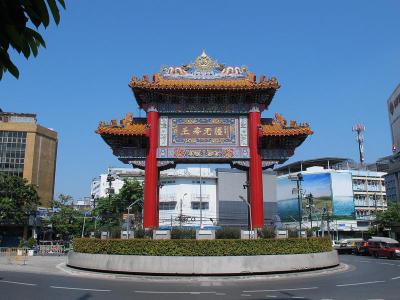
1) Chinatown Gate (must see)




Walking Tours in Bangkok, Thailand

Create Your Own Walk in Bangkok
Creating your own self-guided walk in Bangkok is easy and fun. Choose the city attractions that you want to see and a walk route map will be created just for you. You can even set your hotel as the start point of the walk.

Flower Market to Chinatown
One of the world’s great shopping playgrounds, Bangkok doesn’t just invite you to shop—it dares you to keep up. You can buy almost anything here, from silk and spices to things you didn’t know existed five minutes ago. The trick is knowing where to look. And if your idea of retail therapy involves a bit of chaos, a lot of flavor, and zero predictability, then the city’s markets are where... view more
Tour Duration: 1 Hour(s)
Travel Distance: 2.3 Km or 1.4 Miles
Tour Duration: 1 Hour(s)
Travel Distance: 2.3 Km or 1.4 Miles

Food Walk
There aren't many cities out there, if any, beside the Thai capital to be just as voracious and passionate about eating! Food in Bangkok is a key aspect of daily life, attesting to which are the numerous eateries all over the city. And what's more, regardless of where you have it, be it a scrumptious street food stall or a fancy restaurant, the local food never fails to impress.
... view more
Tour Duration: 1 Hour(s)
Travel Distance: 2.8 Km or 1.7 Miles
... view more
Tour Duration: 1 Hour(s)
Travel Distance: 2.8 Km or 1.7 Miles

Wats and Temples of Bangkok
The “City of Angels” – Bangkok – is home to more than 400 temples. Known locally as “wats,” they range from vast ceremonial complexes to modest neighborhood shrines hidden deep within the city’s maze-like, narrow side streets called “sois.” Some of these shrines are landmarks that draw steady streams of visitors, while others remain quiet places of daily devotion. Yet together,... view more
Tour Duration: 2 Hour(s)
Travel Distance: 3.4 Km or 2.1 Miles
Tour Duration: 2 Hour(s)
Travel Distance: 3.4 Km or 2.1 Miles

Bangkok Old City Walk
The Thai capital, Bangkok, began life in the 15th century in the fertile delta of the Chao Phraya River as a modest trading post—hardly the megacity you see today. As for the name “Bangkok,” no one agrees on its origin. It may come from the Thai words “bang,” meaning a riverside village, and “ko,” meaning island, which is quite fitting for a place once threaded with canals. Or it... view more
Tour Duration: 2 Hour(s)
Travel Distance: 2.8 Km or 1.7 Miles
Tour Duration: 2 Hour(s)
Travel Distance: 2.8 Km or 1.7 Miles
Useful Travel Guides for Planning Your Trip

Top 15 Things to Buy in Bangkok
Well-made, local products not only remind people of the trip they've had, but also make great gifts to bring home to family and friends. Following is the list of original and representative of Bangkok local specialties that you might wish to consider as a memorable...

7 Places in Bangkok for Superb Street Food
Eating is huge in Bangkok, and luckily for the famished, you won't be that way for long, regardless of the hour. You can find conglomerations of vendors selling five-star fast food (in the you-won't-have-to-wait-long-to-enjoy-it sense, not McDonald's style) for under 100 baht (roughly...
The Most Popular Cities
/ view all