

Historical Churches Walking Tour (Self Guided), Strasbourg
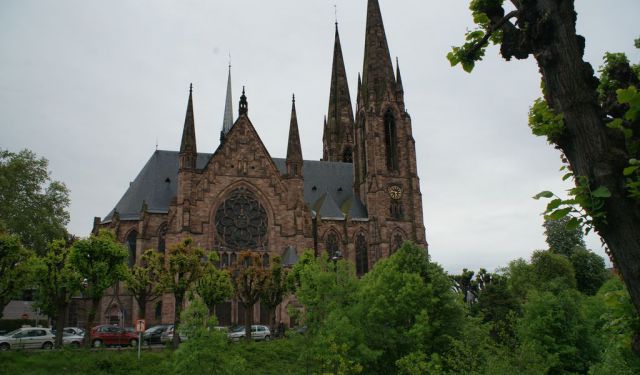
Strasbourg, which celebrated its bimillennial anniversary in 1988, is a city with a very rich heritage. Among other historical monuments found here is a wealth of ancient churches and cathedrals, representing a variety of architectural styles. Exploring Strasbourg on foot, one is inevitably drawn to visit some of these locations. Here are some of the best known places of worship in the city.
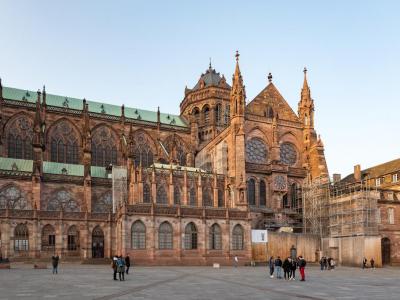
Cathédrale Notre-Dame de Strasbourg (Strasbourg Cathedral) – famous for its astronomical clock and tower dominating the skyline; described by Victor Hugo as a "gigantic and delicate marvel", and by Goethe as a "sublimely towering, wide-spreading tree of God".
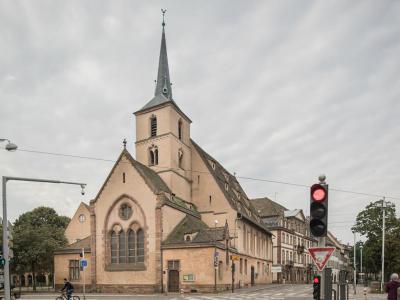
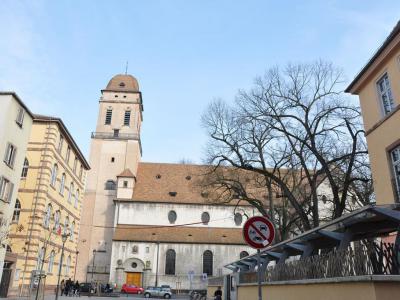
Église Saint-Pierre le Vieux (Old St. Peter's Church) – the oldest church in Strasbourg, first documented in 1130; with several vestiges from an older church, dated circa the 4th-8th centuries.
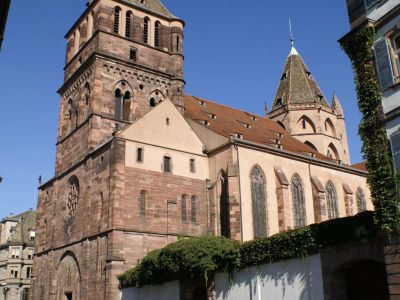
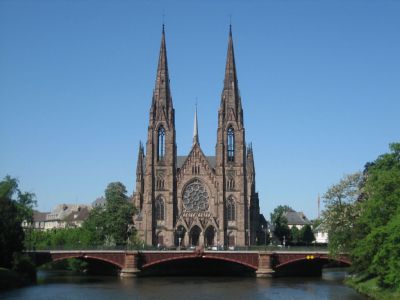
Saint-Thomas Church – the most unique and only "hall church" in Alsace; the site has been a place of worship since the 6th century AD as a shrine to Thomas the Apostle.
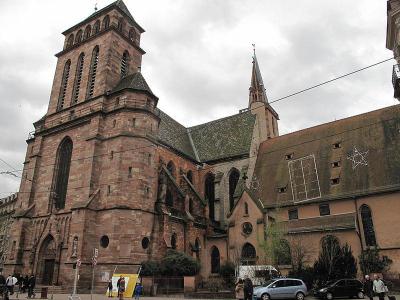
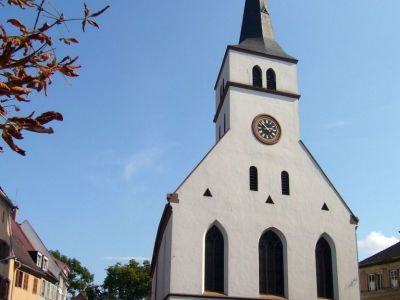
Saint-Nicolas Church – Jean Calvin preached here in 1538.
Saint William's Church – one of the most beautiful churches in Strasbourg, with its lopsided aspect adding to the charm.
If you're an ardent believer or an architecture buff or both of that, you might wish to spend some time to learn more about these and other historical churches of Strasbourg. For this, our self-guided walking tour will come in handy.
Cathédrale Notre-Dame de Strasbourg (Strasbourg Cathedral) – famous for its astronomical clock and tower dominating the skyline; described by Victor Hugo as a "gigantic and delicate marvel", and by Goethe as a "sublimely towering, wide-spreading tree of God".
Église Saint-Pierre le Vieux (Old St. Peter's Church) – the oldest church in Strasbourg, first documented in 1130; with several vestiges from an older church, dated circa the 4th-8th centuries.
Saint-Thomas Church – the most unique and only "hall church" in Alsace; the site has been a place of worship since the 6th century AD as a shrine to Thomas the Apostle.
Saint-Nicolas Church – Jean Calvin preached here in 1538.
Saint William's Church – one of the most beautiful churches in Strasbourg, with its lopsided aspect adding to the charm.
If you're an ardent believer or an architecture buff or both of that, you might wish to spend some time to learn more about these and other historical churches of Strasbourg. For this, our self-guided walking tour will come in handy.
How it works: Download the app "GPSmyCity: Walks in 1K+ Cities" from Apple App Store or Google Play Store to your mobile phone or tablet. The app turns your mobile device into a personal tour guide and its built-in GPS navigation functions guide you from one tour stop to next. The app works offline, so no data plan is needed when traveling abroad.
Download The GPSmyCity App



Historical Churches Walking Tour Map
Guide Name: Historical Churches Walking Tour
Guide Location: France » Strasbourg (See other walking tours in Strasbourg)
Guide Type: Self-guided Walking Tour (Sightseeing)
Tour Duration: 2 Hour(s)
Travel Distance: 3.0 Km or 1.9 Miles
Guide Location: France » Strasbourg (See other walking tours in Strasbourg)
Guide Type: Self-guided Walking Tour (Sightseeing)
Tour Duration: 2 Hour(s)
Travel Distance: 3.0 Km or 1.9 Miles
Sights Featured in This Walk
Walking Tours in Strasbourg, France

Create Your Own Walk in Strasbourg
Creating your own self-guided walk in Strasbourg is easy and fun. Choose the city attractions that you want to see and a walk route map will be created just for you. You can even set your hotel as the start point of the walk.
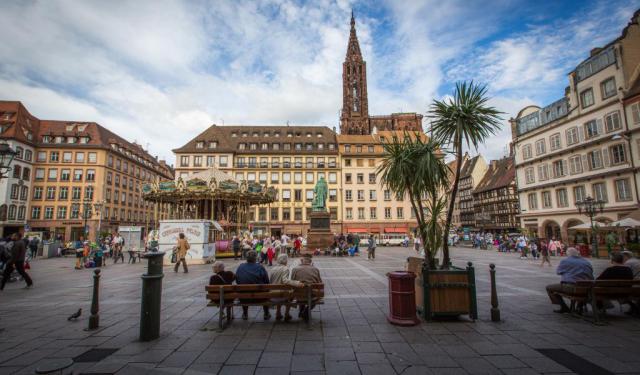
Famous Squares Walking Tour
Justly reputed as one of the most beautiful cities in all of France, Strasbourg greets visitors with an array of picturesque squares. Among the most famous of them are:
Place Kléber – the biggest square in the heart of the city’s commercial district; a central meeting place since the 14th century.
Place Gutenberg – a definite “must-see” in the heart of medieval Strasbourg, not... view more
Tour Duration: 2 Hour(s)
Travel Distance: 2.7 Km or 1.7 Miles
Place Kléber – the biggest square in the heart of the city’s commercial district; a central meeting place since the 14th century.
Place Gutenberg – a definite “must-see” in the heart of medieval Strasbourg, not... view more
Tour Duration: 2 Hour(s)
Travel Distance: 2.7 Km or 1.7 Miles
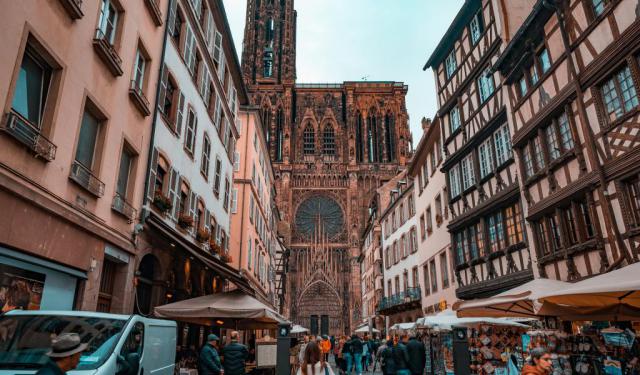
Strasbourg Downtown Walking Tour
German writer Johann Wolfgang von Goethe studied in Strasbourg between 1770 and 1771, a period he later described as highly formative. He gave back to the city by including his fascination for Strasbourg Cathedral's spire in his own autobiography.
Strasbourg’s downtown, known as the "Large Island”, is the historic core of the city and one of the best-preserved medieval urban... view more
Tour Duration: 1 Hour(s)
Travel Distance: 1.5 Km or 0.9 Miles
Strasbourg’s downtown, known as the "Large Island”, is the historic core of the city and one of the best-preserved medieval urban... view more
Tour Duration: 1 Hour(s)
Travel Distance: 1.5 Km or 0.9 Miles
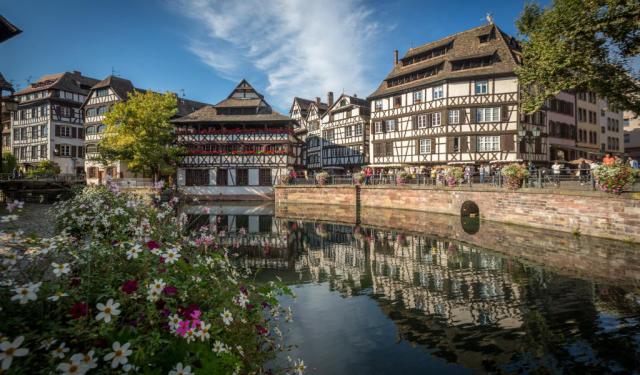
Strasbourg Introduction Walking Tour
Decades of shifting rule between France and Germany eventually caught up with Strasbourg locals. They joked, "We change nationality as easily as others change their coats."
Strasbourg began as a Roman military outpost known as Argentoratum in the 1st century AD, part of the empire’s fortified Rhine frontier. After the fall of Rome, the settlement evolved under the Franks, eventually... view more
Tour Duration: 2 Hour(s)
Travel Distance: 2.8 Km or 1.7 Miles
Strasbourg began as a Roman military outpost known as Argentoratum in the 1st century AD, part of the empire’s fortified Rhine frontier. After the fall of Rome, the settlement evolved under the Franks, eventually... view more
Tour Duration: 2 Hour(s)
Travel Distance: 2.8 Km or 1.7 Miles
The Most Popular Cities
/ view all