


Ankara Introduction Walking Tour (Self Guided), Ankara
Ankara has a long and eventful history, dating back to the Bronze Age, circa 2,000 BC. Owing to its strategic position at the center of the Anatolian tableland, as a key stopping-place en route from Persia to the Aegean coast, over the centuries, the city has been contested by various civilizations, including the Hittites, Phrygians, Lydians, Persians, Greeks, Romans, Byzantines, Seljuks, and Ottomans.
One of the most ancient local landmarks is the prominent Ankara Citadel, sitting atop a hill overlooking the city; it was built around the 7th century on the site of an earlier fortification constructed in the 8th century BC.
The name Ankara is believed to have originated from the Greek word 'Ancyra', which means anchor. Some sources suggest that the city was named after the anchor-shaped hill on which it was built.
Ankara played a significant role during the Turkish War of Independence and became the capital of the new Turkish Republic in 1923. A testament to that period is the Victory Monument erected at Ulus Square.
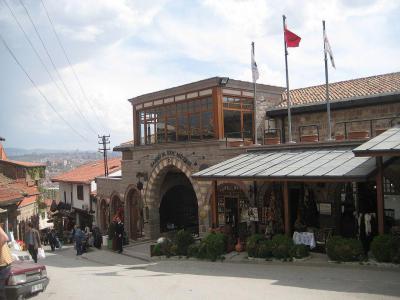
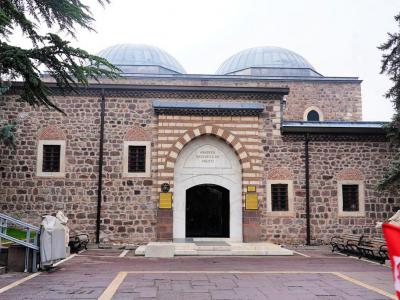
The city is home to several museums, including the Museum of Anatolian Civilizations and the Çengelhan Rahmi M. Koç Museum, which is an industrial technology museum situated in a 16th-century Ottoman-era inn.
Similarly to her grander sister Istanbul, Ankara is "a city of contrasts" with a rather diverse and multifaceted nature, featuring a mix of modern and traditional elements, both urban and rural, and of different cultural and ethnic origins. For more in-depth exposure to the wealth of experiences Ankara has to offer, you may wish to embark on a self-guided walking tour armed with this mobile app.
Download The GPSmyCity App



Ankara Introduction Walking Tour Map
Map Instructions: (1) Click the "Nearby Sights" button  to view the nearby attractions; (2) click a map pin to see sight information.
Guide Location: Turkey » Ankara (See other walking tours in Ankara)
Guide Type: Self-guided Walking Tour (Sightseeing)
Tour Duration: 1 Hour(s)
Travel Distance: 2.6 Km or 1.6 Miles
Sights Featured in This Walk
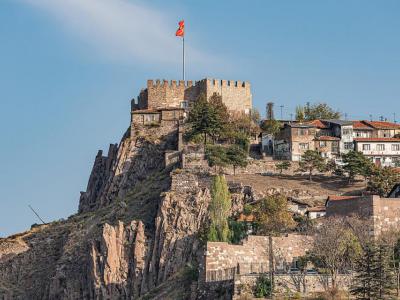
1) Ankara Citadel (must see)


WalkBuilder (customize this walk or build your own)Use the WalkBuilder tool below to customize this walk to suit your interests. Instructions: click at the upper right corner in the map above to view other sights in the city. To learn more about a sight, click a map pin. Click the "+" or "–" to add or remove a sight from the walk. To reorder the selected sights, simply drag and move them up or down the list in the left column.
|
||||||||
|
||||||||
Frequently Asked Questions1. How do I access my walking tour in Ankara? Save your walking tour on the website. Then download the GPSmyCity app from the Apple App Store or Google Play Store and sign in to your GPSmyCity account. Next, download "Ankara Map and Walking Tours" within the app. Your walk will appear on the Walks screen.
2. How do I view other attractions in Ankara?
3. How do I re-arrange the sight order?
4. Can I add my hotel to a walking tour?
5. Can I add my own sights to a walking tour?
6. How many sights can be included in a walking tour?
|
||||||||
Walking Tours in Ankara, Turkey

Create Your Own Walk in Ankara

Ankara Roman Ruins Walking Tour
The most significant Roman landmarks, a testament to the Roman imperial cultural influence, survived to our days albeit ruined, include the Roman Theater... view more
Tour Duration: 1 Hour(s)
Travel Distance: 1.4 Km or 0.9 Miles