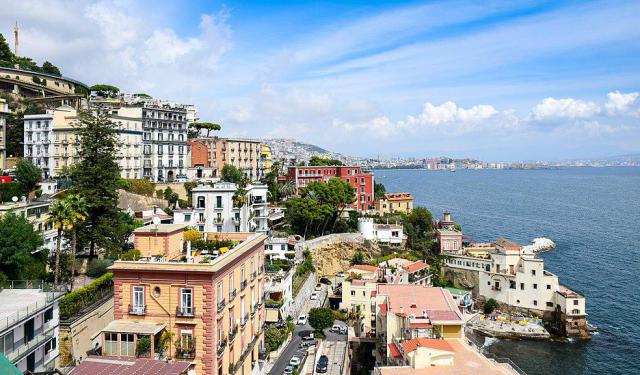


Audio Guide: Naples Introduction Walking Tour (Self Guided), Naples
“See Naples and die.” German poet and scientist Goethe was convinced that Naples represented the epitome of human experience.
The city has been continuously inhabited for nearly three thousand years. Its origins date to the 8th century BC, when Greek settlers from Euboea established a small coastal colony known as Parthenope, near the site of today’s Ovo Castle. As the settlement expanded inland, a larger and more formally planned city was laid out on a regular grid and named Neápolis, meaning “new city” in Greek. Over time, this name evolved linguistically into its current form: Naples.
Under Greek rule, Neapolis developed into a thriving centre of trade, culture, and learning. Even after its incorporation into the Roman Republic in the 4th century BC, the city retained a strong Greek character, as Greek philosophy, customs, and education continued to shape daily life. During the Roman period, Naples prospered as a seaside resort and intellectual hub, known for its villas, theatres, and artistic circles. Nearby cities such as Pompeii and Herculaneum flourished until their sudden destruction by the eruption of Mount Vesuvius in 79 AD.
After the fall of the Western Roman Empire, Naples entered a long medieval phase marked by shifting powers. It passed through Byzantine control, periods of independent rule, and eventually became the capital of the Kingdom of Naples in 1285.
Thanks to the Italian painter Caravaggio settling in Naples for several years in the early 17th century, the city came to be regarded as a capital of the Baroque. He left three major works in Naples, and his presence catalysed an artistic revolution that reshaped local painting.
In the early modern era, Naples was ruled successively by Spanish, Austrian, and Bourbon dynasties. The latter founded the Kingdom of the Two Sicilies in 1816, with Naples as its capital, helping it become a major European metropolis admired for its music, philosophy, and intellectual life. Following Italian unification in 1861, Naples lost its role as a capital but maintained a strong cultural identity.
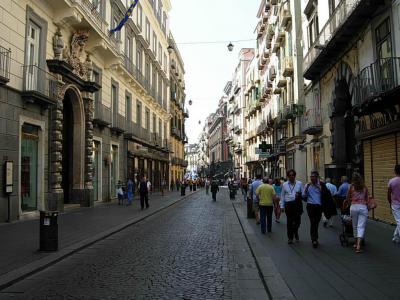
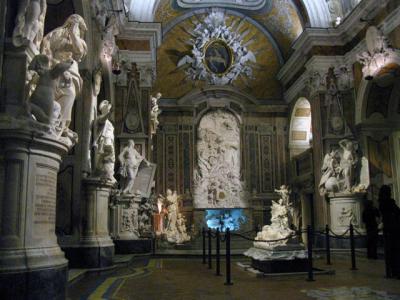
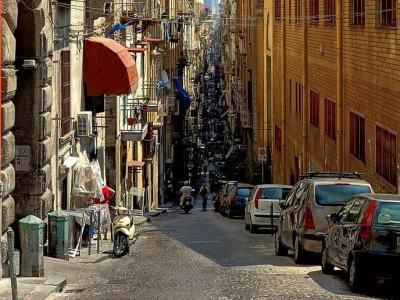
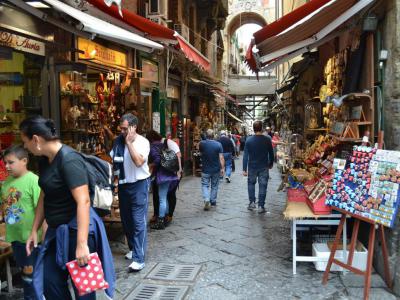
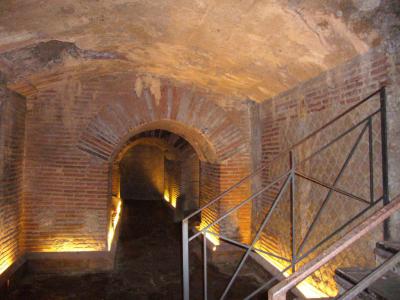
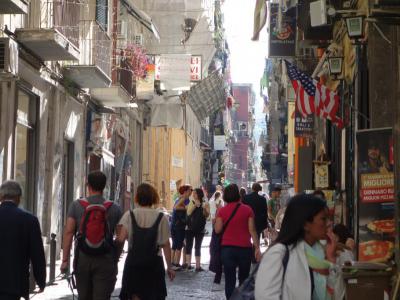
Walking through Napoli’s historic centre means moving through tightly packed streets laid out over ancient Greek foundations. Along Spaccanapoli and Tribunal Street, Roman remains sit beneath churches, medieval palaces stand beside Baroque façades, and everyday life unfolds between laundry lines and street markets. Narrow lanes open suddenly toward landmarks such as Naples Cathedral or the Sansevero Chapel, while workshops, shrines, and food stalls coexist in a dense, noisy, intensely lived-in urban fabric.
As this walk unfolds, you will realize that Naples is a fully sensory adventure, from its food to the artistic details that define its narrow streets. You will surely notice the profound sense of fulfillment that Goethe observed centuries ago.
The city has been continuously inhabited for nearly three thousand years. Its origins date to the 8th century BC, when Greek settlers from Euboea established a small coastal colony known as Parthenope, near the site of today’s Ovo Castle. As the settlement expanded inland, a larger and more formally planned city was laid out on a regular grid and named Neápolis, meaning “new city” in Greek. Over time, this name evolved linguistically into its current form: Naples.
Under Greek rule, Neapolis developed into a thriving centre of trade, culture, and learning. Even after its incorporation into the Roman Republic in the 4th century BC, the city retained a strong Greek character, as Greek philosophy, customs, and education continued to shape daily life. During the Roman period, Naples prospered as a seaside resort and intellectual hub, known for its villas, theatres, and artistic circles. Nearby cities such as Pompeii and Herculaneum flourished until their sudden destruction by the eruption of Mount Vesuvius in 79 AD.
After the fall of the Western Roman Empire, Naples entered a long medieval phase marked by shifting powers. It passed through Byzantine control, periods of independent rule, and eventually became the capital of the Kingdom of Naples in 1285.
Thanks to the Italian painter Caravaggio settling in Naples for several years in the early 17th century, the city came to be regarded as a capital of the Baroque. He left three major works in Naples, and his presence catalysed an artistic revolution that reshaped local painting.
In the early modern era, Naples was ruled successively by Spanish, Austrian, and Bourbon dynasties. The latter founded the Kingdom of the Two Sicilies in 1816, with Naples as its capital, helping it become a major European metropolis admired for its music, philosophy, and intellectual life. Following Italian unification in 1861, Naples lost its role as a capital but maintained a strong cultural identity.
Walking through Napoli’s historic centre means moving through tightly packed streets laid out over ancient Greek foundations. Along Spaccanapoli and Tribunal Street, Roman remains sit beneath churches, medieval palaces stand beside Baroque façades, and everyday life unfolds between laundry lines and street markets. Narrow lanes open suddenly toward landmarks such as Naples Cathedral or the Sansevero Chapel, while workshops, shrines, and food stalls coexist in a dense, noisy, intensely lived-in urban fabric.
As this walk unfolds, you will realize that Naples is a fully sensory adventure, from its food to the artistic details that define its narrow streets. You will surely notice the profound sense of fulfillment that Goethe observed centuries ago.
How it works: Download the app "GPSmyCity: Walks in 1K+ Cities" from Apple App Store or Google Play Store to your mobile phone or tablet. The app turns your mobile device into a personal tour guide. For US$14.99 per year, you get access to walking tours in 630+ cities worldwide. In comparison, a guided tour often costs dozens of dollars per person for a single tour. The app works offline, so no data plan is needed when traveling abroad.
Download The GPSmyCity App



Naples Introduction Walking Tour Map
Guide Name: Naples Introduction Walking Tour
Guide Location: Italy » Naples (See other walking tours in Naples)
Guide Type: Self-guided Walking Tour (Sightseeing)
Tour Duration: 2 Hour(s)
Travel Distance: 3.7 Km or 2.3 Miles
Guide Location: Italy » Naples (See other walking tours in Naples)
Guide Type: Self-guided Walking Tour (Sightseeing)
Tour Duration: 2 Hour(s)
Travel Distance: 3.7 Km or 2.3 Miles
Sights Featured in This Walk


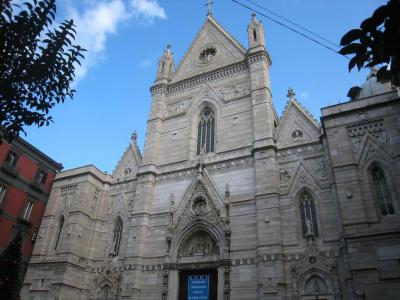
Walking Tours in Naples, Italy

Create Your Own Walk in Naples
Creating your own self-guided walk in Naples is easy and fun. Choose the city attractions that you want to see and a walk route map will be created just for you. You can even set your hotel as the start point of the walk.
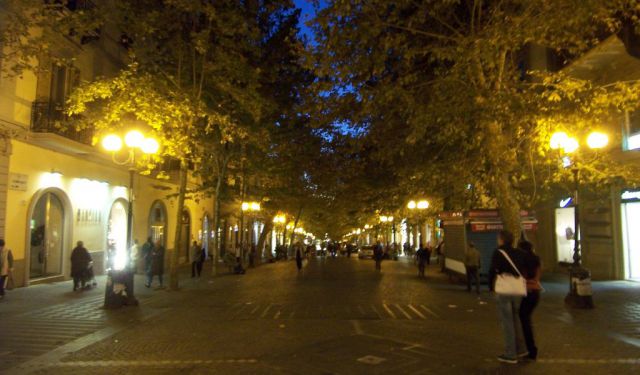
Naples Food Tour
A food tour through Naples is less about restaurants alone and more about understanding a city that has always lived through its kitchens, bakeries, markets, and street corners. Naples’ culinary story stretches back more than two thousand years, shaped by Greeks, Romans, Spanish rulers, French influences, and centuries of trade through one of the Mediterranean’s busiest ports. Each period... view more
Tour Duration: 1 Hour(s)
Travel Distance: 1.6 Km or 1 Miles
Tour Duration: 1 Hour(s)
Travel Distance: 1.6 Km or 1 Miles
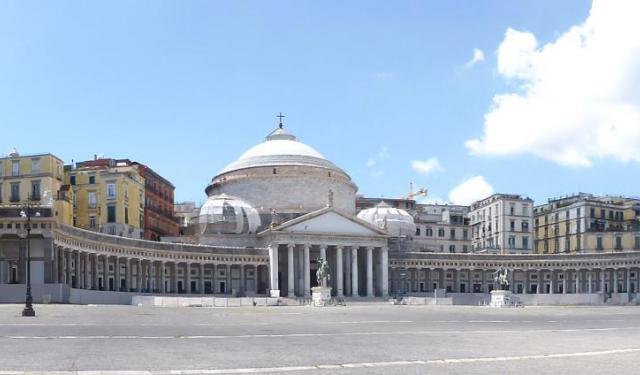
Historical Churches
Christianity in general and the Catholic faith in particular have always played an important role in the social and cultural life of Naples. Not everyone knows that the city boasts the highest number of churches in the world – almost 500 historic “houses of God” (1,000 in total) – accumulated over the course of 17(!) centuries. Hence the nickname – “the city of 500 domes”.
And... view more
Tour Duration: 2 Hour(s)
Travel Distance: 3.7 Km or 2.3 Miles
And... view more
Tour Duration: 2 Hour(s)
Travel Distance: 3.7 Km or 2.3 Miles
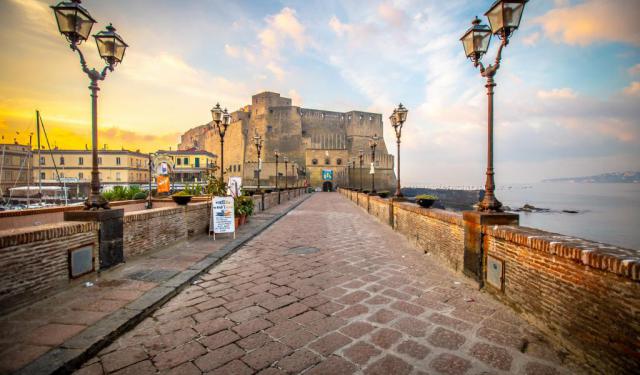
Naples Old Town Walk
After travelling to Naples in 1835 using a false passport, French painter and writer Alexandre Dumas described the Old Town’s streets as true storytellers in his travel writings.
From the Middle Ages onward, the Old Town developed as a dense network of neighbourhoods organised around churches, convents, guilds, and markets. Religious institutions played a decisive role in shaping the urban... view more
Tour Duration: 2 Hour(s)
Travel Distance: 2.7 Km or 1.7 Miles
From the Middle Ages onward, the Old Town developed as a dense network of neighbourhoods organised around churches, convents, guilds, and markets. Religious institutions played a decisive role in shaping the urban... view more
Tour Duration: 2 Hour(s)
Travel Distance: 2.7 Km or 1.7 Miles
The Most Popular Cities
/ view all