


Literary Landmarks Tour (Self Guided), Edinburgh
For centuries, Edinburgh has been home to numerous writers. The likes of Robert Burns, Robert Louis Stevenson, and JK Rowling, just to name a few, have given pride to this city. Fortunately, the tradition doesn't seem to die out any time soon, as Edinburgh keeps producing more and more authors and literary heroes in whose footsteps people still wish to tread.
Naturally, there is a wealth of iconic landmarks in Edinburgh that left an indelible mark on the world of literature. These locations offer a glimpse into the capital's literary history and its influence on renowned authors.
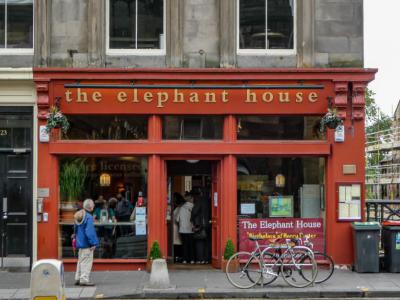
The Elephant House, a cozy café nestled in the heart of Edinburgh, is famous as the birthplace of JK Rowling's Harry Potter series. Today, this charming spot has become a pilgrimage site for fans of the wizarding world.
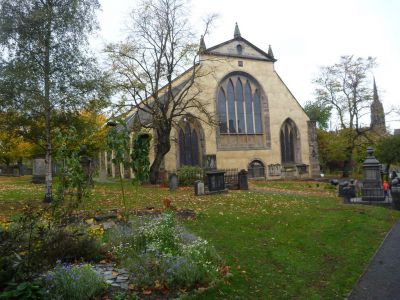
Another must-visit site for Harry Potter fans is Greyfriars Church. Hidden behind the Elephant House Café, this historic church's graveyard is said to have inspired (at least in terms of names) some of the book's characters, like Tom Riddle (Lord Voldemort), derived from the grave of Thomas Riddell here.
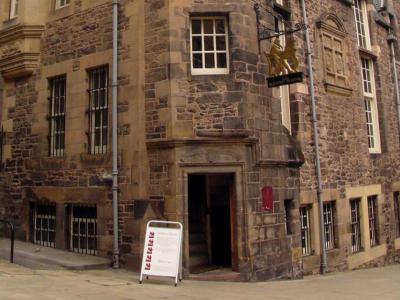
The Writers' Museum and Makar's Court is a treasure trove for lovers of Scottish literature. Located on the Royal Mile, this museum honors Scotland's literary greats, like Robert Burns, Sir Walter Scott, and Robert Louis Stevenson. Makar's Court, just outside the museum, features inscriptions of quotes from various Scottish men of letters.
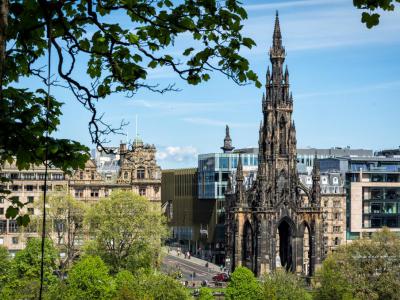
The Scott Monument, a towering Gothic structure dedicated to Sir Walter Scott, offers breathtaking panoramic views of the city. Scott's prolific works, including "Waverley" and "Ivanhoe," continue to captivate readers worldwide to this day.
Robert Stevenson's Childhood Home, the birthplace of the famous author of "Treasure Island" and "Doctor Jekyll and Mister Hyde," provides a glimpse into his early life and inspiration for his adventurous tales.
For fans of detective fiction, The Conan Doyle Pub pays homage to the creator of Sherlock Holmes, Sir Arthur Conan Doyle. Enjoy a pint of ale and immerse yourself in the world of the brilliant detective.
A seasoned bookworm or simply one curious about the city's literary heritage will find these sites equally interesting. So, embark on this literary pilgrimage, explore the stories that shaped Edinburgh, and be inspired by the words of the great writers who once graced these locations with their presence.
Naturally, there is a wealth of iconic landmarks in Edinburgh that left an indelible mark on the world of literature. These locations offer a glimpse into the capital's literary history and its influence on renowned authors.
The Elephant House, a cozy café nestled in the heart of Edinburgh, is famous as the birthplace of JK Rowling's Harry Potter series. Today, this charming spot has become a pilgrimage site for fans of the wizarding world.
Another must-visit site for Harry Potter fans is Greyfriars Church. Hidden behind the Elephant House Café, this historic church's graveyard is said to have inspired (at least in terms of names) some of the book's characters, like Tom Riddle (Lord Voldemort), derived from the grave of Thomas Riddell here.
The Writers' Museum and Makar's Court is a treasure trove for lovers of Scottish literature. Located on the Royal Mile, this museum honors Scotland's literary greats, like Robert Burns, Sir Walter Scott, and Robert Louis Stevenson. Makar's Court, just outside the museum, features inscriptions of quotes from various Scottish men of letters.
The Scott Monument, a towering Gothic structure dedicated to Sir Walter Scott, offers breathtaking panoramic views of the city. Scott's prolific works, including "Waverley" and "Ivanhoe," continue to captivate readers worldwide to this day.
Robert Stevenson's Childhood Home, the birthplace of the famous author of "Treasure Island" and "Doctor Jekyll and Mister Hyde," provides a glimpse into his early life and inspiration for his adventurous tales.
For fans of detective fiction, The Conan Doyle Pub pays homage to the creator of Sherlock Holmes, Sir Arthur Conan Doyle. Enjoy a pint of ale and immerse yourself in the world of the brilliant detective.
A seasoned bookworm or simply one curious about the city's literary heritage will find these sites equally interesting. So, embark on this literary pilgrimage, explore the stories that shaped Edinburgh, and be inspired by the words of the great writers who once graced these locations with their presence.
How it works: Download the app "GPSmyCity: Walks in 1K+ Cities" from Apple App Store or Google Play Store to your mobile phone or tablet. The app turns your mobile device into a personal tour guide. For US$14.99 per year (with a 3-day free trial), you get access to walking tours in 630+ cities worldwide for an entire year. In comparison, a guided tour often costs dozens of dollars per person for a single tour. The app works offline, so no data plan is needed when traveling abroad.
Download The GPSmyCity App



Literary Landmarks Tour Map
Guide Name: Literary Landmarks Tour
Guide Location: Scotland » Edinburgh (See other walking tours in Edinburgh)
Guide Type: Self-guided Walking Tour (Sightseeing)
Tour Duration: 1 Hour(s)
Travel Distance: 2.9 Km or 1.8 Miles
Guide Location: Scotland » Edinburgh (See other walking tours in Edinburgh)
Guide Type: Self-guided Walking Tour (Sightseeing)
Tour Duration: 1 Hour(s)
Travel Distance: 2.9 Km or 1.8 Miles
Sights Featured in This Walk


Walking Tours in Edinburgh, Scotland

Create Your Own Walk in Edinburgh
Creating your own self-guided walk in Edinburgh is easy and fun. Choose the city attractions that you want to see and a walk route map will be created just for you. You can even set your hotel as the start point of the walk.

New Town Walking Tour
Rightly regarded as the historic masterpiece of city planning, the New Town of Edinburgh has been a UNESCO World Heritage Site since 1995. The area forms a significant part of the Scottish capital and is known for its elegant Georgian architecture, abundant shopping opportunities, and many other delights firmly associated with this city.
One of the prominent landmarks in the New Town is... view more
Tour Duration: 2 Hour(s)
Travel Distance: 2.5 Km or 1.6 Miles
One of the prominent landmarks in the New Town is... view more
Tour Duration: 2 Hour(s)
Travel Distance: 2.5 Km or 1.6 Miles

Harry Potter Trail
Years after the last Harry Potter book hit the shelves and the last movie rolled its credits, the cultural phenomenon of Harry Potter doesn't seem to fade away, and the fandom continues strong as ever. Although by now Harry Potter has become a household name across the globe, his literary roots are right here in Edinburgh.
Indeed, J.K. Rowling wrote much of the saga in Scotland’s... view more
Tour Duration: 2 Hour(s)
Travel Distance: 2.6 Km or 1.6 Miles
Indeed, J.K. Rowling wrote much of the saga in Scotland’s... view more
Tour Duration: 2 Hour(s)
Travel Distance: 2.6 Km or 1.6 Miles
Edinburgh Pub Crawl
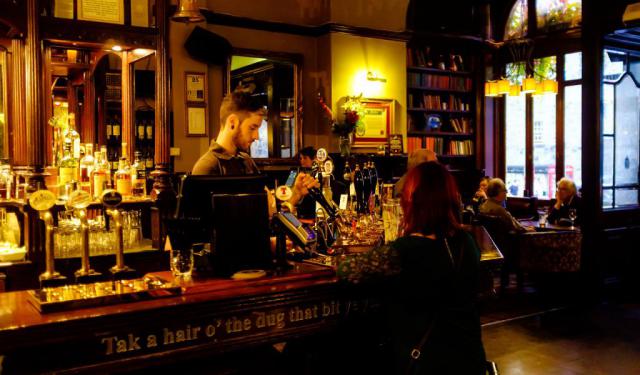
Edinburgh is rich in pubs, both old and new, spoiling their patrons with the best in town drinks and food. Although most traditional pubs in the city are laid back, with a quiet and relaxing atmosphere, some have dance floors and double as nightclubs. This self-guided adventure takes you to several such spots, each with its own story to tell.
Our journey begins at the World's End Pub, a... view more
Tour Duration: 1 Hour(s)
Travel Distance: 1.5 Km or 0.9 Miles
Our journey begins at the World's End Pub, a... view more
Tour Duration: 1 Hour(s)
Travel Distance: 1.5 Km or 0.9 Miles

Edinburgh Introduction Walking Tour
If you like cities with a split personality, Edinburgh is definitely one such, featuring a striking mix of medieval and Georgian architecture. Indeed, here medieval grit meets Enlightenment wit, and every cobbled incline has a story to tell-whether your legs are ready for it or not. Perched (or more like wedged) across volcanic hills, the city has been Scotland’s capital since the 15th century... view more
Tour Duration: 2 Hour(s)
Travel Distance: 3.4 Km or 2.1 Miles
Tour Duration: 2 Hour(s)
Travel Distance: 3.4 Km or 2.1 Miles

Royal Mile Walking Tour
The Royal Mile, a steep thoroughfare in the heart of Edinburgh, has served as the city’s backbone since the medieval period. Carved along a volcanic ridge called Castle Rock, this spine of the Old Town slopes down from the mighty Edinburgh Castle at one end to the Holyroodhouse Palace and the weathered ruins of Holyrood Abbey at the other. The distance is almost exactly one Scots mile (hence the... view more
Tour Duration: 2 Hour(s)
Travel Distance: 1.6 Km or 1 Miles
Tour Duration: 2 Hour(s)
Travel Distance: 1.6 Km or 1 Miles

Old Town Walking Tour
Edinburgh’s Old Town isn’t just old-it’s ancient, smoky, and proud of itself. This is the city’s historic core, where centuries of drama, diplomacy, and architectural ambition come layered in stone, soot, and scandal. From its Celtic roots to Roman incursions and royal power plays, this part of town has seen more plot twists than a binge-worthy period drama.
At the heart of it all lies... view more
Tour Duration: 2 Hour(s)
Travel Distance: 2.5 Km or 1.6 Miles
At the heart of it all lies... view more
Tour Duration: 2 Hour(s)
Travel Distance: 2.5 Km or 1.6 Miles
Useful Travel Guides for Planning Your Trip

Scottish Souvenirs: 15 Authentic Scottish Things to Buy in Edinburgh
The popularity of Scotland stretches far beyond its geographical borders, fueled, in large part, by Hollywood's interest in the Scottish theme - Sean Connery (as James Bond), "Braveheart", etc. Indeed, the cultural spectrum of this part of Britain is enormous and comprises great...

Top 12 Pubs On and Around Royal Mile in Edinburgh
Edinburgh is a vibrant city with abundant nightlife and no shortage of places to go after dusk. The Royal Mile alone, in the very heart of Edinburgh, is laden with character spots craving to be discovered by the first time visitors to the city. This is the highlight of some of the most notable bars...

19 Best Pubs in New Town, Edinburgh
A guide to the pubs that make up the area that is called Edinburgh's New Town. A description about what you can expect from each of the locations in the directory. A fantastic directory if you are a tourist or even a...
The Most Popular Cities
/ view all