

Audio Guide: Atlanta Downtown Walk (Self Guided), Atlanta
Atlanta began as a practical idea rather than a grand vision. In the 1830s, Georgia planners selected a forested ridge as the southern endpoint of a new railroad linking the state to the Midwest. The settlement that emerged was first called Terminus. The name Atlanta appeared in the 1840s, likely derived from Atlantica-Pacifica, a poetic nod to the railroad’s ambition to connect the Atlantic coast with territories pushing westward.
Railroads shaped Atlanta’s early identity, turning it into a transportation and commercial hub almost overnight. That importance also made it a target during the Civil War. In 1864, Union forces under General William T. Sherman captured and burned much of the city, leaving it heavily damaged. Atlanta’s rapid rebuilding afterward fueled its reputation as a city of resilience, later reinforced by its central role in the Civil Rights Movement and its emergence as the economic heart of the modern Southeast.
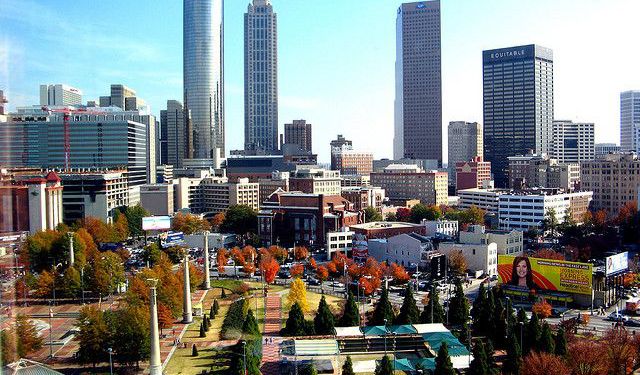
Downtown Atlanta is where this layered history is most visible. The area grew around Five Points, the intersection where the original rail lines and early streets converged. In the late 19th and early 20th centuries, downtown became the city’s commercial and civic core, filled with banks, department stores, hotels, theaters, and newspaper offices. Early skyscrapers rose alongside courthouses and train terminals, reflecting Atlanta’s ambition to present itself as a modern Southern metropolis.
The district also witnessed key moments in American history. Downtown streets were central to Civil Rights-era protests and marches, and nearby institutions played a role in shaping national conversations on race, equality, and urban change. While suburban expansion after World War II drew residents and businesses outward, downtown never lost its symbolic weight. Instead, it evolved.
Today, downtown blends historic landmarks with large-scale convention centers, sports arenas, universities, and government buildings. Restored theaters and surviving early skyscrapers sit alongside modern glass towers, while pedestrian areas and public spaces reconnect the district to daily city life.
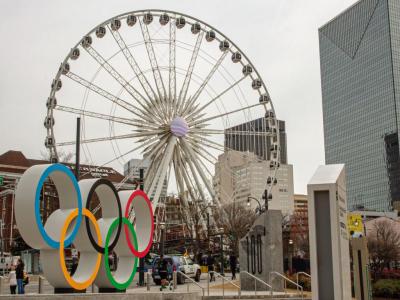
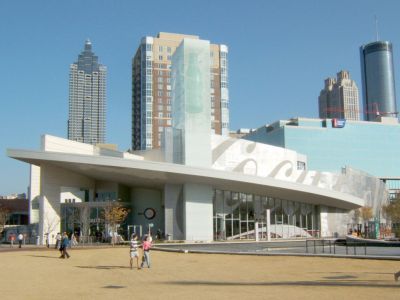
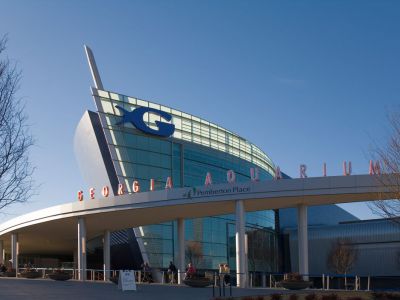
Walking through downtown Atlanta, visitors pass Centennial Olympic Park, a green legacy of the 1996 Olympic Games, framed by major attractions. Nearby stand the Georgia Aquarium and the World of Coca-Cola, both drawing crowds throughout the day. The College Football Hall of Fame celebrates the sport’s national culture, while the National Center for Civil and Human Rights adds historical depth. The CNN Center anchors the area with broadcasting history and a lively public concourse experience today. Together, these landmarks show downtown Atlanta as a place where entertainment, history, and public life overlap.
Railroads shaped Atlanta’s early identity, turning it into a transportation and commercial hub almost overnight. That importance also made it a target during the Civil War. In 1864, Union forces under General William T. Sherman captured and burned much of the city, leaving it heavily damaged. Atlanta’s rapid rebuilding afterward fueled its reputation as a city of resilience, later reinforced by its central role in the Civil Rights Movement and its emergence as the economic heart of the modern Southeast.
Downtown Atlanta is where this layered history is most visible. The area grew around Five Points, the intersection where the original rail lines and early streets converged. In the late 19th and early 20th centuries, downtown became the city’s commercial and civic core, filled with banks, department stores, hotels, theaters, and newspaper offices. Early skyscrapers rose alongside courthouses and train terminals, reflecting Atlanta’s ambition to present itself as a modern Southern metropolis.
The district also witnessed key moments in American history. Downtown streets were central to Civil Rights-era protests and marches, and nearby institutions played a role in shaping national conversations on race, equality, and urban change. While suburban expansion after World War II drew residents and businesses outward, downtown never lost its symbolic weight. Instead, it evolved.
Today, downtown blends historic landmarks with large-scale convention centers, sports arenas, universities, and government buildings. Restored theaters and surviving early skyscrapers sit alongside modern glass towers, while pedestrian areas and public spaces reconnect the district to daily city life.
Walking through downtown Atlanta, visitors pass Centennial Olympic Park, a green legacy of the 1996 Olympic Games, framed by major attractions. Nearby stand the Georgia Aquarium and the World of Coca-Cola, both drawing crowds throughout the day. The College Football Hall of Fame celebrates the sport’s national culture, while the National Center for Civil and Human Rights adds historical depth. The CNN Center anchors the area with broadcasting history and a lively public concourse experience today. Together, these landmarks show downtown Atlanta as a place where entertainment, history, and public life overlap.
How it works: Download the app "GPSmyCity: Walks in 1K+ Cities" from Apple App Store or Google Play Store to your mobile phone or tablet. The app turns your mobile device into a personal tour guide and its built-in GPS navigation functions guide you from one tour stop to next. The app works offline, so no data plan is needed when traveling abroad.
Download The GPSmyCity App



Atlanta Downtown Walk Map
Guide Name: Atlanta Downtown Walk
Guide Location: USA » Atlanta (See other walking tours in Atlanta)
Guide Type: Self-guided Walking Tour (Sightseeing)
Tour Duration: 2 Hour(s)
Travel Distance: 3.3 Km or 2.1 Miles
Guide Location: USA » Atlanta (See other walking tours in Atlanta)
Guide Type: Self-guided Walking Tour (Sightseeing)
Tour Duration: 2 Hour(s)
Travel Distance: 3.3 Km or 2.1 Miles
Sights Featured in This Walk



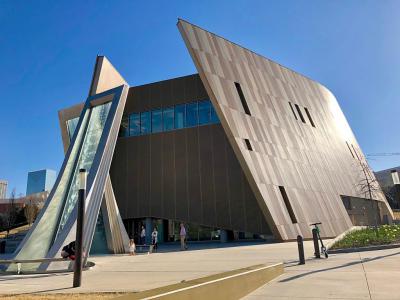
Walking Tours in Atlanta, Georgia

Create Your Own Walk in Atlanta
Creating your own self-guided walk in Atlanta is easy and fun. Choose the city attractions that you want to see and a walk route map will be created just for you. You can even set your hotel as the start point of the walk.

Centennial Olympic Park
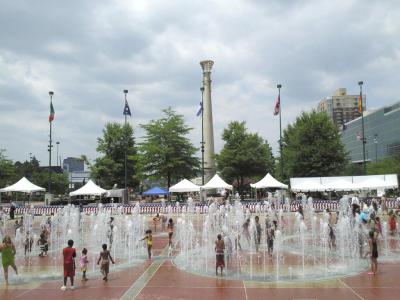
The Centennial Olympic Park in Atlanta is a sprawling urban oasis, covering approximately 21 acres. It was created as a central gathering place for the Centennial Summer Olympic Games held in Georgia in 1996. In the years following the Games, the area witnessed commercial development resulting in a variety of attractions and amenities suitable for visitors of all ages.
One of the notable sites... view more
Tour Duration: 2 Hour(s)
Travel Distance: 1.6 Km or 1 Miles
One of the notable sites... view more
Tour Duration: 2 Hour(s)
Travel Distance: 1.6 Km or 1 Miles

"Gone with the Wind" Walking Tour
Atlanta does “give a damn” about Gone With The Wind. There is a number of museums and sites in the city that commemorate one of America's all-time classic stories. Although released as far back as the 1930s, both Margaret Mitchell's award-winning novel and the film that followed shortly still inspire curiosity about and are equally celebrated in Atlanta.
The first port of call for... view more
Tour Duration: 2 Hour(s)
Travel Distance: 5.0 Km or 3.1 Miles
The first port of call for... view more
Tour Duration: 2 Hour(s)
Travel Distance: 5.0 Km or 3.1 Miles
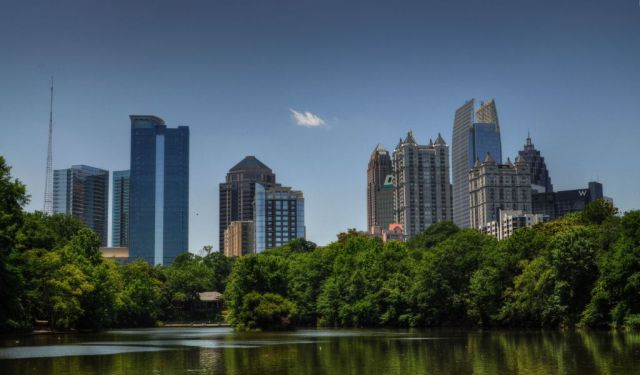
Atlanta Midtown Walking Tour
Atlanta began not as a grand colonial settlement but as a practical railroad town. Its origins lie in the 1830s, when Georgia planned a rail line to connect the interior of the state with the Midwest. The settlement that formed at the rail terminus was first known simply as Terminus, then Marthasville, before being renamed Atlanta in 1847. The name is generally understood to derive from the... view more
Tour Duration: 2 Hour(s)
Travel Distance: 3.4 Km or 2.1 Miles
Tour Duration: 2 Hour(s)
Travel Distance: 3.4 Km or 2.1 Miles
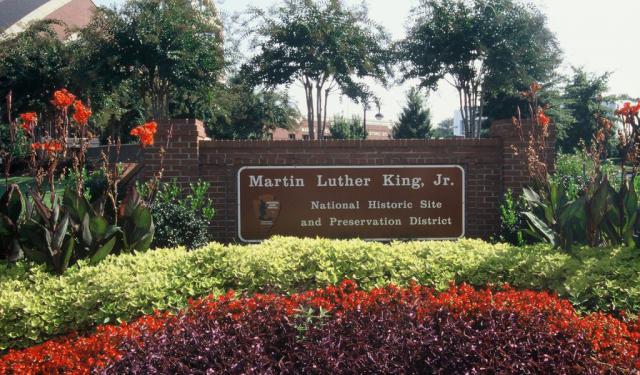
Martin Luther King Walking Tour
Martin Luther King Jr. once said “I was born here. I grew up here. And this city helped shape the man I became.”
Martin Luther King Jr. was born in Atlanta in 1929 into a family deeply rooted in the city’s Black Baptist tradition. Raised on Auburn Avenue, then one of African American corridors in the United States, King grew up surrounded by faith, education, and civic responsibility.... view more
Tour Duration: 1 Hour(s)
Travel Distance: 1.0 Km or 0.6 Miles
Martin Luther King Jr. was born in Atlanta in 1929 into a family deeply rooted in the city’s Black Baptist tradition. Raised on Auburn Avenue, then one of African American corridors in the United States, King grew up surrounded by faith, education, and civic responsibility.... view more
Tour Duration: 1 Hour(s)
Travel Distance: 1.0 Km or 0.6 Miles
The Most Popular Cities
/ view all