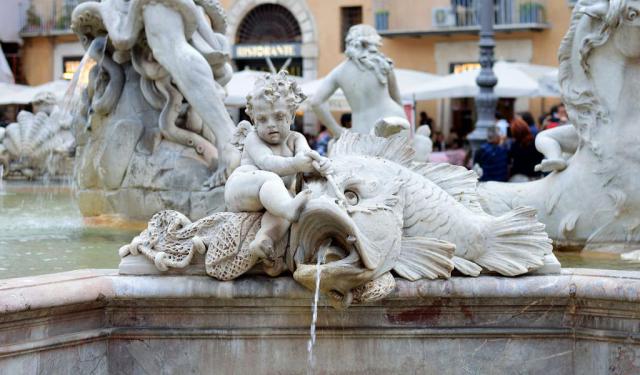


Fountains and Squares Walking Tour (Self Guided), Rome
In Rome there is a lively piazza round almost every corner, each with its own unique atmosphere and its own story to tell. These public squares have been the center of Roman culture for centuries, and some of the city’s most popular attractions are located within them.
Most piazzas have a fountain in the center and a lot of cafes around. In fact, Rome holds the largest number of fountains in the world (including 50 monumental and hundreds of smaller ones), some of which date back thousands of years.
Rome's love affair with fountains started over two millennia ago, during which time the fountains have provided drinking water to the city via nine specially-built aqueducts and served as decorations for the numerous piazzas. To ensure their fail-safe performance, each of the major fountains was traditionally fed by two different aqueducts, in case one was shut down for service.
Today, fountains are integral part of the Roman cultural setting glorified by cinema – such as the Trevi Fountain in the La Dolce Vita movie. To appreciate the city's most prominent fountains in their splendor and, perhaps, to toss in a coin for good luck, take this self-guided walk!
Getting to Sight #1. The first tour stop (Piazza della Repubblica) is a short walk from Termini Train Station or can be reached directly by Bus: 170, 649, 70, H; Train: FCO, FL2, FL5, Train R; Metro: line A and B, Light Rail: 5; Tram: 5 and 14.
Most piazzas have a fountain in the center and a lot of cafes around. In fact, Rome holds the largest number of fountains in the world (including 50 monumental and hundreds of smaller ones), some of which date back thousands of years.
Rome's love affair with fountains started over two millennia ago, during which time the fountains have provided drinking water to the city via nine specially-built aqueducts and served as decorations for the numerous piazzas. To ensure their fail-safe performance, each of the major fountains was traditionally fed by two different aqueducts, in case one was shut down for service.
Today, fountains are integral part of the Roman cultural setting glorified by cinema – such as the Trevi Fountain in the La Dolce Vita movie. To appreciate the city's most prominent fountains in their splendor and, perhaps, to toss in a coin for good luck, take this self-guided walk!
Getting to Sight #1. The first tour stop (Piazza della Repubblica) is a short walk from Termini Train Station or can be reached directly by Bus: 170, 649, 70, H; Train: FCO, FL2, FL5, Train R; Metro: line A and B, Light Rail: 5; Tram: 5 and 14.
How it works: Download the app "GPSmyCity: Walks in 1K+ Cities" from Apple App Store or Google Play Store to your mobile phone or tablet. The app turns your mobile device into a personal tour guide and its built-in GPS navigation functions guide you from one tour stop to next. The app works offline, so no data plan is needed when traveling abroad.
Download The GPSmyCity App



Fountains and Squares Walking Tour Map
Guide Name: Fountains and Squares Walking Tour
Guide Location: Italy » Rome (See other walking tours in Rome)
Guide Type: Self-guided Walking Tour (Sightseeing)
Tour Duration: 2 Hour(s)
Travel Distance: 4.1 Km or 2.5 Miles
Guide Location: Italy » Rome (See other walking tours in Rome)
Guide Type: Self-guided Walking Tour (Sightseeing)
Tour Duration: 2 Hour(s)
Travel Distance: 4.1 Km or 2.5 Miles
Sights Featured in This Walk
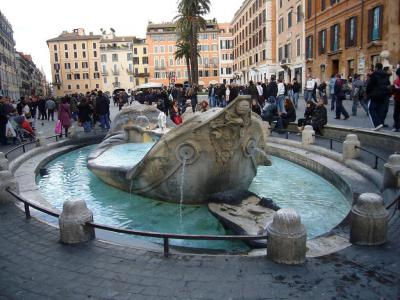
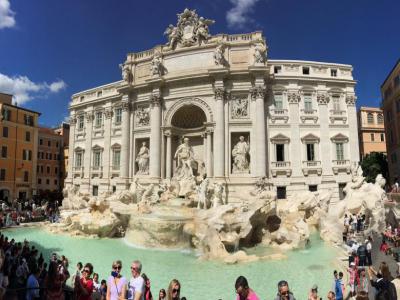
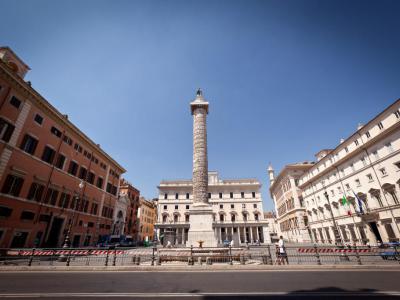
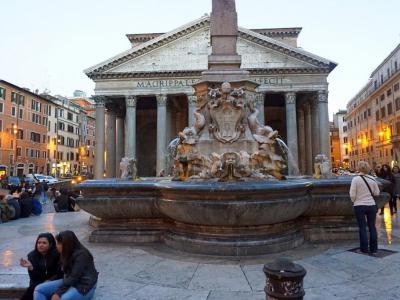
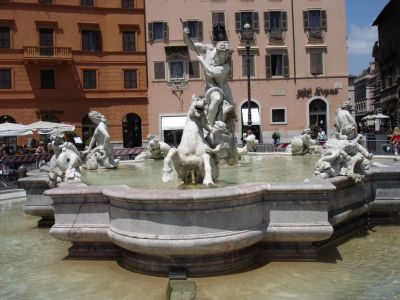
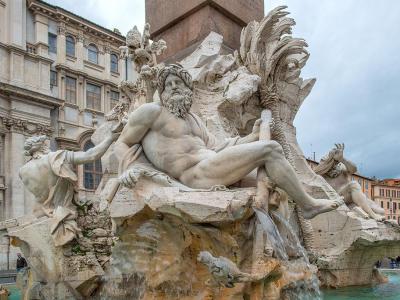
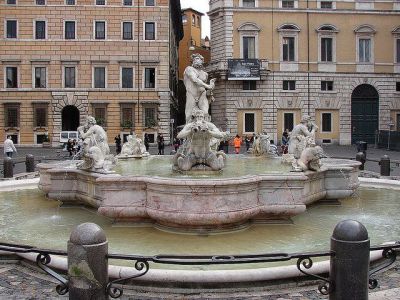
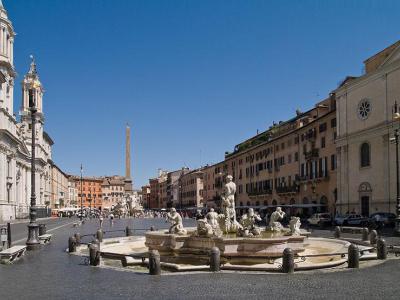
Walking Tours in Rome, Italy

Create Your Own Walk in Rome
Creating your own self-guided walk in Rome is easy and fun. Choose the city attractions that you want to see and a walk route map will be created just for you. You can even set your hotel as the start point of the walk.
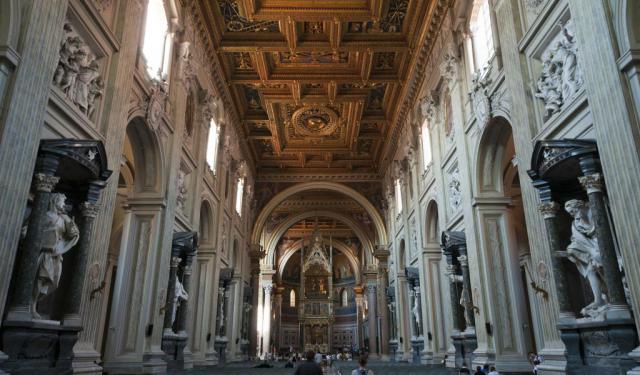
Holy Sites Walking Tour
As the cradle of the Catholic Church, one of the world's largest organizations, Rome has a large number of valuable, sacred places of worship. Crowded with architectural splendors from different periods of time, each of its churches and basilicas represent a significant part of culture and history.
Take this self-guided walking tour to discover Rome's magnificent religious heritage,... view more
Tour Duration: 3 Hour(s)
Travel Distance: 6.9 Km or 4.3 Miles
Take this self-guided walking tour to discover Rome's magnificent religious heritage,... view more
Tour Duration: 3 Hour(s)
Travel Distance: 6.9 Km or 4.3 Miles
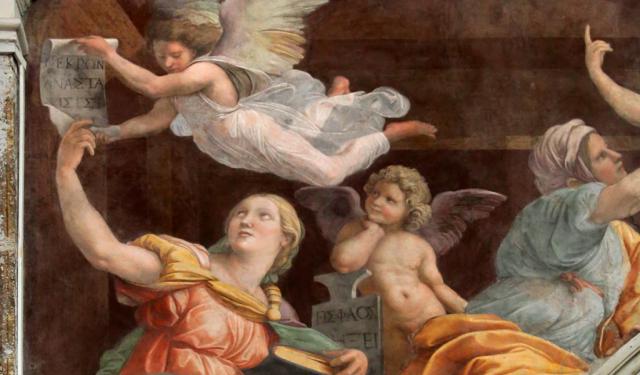
Hidden Art Treasures in Rome
Rome is one of the world's top living museums, replete with some of the most iconic pieces of art on the face of the planet. Famous artists, such as Michelangelo, Caravaggio, Raphael, Bernini, to mention but a few, had lived and worked here and left indelible marks in the city.
Needless to say that the abundance of masterpieces makes Rome crowded with tourists anxious to see them, causing... view more
Tour Duration: 1 Hour(s)
Travel Distance: 2.6 Km or 1.6 Miles
Needless to say that the abundance of masterpieces makes Rome crowded with tourists anxious to see them, causing... view more
Tour Duration: 1 Hour(s)
Travel Distance: 2.6 Km or 1.6 Miles
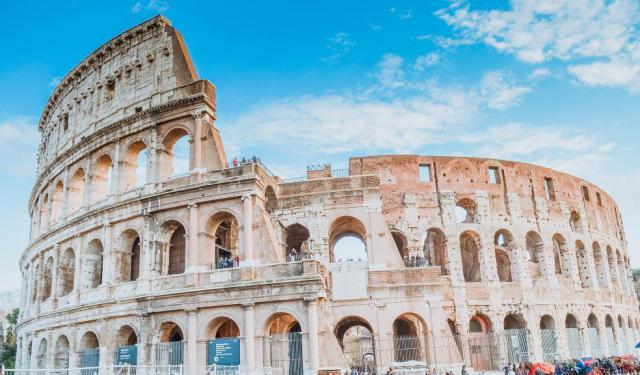
Rome Introduction Walking Tour I
Often referred to as the Eternal City, Rome holds a unique place in the story of Western civilization. Its influence shaped European culture through language, governance, and monumental architecture.
The name “Rome” originates from Romulus, the mythical founder of the city, who, according to legend, was the son of the war god Mars and Rhea Silvia, the priestess of goddess Vesta. Both... view more
Tour Duration: 2 Hour(s)
Travel Distance: 3.7 Km or 2.3 Miles
The name “Rome” originates from Romulus, the mythical founder of the city, who, according to legend, was the son of the war god Mars and Rhea Silvia, the priestess of goddess Vesta. Both... view more
Tour Duration: 2 Hour(s)
Travel Distance: 3.7 Km or 2.3 Miles
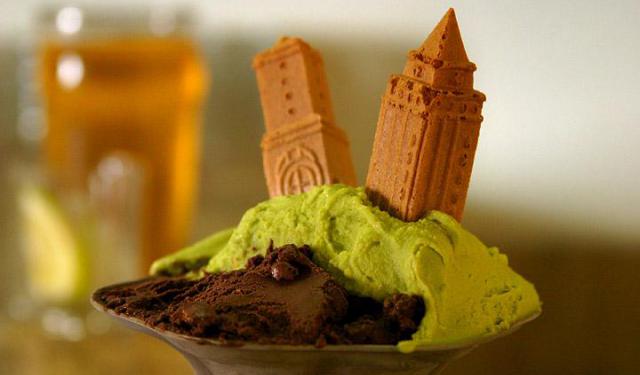
Food Tasting Walking Tour
Whether it’s a long lunch or a stop-off for an ice cream on an evening stroll, eating in Rome is a very social activity. Culinary traditions run deep here, and it may well be one of Italy’s most pleasurable cities in which to eat. Deli shops, prosciutterias, pizzerias, fornos (bakeries) and caffès are also very popular and offer a great alternative to a restaurant meal.
On this... view more
Tour Duration: 2 Hour(s)
Travel Distance: 2.5 Km or 1.6 Miles
On this... view more
Tour Duration: 2 Hour(s)
Travel Distance: 2.5 Km or 1.6 Miles
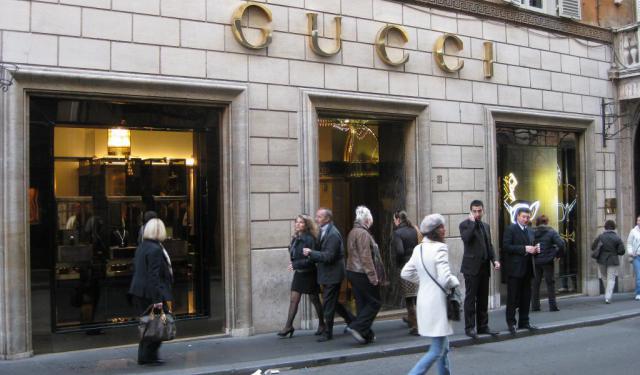
Rome Shopping Streets Walking Tour
Loved by tourists for its busy fashionable streets and significant baroque icons, the so-called ‘Tridente’ is one of the Eternal City's most lusted-after areas, formed by Via dei Condotti, Via Borgognona, Via Frattina and the adjacent Via del Corso. It is perhaps the most high-end destination for Roman shopping, with a concentration of renowned jewelers and important Italian/international... view more
Tour Duration: 2 Hour(s)
Travel Distance: 2.9 Km or 1.8 Miles
Tour Duration: 2 Hour(s)
Travel Distance: 2.9 Km or 1.8 Miles
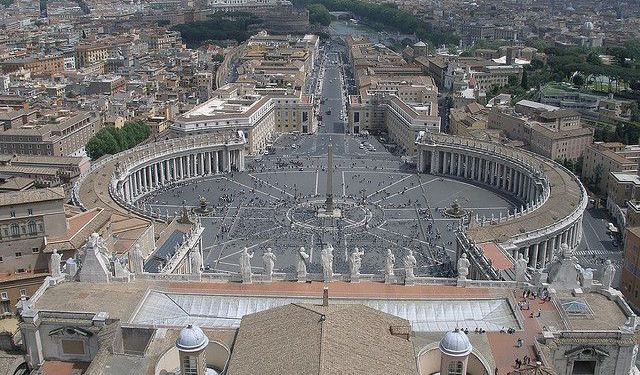
Vatican Walking Tour
Consisting of a walled enclave within the city of Rome, the Vatican is the world’s smallest sovereign state, as well as a symbol (and headquarters) of the Roman Catholic faith. Although only 44 hectares in surface, one is amazed by the vastness of this place and the sheer size of everything. When gazing around in all directions, you realize how much can be achieved by people working in faith for... view more
Tour Duration: 2 Hour(s)
Travel Distance: 3.4 Km or 2.1 Miles
Tour Duration: 2 Hour(s)
Travel Distance: 3.4 Km or 2.1 Miles
Useful Travel Guides for Planning Your Trip
10 Best Food Markets in Rome Italy
Of all the things Italy is most famous for (cars, music, fashion, movies, etc.), food is, undoubtedly, top of the list. Rome may well not be the whole Italy, but no Italy is whole without Rome... And the Romans, much as all their fellow-Italians, like it "fresco", hence the abundance of...
Souvenirs Shopping: 15 Authentic Italian Things To Buy in Rome
Rome is the Eternal City and, as such, the list of gift options available here is countless. Whether it's something edible, drinkable, wearable or pleasing to the eye that you want - you will find it all here in abundance. However, if time or budget is the factor, perhaps you might want to...
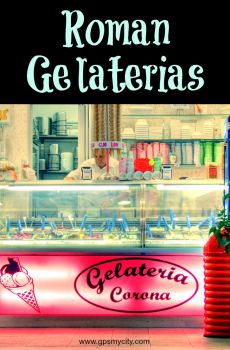
17 Best Gelaterias in Rome Italy
For ice cream lovers and dabblers this guide is a treasure chest of Rome’s best gelato shops. There are gelaterias everywhere. Many visitors to Rome only have a few days to explore the city. You owe it to yourself to make the most of your time and find the gelato locals eat. Often the authentic...
The Most Popular Cities
/ view all