

Audio Guide: Historic Gaslamp District Walking Tour (Self Guided), San Diego
Downtown San Diego’s Gaslamp Quarter is vivid proof that history doesn’t have to sit quietly in a museum-it can dance, dine, and light up the night! Stretching across 16½ lively blocks, this historic district is where Victorian architecture meets craft cocktails and neon signs. With over 90 preserved buildings, the Gaslamp is one of the largest collections of Victorian commercial structures in the western United States, now reborn as restaurants, theaters, and late-night haunts.
The district’s story began in 1850, when entrepreneur William Heath Davis attempted to establish “New Town” near the waterfront, hoping to move San Diego’s core from the old Spanish settlement inland. Unfortunately, his project failed, leaving little more than shanties in what locals mockingly referred to as “Rabbitville.” Another, more successful developer, Alonzo Horton, revived the plan in 1867 by purchasing large tracts of land and constructing a wharf at the foot of 5th Avenue. “New Town” quickly flourished, attracting residents, merchants, and builders who filled its streets with ornate façades and energetic life.
By the 1880s, the district was “dressed to impress” in elaborate Victorian finery, but also gained notoriety as a red-light and gambling quarter, nicknamed the “Stingaree.” There, saloons and brothels thrived, cards flipped, and the legendary lawman of the Wild West, Wyatt Earp, kept the peace his own way. Buildings like the Louis Bank of Commerce, the Keating Building, and the Old City Hall still whisper stories from those raucous days. Meanwhile, the Davis-Horton House, now the Gaslamp Museum, and the San Diego Chinese Historical Museum remind visitors that San Diego’s early melting pot had more than its share of intrigue.
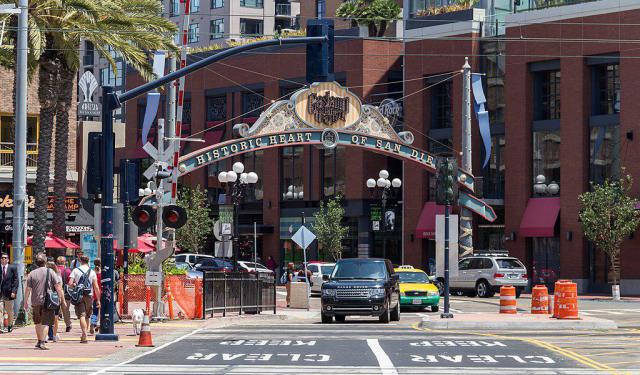
After the moral reform campaigns of the early 1900s, the Gaslamp lost its edge-and much of its sparkle. By the mid-century, it had traded gambling parlors for pawn shops and seedy taverns. But the 1970s brought a comeback: preservationists and city planners swooped in, restoring façades and rewriting the neighborhood’s story. The crowning touch arrived in 1990 with the Gaslamp Quarter Archway-a proud neon banner announcing the district’s return.
Today, the Gaslamp is San Diego’s most theatrical mix of past and present. The Horton Grand Hotel and the Balboa Theatre stand as polished reminders of its revival, while the streets below hum with the same energy that’s fueled this neighborhood for more than a century-equal parts elegance, mischief, and electric charm...
The district’s story began in 1850, when entrepreneur William Heath Davis attempted to establish “New Town” near the waterfront, hoping to move San Diego’s core from the old Spanish settlement inland. Unfortunately, his project failed, leaving little more than shanties in what locals mockingly referred to as “Rabbitville.” Another, more successful developer, Alonzo Horton, revived the plan in 1867 by purchasing large tracts of land and constructing a wharf at the foot of 5th Avenue. “New Town” quickly flourished, attracting residents, merchants, and builders who filled its streets with ornate façades and energetic life.
By the 1880s, the district was “dressed to impress” in elaborate Victorian finery, but also gained notoriety as a red-light and gambling quarter, nicknamed the “Stingaree.” There, saloons and brothels thrived, cards flipped, and the legendary lawman of the Wild West, Wyatt Earp, kept the peace his own way. Buildings like the Louis Bank of Commerce, the Keating Building, and the Old City Hall still whisper stories from those raucous days. Meanwhile, the Davis-Horton House, now the Gaslamp Museum, and the San Diego Chinese Historical Museum remind visitors that San Diego’s early melting pot had more than its share of intrigue.
After the moral reform campaigns of the early 1900s, the Gaslamp lost its edge-and much of its sparkle. By the mid-century, it had traded gambling parlors for pawn shops and seedy taverns. But the 1970s brought a comeback: preservationists and city planners swooped in, restoring façades and rewriting the neighborhood’s story. The crowning touch arrived in 1990 with the Gaslamp Quarter Archway-a proud neon banner announcing the district’s return.
Today, the Gaslamp is San Diego’s most theatrical mix of past and present. The Horton Grand Hotel and the Balboa Theatre stand as polished reminders of its revival, while the streets below hum with the same energy that’s fueled this neighborhood for more than a century-equal parts elegance, mischief, and electric charm...
How it works: Download the app "GPSmyCity: Walks in 1K+ Cities" from Apple App Store or Google Play Store to your mobile phone or tablet. The app turns your mobile device into a personal tour guide and its built-in GPS navigation functions guide you from one tour stop to next. The app works offline, so no data plan is needed when traveling abroad.
Download The GPSmyCity App



Historic Gaslamp District Walking Tour Map
Guide Name: Historic Gaslamp District Walking Tour
Guide Location: USA » San Diego (See other walking tours in San Diego)
Guide Type: Self-guided Walking Tour (Sightseeing)
Tour Duration: 1 Hour(s)
Travel Distance: 1.5 Km or 0.9 Miles
Guide Location: USA » San Diego (See other walking tours in San Diego)
Guide Type: Self-guided Walking Tour (Sightseeing)
Tour Duration: 1 Hour(s)
Travel Distance: 1.5 Km or 0.9 Miles
Sights Featured in This Walk


Walking Tours in San Diego, California

Create Your Own Walk in San Diego
Creating your own self-guided walk in San Diego is easy and fun. Choose the city attractions that you want to see and a walk route map will be created just for you. You can even set your hotel as the start point of the walk.

Balboa Park Walking Tour
Balboa Park, named after Spanish explorer Vasco Núñez de Balboa, is one of the largest and most culturally significant urban parks in the United States. Established in 1868 as “City Park,” this 1,400-acre area began as undeveloped public land before its transformation in the early 20th century into a center of art, culture, and recreation. Its evolution truly began with the... view more
Tour Duration: 1 Hour(s)
Travel Distance: 1.7 Km or 1.1 Miles
Tour Duration: 1 Hour(s)
Travel Distance: 1.7 Km or 1.1 Miles

Old Town Walking Tour
Old Town is the oldest settled area in San Diego which claims to be the first site visited by Europeans on the West Coast of modern United States.
The Native American culture in the area, however, goes back thousands of years. Historically, this land had been a home to the Kumeyaay people who settled on the banks of the San Diego river since around 1000 AD. The first European explorer to... view more
Tour Duration: 2 Hour(s)
Travel Distance: 1.2 Km or 0.7 Miles
The Native American culture in the area, however, goes back thousands of years. Historically, this land had been a home to the Kumeyaay people who settled on the banks of the San Diego river since around 1000 AD. The first European explorer to... view more
Tour Duration: 2 Hour(s)
Travel Distance: 1.2 Km or 0.7 Miles

Embarcadero Marina Walking Tour
Adjacent to downtown San Diego and the picturesque San Diego Bay is a vibrant waterfront area. Embarcadero Marina, a testament to the region's colorful maritime heritage, houses several outstanding ship museums and is home to other notable sites. The abundance of shopping and dining options, complete with the pristine views of the city skyline, delight numerous locals and tourists and make... view more
Tour Duration: 1 Hour(s)
Travel Distance: 2.3 Km or 1.4 Miles
Tour Duration: 1 Hour(s)
Travel Distance: 2.3 Km or 1.4 Miles
Useful Travel Guides for Planning Your Trip

Souvenir Shopping Guide: 14 Gifts That Say San Diego
San Diego is known for its beautiful, temperate climate, but you can’t take the weather home with you. If you want a piece of San Diego as a souvenir, it’s best to shop with the natives. Whether it is made locally or just made famous locally, following are 14 perfect gifts that capture the...
The Most Popular Cities
/ view all