

Audio Guide: Georgetown Walking Tour (Self Guided), Washington D.C.
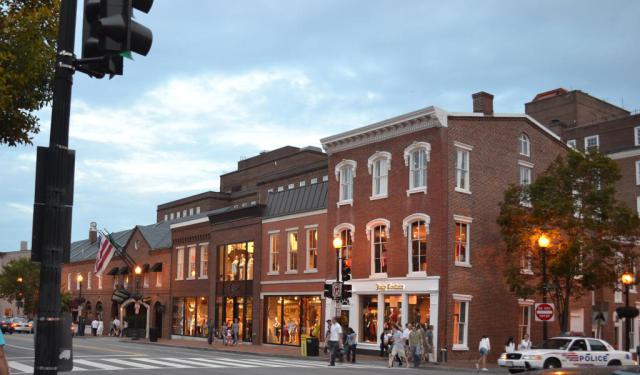
Georgetown is Washington, D.C.’s historic northwest charmer: close enough to downtown to hear the political machinery humming, yet old enough and proud enough to pretend it has no idea what all the fuss is about. Once a busy port town on the Potomac, it still keeps a character all its own, with brick sidewalks, old houses, leafy streets, and enough polished boutiques to remind you that history here comes with very nice window displays...
People like to say that Georgetown is where “old-world charm meets modern allure.” Others, feeling poetic, call it “a tapestry of cobblestone dreams and timeless grace.” In plain English, it is a very pretty, very historic, and occasionally very expensive place.
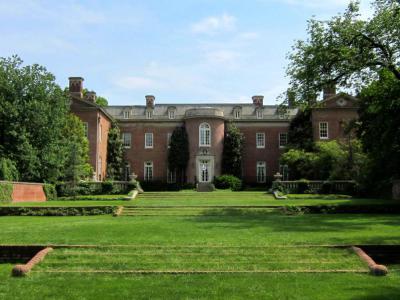
The neighborhood has its serious cultural credentials, too. Dumbarton Oaks offers a museum, gardens, and the kind of calm that makes you briefly forget traffic exists. Nearby, Tudor Place brings Federal-style elegance, family history, and greenery that have remained in good condition for generations. The Bowie-Sevier House adds another layer to Georgetown’s architectural memory.
Wisconsin Avenue supplies the bustle, with shops, cafés, and historic buildings lined up as if they all deliberately agreed to look photogenic. Martin’s Tavern, open since 1933, has hosted plenty of famous guests, including John F. Kennedy, who dined here often enough to give the place a presidential footnote, and possibly a very confident menu...
Then there is Georgetown University, full of Gothic towers, student energy, and the faint academic atmosphere of approaching deadlines... Holy Trinity Catholic Church, rooted in the 18th century, brings a quieter note of faith and continuity. Not far off, the Exorcist Steps provide a very different kind of spiritual association, thanks to their role in the famous horror movie. Indeed, Georgetown is where you can move from theology to cinematic terror in just a few steps...
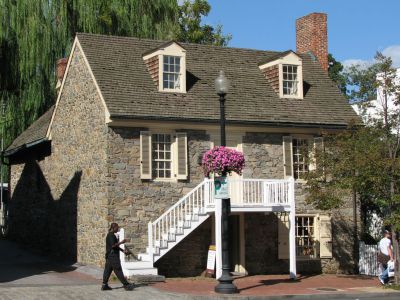
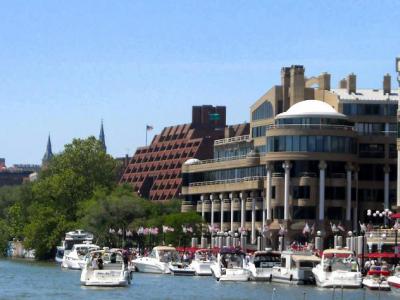
M Street, in turn, brings the modern pulse, with boutiques, restaurants, nightlife, and shoppers walking with purpose. The Old Stone House, dating back to 1765, represents a humbler kind of landmark status as the oldest surviving structure in Washington, D.C. And finally, down by the Potomac, Washington Harbour offers a wealth of waterfront dining, outdoor seating, and views that make even a simple drink feel like a civic occasion.
In Georgetown, the past is not hidden away; it is standing right there in brick, stone, and polished front steps. So, follow this self-guided walking tour, and you will meet a neighborhood where history, style, scholarship, film lore, and riverside leisure all seem perfectly at home.
In Georgetown, “the streets whisper tales of the past, while the present dances with sophistication.” If you want to hear some of these tales yourself and feel Georgetown's intoxicating blend of heritage and contemporary chic, embark on this self-guided walking tour.
People like to say that Georgetown is where “old-world charm meets modern allure.” Others, feeling poetic, call it “a tapestry of cobblestone dreams and timeless grace.” In plain English, it is a very pretty, very historic, and occasionally very expensive place.
The neighborhood has its serious cultural credentials, too. Dumbarton Oaks offers a museum, gardens, and the kind of calm that makes you briefly forget traffic exists. Nearby, Tudor Place brings Federal-style elegance, family history, and greenery that have remained in good condition for generations. The Bowie-Sevier House adds another layer to Georgetown’s architectural memory.
Wisconsin Avenue supplies the bustle, with shops, cafés, and historic buildings lined up as if they all deliberately agreed to look photogenic. Martin’s Tavern, open since 1933, has hosted plenty of famous guests, including John F. Kennedy, who dined here often enough to give the place a presidential footnote, and possibly a very confident menu...
Then there is Georgetown University, full of Gothic towers, student energy, and the faint academic atmosphere of approaching deadlines... Holy Trinity Catholic Church, rooted in the 18th century, brings a quieter note of faith and continuity. Not far off, the Exorcist Steps provide a very different kind of spiritual association, thanks to their role in the famous horror movie. Indeed, Georgetown is where you can move from theology to cinematic terror in just a few steps...
M Street, in turn, brings the modern pulse, with boutiques, restaurants, nightlife, and shoppers walking with purpose. The Old Stone House, dating back to 1765, represents a humbler kind of landmark status as the oldest surviving structure in Washington, D.C. And finally, down by the Potomac, Washington Harbour offers a wealth of waterfront dining, outdoor seating, and views that make even a simple drink feel like a civic occasion.
In Georgetown, the past is not hidden away; it is standing right there in brick, stone, and polished front steps. So, follow this self-guided walking tour, and you will meet a neighborhood where history, style, scholarship, film lore, and riverside leisure all seem perfectly at home.
In Georgetown, “the streets whisper tales of the past, while the present dances with sophistication.” If you want to hear some of these tales yourself and feel Georgetown's intoxicating blend of heritage and contemporary chic, embark on this self-guided walking tour.
How it works: Download the app "GPSmyCity: Walks in 1K+ Cities" from Apple App Store or Google Play Store to your mobile phone or tablet. The app turns your mobile device into a personal tour guide and its built-in GPS navigation functions guide you from one tour stop to next. The app works offline, so no data plan is needed when traveling abroad.
Download The GPSmyCity App



Georgetown Walking Tour Map
Guide Name: Georgetown Walking Tour
Guide Location: USA » Washington D.C. (See other walking tours in Washington D.C.)
Guide Type: Self-guided Walking Tour (Sightseeing)
Tour Duration: 2 Hour(s)
Travel Distance: 3.9 Km or 2.4 Miles
Guide Location: USA » Washington D.C. (See other walking tours in Washington D.C.)
Guide Type: Self-guided Walking Tour (Sightseeing)
Tour Duration: 2 Hour(s)
Travel Distance: 3.9 Km or 2.4 Miles
Sights Featured in This Walk


Walking Tours in Washington D.C., USA

Create Your Own Walk in Washington D.C.
Creating your own self-guided walk in Washington D.C. is easy and fun. Choose the city attractions that you want to see and a walk route map will be created just for you. You can even set your hotel as the start point of the walk.

Federal Buildings Walking Tour
The capital of the United States is home to several notable federal buildings that hold significant historical, architectural, and governmental value.
Among the stately “emblems of authority” in Washington D.C. perhaps the most prominent is the official residence and workplace of the President of the United States – The White House. This resplendent mansion at 1600 Pennsylvania Avenue... view more
Tour Duration: 2 Hour(s)
Travel Distance: 4.9 Km or 3 Miles
Among the stately “emblems of authority” in Washington D.C. perhaps the most prominent is the official residence and workplace of the President of the United States – The White House. This resplendent mansion at 1600 Pennsylvania Avenue... view more
Tour Duration: 2 Hour(s)
Travel Distance: 4.9 Km or 3 Miles
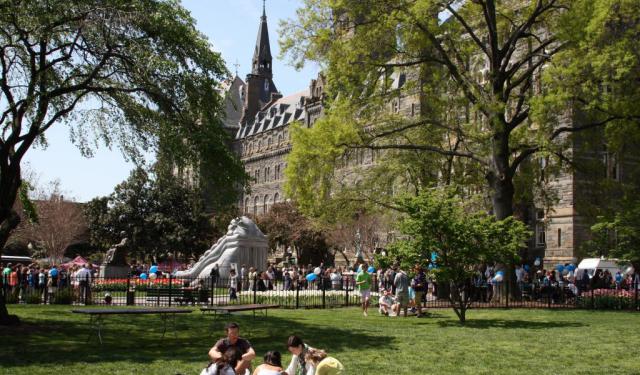
Georgetown University Walking Tour
Georgetown University, established in 1789, is America's oldest Catholic and Jesuit institution. Spanning four campuses in Washington, DC, its main undergraduate campus in Georgetown features fifty-four buildings across 104 acres.
With its Gothic and Georgian architecture, serene green spaces, and Jesuit traditions, the university promotes academic excellence and global engagement. For... view more
Tour Duration: 2 Hour(s)
Travel Distance: 2.1 Km or 1.3 Miles
With its Gothic and Georgian architecture, serene green spaces, and Jesuit traditions, the university promotes academic excellence and global engagement. For... view more
Tour Duration: 2 Hour(s)
Travel Distance: 2.1 Km or 1.3 Miles
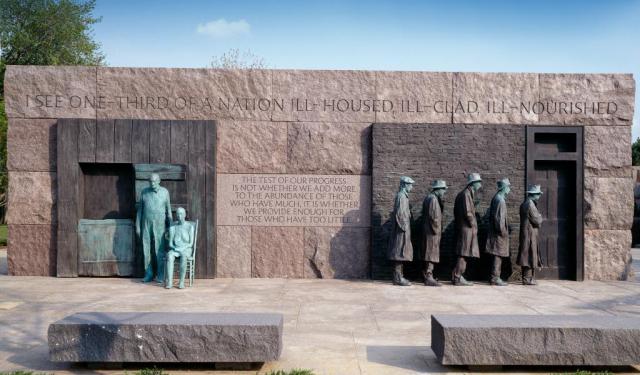
DC Monuments and Memorials Walking Tour
“In the end, it’s not the years in your life that count. It’s the life in your years,” goes the famous quote by Abraham Lincoln.
Indeed, those remembered in Washington, D.C.—statesmen, reformers, fallen soldiers, civil rights leaders, and other figures of national importance—had their lives filled with consequence. What they left behind is not only a record of public service,... view more
Tour Duration: 2 Hour(s)
Travel Distance: 3.6 Km or 2.2 Miles
Indeed, those remembered in Washington, D.C.—statesmen, reformers, fallen soldiers, civil rights leaders, and other figures of national importance—had their lives filled with consequence. What they left behind is not only a record of public service,... view more
Tour Duration: 2 Hour(s)
Travel Distance: 3.6 Km or 2.2 Miles
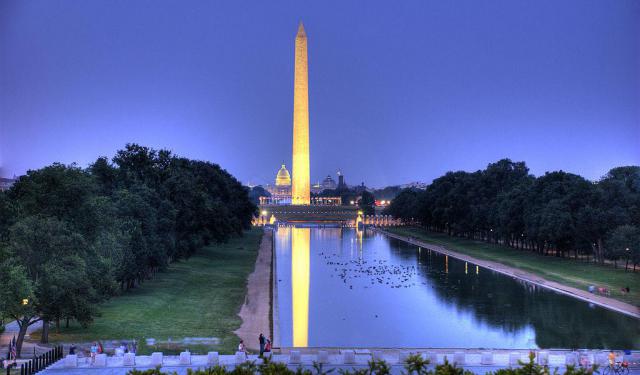
Washington D.C. Introduction Walking Tour
Washington, D.C., formally the District of Columbia, is the capital of the United States and, in many ways, the country’s grand civic stage. It is where government, history, protest, memory, and national ceremony meet in unusually concentrated form. The idea for a federal capital grew out of the young nation’s need for a seat of government independent of any state, especially after the... view more
Tour Duration: 2 Hour(s)
Travel Distance: 5.2 Km or 3.2 Miles
Tour Duration: 2 Hour(s)
Travel Distance: 5.2 Km or 3.2 Miles

Arlington National Cemetery Tour
“The legacy of heroes is the memory of a great name and the inheritance of a great example,” a distinguished politician of the 19th century once said. Few places embody that thought more deeply than Arlington National Cemetery in Arlington, Virginia.
Established during the Civil War in 1864, this historic military cemetery is the final resting place for many of America’s heroes, whose... view more
Tour Duration: 2 Hour(s)
Travel Distance: 4.1 Km or 2.5 Miles
Established during the Civil War in 1864, this historic military cemetery is the final resting place for many of America’s heroes, whose... view more
Tour Duration: 2 Hour(s)
Travel Distance: 4.1 Km or 2.5 Miles
Useful Travel Guides for Planning Your Trip

7 Chocolate Destinations in Washington D.C.
Let’s be honest, you hear the words "Washington, D.C." and you think politics, history, museums, etc. You can’t take five steps in the city without being surrounded by history. As important as all that culture is, it’s also a bit overwhelming. Make it fun by exploring Washington,...

10 Unusual Things to Do in Washington DC
You might be inclined to think that the capital of the United States consists solely of museums and monuments, but that couldn’t be further from the truth. As a local, I’ve found that there are so many more things to do in this city than just the main tourist highlights. Read on to learn 10 of...

Traveler's Guide to Washington DC: 16 Souvenirs to Bring Home
The capital of the United States is an attraction in its own right and many things that have originated here or in the nearby areas are of great cultural and historic significance. To decide which of them can make for an ideal souvenir for you to bring home, check out the proposed list of local...
The Most Popular Cities
/ view all