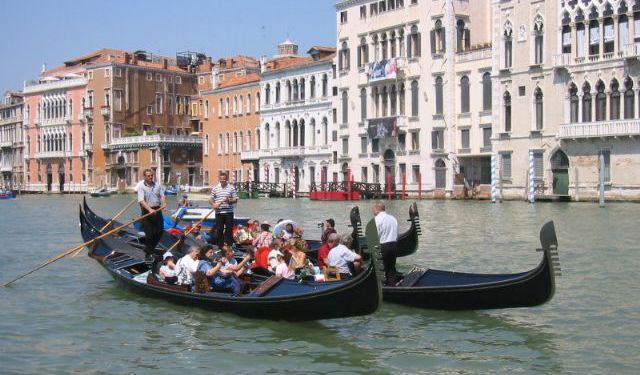


Grand Canal Walking Tour (Self Guided), Venice
The main waterway in Venice, Grand Canal snakes in an "S" shape through the center of the city, dividing its main districts. On both sides of this thoroughfare are the most beautiful buildings dating from the 12th to the 18th centuries that tell the story of a thousand years of Venetian splendor. While one can view the architectural parade from water buses, our self-guided walking tour offers the opportunity to see some magnificent masterpieces up close and even step inside them.
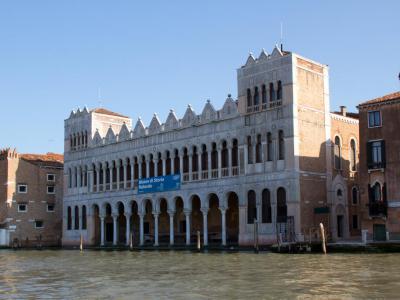
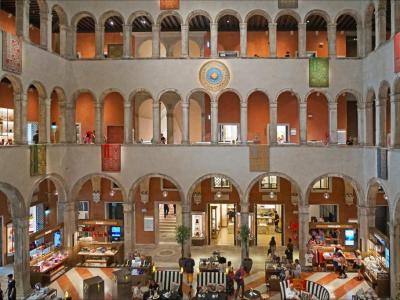
In 2016, stellar architect Rem Koolhaas converted one of the city’s elegant 16th-century palazzo – Fondaco dei Tedeschi – into a posh department store, centered on an elegant courtyard. A roof deck above has rotating art exhibitions and quite possibly the most spectacular view of Venice. Meanwhile, the other grand palazzo of the Grand Canal, Fondaco dei Turchi, is occupied by the Natural History Museum’s beautiful collection of big game taxidermy, insects, marine life, fossils, and other interesting finds collected by Venetians over the centuries, as they explored the world.
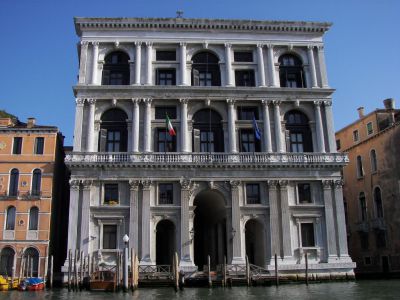
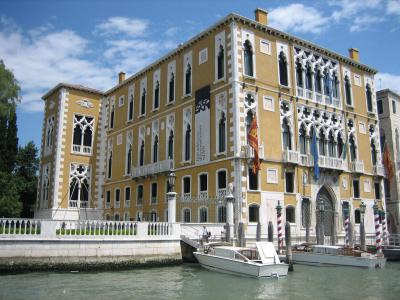
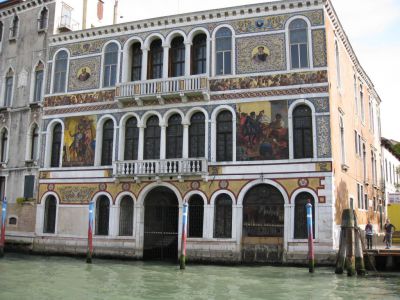
Another sight not to miss is the yellow gold Palazzo Cavalli-Franchetti – so distinctive, indeed, which is a rare attribute in this city of grandeur. Located just across the Accademia bridge, it neighbors the Palazzo Barbarigo, which has been adorned with Murano glass mosaics since the late 1800s.
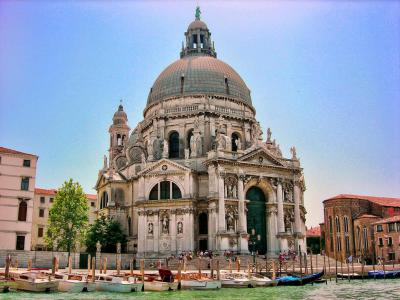
While there’s no shortage of eye-catching churches along the way, the baroque Santa Maria della Salute, supported by over 1,150,000 wooden pylons, is arguably most picturesquely situated. Dedicated to the Virgin Mary and Health/Deliverance (“salute”), it takes the form of a rotunda, or as its architect intended, “the shape of a crown”.
Time may have passed, but the Grand Canal is still, to quote a French ambassador in the 15th century, “the most beautiful street in the world”. Follow this walk along interesting narrow streets and we’re sure you’ll agree.
Getting to Sight #1. The first tour stop (Santa Lucia Train Station) can be reached by: Water Bus: 1, 1/, 3, 4.1, 5.1, 4.2, 5.2, 2, 2/, N; Tram: T1; Bus: 12L, 84, 5E, 6E, 12E, 53E, 56.
In 2016, stellar architect Rem Koolhaas converted one of the city’s elegant 16th-century palazzo – Fondaco dei Tedeschi – into a posh department store, centered on an elegant courtyard. A roof deck above has rotating art exhibitions and quite possibly the most spectacular view of Venice. Meanwhile, the other grand palazzo of the Grand Canal, Fondaco dei Turchi, is occupied by the Natural History Museum’s beautiful collection of big game taxidermy, insects, marine life, fossils, and other interesting finds collected by Venetians over the centuries, as they explored the world.
Another sight not to miss is the yellow gold Palazzo Cavalli-Franchetti – so distinctive, indeed, which is a rare attribute in this city of grandeur. Located just across the Accademia bridge, it neighbors the Palazzo Barbarigo, which has been adorned with Murano glass mosaics since the late 1800s.
While there’s no shortage of eye-catching churches along the way, the baroque Santa Maria della Salute, supported by over 1,150,000 wooden pylons, is arguably most picturesquely situated. Dedicated to the Virgin Mary and Health/Deliverance (“salute”), it takes the form of a rotunda, or as its architect intended, “the shape of a crown”.
Time may have passed, but the Grand Canal is still, to quote a French ambassador in the 15th century, “the most beautiful street in the world”. Follow this walk along interesting narrow streets and we’re sure you’ll agree.
Getting to Sight #1. The first tour stop (Santa Lucia Train Station) can be reached by: Water Bus: 1, 1/, 3, 4.1, 5.1, 4.2, 5.2, 2, 2/, N; Tram: T1; Bus: 12L, 84, 5E, 6E, 12E, 53E, 56.
How it works: Download the app "GPSmyCity: Walks in 1K+ Cities" from Apple App Store or Google Play Store to your mobile phone or tablet. The app turns your mobile device into a personal tour guide and its built-in GPS navigation functions guide you from one tour stop to next. The app works offline, so no data plan is needed when traveling abroad.
Download The GPSmyCity App



Grand Canal Walking Tour Map
Guide Name: Grand Canal Walking Tour
Guide Location: Italy » Venice (See other walking tours in Venice)
Guide Type: Self-guided Walking Tour (Sightseeing)
Tour Duration: 3 Hour(s)
Travel Distance: 5.2 Km or 3.2 Miles
Guide Location: Italy » Venice (See other walking tours in Venice)
Guide Type: Self-guided Walking Tour (Sightseeing)
Tour Duration: 3 Hour(s)
Travel Distance: 5.2 Km or 3.2 Miles
Sights Featured in This Walk
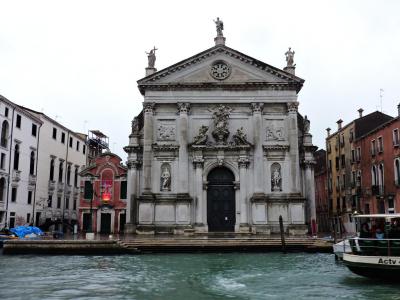
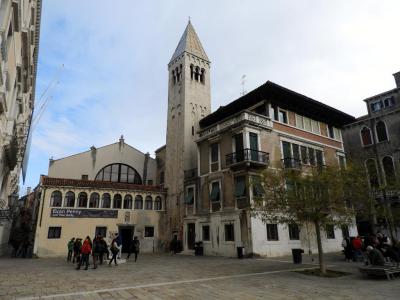
Walking Tours in Venice, Italy

Create Your Own Walk in Venice
Creating your own self-guided walk in Venice is easy and fun. Choose the city attractions that you want to see and a walk route map will be created just for you. You can even set your hotel as the start point of the walk.
Murano Island Walking Tour
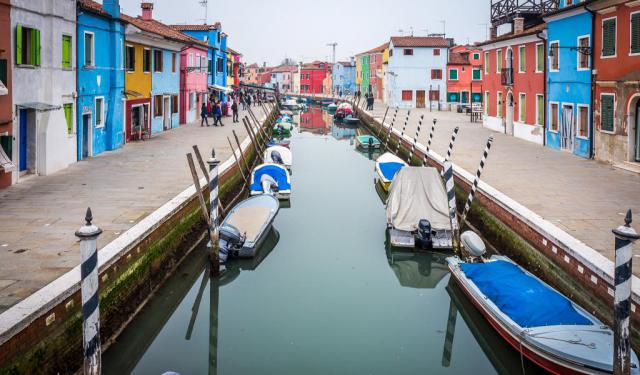
Murano Island is known around the world as the “Glass Island,” and it didn’t earn that nickname overnight. This reputation rests on more than seven centuries of uninterrupted glassmaking. Located just north of Venice, separated by a slim ribbon of lagoon water, Murano grew into a place where identity and industry became inseparable. Although inhabited since Roman times, the island truly... view more
Tour Duration: 1 Hour(s)
Travel Distance: 2.3 Km or 1.4 Miles
Tour Duration: 1 Hour(s)
Travel Distance: 2.3 Km or 1.4 Miles
Venice Introduction Walking Tour
Venice is a city that learned early how to live with water-and, ultimately, how to profit from it. Built across hundreds of small islands in a shallow lagoon in the northern Adriatic, it runs without roads, relying solely on canals and bridges. Although the lagoon itself formed thousands of years ago, it was inhabited mainly by fishermen up until the 5th century AD, when waves of barbarian... view more
Tour Duration: 3 Hour(s)
Travel Distance: 4.1 Km or 2.5 Miles
Tour Duration: 3 Hour(s)
Travel Distance: 4.1 Km or 2.5 Miles
Titian's Paintings Walk
One of the greatest painters of all time, Tiziano Vecelli – better known as Titian – was a pioneering figure of the Venetian school of Italian Renaissance painting. His career was successful from the start, and he became sought after by patrons, initially from Venice and its possessions, then joined by the north Italian princes, and finally the Habsburgs and papacy.
Equally adept with... view more
Tour Duration: 2 Hour(s)
Travel Distance: 3.6 Km or 2.2 Miles
Equally adept with... view more
Tour Duration: 2 Hour(s)
Travel Distance: 3.6 Km or 2.2 Miles
Venice's Hidden Art Treasures
Among the first things springing to mind when talking about Venice, apart from the canals and gondolas, of course, is Art and Architecture. Indeed, Venice is one of the few cities in the world where Art and Architecture have merged in a stunning multiplicity of forms. The city is even renowned for its unique (Venetian) pictorial school famed by the likes of Tintoretto, Titian, Veronese, Castagno... view more
Tour Duration: 2 Hour(s)
Travel Distance: 3.6 Km or 2.2 Miles
Tour Duration: 2 Hour(s)
Travel Distance: 3.6 Km or 2.2 Miles
Piazza San Marco Walking Tour
Piazza San Marco is where Venice has always put on its best face. This is the city’s ceremonial and political core, shaped over centuries as the grand stage of the Venetian Republic. Its story began in the 9th century, when the relics of Saint Mark arrived in the lagoon and instantly raised the evangelist-much as the square built in his name-to the highest rank. From a simple open space, the... view more
Tour Duration: 1 Hour(s)
Travel Distance: 0.6 Km or 0.4 Miles
Tour Duration: 1 Hour(s)
Travel Distance: 0.6 Km or 0.4 Miles
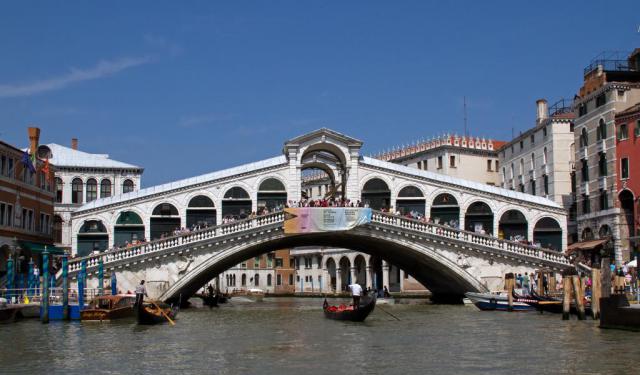
Around Rialto Bridge
The Rialto district represents the earliest urban and commercial core of Venice that has shaped the city’s identity for centuries. Long before grand palaces lined the canals or empires were managed from marble halls, this was the practical heart of the lagoon. Its name comes from Rivo Alto, meaning “high bank,” a rare patch of ground that stayed relatively dry and therefore attracted... view more
Tour Duration: 1 Hour(s)
Travel Distance: 0.4 Km or 0.2 Miles
Tour Duration: 1 Hour(s)
Travel Distance: 0.4 Km or 0.2 Miles
Useful Travel Guides for Planning Your Trip
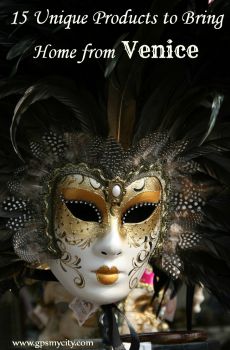
15 Distinctively Italian Things to Buy in Venice
Venice has been a tourist mecca for over a century now, with millions of visitors flocking in every year to see this unique place on the face of the Earth. Many, if not all, of these people seek to obtain something memorable as a token of their stay in this city. By far, not all of them know which...
The Most Popular Cities
/ view all