

Audio Guide: Grand Place Walking Tour (Self Guided), Brussels
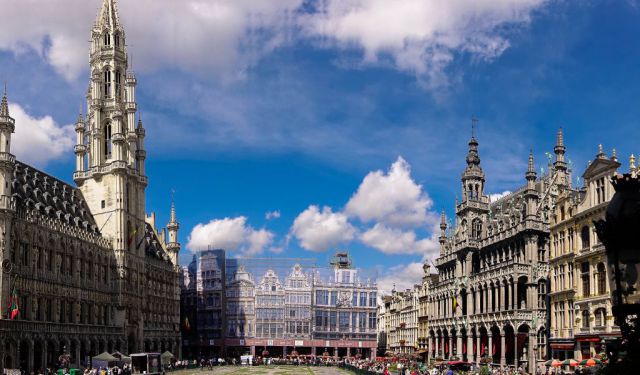
The Grand Square in Brussels-steeped in history and overflowing with architectural charm-is the city’s star attraction. Here, the buildings are dressed fancier than most people at a wedding, and every cobblestone whispers, “I’ve seen some stuff.”
Hard to believe, but back in the 11th century, this was just a humble wheat market. Eventually, the area evolved into a civic and commercial hub courtesy of the wealth and power of ambitious local guilds. The mashup of Gothic, Baroque, and Louis XIV styles, resulting from a very determined rebuild following a devastating French bombardment in 1695, earned it a UNESCO World Heritage Site status in 1998.
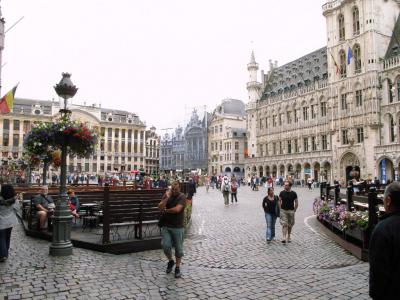
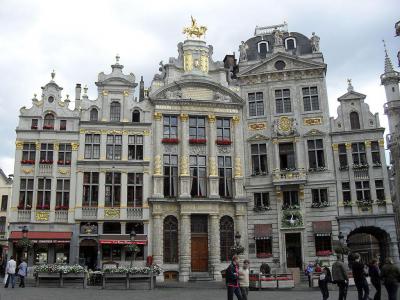
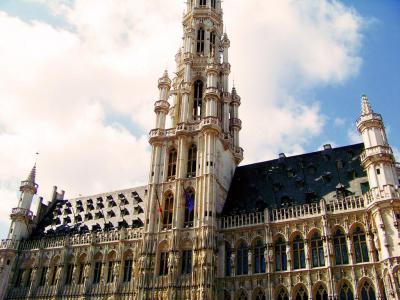
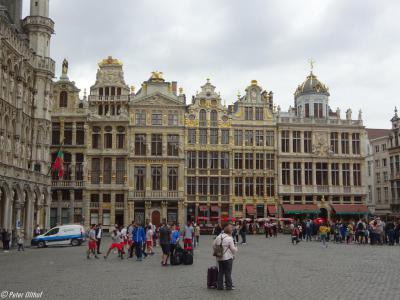
The square itself is an open-air museum of 17th-century guildhalls, each with unique details and symbolism tied to different trades, and the occasional golden statue. The crown jewel is the Town Hall-a spiky Gothic beauty built between 1401 and 1455, proudly showing off its 96-meter-high tower like a medieval skyscraper.
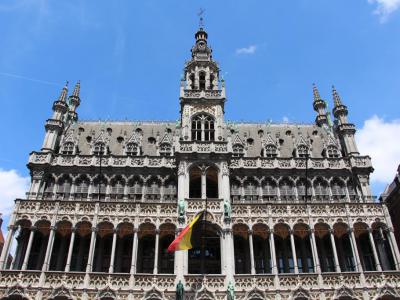
Directly opposite, we've got the King’s House-which, in reality, never housed a king. These days, it is home to the Brussels City Museum, best known for its extensive, quirky collection of Manneken Pis costumes. (Yes, the little statue has dozens of them.)
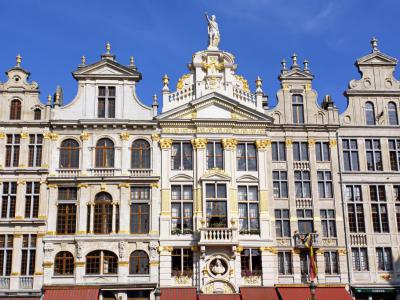
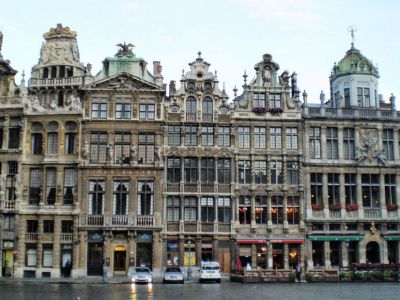
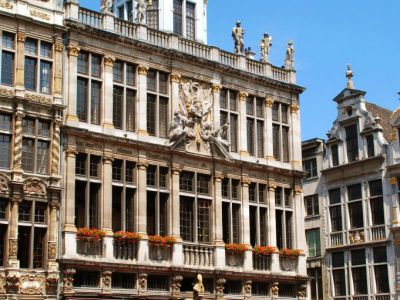
Among the other architectural divas, there’s The Pigeon, where Victor Hugo once holed up, and The Golden Boat, glimmering with enough gold to blind you on a sunny day. Then there’s the House of the Dukes of Brabant-not a royal residence, but a really ambitious row of façades with big “look at me” energy.
Keep your eyes peeled for The Golden Tree, The Swan, and The Star buildings. These guildhalls respectively represent the brewers, the butchers, and the innkeepers. The Golden Tree is now the Brewers’ Museum, and The Swan once hosted none other than communism theorists Karl Marx and Friedrich Engels. Clearly, this square has range.
Other guildhalls got even more creative: The Fox for haberdashers, The Cornet with a boat-like backside for the boatmen, The She-Wolf featuring a literal she-wolf, The Bag for the coopers (think barrel-makers, not bag designers), and The Wheelbarrow, proudly sporting a wheelbarrow for the tallow merchants.
And don’t miss The King of Spain-once the bakers’ hangout, now a classic café with a view and a bust of Charles II of Spain keeping watch, probably judging your pastry order.
Whether you're here for the history, the gold-leaf overload, or just trying to one-up your Instagram feed, Grand Square is where Brussels struts its stuff. So, go ahead-snap that photo, sip that beer, and let this square show you why it’s the most extra place in town.
Hard to believe, but back in the 11th century, this was just a humble wheat market. Eventually, the area evolved into a civic and commercial hub courtesy of the wealth and power of ambitious local guilds. The mashup of Gothic, Baroque, and Louis XIV styles, resulting from a very determined rebuild following a devastating French bombardment in 1695, earned it a UNESCO World Heritage Site status in 1998.
The square itself is an open-air museum of 17th-century guildhalls, each with unique details and symbolism tied to different trades, and the occasional golden statue. The crown jewel is the Town Hall-a spiky Gothic beauty built between 1401 and 1455, proudly showing off its 96-meter-high tower like a medieval skyscraper.
Directly opposite, we've got the King’s House-which, in reality, never housed a king. These days, it is home to the Brussels City Museum, best known for its extensive, quirky collection of Manneken Pis costumes. (Yes, the little statue has dozens of them.)
Among the other architectural divas, there’s The Pigeon, where Victor Hugo once holed up, and The Golden Boat, glimmering with enough gold to blind you on a sunny day. Then there’s the House of the Dukes of Brabant-not a royal residence, but a really ambitious row of façades with big “look at me” energy.
Keep your eyes peeled for The Golden Tree, The Swan, and The Star buildings. These guildhalls respectively represent the brewers, the butchers, and the innkeepers. The Golden Tree is now the Brewers’ Museum, and The Swan once hosted none other than communism theorists Karl Marx and Friedrich Engels. Clearly, this square has range.
Other guildhalls got even more creative: The Fox for haberdashers, The Cornet with a boat-like backside for the boatmen, The She-Wolf featuring a literal she-wolf, The Bag for the coopers (think barrel-makers, not bag designers), and The Wheelbarrow, proudly sporting a wheelbarrow for the tallow merchants.
And don’t miss The King of Spain-once the bakers’ hangout, now a classic café with a view and a bust of Charles II of Spain keeping watch, probably judging your pastry order.
Whether you're here for the history, the gold-leaf overload, or just trying to one-up your Instagram feed, Grand Square is where Brussels struts its stuff. So, go ahead-snap that photo, sip that beer, and let this square show you why it’s the most extra place in town.
How it works: Download the app "GPSmyCity: Walks in 1K+ Cities" from Apple App Store or Google Play Store to your mobile phone or tablet. The app turns your mobile device into a personal tour guide. For US$14.99 per year, you get access to walking tours in 630+ cities worldwide. In comparison, a guided tour often costs dozens of dollars per person for a single tour. The app works offline, so no data plan is needed when traveling abroad.
Download The GPSmyCity App



Grand Place Walking Tour Map
Guide Name: Grand Place Walking Tour
Guide Location: Belgium » Brussels (See other walking tours in Brussels)
Guide Type: Self-guided Walking Tour (Sightseeing)
Tour Duration: 1 Hour(s)
Travel Distance: 0.3 Km or 0.2 Miles
Guide Location: Belgium » Brussels (See other walking tours in Brussels)
Guide Type: Self-guided Walking Tour (Sightseeing)
Tour Duration: 1 Hour(s)
Travel Distance: 0.3 Km or 0.2 Miles
Sights Featured in This Walk

Walking Tours in Brussels, Belgium

Create Your Own Walk in Brussels
Creating your own self-guided walk in Brussels is easy and fun. Choose the city attractions that you want to see and a walk route map will be created just for you. You can even set your hotel as the start point of the walk.
Brussels Beer Tour
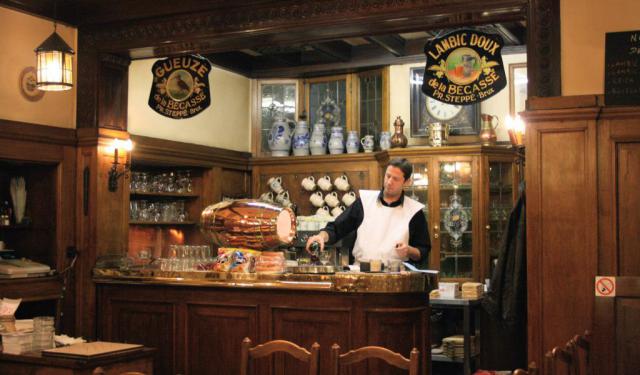
Belgians are not very prone to boasting, except with things such as chocolate, fries and, evidently, beer. They treat beer the way the French treat wine: for the makers, it's a prized art; for the drinkers, it is something to be savored and discussed. They say that, on average, Belgians drink 150 liters of beer per year per person, and one would often see them sipping it from early in the... view more
Tour Duration: 1 Hour(s)
Travel Distance: 2.1 Km or 1.3 Miles
Tour Duration: 1 Hour(s)
Travel Distance: 2.1 Km or 1.3 Miles
Brussels Introduction Walking Tour
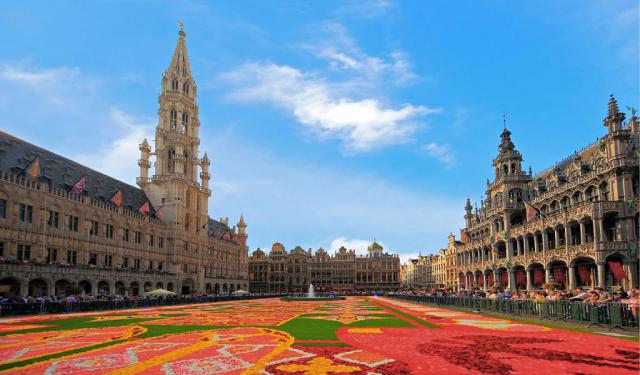
Nowadays a major center for international politics, the capital of Belgium, Brussels, is often referred to as the "Crossroads of Europe". Indeed, nestled at the heart of the continent, this city has a history closely linked to that of Western Europe. Repeatedly changing hands between various duchies, empires, republics, and kingdoms, it has evolved from a small rural settlement to an... view more
Tour Duration: 2 Hour(s)
Travel Distance: 3.6 Km or 2.2 Miles
Tour Duration: 2 Hour(s)
Travel Distance: 3.6 Km or 2.2 Miles

The European Quarter Walking Tour
Along with Luxembourg and Strasbourg, Brussels is one of the European Union’s de facto capitals. The office blocks of the European Quarter are mainly concentrated along and between two wide boulevards – rue de la Loi and rue Belliard – which Léopold II built to connect his Parc du Cinquantenaire with the city center.
Begin your exploration with the EU’s most symbolic construction, the... view more
Tour Duration: 1 Hour(s)
Travel Distance: 1.3 Km or 0.8 Miles
Begin your exploration with the EU’s most symbolic construction, the... view more
Tour Duration: 1 Hour(s)
Travel Distance: 1.3 Km or 0.8 Miles
Brussels Historical Churches Walking Tour
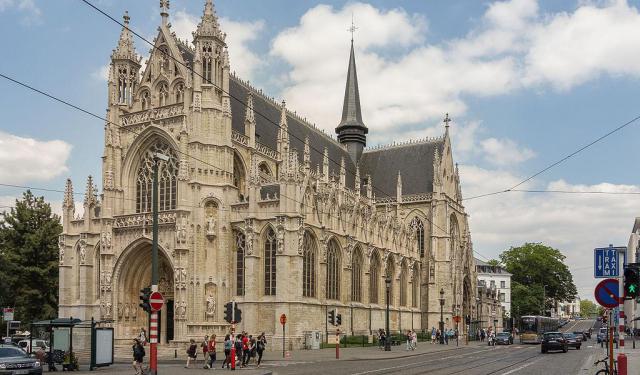
As well as being Belgium’s political and cultural capital, Brussels is the spiritual home of its most significant churches. Historically, the city has been predominantly Roman Catholic, especially since the expulsion of Protestants in the 16th century. The pre-eminent Catholic temple here, located just a couple of minutes from the Grand-Place, is the Brabantine Gothic Cathedral of St. Michael... view more
Tour Duration: 2 Hour(s)
Travel Distance: 4.6 Km or 2.9 Miles
Tour Duration: 2 Hour(s)
Travel Distance: 4.6 Km or 2.9 Miles
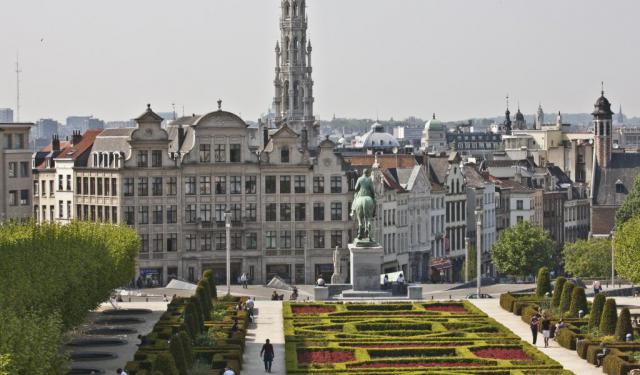
Mont Des Arts Cultural Walk
Mont des Arts, meaning "hill of the arts", is one of the most important cultural sites in Brussels. A classic among the city’s vantage points, it offers a fine city garden and restored showcase of architecture, in addition to several great museums.
Start your journey by traveling towards the old part of the city, where you’ll find the BOZAR Centre for Fine Arts, greatly admired... view more
Tour Duration: 1 Hour(s)
Travel Distance: 1.0 Km or 0.6 Miles
Start your journey by traveling towards the old part of the city, where you’ll find the BOZAR Centre for Fine Arts, greatly admired... view more
Tour Duration: 1 Hour(s)
Travel Distance: 1.0 Km or 0.6 Miles
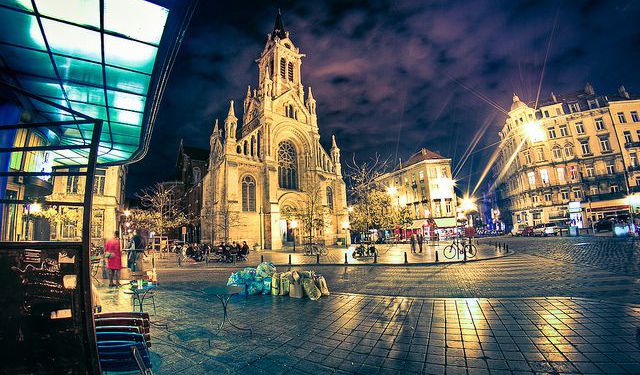
Brussels Food Tour
In the Middle Ages, Brussels grew as a commercial centre within the Duchy of Brabant. Markets formed around what is now the Grand Place, where traders sold bread, meat, dairy, and beer. Food production was regulated by powerful guilds, which controlled quality and pricing. Bakers, brewers, and butchers each had defined roles, establishing early standards that still influence Belgian food culture... view more
Tour Duration: 1 Hour(s)
Travel Distance: 1.4 Km or 0.9 Miles
Tour Duration: 1 Hour(s)
Travel Distance: 1.4 Km or 0.9 Miles
Useful Travel Guides for Planning Your Trip
Belgian Beer Tour of Brussels
Belgium is world-renowned for its beers and Brussels is the best city to sample the huge variety of flavors. We'll show you the best places to buy them and to drink them. We'll even show you a family brewery where the liquid gold is produced right in front of your eyes! This tour is meant...
What to Buy in Brussels: 14 Ideas for Travelers
It's no secret that Brussels is not all about JCVD muscles and EU headquarters. Small country as such, Belgium abounds in signature items, such as beer, chocolates and... the peeing boy. All of these have made prime Belgian souvenirs for years. Now you can explore the Brussels gift scene in...
The Most Popular Cities
/ view all