
Harry Potter Walking Tour I (Self Guided), London
The arrival of Harry Potter books, followed by tremendously successful Hollywood adaptation, has made London an even more popular destination now with the Harry Potter fans all over the world. The list of attractions in the city associated with Potter’s journeys includes both, newly-invented as well as some long-standing locations.
On Part I of the self-guided Happy Potter Walking Tour, you will follow in the footsteps of the young wizard and his friends in the British capital by visiting the filming sites including Westminster Underground Station, Great Scotland Yard, Piccadilly Circus, and more.
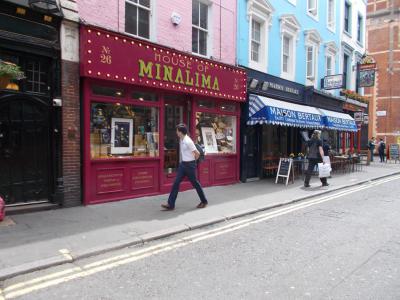
The House of MinaLima’s window display will stop you in your tracks, and it will impossible to not go in and take a look. This shop displays the exquisite artwork of two graphic designers who are responsible for the artwork in the Harry Potter + Fantastic Beasts films. The shop also has a gallery that displays the duo's work (Harry Potter-related and other), and you can see the original Marauder's map used in the third Harry Potter film in all its amazing detailed glory.
Finish with Cecil’s Court and Goodwin’s court, believed to have been behind the inspiration for Diagon Alley and Knockturn Alley, respectively. See if you can spot the similarities.
Follow the map and explore at your own pace!
On Part I of the self-guided Happy Potter Walking Tour, you will follow in the footsteps of the young wizard and his friends in the British capital by visiting the filming sites including Westminster Underground Station, Great Scotland Yard, Piccadilly Circus, and more.
The House of MinaLima’s window display will stop you in your tracks, and it will impossible to not go in and take a look. This shop displays the exquisite artwork of two graphic designers who are responsible for the artwork in the Harry Potter + Fantastic Beasts films. The shop also has a gallery that displays the duo's work (Harry Potter-related and other), and you can see the original Marauder's map used in the third Harry Potter film in all its amazing detailed glory.
Finish with Cecil’s Court and Goodwin’s court, believed to have been behind the inspiration for Diagon Alley and Knockturn Alley, respectively. See if you can spot the similarities.
Follow the map and explore at your own pace!
How it works: Download the app "GPSmyCity: Walks in 1K+ Cities" from Apple App Store or Google Play Store to your mobile phone or tablet. The app turns your mobile device into a personal tour guide and its built-in GPS navigation functions guide you from one tour stop to next. The app works offline, so no data plan is needed when traveling abroad.
Download The GPSmyCity App



Harry Potter Walking Tour I Map
Guide Name: Harry Potter Walking Tour I
Guide Location: England » London (See other walking tours in London)
Guide Type: Self-guided Walking Tour (Sightseeing)
# of Attractions: 8
Tour Duration: 2 Hour(s)
Travel Distance: 2.7 Km or 1.7 Miles
Author: clare
Sight(s) Featured in This Guide:
Guide Location: England » London (See other walking tours in London)
Guide Type: Self-guided Walking Tour (Sightseeing)
# of Attractions: 8
Tour Duration: 2 Hour(s)
Travel Distance: 2.7 Km or 1.7 Miles
Author: clare
Sight(s) Featured in This Guide:
- Westminster Underground Station
- 10 Downing Street
- Great Scotland Yard
- Piccadilly Circus
- House of MinaLima (with Harry Potter exhibition)
- Charing Cross Road
- Cecile Court
- Goodwin’s Court

1) Westminster Underground Station
For regular folks, Westminster Underground might be the closest one to places like the Houses of Parliament, Westminster Abbey, and Westminster Bridge, but for wizards like Mr. Weasley and Harry Potter, it was also their gateway to the Ministry of Magic, as we saw in "Harry Potter and the Order of the Phoenix". Poor Mr. Weasley had a bit of trouble with the ticket barriers on his way out, just like many first-timers on the London Underground!
When filming that scene for the movie, they had to shut down the whole station for a whole day. And there was another time when Harry and the Order of the Phoenix gang whizzed past Westminster Station, along the River Thames, on their broomsticks, heading towards the London Eye – yee-haw!
When filming that scene for the movie, they had to shut down the whole station for a whole day. And there was another time when Harry and the Order of the Phoenix gang whizzed past Westminster Station, along the River Thames, on their broomsticks, heading towards the London Eye – yee-haw!
2) 10 Downing Street
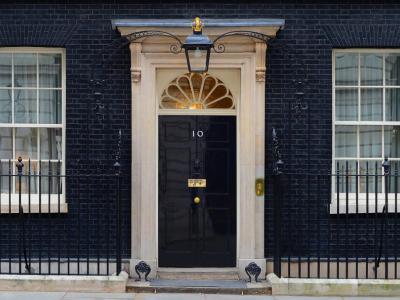
10 Downing Street, or simply "Number 10", serves as both the official residence and workplace of the British Prime Minister, making it the UK's premier address for nearly three centuries. Originally three separate houses, the building now boasts over 100 rooms, with the Prime Minister's family occupying a private residence on the third floor and their kitchen situated in the basement. The remaining floors house offices, as well as numerous conference and reception rooms. The property features an interior courtyard and, at the rear, a terrace overlooking a spacious half-acre garden. The Cabinet Room is isolated from the rest of the building by soundproof doors.
Contrary to popular belief, the famous black front door is constructed from reinforced steel rather than wood. This door lacks a keyhole and can only be opened from the inside, which is why a doorman is always on duty. Speaking of that, the phrase "In the hot seat" originates from Downing Street. The entrance hall of Number 10 contains a large black chair, originally used by the night watchman. Underneath this chair is a drawer that, back in the day, was filled with hot coals to keep the watchman warm during cold nighttime hours. Other iconic features, including the lamp above the door, the lion door knocker, and the black and white flooring in the entrance hall, were added during the premiership of Lord Frederick North between 1770 and 1782.
Like many London properties, Downing Street suffered damage during World War II. On October 14, 1940, a bomb struck nearby, causing damage to the kitchen and state rooms. In 1991, another attack occurred when the IRA launched a mortar attack, resulting in further damage to the premises. A reminder of this attack is a splinter lodged in the upstairs plasterwork, left untouched.
The walls of the Grand Staircase are lined with portraits of every British Prime Minister in chronological order. During Tony Blair's tenure as Prime Minister, he had six plaster bees installed in the window frames of one of the upstairs drawing rooms. Under Mrs. Thatcher, a miniature roof was incorporated into one of the door frames. Regrettably, none of these areas are accessible to the general public, as entry to Number 10 is strictly prohibited for security reasons, with access only granted to staff and authorized personnel.
***HARRY POTTER MOVIE***
Contrary to what most folks usually think of as just the British Prime Minister's home and office, 10 Downing Street also serves as a secret link between the wizarding and muggle worlds, as mentioned in the first chapter of "Harry Potter and the Half-Blood Prince". Through this portal, the UK's leader can sometimes have a chat with the Minister for Magic.
It's also where the wizard Kingsley Shacklebolt works undercover, guarding the Prime Minister against the dark magical forces led by Lord Voldemort. Seems like there's more to this place than you'd expect...
Tip:
Best enjoyed as part of a broader exploration of Whitehall and Westminster as a whole.
Contrary to popular belief, the famous black front door is constructed from reinforced steel rather than wood. This door lacks a keyhole and can only be opened from the inside, which is why a doorman is always on duty. Speaking of that, the phrase "In the hot seat" originates from Downing Street. The entrance hall of Number 10 contains a large black chair, originally used by the night watchman. Underneath this chair is a drawer that, back in the day, was filled with hot coals to keep the watchman warm during cold nighttime hours. Other iconic features, including the lamp above the door, the lion door knocker, and the black and white flooring in the entrance hall, were added during the premiership of Lord Frederick North between 1770 and 1782.
Like many London properties, Downing Street suffered damage during World War II. On October 14, 1940, a bomb struck nearby, causing damage to the kitchen and state rooms. In 1991, another attack occurred when the IRA launched a mortar attack, resulting in further damage to the premises. A reminder of this attack is a splinter lodged in the upstairs plasterwork, left untouched.
The walls of the Grand Staircase are lined with portraits of every British Prime Minister in chronological order. During Tony Blair's tenure as Prime Minister, he had six plaster bees installed in the window frames of one of the upstairs drawing rooms. Under Mrs. Thatcher, a miniature roof was incorporated into one of the door frames. Regrettably, none of these areas are accessible to the general public, as entry to Number 10 is strictly prohibited for security reasons, with access only granted to staff and authorized personnel.
***HARRY POTTER MOVIE***
Contrary to what most folks usually think of as just the British Prime Minister's home and office, 10 Downing Street also serves as a secret link between the wizarding and muggle worlds, as mentioned in the first chapter of "Harry Potter and the Half-Blood Prince". Through this portal, the UK's leader can sometimes have a chat with the Minister for Magic.
It's also where the wizard Kingsley Shacklebolt works undercover, guarding the Prime Minister against the dark magical forces led by Lord Voldemort. Seems like there's more to this place than you'd expect...
Tip:
Best enjoyed as part of a broader exploration of Whitehall and Westminster as a whole.
3) Great Scotland Yard
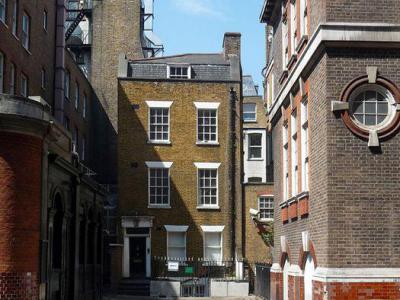
Back in the late 19th century, this historic former headquarters of London's Metropolitan Police gained fame thanks to the iconic fictional detective Sherlock Holmes, but more recently, it's also made its way into the Harry Potter series. Right next to Westminster Station, you'll find the Great Scotland Yard, which served as the exterior for the Ministry of Magic, while its back entrance was cleverly transformed into the Ministry's Visitor's Entrance.
Fans of "Harry Potter and the Order of the Phoenix" will surely remember the corner of Scotland Place with the red phone booth. That's where the characters dialed the magical 62442 combination to enter the Ministry. Sadly, you can't recreate that moment because the phone booth was just a movie prop brought in for filming and taken away once they were done.
Scotland Place had another cameo in "Harry Potter and the Deathly Hallows – Part 1" when Harry, Hermione, and Ron sneaked into the Ministry of Magic, pretending to be its employees.
Fans of "Harry Potter and the Order of the Phoenix" will surely remember the corner of Scotland Place with the red phone booth. That's where the characters dialed the magical 62442 combination to enter the Ministry. Sadly, you can't recreate that moment because the phone booth was just a movie prop brought in for filming and taken away once they were done.
Scotland Place had another cameo in "Harry Potter and the Deathly Hallows – Part 1" when Harry, Hermione, and Ron sneaked into the Ministry of Magic, pretending to be its employees.
4) Piccadilly Circus
The name "Piccadilly" has its origins linked to a modest 17th-century tailor named Robert Baker who specialized in selling piccadills, which were fashionable stiff ruffled collars highly favored in courtly circles. With the proceeds from his collar sales, Baker constructed a house. This new-money mansion earned the derisive nickname "Piccadilly Hall" from the snobbish elite, and the name has endured to this day.
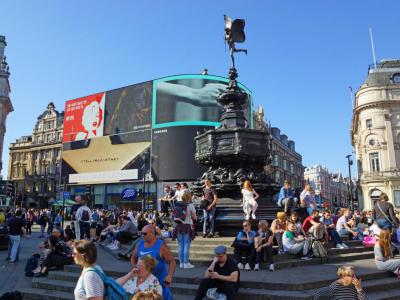
At the heart of Piccadilly Circus, which used to be a circular junction until the construction of Shaftesbury Avenue in 1886, stands the pride of the place commonly known as Eros. Dating back to 1893, many Londoners are unaware that it actually represents Eros's brother, Anteros, the Greek god of requited love. Another unmistakable feature of Piccadilly Circus is the massive array of illuminated billboards on the north side. The very first illuminated sign, advertising Perrier mineral water, was installed there in 1908. If you happen to pass by at night, try framing these billboards behind the Tube entrance sign at the corner of Regent Street for a timeless photograph.
Beneath the surface, you'll discover two noteworthy attractions: the Criterion Theatre and the Piccadilly Circus tube station. The theatre, built in 1873, is primarily situated underground, with the exception of its box office. In the 19th century, during its performances, a special system was used to pump in fresh air to ventilate the interior and mitigate the toxic fumes produced by gas lighting. As for the tube station, it stands out as one of the rare ones within the London Underground network that is entirely and authentically subterranean.
On the western side of Piccadilly, another relic of the past can still be seen: a police public call box established in 1935, one of the few remaining in Britain. Another hidden gem somewhere in Piccadilly Circus is a sculpted nose, one of the Seven Noses of Soho. Legend has it that anyone who discovers all seven noses will be blessed with unimaginable wealth. It's intriguing to ponder whether any of the nearly half a million people who pass through here each day are on the hunt for that elusive fortune.
***HARRY POTTER MOVIE***
In "Harry Potter and the Deathly Hallows – Part 1," there's an most memorable scene featuring Piccadilly Circus: Harry, Hermione, and Ron find themselves racing through London's West End, desperately fleeing from Death Eaters who had attacked Bill's wedding. Their escape narrowly avoids a collision with a quintessential London red double-decker bus. Interestingly, the actual location where this dramatic moment was filmed in the movie is right in front of the Gap store just adjacent to Piccadilly Circus, whereas on the book, the characters end up in Tottenham Court Road. Filming such an action-packed scene in a popular tourist hub presented a significant challenge.
Why You Should Visit:
A quintessential London intersection, centrally positioned for easy exploration of Regent Street, Leicester Square, Trafalgar Square, Covent Garden, and the West End theater district. It's a bustling and vibrant hub that captures the essence of London's atmosphere.
At the heart of Piccadilly Circus, which used to be a circular junction until the construction of Shaftesbury Avenue in 1886, stands the pride of the place commonly known as Eros. Dating back to 1893, many Londoners are unaware that it actually represents Eros's brother, Anteros, the Greek god of requited love. Another unmistakable feature of Piccadilly Circus is the massive array of illuminated billboards on the north side. The very first illuminated sign, advertising Perrier mineral water, was installed there in 1908. If you happen to pass by at night, try framing these billboards behind the Tube entrance sign at the corner of Regent Street for a timeless photograph.
Beneath the surface, you'll discover two noteworthy attractions: the Criterion Theatre and the Piccadilly Circus tube station. The theatre, built in 1873, is primarily situated underground, with the exception of its box office. In the 19th century, during its performances, a special system was used to pump in fresh air to ventilate the interior and mitigate the toxic fumes produced by gas lighting. As for the tube station, it stands out as one of the rare ones within the London Underground network that is entirely and authentically subterranean.
On the western side of Piccadilly, another relic of the past can still be seen: a police public call box established in 1935, one of the few remaining in Britain. Another hidden gem somewhere in Piccadilly Circus is a sculpted nose, one of the Seven Noses of Soho. Legend has it that anyone who discovers all seven noses will be blessed with unimaginable wealth. It's intriguing to ponder whether any of the nearly half a million people who pass through here each day are on the hunt for that elusive fortune.
***HARRY POTTER MOVIE***
In "Harry Potter and the Deathly Hallows – Part 1," there's an most memorable scene featuring Piccadilly Circus: Harry, Hermione, and Ron find themselves racing through London's West End, desperately fleeing from Death Eaters who had attacked Bill's wedding. Their escape narrowly avoids a collision with a quintessential London red double-decker bus. Interestingly, the actual location where this dramatic moment was filmed in the movie is right in front of the Gap store just adjacent to Piccadilly Circus, whereas on the book, the characters end up in Tottenham Court Road. Filming such an action-packed scene in a popular tourist hub presented a significant challenge.
Why You Should Visit:
A quintessential London intersection, centrally positioned for easy exploration of Regent Street, Leicester Square, Trafalgar Square, Covent Garden, and the West End theater district. It's a bustling and vibrant hub that captures the essence of London's atmosphere.
5) House of MinaLima (with Harry Potter exhibition)
Miraphora Mina and Eduardo Lima, together known as MinaLima, are a dynamic duo of graphic designers responsible for shaping the visual universe of Harry Potter. They crafted the distinctive style, graphics, and the majority of props for all the Potter films! After the iconic film series concluded, they unveiled the House of MinaLima, a boutique store that serves as a veritable treasure trove of graphic art from the wizarding world. This includes prints, books, and various other Potter-related items, catering to the devoted Potterheads.
On the ground level, you can peruse an assortment of stationery, books, mugs, and badges, while the three upper floors house a gorgeous Harry Potter exhibition, open to all enthusiasts of the wizarding world. Virtually everything on display is available for purchase, from journals that mimic Hogwarts textbooks to replicas of the Quibbler, composition books reminiscent of those used by characters during their time at Hogwarts, and posters featured in the Daily Prophet, among other items. There's something to fit every budget, making it a true treasure for any Harry Potter fan spending a day in London!
On the ground level, you can peruse an assortment of stationery, books, mugs, and badges, while the three upper floors house a gorgeous Harry Potter exhibition, open to all enthusiasts of the wizarding world. Virtually everything on display is available for purchase, from journals that mimic Hogwarts textbooks to replicas of the Quibbler, composition books reminiscent of those used by characters during their time at Hogwarts, and posters featured in the Daily Prophet, among other items. There's something to fit every budget, making it a true treasure for any Harry Potter fan spending a day in London!

6) Charing Cross Road
Renowned for its charming array of second-hand bookstores and antique shops which contribute to its distinctive allure, it's no surprise that Charing Cross Road served as the inspiration for J.K. Rowling's choice of location for the entrance to London's magical realm.
In the Harry Potter series, the Leaky Cauldron, a pub and boarding house for wizards – in which Harry lives for a brief period at the beginning of "Harry Potter and the Prisoner of Azkaban" – plays a pivotal role as the gateway connecting the non-wizarding world to Diagon Alley, the wizarding shopping district where young Harry embarks on his magical journey in "Harry Potter and the Sorcerer's Stone" to procure all his school supplies for Hogwarts. To the untrained eye of non-wizards or muggles, it merely appears as a shuttered storefront nestled along Charing Cross Road in London's vibrant West End.
Harry also strolled along Charing Cross Road with Hagrid, and later embarked on a thrilling ride down the same road aboard the Knight Bus and Ministry cars. Additionally, one can spot a clothing boutique on Charing Cross Road by the name of "A Child of the Jago", featuring uniquely attired mannequins that seem to showcase wizard-like clothing and costumes.
In the Harry Potter series, the Leaky Cauldron, a pub and boarding house for wizards – in which Harry lives for a brief period at the beginning of "Harry Potter and the Prisoner of Azkaban" – plays a pivotal role as the gateway connecting the non-wizarding world to Diagon Alley, the wizarding shopping district where young Harry embarks on his magical journey in "Harry Potter and the Sorcerer's Stone" to procure all his school supplies for Hogwarts. To the untrained eye of non-wizards or muggles, it merely appears as a shuttered storefront nestled along Charing Cross Road in London's vibrant West End.
Harry also strolled along Charing Cross Road with Hagrid, and later embarked on a thrilling ride down the same road aboard the Knight Bus and Ministry cars. Additionally, one can spot a clothing boutique on Charing Cross Road by the name of "A Child of the Jago", featuring uniquely attired mannequins that seem to showcase wizard-like clothing and costumes.
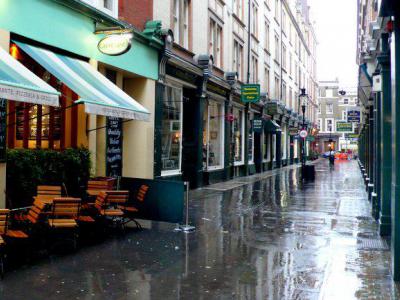
7) Cecile Court
Just a short detour from Charing Cross Road, the first lane on your right as you head up the street leads to the quaint and historic Cecil Court: a one-block pedestrian street, one of London's oldest, adorned with delightful Victorian-era storefronts and widely credited with having provided inspiration to J.K. Rowling when she envisioned Diagon Alley. This connection becomes all the more apparent when you explore the rather eccentric shops here, some of which specialize in magical and psychic literature, such as The Witch Ball.
These stores offer a wide array of treasures, ranging from rare and second-hand books to collector's editions, first editions, old stamps, maps, posters, banknotes, and various other antiques. For instance, Marchpane, a children's bookstore, proudly boasts rare signed copies of Harry Potter books. The entire street exudes an atmosphere eerily reminiscent of Diagon Alley, making you half expect to stumble upon Ollivanders Wand Shop or even a frothy pint of Butterbeer!
These stores offer a wide array of treasures, ranging from rare and second-hand books to collector's editions, first editions, old stamps, maps, posters, banknotes, and various other antiques. For instance, Marchpane, a children's bookstore, proudly boasts rare signed copies of Harry Potter books. The entire street exudes an atmosphere eerily reminiscent of Diagon Alley, making you half expect to stumble upon Ollivanders Wand Shop or even a frothy pint of Butterbeer!
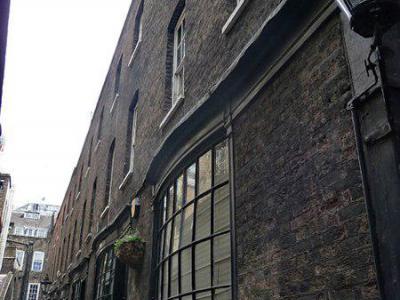
8) Goodwin’s Court
In the Covent Garden area of London, you'll come across numerous narrow alleys adorned with small storefronts. Among these lesser-known and tucked-away passages lies Goodwin's Court, a dark and slender alley that's discreetly incorporated into the facade of The Theatre Goers Club of Great Britain and conveniently located just a short distance from Cecil Court and Charing Cross Road. Stepping into this charming court, which dates back to around 1627, is like taking a journey back in time to the Georgian era, evident in the characteristic bow-fronted windows (remnants of the previous row of shops), glossy black doors adorned with gleaming knockers and brass knobs, and brass plates bearing the names of the businesses that occupy the space.
In the world of Harry Potter films, this place is very reminiscent of Diagon Alley, although, depending on the weather and lighting, it can even evoke a sense of its creepy evil twin, the Knockturn Alley. A stroll through Goodwin's Court is well worth it, if only to witness the authentic street lanterns and darkly painted structures that inspired the props created by Warner Brothers for the Harry Potter movies. Although you won't find wizarding books, robes, or wands here, the eerie resemblance between the black bay windows of Goodwin's Court and the film set is uncanny. It might just send shivers down your spine as you imagine encountering characters like Bellatrix Lestrange or Lucius Malfoy apparating in the dead of night!
In the world of Harry Potter films, this place is very reminiscent of Diagon Alley, although, depending on the weather and lighting, it can even evoke a sense of its creepy evil twin, the Knockturn Alley. A stroll through Goodwin's Court is well worth it, if only to witness the authentic street lanterns and darkly painted structures that inspired the props created by Warner Brothers for the Harry Potter movies. Although you won't find wizarding books, robes, or wands here, the eerie resemblance between the black bay windows of Goodwin's Court and the film set is uncanny. It might just send shivers down your spine as you imagine encountering characters like Bellatrix Lestrange or Lucius Malfoy apparating in the dead of night!
Walking Tours in London, England

Create Your Own Walk in London
Creating your own self-guided walk in London is easy and fun. Choose the city attractions that you want to see and a walk route map will be created just for you. You can even set your hotel as the start point of the walk.
Charles Dickens Tour
Today's world's literature and mass culture are hardly imaginable without the works of Charles Dickens, recognized as the greatest British novelist of the Victorian era. A pioneer of “cliffhanger” endings, Dickens remains one of the most-read English authors whose writings never go out of print and have been repeatedly adapted to stage, screen and TV.
Dickens was born in... view more
Tour Duration: 3 Hour(s)
Travel Distance: 4.5 Km or 2.8 Miles
Dickens was born in... view more
Tour Duration: 3 Hour(s)
Travel Distance: 4.5 Km or 2.8 Miles
Covent Garden Walking Tour
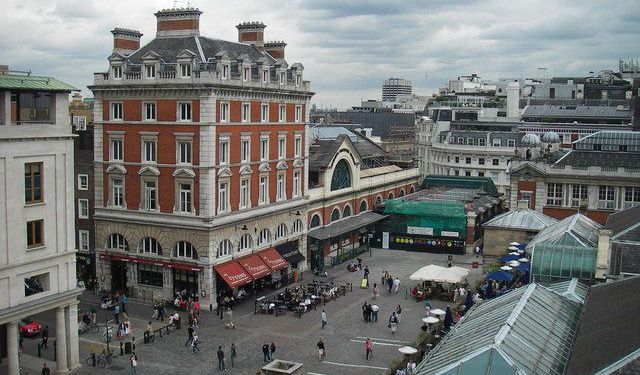
A shopping and entertainment hub on the eastern fringes of London's West End, Covent Garden is a district historically associated with the former fruit-and-vegetable market – currently a shopping spot popular with locals and tourists alike.
Once a slum area, today the north of the district is given over to independent shops centered on Neal's Yard and Seven Dials. Both places offer... view more
Tour Duration: 2 Hour(s)
Travel Distance: 3.0 Km or 1.9 Miles
Once a slum area, today the north of the district is given over to independent shops centered on Neal's Yard and Seven Dials. Both places offer... view more
Tour Duration: 2 Hour(s)
Travel Distance: 3.0 Km or 1.9 Miles
Kensington/Knightsbridge Walking Tour
Situated just below Hyde Park, Knightsbridge and South Kensington are two adjacent neighborhoods with grand Victorian homes and leafy garden squares. Home to London’s most expensive homes, Knightsbridge has some of the highest density of millionaires in the world. This is clearly reflected in the selection of stores & restaurants in the area, including the famous Harvey Nichols and Harrods... view more
Tour Duration: 2 Hour(s)
Travel Distance: 4.5 Km or 2.8 Miles
Tour Duration: 2 Hour(s)
Travel Distance: 4.5 Km or 2.8 Miles
Sherlock Holmes Tour in London
Among a myriad of other, real-life celebrities who have ever called London their home, perhaps the most famous is the fictional consulting detective, Sherlock Holmes, created by Conan Doyle. Indeed, the ingenious sleuth has left an indelible mark on the literary and cultural landscape of London ever since the appearance of the first stories about him in the late 1880s. Years on, there are several... view more
Tour Duration: 1 Hour(s)
Travel Distance: 2.3 Km or 1.4 Miles
Tour Duration: 1 Hour(s)
Travel Distance: 2.3 Km or 1.4 Miles
Bridges of London
Around thirty bridges span the Thames river in London, each with its own story. Our self-guided walk takes you to see nine such historical structures located in the heart of the city, starting from the storied Westminster Bridge and ending at the iconic Tower Bridge.
The latter has stood over the River Thames in London since 1894 and is one of the finest, most recognizable bridges in the... view more
Tour Duration: 2 Hour(s)
Travel Distance: 5.2 Km or 3.2 Miles
The latter has stood over the River Thames in London since 1894 and is one of the finest, most recognizable bridges in the... view more
Tour Duration: 2 Hour(s)
Travel Distance: 5.2 Km or 3.2 Miles
South Bank Walking Tour
The South Bank is a stretch of the Thames in London that is beautiful to walk through because there are so many iconic and magnificent things to see along the way. A lively and ever-changing area at the heart of London’s cultural scene, it also has the advantage of offering views across the Thames to some of the most famous buildings anywhere. The Palace of Westminster is the major feature in... view more
Tour Duration: 3 Hour(s)
Travel Distance: 4.8 Km or 3 Miles
Tour Duration: 3 Hour(s)
Travel Distance: 4.8 Km or 3 Miles
Useful Travel Guides for Planning Your Trip

London Souvenirs: 20 Distinctively British Products for Travelers
Most visitors to London consider shopping as part of their must-do London experience. From street markets to Victorian arcades to snobbish Sloane Square to busy Oxford Street, there are a host of shops selling items which typically represent this vibrant city. Whether you are shopping for souvenirs...
The Most Popular Cities
/ view all