


Historical Buildings Tour (Self Guided), San Jose
What's known today as San Jose, the capital of Costa Rica, came into being as a small settlement during the Spanish invasion, circa the mid-16th century. From a town of little importance, San Jose eventually evolved into a densely-populated cosmopolitan city, built mostly with proceeds from coffee trade.
The historic architecture of San Jose is a mix of European and Latin American styles with buildings dating back mostly to the end of the 19th – beginning of the 20th centuries. Just as imposing today as they were 100 years ago, these former benchmarks of good taste and prosperity, having survived numerous demolitions and works carried out in the heart of the capital over time, continue silently observing the ongoing history of San José amid its daily hustle and bustle.
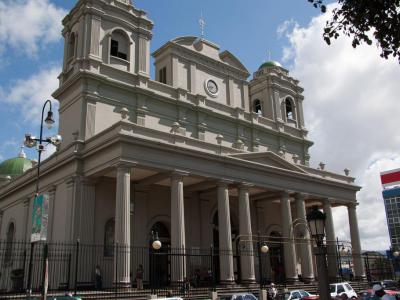
Central Post Office – a monumental, elegant structure of an eclectic style and notable French influence, built between 1914 and 1917. Metropolitan Cathedral – originally mud-and-straw, this 18th-century church eventually took the shape of a concrete edifice with Salomonic columns that had survived numerous earthquakes prior to being remodeled and converted into the Metropolitan Cathedral it is today.
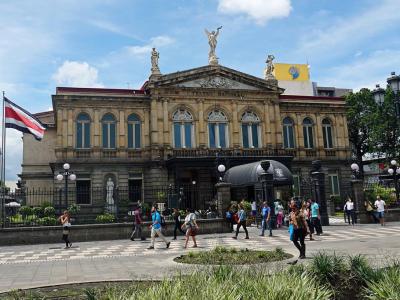
Teatro Popular Melico Salazar – completed in 1928; was renamed in the 1980s to honor Manuel “Melico” Salazar, one of the most recognized Costa Rican opera stars. Grand Hotel Costa Rica – one of the most distinguished hotels in San Jose, built in 1928-1930; many famous international guests traveling to Costa Rica have stayed here. The National Theater – built from 1890 to 1897; an ambitious project funded by local coffee oligarchs. Lavishly adorned with sculptures and paintings by renowned Italian artists.
For a closer look at these and other prominent monuments of historic architecture in San Jose, take this self-guided walking tour.
The historic architecture of San Jose is a mix of European and Latin American styles with buildings dating back mostly to the end of the 19th – beginning of the 20th centuries. Just as imposing today as they were 100 years ago, these former benchmarks of good taste and prosperity, having survived numerous demolitions and works carried out in the heart of the capital over time, continue silently observing the ongoing history of San José amid its daily hustle and bustle.
Central Post Office – a monumental, elegant structure of an eclectic style and notable French influence, built between 1914 and 1917. Metropolitan Cathedral – originally mud-and-straw, this 18th-century church eventually took the shape of a concrete edifice with Salomonic columns that had survived numerous earthquakes prior to being remodeled and converted into the Metropolitan Cathedral it is today.
Teatro Popular Melico Salazar – completed in 1928; was renamed in the 1980s to honor Manuel “Melico” Salazar, one of the most recognized Costa Rican opera stars. Grand Hotel Costa Rica – one of the most distinguished hotels in San Jose, built in 1928-1930; many famous international guests traveling to Costa Rica have stayed here. The National Theater – built from 1890 to 1897; an ambitious project funded by local coffee oligarchs. Lavishly adorned with sculptures and paintings by renowned Italian artists.
For a closer look at these and other prominent monuments of historic architecture in San Jose, take this self-guided walking tour.
How it works: Download the app "GPSmyCity: Walks in 1K+ Cities" from Apple App Store or Google Play Store to your mobile phone or tablet. The app turns your mobile device into a personal tour guide. For US$14.99 per year (with a 3-day free trial), you get access to walking tours in 630+ cities worldwide for an entire year. In comparison, a guided tour often costs dozens of dollars per person for a single tour. The app works offline, so no data plan is needed when traveling abroad.
Download The GPSmyCity App



Historical Buildings Tour Map
Guide Name: Historical Buildings Tour
Guide Location: Costa Rica » San Jose (See other walking tours in San Jose)
Guide Type: Self-guided Walking Tour (Sightseeing)
Tour Duration: 1 Hour(s)
Travel Distance: 1.7 Km or 1.1 Miles
Guide Location: Costa Rica » San Jose (See other walking tours in San Jose)
Guide Type: Self-guided Walking Tour (Sightseeing)
Tour Duration: 1 Hour(s)
Travel Distance: 1.7 Km or 1.1 Miles
Sights Featured in This Walk





Walking Tours in San Jose, Costa Rica

Create Your Own Walk in San Jose
Creating your own self-guided walk in San Jose is easy and fun. Choose the city attractions that you want to see and a walk route map will be created just for you. You can even set your hotel as the start point of the walk.

San Jose Introduction Walking Tour
Ricardo Jimenez Oreamuno, former president of Costa Rica, once said: “San Jose is the heart of Costa Rica, where the pulse of the nation beats.”
San Jose, Costa Rica's capital, has a rich history dating back to the early 19th century. The city's origins are tied to the country’s shift toward independence and urban development. Before becoming the capital, Costa Rica’s main... view more
Tour Duration: 2 Hour(s)
Travel Distance: 3.2 Km or 2 Miles
San Jose, Costa Rica's capital, has a rich history dating back to the early 19th century. The city's origins are tied to the country’s shift toward independence and urban development. Before becoming the capital, Costa Rica’s main... view more
Tour Duration: 2 Hour(s)
Travel Distance: 3.2 Km or 2 Miles

Shopping and Food Walking Tour
Walking the pedestrian-friendly promenades of Costa Rica's capital – San Jose – is a great way to experience the local culture. Despite an occasional rainstorm, the country's tropical weather makes outdoor shopping an undeniably fun experience. The downtown part of San Jose has no shortage of department stores, traditional marketplaces and souvenir shops selling handcrafts.
The... view more
Tour Duration: 1 Hour(s)
Travel Distance: 1.1 Km or 0.7 Miles
The... view more
Tour Duration: 1 Hour(s)
Travel Distance: 1.1 Km or 0.7 Miles
Useful Travel Guides for Planning Your Trip

17 Uniquely Costa Rican Things to Buy in San Jose
Not to be confused with San Jose, the sunny California, San Jose, Costa Rica is the capital city of a wet (250 centimeters of rainfall per year) and colorful Latin American country renowned for its diverse craftsmanship (courtesy of the numerous indigenous tribes), splendid coffee and rich cultural...
The Most Popular Cities
/ view all