

Audio Guide: Rome Introduction Walking Tour I (Self Guided), Rome
Often referred to as the Eternal City, Rome holds a unique place in the story of Western civilization. Its influence shaped European culture through language, governance, and monumental architecture.
The name “Rome” originates from Romulus, the mythical founder of the city, who, according to legend, was the son of the war god Mars and Rhea Silvia, the priestess of goddess Vesta. Both Romulus and his twin brother Remus were found by a she-wolf in a cave. She suckled them until a shepherd rescued the two.
As adults, the brothers decided to establish a new town but quarreled over its location. In a heated debate that turned into a fight, Romulus killed Remus. He established the new town on the Palatine Hill, naming it after himself and reigning as its first king. The Hut of Romulus on the Palatine Hill attests to this legend.
Rome's history stretches back over 2,500 years, beginning as an Iron Age village in 753 BC. In 509 BC, the Romans overthrown its last king and established a republic led by two annually-elected consuls. This form of governance had a profound influence on how modern-day governments function.
Over the centuries, Rome grew from a struggling city-state to the capital of the mighty empire, which dominated the Mediterranean by the 1st century AD. Between the 6th and 9th centuries, Latin, the dominant tongue of the Roman Empire, evolved into distinct Romance languages. Most European languages today either trace their roots directly to or are heavily influenced by Latin.
After the Roman Empire's fall in 476 AD, the city declined but rebounded during the Renaissance and Baroque periods, becoming a hub for artistic achievements. In 1870, Rome was declared the capital of unified Italy, cementing its legacy as a cultural and historical powerhouse.
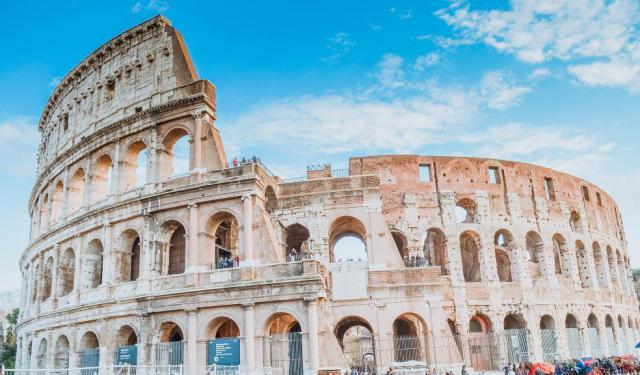
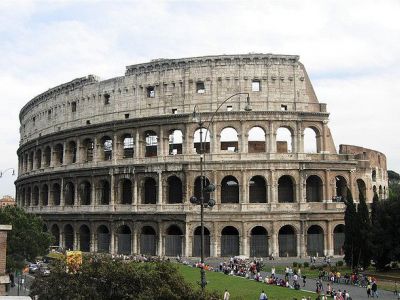
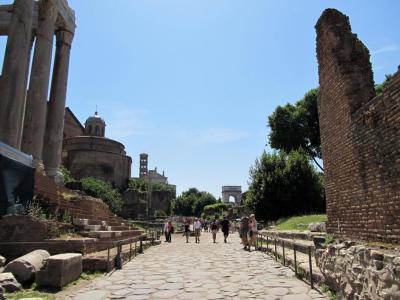
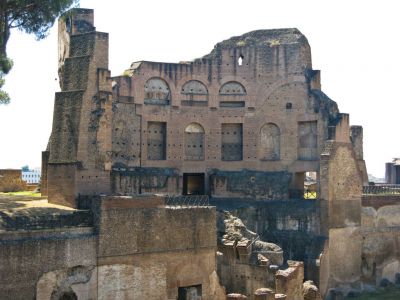
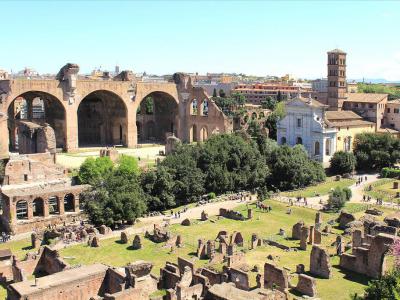
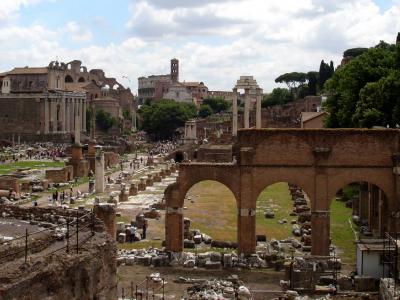
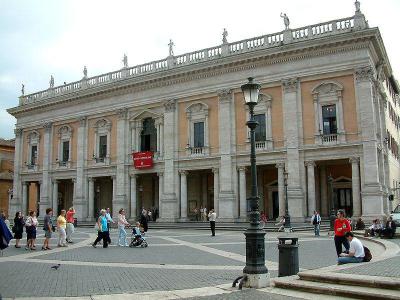
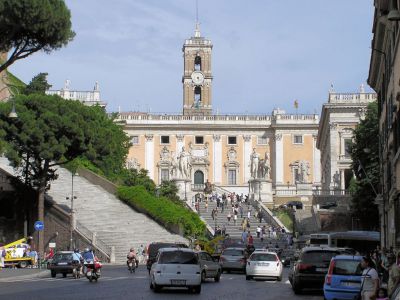
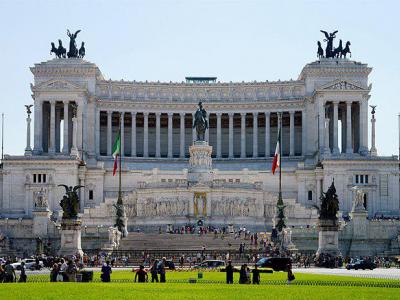
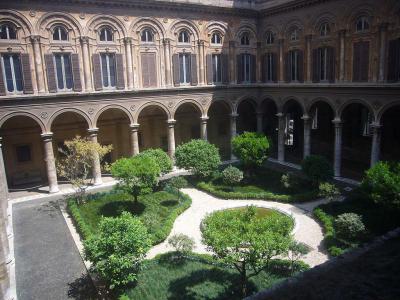
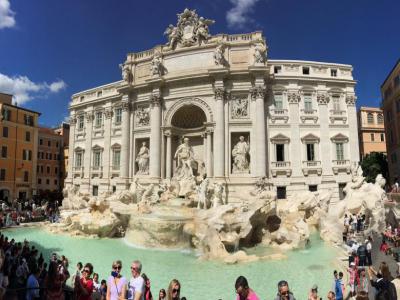
The Colosseum, built in 70-80 AD, symbolizes Rome’s grandeur as the Roman Empire’s largest amphitheater. The Roman Forum still in place was once the city’s political and commercial heart, while the Imperial Forums reflect the architectural ambitions of its emperors. The Capitoline Museums, atop Michelangelo-designed Capitoline Hill, house remarkable artifacts. Nearby, the Victor Emmanuel II Monument celebrates Italy’s unification. Art enthusiasts can explore masterpieces at the Doria Pamphilj Gallery, and Trevi Fountain beckons visitors to toss a coin, promising their return.
Rome is a city where every corner tells a story, blending myth and history, the ancient and the modern. A visit here offers an endless journey of discovery. So come and immerse yourself in the Eternal City, where the past and present live in perfect harmony.
The name “Rome” originates from Romulus, the mythical founder of the city, who, according to legend, was the son of the war god Mars and Rhea Silvia, the priestess of goddess Vesta. Both Romulus and his twin brother Remus were found by a she-wolf in a cave. She suckled them until a shepherd rescued the two.
As adults, the brothers decided to establish a new town but quarreled over its location. In a heated debate that turned into a fight, Romulus killed Remus. He established the new town on the Palatine Hill, naming it after himself and reigning as its first king. The Hut of Romulus on the Palatine Hill attests to this legend.
Rome's history stretches back over 2,500 years, beginning as an Iron Age village in 753 BC. In 509 BC, the Romans overthrown its last king and established a republic led by two annually-elected consuls. This form of governance had a profound influence on how modern-day governments function.
Over the centuries, Rome grew from a struggling city-state to the capital of the mighty empire, which dominated the Mediterranean by the 1st century AD. Between the 6th and 9th centuries, Latin, the dominant tongue of the Roman Empire, evolved into distinct Romance languages. Most European languages today either trace their roots directly to or are heavily influenced by Latin.
After the Roman Empire's fall in 476 AD, the city declined but rebounded during the Renaissance and Baroque periods, becoming a hub for artistic achievements. In 1870, Rome was declared the capital of unified Italy, cementing its legacy as a cultural and historical powerhouse.
The Colosseum, built in 70-80 AD, symbolizes Rome’s grandeur as the Roman Empire’s largest amphitheater. The Roman Forum still in place was once the city’s political and commercial heart, while the Imperial Forums reflect the architectural ambitions of its emperors. The Capitoline Museums, atop Michelangelo-designed Capitoline Hill, house remarkable artifacts. Nearby, the Victor Emmanuel II Monument celebrates Italy’s unification. Art enthusiasts can explore masterpieces at the Doria Pamphilj Gallery, and Trevi Fountain beckons visitors to toss a coin, promising their return.
Rome is a city where every corner tells a story, blending myth and history, the ancient and the modern. A visit here offers an endless journey of discovery. So come and immerse yourself in the Eternal City, where the past and present live in perfect harmony.
How it works: Download the app "GPSmyCity: Walks in 1K+ Cities" from Apple App Store or Google Play Store to your mobile phone or tablet. The app turns your mobile device into a personal tour guide. For US$14.99 per year (with a 3-day free trial), you get access to walking tours in 630+ cities worldwide for an entire year. In comparison, a guided tour often costs dozens of dollars per person for a single tour. The app works offline, so no data plan is needed when traveling abroad.
Download The GPSmyCity App



Rome Introduction Walking Tour I Map
Guide Name: Rome Introduction Walking Tour I
Guide Location: Italy » Rome (See other walking tours in Rome)
Guide Type: Self-guided Walking Tour (Sightseeing)
Tour Duration: 2 Hour(s)
Travel Distance: 3.7 Km or 2.3 Miles
Guide Location: Italy » Rome (See other walking tours in Rome)
Guide Type: Self-guided Walking Tour (Sightseeing)
Tour Duration: 2 Hour(s)
Travel Distance: 3.7 Km or 2.3 Miles
Sights Featured in This Walk
Walking Tours in Rome, Italy

Create Your Own Walk in Rome
Creating your own self-guided walk in Rome is easy and fun. Choose the city attractions that you want to see and a walk route map will be created just for you. You can even set your hotel as the start point of the walk.
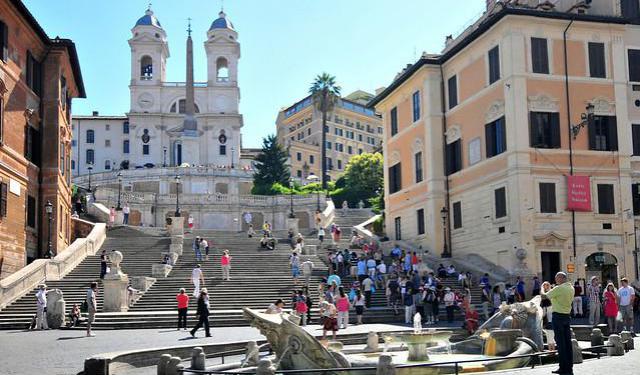
Spanish Steps to Trevi Fountain
An established tourist mecca, today's Rome is hardly imaginable without two of its much loved attractions – the Spanish Steps and the Trevi Fountain. Magnets for tourists as they are, these two sights are connected to a number of other, not less worthy of attention locations, such as the Fountain of the Longboat or Piazza Colonna and its centerpiece, the Column of Marcus Aurelius, to... view more
Tour Duration: 1 Hour(s)
Travel Distance: 2.0 Km or 1.2 Miles
Tour Duration: 1 Hour(s)
Travel Distance: 2.0 Km or 1.2 Miles
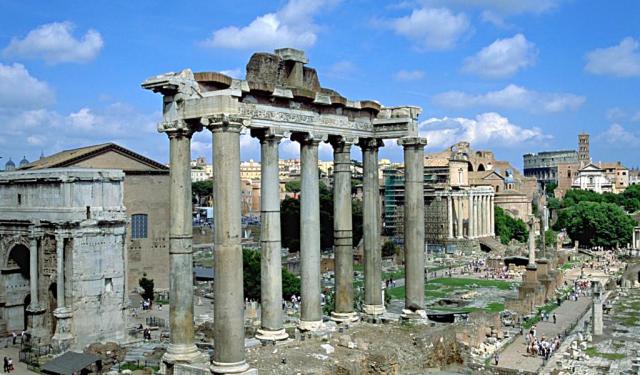
Roman Forum and Imperial Forums Walking Tour
t's a known fact that Rome wasn't built in a day. But since it was built, the city has stood the test of time and become "eternal." A popular proverb says, "all roads lead to Rome," but very few realize that, inside Rome itself, all roads lead to the Forum.
Indeed, the central hub of ancient Rome, the Roman Forum and the Imperial Forums once served as the... view more
Tour Duration: 2 Hour(s)
Travel Distance: 2.0 Km or 1.2 Miles
Indeed, the central hub of ancient Rome, the Roman Forum and the Imperial Forums once served as the... view more
Tour Duration: 2 Hour(s)
Travel Distance: 2.0 Km or 1.2 Miles
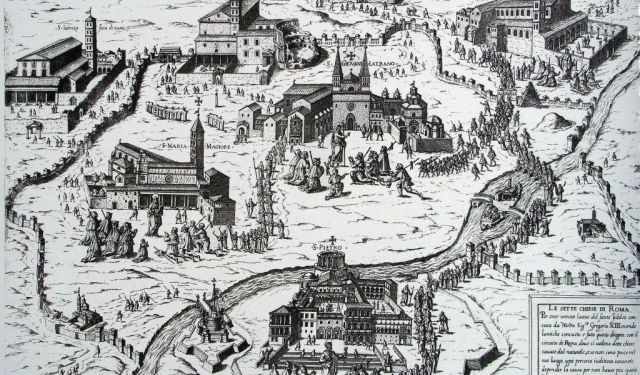
Seven Pilgrim Churches of Rome Walking Tour
Rome has long played host to pilgrims-after all, it's home to the Pope, the Catholic Curia, and a treasure trove of relics linked to apostles, saints, and martyrs. Back in the day, the Via Francigena provided a straight shot for the faithful traveling from England to Rome. Upon arrival, it was tradition to visit the tombs of Saints Peter and Paul. When a Jubilee rolled around, the spiritual... view more
Tour Duration: 6 Hour(s)
Travel Distance: 17.4 Km or 10.8 Miles
Tour Duration: 6 Hour(s)
Travel Distance: 17.4 Km or 10.8 Miles
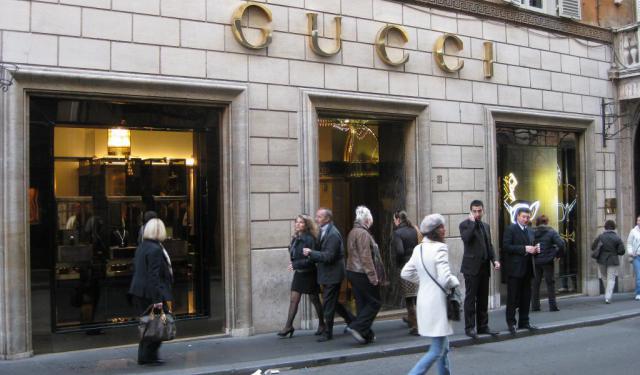
Rome Shopping Streets Walking Tour
Loved by tourists for its busy fashionable streets and significant baroque icons, the so-called ‘Tridente’ is one of the Eternal City's most lusted-after areas, formed by Via dei Condotti, Via Borgognona, Via Frattina and the adjacent Via del Corso. It is perhaps the most high-end destination for Roman shopping, with a concentration of renowned jewelers and important Italian/international... view more
Tour Duration: 2 Hour(s)
Travel Distance: 2.9 Km or 1.8 Miles
Tour Duration: 2 Hour(s)
Travel Distance: 2.9 Km or 1.8 Miles
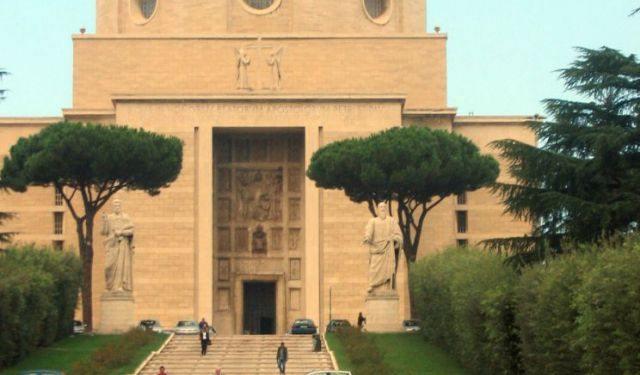
EUR Sightseeing Walking Tour
The Esposizione Universale di Roma (EUR), located in the southern suburb of Rome, was originally constructed for an international exhibition that was planned by Mussolini as a grand celebration of Fascist Italy. However, due to the outbreak of World War II, the exhibition never took place. The architecture of EUR was designed to glorify Fascism and showcases a distinct style that sets it apart... view more
Tour Duration: 2 Hour(s)
Travel Distance: 3.6 Km or 2.2 Miles
Tour Duration: 2 Hour(s)
Travel Distance: 3.6 Km or 2.2 Miles
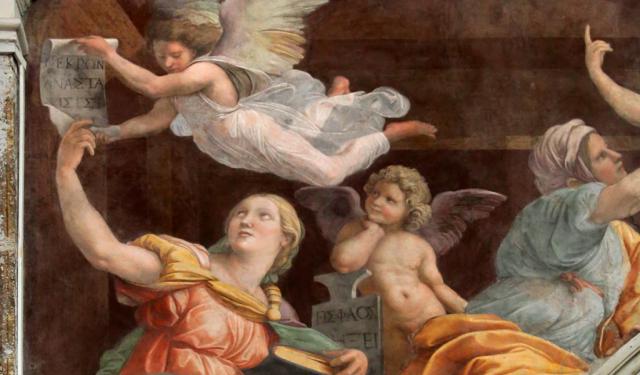
Hidden Art Treasures in Rome
Rome is one of the world's top living museums, replete with some of the most iconic pieces of art on the face of the planet. Famous artists, such as Michelangelo, Caravaggio, Raphael, Bernini, to mention but a few, had lived and worked here and left indelible marks in the city.
Needless to say that the abundance of masterpieces makes Rome crowded with tourists anxious to see them, causing... view more
Tour Duration: 1 Hour(s)
Travel Distance: 2.6 Km or 1.6 Miles
Needless to say that the abundance of masterpieces makes Rome crowded with tourists anxious to see them, causing... view more
Tour Duration: 1 Hour(s)
Travel Distance: 2.6 Km or 1.6 Miles
Useful Travel Guides for Planning Your Trip
10 Best Food Markets in Rome Italy
Of all the things Italy is most famous for (cars, music, fashion, movies, etc.), food is, undoubtedly, top of the list. Rome may well not be the whole Italy, but no Italy is whole without Rome... And the Romans, much as all their fellow-Italians, like it "fresco", hence the abundance of...
17 Best Gelaterias in Rome Italy
For ice cream lovers and dabblers this guide is a treasure chest of Rome’s best gelato shops. There are gelaterias everywhere. Many visitors to Rome only have a few days to explore the city. You owe it to yourself to make the most of your time and find the gelato locals eat. Often the authentic...
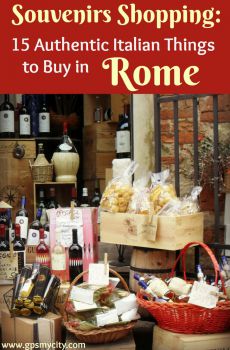
Souvenirs Shopping: 15 Authentic Italian Things To Buy in Rome
Rome is the Eternal City and, as such, the list of gift options available here is countless. Whether it's something edible, drinkable, wearable or pleasing to the eye that you want - you will find it all here in abundance. However, if time or budget is the factor, perhaps you might want to...
The Most Popular Cities
/ view all