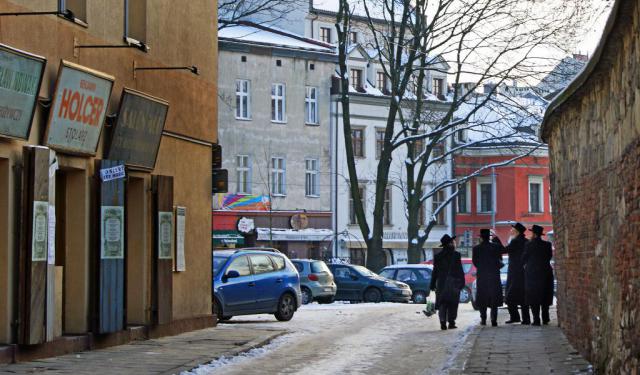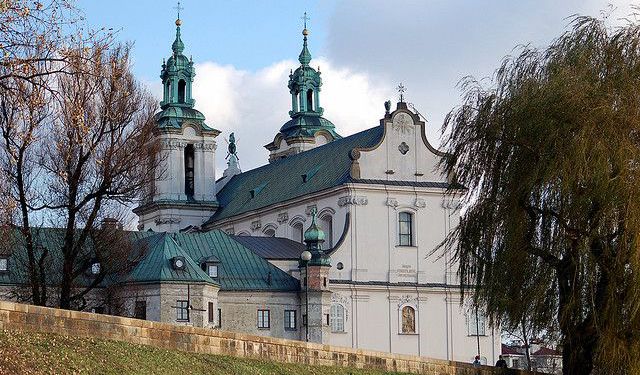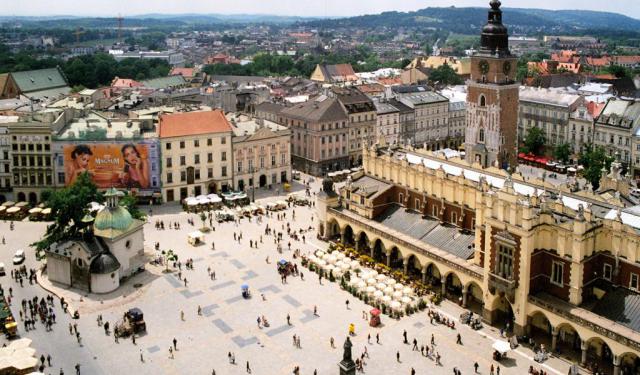


For fifteen centuries Krakow has managed to develop from a hamlet on top of Wawel hill to one of the main cultural cities of Europe. The city was inscribed as the first of its kind in the list of World Heritage Sights and is a leading center of the academic, artistic and cultural life in Poland. Here you can see a list some of the most visited tourist attractions.
1) Barbican Gate
The Barbican guards the city of Krakow. This mighty structure is an excellent example of a building that is deeply embedded in the history of the city and displays its lavish architecture. The Barbican was built for purposes of safeguarding the city of Krakow from those who dared to put a bad eye on its security. With a 3 metre thick wall, the Barbican was well designed to accommodate 130 crenels in four rows. The lower crenels were used by artillery and the higher ones were used by archers and riflemen. With seven turrets, the Barbican acted as the perfect outpost protecting the city of Krakow. This Gothic style fortification was built in the late 15th century and is more of the Arabic style rather than the European style military structure. The Barbican was initially linked to the inner city wall. Today one can take time to watch some of the finest exhibits the city has to display at the Barbican. Right from music concerts to plays and theatre performances, the Barbican is the perfect place where you can enjoy the building’s immense historical presence while listening to your favourite band play or watching a story unwind before your very own eyes.
Image Courtesy of Flickr and bazylek100
2) Czartoryski Museum
The Czartoryski Museum was established in 1796 by Princess Izabela Czartoryska and its collections are actually the work of five generations of the Czartoryski family. The collection has been moved to another city, gone underground and even missing; a small percentage of the original collection is what is open to the public today. The tale of the Museum is a story everyone must know. With the motto ‘From the Past to the Future’, Princess Izabela set up the museum in Pulawy, Poland to store Polish and other historic memorabilia. Da Vinci’s ‘The Lady with an Ermine’ was added to the collection by Izabela’s son, Adam, upon his return from Italy. After his political career failed, Adam moved to Paris along with the collection which was set up at Hotel Lambert. Adam’s children, Prince Wladyslaw and Princess Izabela Działyńska, also added to this collection. In 1878, the return of Prince Wladyslaw to Poland led to the inauguration of the current Czartoryski Museum. His son, Adam Ludwik, and Adam’s wife then took over the museum and further expanded the collection. During the Second World War, the museum was raided by the Germans and most artefacts were stolen. After the War, a massive attempt to recover lost collections was made but over 800 artefacts were lost forever. The Museum’s prized possession remains the Da Vinci painting which has toured the world. Over 12,000 visitors come to the Museum every year and keep Princess Izabela’s dream alive.
Image Courtesy of Wikimedia and Rj1979
3) Jan Matejko House
Jan Matejko was one of the greatest painters and artist in the 19th century. One of the most renowned Polish artists, Jan Matejko was known for his romantic oil paintings where he beautifully brought out the emotion of the subject on canvas. He is also known for paintings that depict war and political unrest and scenes from the courtroom. He is believed to have instilled a sense of brotherhood in the people of Poland when the country was split due to political unrest. Some of his known oils include Battle of Grunwald, Copernicus, in conversation with God, Stańczyk etc.
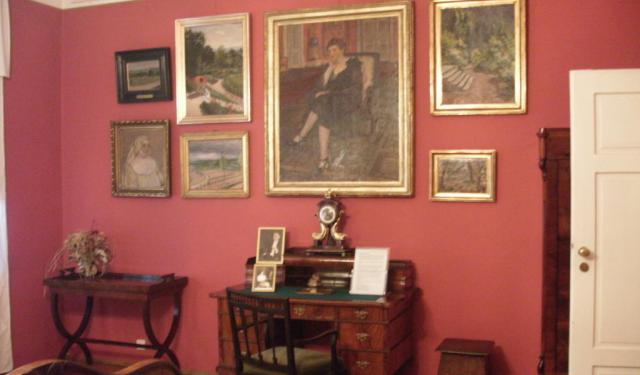
The Jan Matejko House is the mansion which saw the birth and the tragic end of this famous painter. Jan Matejko was born in the house, grew up to be established as one of the finest painters of Poland, after which he briefly left the building. However, during his final years, he returned back and lived here till he finally bid adieu to the world. The museum, renovated in 2007-09 showcases the everyday life of Jan Matejko. One can see the artist’s studio with his palette, brushes, painting tools, work desk, his drafts and sketches, paintings and even the bed he breathed his last. The museum is a delight to get a glimpse of the life of Jan Matejko.
Image Courtesy of Wikimedia and Cancre
4) Ulica Florianska
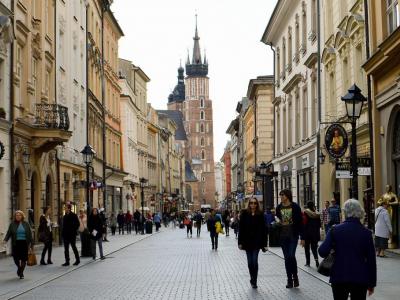
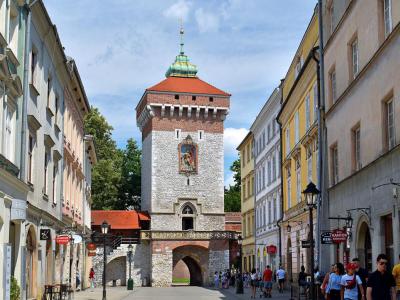
Take a walk down one of the oldest and most important streets of Krakow, Ulica Florianska. Commonly known as Florianska Street, this place gets its name from the famous Florian Gate at the north. Built in 13th century, the Street has managed to garner attention since its inception. Filled with structures that boast of beautiful facades, the Ulica Florianska is the best place to admire the change in styles of architecture of the buildings through the years.
While some buildings still brag of a stern yet intricate edifice displaying Gothic influence, other buildings showcase styles more modern ranging from early to late Renaissance to Baroque and Neo classic. Never the less, the amalgamation of the different styles of buildings makes the street worthy of mention and visit in Krakow.
Not only is it a must see because of its rich architectural wealth, each structure (that is given a serial number) has a story of its own. There might even be a few houses you would like to enter for a short visit. Owned by some of the wealthier middle class families in the 14th century, one can read about each structure and its inhabitants in detail. Today, the Ulica Florianska is the most visited street in Krakow and rightly so, for it has so many stories to offer to its visitors.
Image Courtesy of Wikimedia and ImreKiss
5) Small Market Square (Maly Rynek)
Not very far away from the Main Market Square you have the Small Market Square or the Maly Rynek. Not as impressive as the Main Square albeit the Small Market has its own charm and history.
Originally a butcher’s market where the freshest meat and fish could be obtained, this area later went on to become a fruit and vegetable market in the 18th century. The history of the market is also tainted with bloody violence from the conflicts between Catholics and Protestants that lived on either side of the square.
In 1903, it was transformed to accommodate a tram track, which was only functional till the 1950’s after which the use of trams was discontinued in the city. After the redundancy of the track, the area was largely used for parking of taxis and cars, up until recently. On the 750th anniversary of Krakow; the Mal Rynek underwent a major facelift. The whole place was decorated with lanterns, benches and beautiful fountains giving it a very different feel from the Main Market Square. Today, the Maly Rynek is an adorable place to meet up, walk around or simply grab a cup of coffee. Much quieter than the bigger square it also is an excellent place to just sit and watch life in Krakow.
Image Courtesy of Wikimedia and Packa
6) Mariacki Church (St. Mary's Church)
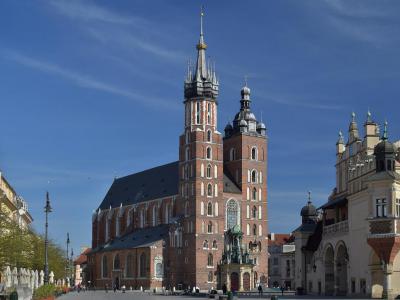
The city of Krakow is filled with treasures of the past that appease the appetite of a historian and an admirer of architecture. The Mariacki Church is one such example. Dedicated to the Virgin Mary, the Mariacki Church stands adjacent to the Main Market Square in Krakow. The Church is a beautiful illustration of merger of different styles of architecture. Together, these styles brew a singular timeless piece of structure that stands as an example for several other churches all over Poland and the world. The façade of the Church consists of two high raised uneven towers, of which one is constructed in Gothic style while the other has a Renaissance style of architecture. The Gothic tower boasts of a magnificent spire built in 1478 that measures 81 metres and has a gold coated crown. The other tower, measuring 69 metres, has a Renaissance roof and was constructed in 1592. The tower has five bells, two of which date back to the 14th century. On the front side of the Church is a beautiful Baroque designed porch that was constructed in the mid-18th century. Not only is the exterior of the Mariacki Church magnificent, the interiors also make their mark in terms of grandeur and excellence. The Mariacki Church houses the famous altarpiece of Veit Stross, the largest Gothic altarpiece in the world. One of the national treasures of Poland, this ornate wooden altarpiece is a must see on the visit to Krakow.
Image Courtesy of Wikimedia and Lestat (Jan Mehlich)
7) Main Market Square
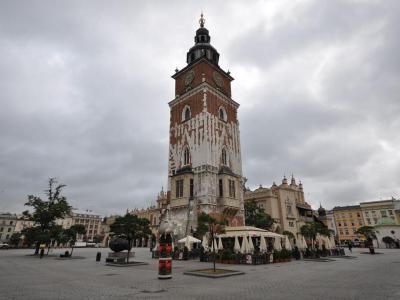
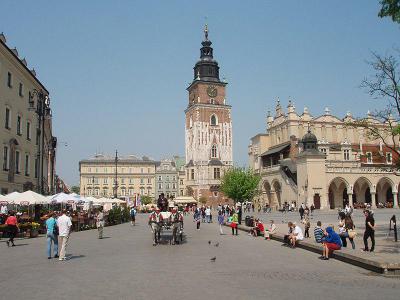
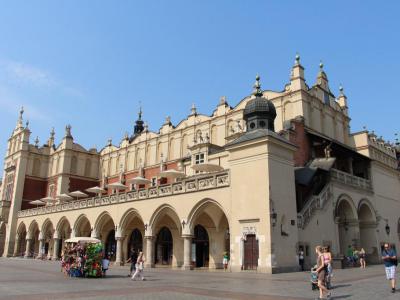
The Main Market Square or popularly known as the Rynek Główny, is one place everyone is bound to visit in Krakow. Surrounding the Market are some of Krakow’s most priced treasures like the Cloth Hall, the St Mary’s Basilica, Town Hall Tower along with many others. The buildings surrounding the Market Square display the tireless effort and the appetite for rich architecture that the denizens of the city had. Contained by castles, palaces and historical monuments, the Main Market Square is probably the most vibrant places in Krakow.
The Mongol Invasion of 1241 which left the city in ruins, also gravely affected the Main Market Square. It was in 1257 that the foundation for this massive complex was laid and today it is Europe’s largest medieval market area (40,000 metre square). The main reason for setting up this market was to attract merchants to share their trade in the city, something quite important in those times.
The drawing room of Krakow, the Main Market Square is one place that is most widely used as a meeting ground by the Cracovians. The inclusion of the statue of Adam Mickiewicz, the area has become even more popular a landmark for people to meet. An excellent place to watch the city go by, the Main Market Square, is bustling with life and a common ground where the city converges.
Image Courtesy of Flickr and iwona_kellie
8) Jagiellonian University - Collegium Maius
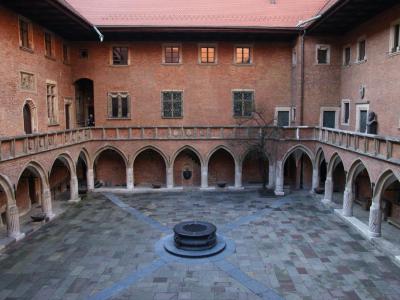
The Jagiellonian University was founded in 1364 and rebuilt at the end of the 15th century in a late-Gothic style. Inside, visitors will find perfectly preserved rooms with authentic furniture and unique scientific instruments. Also, a splendid collection of old European art and varied memorabilia can be found here. Nowadays, in the oldest part of the university, Collegium Maius, different temporary exhibitions and one permanent educational show The World of Senses, can be found.
Image Courtesy of Wikimedia and Michalws
9) National Museum
Home to one of the largest art galleries in the country, the National Museum is a must visit in Krakow. Established in the late 19th century, the National Museum was the first National art collecting institution.
Today, by far it is one of the biggest museums in the country in terms of permanent exhibitions, buildings and collections. The museum was first housed in the Sukiennice, which is the first floor of the Cloth Hall in the Market square. The plan for the current building started off in 1934. However, with the Second World War, the building could not be completed. The present day building was only completed in 1992 after which the museum was officially opened to public.
Some of the darkest moments in the history of the Museum were during the Nazi occupation of Poland. Not only did it affect the overall construction of the Museum building but valuable treasure that belonged to the museum was stolen. By the end of the War much of it was recovered. However, an estimated number of over a thousand artefacts still remain missing from the Museum.
Today the Museum has some of the finest collection of 20th century art. Also a must see in the museum are the decorative pieces and the Militaria – which comprises weaponry, arms, uniforms and medals from the 18th to 20th century.
Image Courtesy of Wikimedia and Marcin Zieliński
10) Wawel Cathedral
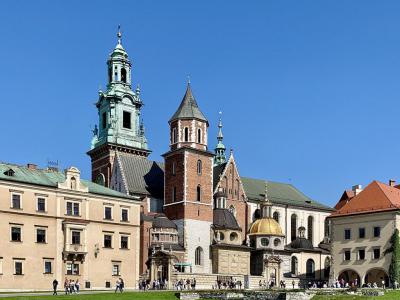
One of the most important churches in the city of Krakow, the Wawel Cathedral stands amidst some of the most historically notable structures on the Wawel Hill. An essential part of the old town Krakow, the Cathedral has administered the crowning and mourned the death of the most noted Kings and nobility of the Polish Empire since the 11th century. Although, the structure has been in existence since the 11th century, the edifice underwent reconstruction on three occasions. The current Gothic edifice of the Wawel Cathedral was built in the 14th century and it took nearly forty years to complete. The earlier structures were constructed in 11th and 12th century. Typical to many Polish cathedrals, the Wawel Cathedral is also an amalgamation of different spires and different styles of architecture. The Golden Dome or the Sigismund Chapel built by Florentine architect Bartolommeo Berrecci, is considered as one of the finest and purest form of Renaissance architecture essentially outside Italy. The Cathedral boasts a magnificent collection of treasury, documents, books and artefacts. In fact, the Wawel Cathedral is one of the oldest libraries in Poland. It is also the place that John Paul II, Father Karol Wojtyla, served his first Mass. One cannot miss this site while visiting Krakow.
Image Courtesy of Wikimedia and Lestat (Jan Mehlich)
11) Wawel Castle
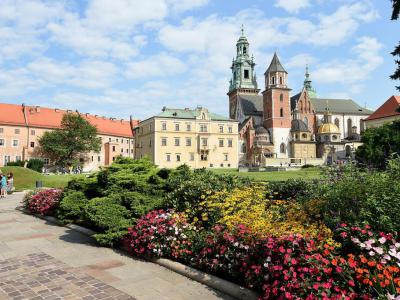
With the wealth of history and abundance of heritage, the city of Krakow is a haven for admirers of the past. The Wawel is one such place in Krakow where one can get enchanted by the city’s legendary sagas. The Wawel Hill was formed about 150 million years ago and is majorly made up of Jurassic lime stone that dates back to the Oxfordian age. The Hill comprises many historically significant buildings that date back to different eras. Surrounded by water and marshes, archaeologists found evidence of settlers on the Wawel Hill that dates back to early Palaeolithic Age. Situated on the left bank of the Vistula River, Wawel played a significant role in the political and religious history of the city from the first millennium AD. The Wawel Hill was the Royal Residence of the first historical ruler of Poland as well as his successors. Also, the Hill was the first place to have been a Christian centre in Poland. It is one of the first few places in the country to have a Romanesque building erected. With its rich and complex past, along with many historically significant sites, the Wawel has loads to offer its visitors.
Image Courtesy of Wikimedia and Jakub Hałun
12) Reformed Temple Synagogue (Synagoga Tempel)
The Reformed Temple Synagogue located in the Kazimierz district is a unique example of the merger of Jewish and Polish cultures. The synagogue built in the late 19th century depicts the grandeur and freedom of the Jewish community before the World War II.
This beautiful building designed by architect Ignacy Hercok, best illustrates the neo-Renaissance or the Moorish Revival style of architecture. The rectangular building with its tall central section is said to have drawn inspiration from Leopoldstädter Tempel in Vienna, Austria. More impressive than the exteriors, the insides of the building can surely take your breath away. Adorned with stained glass windows, exquisite gold leaf that decorate the ceiling and walls, the golden wooden gallery, the interiors of the synagogue are truly impressive. The synagogue is probably among the few which doesn’t segregate the audiences according to their gender and also among the fewer that offer services in Polish, Hebrew and German.
The temple faced its darkest years during the World War II when German troops used the building as an ammunition storage area. The structure suffered a lot of damage during the War and was only restored in 1995. For its architecture or interiors or just simply its place in the history of Krakow, the Synagoga Tempel deserves a visit.
Image Courtesy of Flickr and bazylek100
13) Alchemia
To get a feel of the city of Krakow, one need not look any further than the Alchemia, a special bar in the heart of the city’s Jewish town. One of the first bars to be opened in Kazimierz, the Jewish side of the city, the Alchemia is the most treasured pubs in the city. Visited by students, artists, locals and visitors, the pub over the years has created its mark as a destination to best enjoy the night life of the city.
Not only is it visited as a window into the cultural aspects of the Krakovian society, the pub also hosts live concerts, art exhibitions and other social gatherings. With a good selection of moderately priced drinks and sandwiches and pastries on the menu, the Alchemia manages to imprint into its guest a memory of the night life in the city.
With its dark interiors, uneven floor, Gothic lab equipment, antique furniture and other such bizarre decorations, the ambience of the bar is one of a kind. With a huge Bohemian influence, one cannot help but get transported or rather feel like a hippie himself. You will either hate or totally fall in love with Alchemia, any which way, the pub is sure to remain with you your entire life.
Image Courtesy of Flickr and emdeen
14) Izaak Synagogue
The Izaak Synagogue is one of the most beautiful, noteworthy and morose synagogues in Krakow. Built in the late 16th century, the Synagogue has its reputation of being one of the century’s most beautiful buildings in the Kazimierz district in Krakow. In fact, so magnificent was the building after its construction that Christians in the neighbourhood were offended and revolted at the existence of a synagogue bigger than any other building in the region.
The synagogue was designed by two Italians namely Giovanni Battista Trevano and Giovanni Falconi. The entire structure was financed by Izaak Jakubowicz, also known as Izaak the Rich. A banker to King Władysław IV, many tales have been associated with the wealth that was accumulated by the man at that time.
Even though the Synagogue was one of the grandest buildings of its time, over the years it has undergone a great deal of misfortune. With the infiltration of Nazis, the Synagogue’s rich interiors were destroyed and damaged and the building was used as a warehouse. Post the War, matters did not improve and the Synagogue was used as an artist’s studio. The year of 1970 saw a devastating fire that engulfed the structure ruining it beyond repair. However the year of 1983 saw the first effort for its restoration and ever since constant renovation has brought this Synagogue back to life.
Image Courtesy of Wikimedia and Jakub Hałun
15) Jewish District (Kazimierz)
One of the main destinations in Krakow when you are visiting Jewish sites in the city is Kazimierz. Known throughout history as the Jewish town, Kazimierz has been home to the Jews since the 14th century. Until recently, the Jewish town was considered separate from Krakow.
The birth of Kazimierz took place thanks to King Casimir the Great, after whom the town was named. But it was the decision of King Jan Olbracht, which led the Jews of Krakow to move to Kazimierz. After the move, the pogroms and riots between the two major communities reduced drastically. Both the communities co-existed without much difficulty until the early 19th century when the separate Jewish town was made a part of Krakow. Most of the intelligentsia and the elite abandoned Kazimierz and moved to other parts of Krakow. However, those who stayed back in the old town were the poor and orthodox Jews. It is thanks to them that the buildings and architecture can still be appreciated.
The Second World War brought about further abandonment and misery to the community. By the end of the War, the Jewish town that was once a melting pot of distinct and unique Jewish culture was left in ruins.
It was not until very recently in 2000 when the poorest district of Krakow garnered attention from the budding hospitality industry. Soon the buildings became home to some of the finest and cosiest cafés and restaurants in the city.
Image Courtesy of Wikimedia and Specjal b
16) Ethnographic Museum
After taking a look at how the elite and rich lived in medieval Krakow, why not sneak a peek at how it was to live like a commoner in the city. The Ethnographic Museum gives its viewers an insight on the lives of the working and peasant class of the 18th and 19th century in the city. A delightful insight on the lives of the folk culture of the town, the museum covers minute aspects like their living, festivals, day to day activities and clothing. Fast becoming an interesting window into the Polish culture, the museum offers its viewers sights, sounds and tastes of its villages and culture. Not to be missed if you want to dive deeper and have a better understanding of the Polish ethos. The Ethnographic Museum is rigorously looked after and huge efforts are put in to give an authentic feel to the exhibits. In fact, the museum actually has people from nearby towns and villages chipping in with the decorations and interiors that give it a more genuine feel. A haven for art lovers, the Ethnographic Museum is the best place to see the traditional art and paintings of Poland. One can only get enthralled by how everyday objects are transformed into beautiful ornate master pieces. Wood carving and Puissance (Painting on eggs) are just names of a few traditional art works of the country.
Image Courtesy of Wikimedia and Aktron
17) Oscar Shindler's Factory
The story of Oscar Shindler’s factory is something many of us know, thanks to Stephen Spielberg’s film, The Schindler’s List.
A German industrialist, who initially was just interested in benefiting from the German invasion of Poland, Shindler later became pivotal in saving hundreds of Jewish lives from the torture and death that awaited them in the death camps.
Shindler came to Poland in 1939 and bought a needle enamelware factory from the bankruptcy court. With the help of a German speaking Jew, his accountant Itzhak Stern, he obtained 1000 Jewish workers for his factory.
Workers from the Jewish camps were far cheaper and factory did quite well. Schindler soon climbed up the societal ladder and became an important member of the Nazis in Poland. Although, initially motivated by monetary gains, Schindler soon witnessed the plight of the Jews who were being gathered and deported to Płaszów. Horrified by the mass murder, Schindler started protecting his own workers, going to an extent of bribing, negotiating and even vouching for those who were physically unfit to work.
The museum is filled with photographs, documents, and tools that were used in the factory. The factory still instils a vibe of how it must have been back then, during the invasion and the struggle that came along with it. Undoubtedly, Shindler’s Factory is a must visit when in Krakow.
Image Courtesy of Wikimedia and Noa