


La Ribera Walking Tour (Self Guided), Barcelona
La Ribera is a culturally rich, historic area of Barcelona’s Old Town; somewhat less touristy than the Gothic Quarter (which one should really visit as well) and quite unspoiled, authentic and pretty. Centuries ago, it was a very well-to-do neighborhood inhabited by aristocrats, merchants, wealthy sailors, and Jewish money-lenders. Today, it is regarded as the Soho of Barcelona – a popular hangout place seamlessly transcending the old & new parts of the city, reflected in its vast array of restaurants, cafes, and trendy shops.
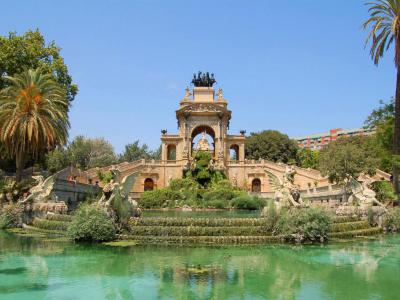
Start your walking tour of La Ribera with a stroll through spacious Parc de la Ciutadella (free entry). It feels like walking through a maze, and you can hire a rowboat on the lake or climb to the top of the Cascada monumental fountain stand directly above the waterfall to get a better look across the surroundings.
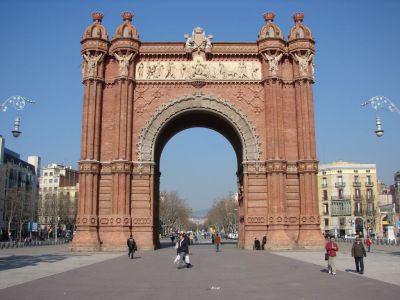
A few minutes away from the park, the Justice Palace (Palau de Justícia de Catalunya) stands out for the large number of sculptural works; its exterior decoration consists of 48 figures related to law, as well as 22 reliefs with legal and historical themes. This leads to Arc de Triomf – one the most unique aches of its kind, given the Gothic style, detailed carvings and red brickwork.
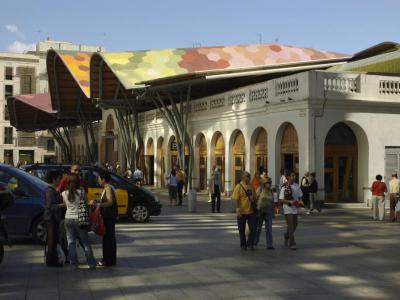
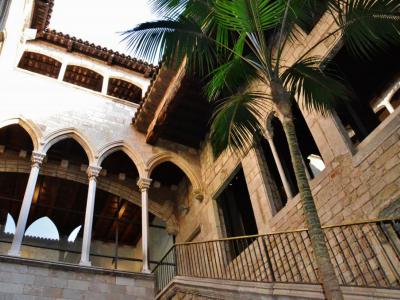
On the second stretch, Mercat Santa Caterina is a great local market with associated restaurants which, combined with the Picasso Museum and the Chocolate Museum, allow you to end the trip in style.
Follow this self-guided walking tour to explore the unique sights of La Ribera!
Start your walking tour of La Ribera with a stroll through spacious Parc de la Ciutadella (free entry). It feels like walking through a maze, and you can hire a rowboat on the lake or climb to the top of the Cascada monumental fountain stand directly above the waterfall to get a better look across the surroundings.
A few minutes away from the park, the Justice Palace (Palau de Justícia de Catalunya) stands out for the large number of sculptural works; its exterior decoration consists of 48 figures related to law, as well as 22 reliefs with legal and historical themes. This leads to Arc de Triomf – one the most unique aches of its kind, given the Gothic style, detailed carvings and red brickwork.
On the second stretch, Mercat Santa Caterina is a great local market with associated restaurants which, combined with the Picasso Museum and the Chocolate Museum, allow you to end the trip in style.
Follow this self-guided walking tour to explore the unique sights of La Ribera!
How it works: Download the app "GPSmyCity: Walks in 1K+ Cities" from Apple App Store or Google Play Store to your mobile phone or tablet. The app turns your mobile device into a personal tour guide and its built-in GPS navigation functions guide you from one tour stop to next. The app works offline, so no data plan is needed when traveling abroad.
Download The GPSmyCity App



La Ribera Walking Tour Map
Guide Name: La Ribera Walking Tour
Guide Location: Spain » Barcelona (See other walking tours in Barcelona)
Guide Type: Self-guided Walking Tour (Sightseeing)
Tour Duration: 2 Hour(s)
Travel Distance: 2.8 Km or 1.7 Miles
Guide Location: Spain » Barcelona (See other walking tours in Barcelona)
Guide Type: Self-guided Walking Tour (Sightseeing)
Tour Duration: 2 Hour(s)
Travel Distance: 2.8 Km or 1.7 Miles
Sights Featured in This Walk




Walking Tours in Barcelona, Spain

Create Your Own Walk in Barcelona
Creating your own self-guided walk in Barcelona is easy and fun. Choose the city attractions that you want to see and a walk route map will be created just for you. You can even set your hotel as the start point of the walk.

Barcelona Shopping Walk
A long-time prime cultural destination, Barcelona is also en route to becoming one of Europe's top shopping spots. Each new day, fashionable designer stores, from well-known international brands to local start-ups, are filling the city streets. If you're a fan of shopping, you're in for a treat when visiting this beautiful city. Here are some of the most popular shopping locations... view more
Tour Duration: 2 Hour(s)
Travel Distance: 3.4 Km or 2.1 Miles
Tour Duration: 2 Hour(s)
Travel Distance: 3.4 Km or 2.1 Miles

Barcelona Food Tasting Walking Tour
No one should visit Barcelona without making an attempt to get acquainted with some of Spain’s best food – Catalan food. An abundance of fresh fish and superb meat, a plethora of great vegetables, plus local inventiveness, have produced a very diverse, distinctive and delicious cuisine, including the famous (and trendy) tapas dishes.
Follow this self-guided walk to treat your taste buds in... view more
Tour Duration: 2 Hour(s)
Travel Distance: 2.9 Km or 1.8 Miles
Follow this self-guided walk to treat your taste buds in... view more
Tour Duration: 2 Hour(s)
Travel Distance: 2.9 Km or 1.8 Miles

Picasso's Barcelona Walking Tour
Pablo Picasso – the great Spanish painter and sculptor – developed his style in Barcelona where he spent the formative years of his life, from the ages of 14 to 23. It is said that when the master spoke nostalgically of home, he actually meant the Catalonian capital, despite having been born in Malaga.
This self-guided walk will take you to the Picasso Museum, the bar-restaurant and the art... view more
Tour Duration: 2 Hour(s)
Travel Distance: 4.2 Km or 2.6 Miles
This self-guided walk will take you to the Picasso Museum, the bar-restaurant and the art... view more
Tour Duration: 2 Hour(s)
Travel Distance: 4.2 Km or 2.6 Miles

Montjuic Walking Tour
Montjuic is a hill in Barcelona which offers a variety of great attractions of historic, cultural, and architectural value. Here, you can watch a spectacular water show at the Magic Fountain of Montjuic, visit the place where matadors faced the bulls in the past, and explore the ancient Montjuic Castle with its breathtaking views.
A convenient start point, Placa d'Espanya is the second... view more
Tour Duration: 3 Hour(s)
Travel Distance: 5.0 Km or 3.1 Miles
A convenient start point, Placa d'Espanya is the second... view more
Tour Duration: 3 Hour(s)
Travel Distance: 5.0 Km or 3.1 Miles

Gothic Quarter Walking Tour
A walk through the Gothic Quarter – Barcelona’s oldest part, dating from the Roman era – is like a journey through time. The typical Roman grid plan is still visible in the quarter's layout. Only a few roads are open for car traffic, so there is little in the way of enjoying the narrow, atmospheric streets filled with high-quality architecture, numerous boutiques, and coffee shops.... view more
Tour Duration: 2 Hour(s)
Travel Distance: 1.8 Km or 1.1 Miles
Tour Duration: 2 Hour(s)
Travel Distance: 1.8 Km or 1.1 Miles

Antoni Gaudí's Masterpieces Walking Tour
Antoni Gaudi, a seminal figure in the Catalan Modernism movement, is one of the top architects of the 20th century. The unique technique and use of natural forms in his works stand out from the pack and have left an indelible mark on the face of Barcelona.
Our journey through Gaudi's Barcelona begins at the Güell Palace, by far the most budget-friendly of his projects. Located near La... view more
Tour Duration: 2 Hour(s)
Travel Distance: 4.6 Km or 2.9 Miles
Our journey through Gaudi's Barcelona begins at the Güell Palace, by far the most budget-friendly of his projects. Located near La... view more
Tour Duration: 2 Hour(s)
Travel Distance: 4.6 Km or 2.9 Miles
Useful Travel Guides for Planning Your Trip

Barcelona Souvenir Shopping: 17 Uniquely Spanish Things to Buy
Spain, in general, and Barcelona, in particular, are a treasure trove of all things exciting. Set your foot in Barcelona and you'll be spoiled for the choice of things worth trying and taking home. Before your head starts spinning, check this guide out to put yourself in the right...

Top 10 Spanish Foods and Drinks to Try in Barcelona
In the countries like Spain, food is a national heritage and cultural attraction in its own right. The latter is even more true of Catalonia in general and Barcelona in particular. Presented here are the 10 staples of Catalan food tradition, missing which would be a gastronomical...
The Most Popular Cities
/ view all