

La Paz Monuments Tour (Self Guided), La Paz
They say monuments are the grappling irons that bind one generation to another, symbolizing the country's aspirations, its past, and its character. The monuments in La Paz do exactly that, holding profound cultural, historical, and symbolic value.
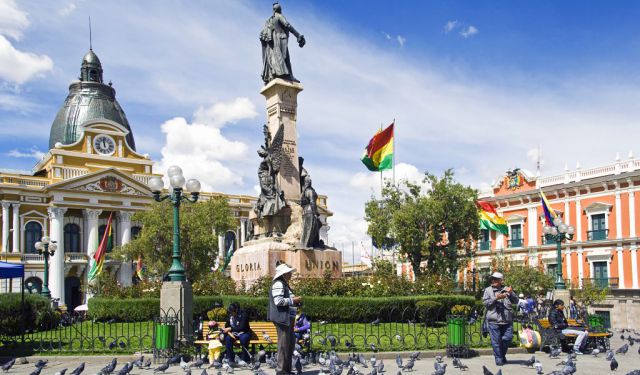
The prominent statue of Pedro Domingo Murillo in Plaza Murillo commemorates the key figure of the La Paz revolution of 1809, one of the chapters in Bolivia's struggle for freedom from Spanish rule. With a stoic gaze, the majestic bronze figure of Murillo serves as a testament to indomitable courage, paying homage to the visionary leader whose fervent spirit ignited the flames of independence.
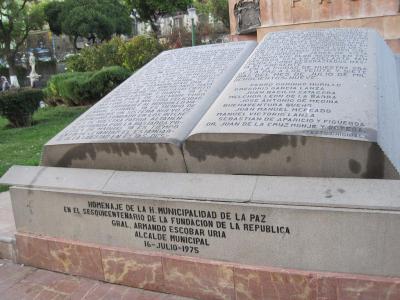
Another token of remembrance tracing the footsteps of the audacious revolutionary is a memorial plaque. This plaque might be seen as a separate installation or a part of the overall monument complex in the heart of La Paz, providing additional historical context and information about Murillo's life and actions.
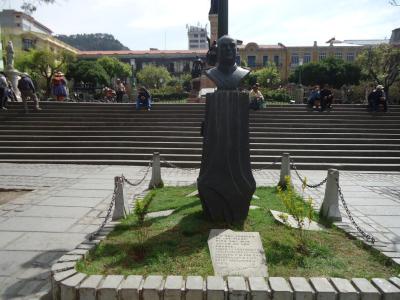
Located nearby is the monument honoring the memory of the country's former president, Gualberto Villaroel, and the impact of his policies on Bolivia's history.
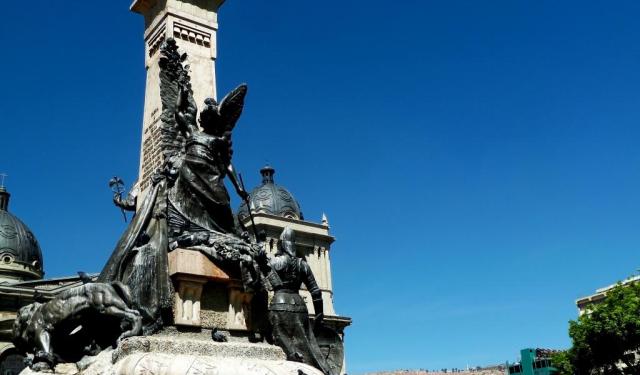
Crowning the heights of La Paz, the Motherland Monument (Monumento a la Madre Patria) stands as a magnificent ode to Bolivia's unwavering devotion to its roots. A graceful amalgamation of artistry and symbolism, this lofty tribute embodies the nation's profound affection for its ancestral heritage.
Amid the tapestry of cultural treasures, the Christopher Columbus Monument graces the cityscape with an aura of historical reverence. A symbolic voyage through time and space, this monument harks back to the age of exploration, where courage and curiosity led to uncharted horizons. While acknowledging the explorer's daring spirit, it also beckons contemplation of the multifaceted narratives that emerged from his endeavors, including the colonization and exploitation of Indigenous peoples in the Americas, calling for a thoughtful reflection on the shared history of mankind.
A monument is but a tombstone if it tells nothing. By far more than just stone and mortar, the monuments in La Paz are the guardians of memories and reflections of Bolivia's soul. These silent storytellers are prepared to whisper the tales of triumphs and tragedies to those who pause to listen. If you are interested in hearing the living voices of the past, speaking for the present, you may wish to take this self-guided tour.
The prominent statue of Pedro Domingo Murillo in Plaza Murillo commemorates the key figure of the La Paz revolution of 1809, one of the chapters in Bolivia's struggle for freedom from Spanish rule. With a stoic gaze, the majestic bronze figure of Murillo serves as a testament to indomitable courage, paying homage to the visionary leader whose fervent spirit ignited the flames of independence.
Another token of remembrance tracing the footsteps of the audacious revolutionary is a memorial plaque. This plaque might be seen as a separate installation or a part of the overall monument complex in the heart of La Paz, providing additional historical context and information about Murillo's life and actions.
Located nearby is the monument honoring the memory of the country's former president, Gualberto Villaroel, and the impact of his policies on Bolivia's history.
Crowning the heights of La Paz, the Motherland Monument (Monumento a la Madre Patria) stands as a magnificent ode to Bolivia's unwavering devotion to its roots. A graceful amalgamation of artistry and symbolism, this lofty tribute embodies the nation's profound affection for its ancestral heritage.
Amid the tapestry of cultural treasures, the Christopher Columbus Monument graces the cityscape with an aura of historical reverence. A symbolic voyage through time and space, this monument harks back to the age of exploration, where courage and curiosity led to uncharted horizons. While acknowledging the explorer's daring spirit, it also beckons contemplation of the multifaceted narratives that emerged from his endeavors, including the colonization and exploitation of Indigenous peoples in the Americas, calling for a thoughtful reflection on the shared history of mankind.
A monument is but a tombstone if it tells nothing. By far more than just stone and mortar, the monuments in La Paz are the guardians of memories and reflections of Bolivia's soul. These silent storytellers are prepared to whisper the tales of triumphs and tragedies to those who pause to listen. If you are interested in hearing the living voices of the past, speaking for the present, you may wish to take this self-guided tour.
How it works: Download the app "GPSmyCity: Walks in 1K+ Cities" from Apple App Store or Google Play Store to your mobile phone or tablet. The app turns your mobile device into a personal tour guide and its built-in GPS navigation functions guide you from one tour stop to next. The app works offline, so no data plan is needed when traveling abroad.
Download The GPSmyCity App



La Paz Monuments Tour Map
Guide Name: La Paz Monuments Tour
Guide Location: Bolivia » La Paz (See other walking tours in La Paz)
Guide Type: Self-guided Walking Tour (Sightseeing)
Tour Duration: 1 Hour(s)
Travel Distance: 0.8 Km or 0.5 Miles
Guide Location: Bolivia » La Paz (See other walking tours in La Paz)
Guide Type: Self-guided Walking Tour (Sightseeing)
Tour Duration: 1 Hour(s)
Travel Distance: 0.8 Km or 0.5 Miles
Sights Featured in This Walk



Walking Tours in La Paz, Bolivia

Create Your Own Walk in La Paz
Creating your own self-guided walk in La Paz is easy and fun. Choose the city attractions that you want to see and a walk route map will be created just for you. You can even set your hotel as the start point of the walk.
La Paz Introduction Walking Tour
Nestled within the Andean highlands at over 3,500 meters above sea level, La Paz is the highest capital city in the world. It is also one of Bolivia’s two capitals, alongside Sucre.
La Paz was founded on the site of a small Inca settlement in 1548 by the Spanish conquistador Alonso de Mendoza. It was originally named Nuestra Señora de La Paz, meaning “Our Lady of Peace,” to mark the... view more
Tour Duration: 2 Hour(s)
Travel Distance: 2.8 Km or 1.7 Miles
La Paz was founded on the site of a small Inca settlement in 1548 by the Spanish conquistador Alonso de Mendoza. It was originally named Nuestra Señora de La Paz, meaning “Our Lady of Peace,” to mark the... view more
Tour Duration: 2 Hour(s)
Travel Distance: 2.8 Km or 1.7 Miles
The Most Popular Cities
/ view all