Naples Old Town Walk (Self Guided), Naples
The Old Town of Naples is a treasure trove of majestic architecture: historical monuments, mysterious churches, underground catacombs & caves, and beautiful fountains. Some of these landmarks are thousand years old and still preserved in their original condition. Owing to this, UNESCO has declared the area a World Heritage site.
Walking the maze of narrow alleyways to discover Naples’s ancient culture is a lengthy process. Centuries upon centuries of history, layered in the heart of Naples, make it virtually impossible to see everything noteworthy within a week, let alone in one day. Still, one has to start somewhere.
The best place for that is Piazza del Plebiscito – the grand Public Square designed in the early 1800s under the Bonapartist king Joachim Murat and completed in 1846 under the Bourbon king Ferdinand IV. It is named after the plebiscite in 1860 that made Naples part of unified Italy. From here you can make way to other prominent locations, like:
San Francesco di Paola Church – initially intended to glorify Napoleon but then converted into a church in 1816; beautifully decorated inside.
The Royal Palace – built in the 17th century, inhabited by the Bourbons in the 18th.
Galleria Borbonica – the tunnel, 100 feet under ground, dug in 1853 as an escape route for the Bourbon royal family.
Fountain of the Giant – also known as Fontana dell'Immacolatella; one of the most beautiful fountains in Naples, built in 1601.
Napoli Lungomare – a pedestrian seafront promenade with exquisite panorama of the sea, Mt Vesuvius and Naples Villa Comunale Park.
To see more of these and other spectacular places in the Historic Center of Naples, enough to perceive just how impressive the architecture and history of the city is, take this self-guided walking tour.
Walking the maze of narrow alleyways to discover Naples’s ancient culture is a lengthy process. Centuries upon centuries of history, layered in the heart of Naples, make it virtually impossible to see everything noteworthy within a week, let alone in one day. Still, one has to start somewhere.
The best place for that is Piazza del Plebiscito – the grand Public Square designed in the early 1800s under the Bonapartist king Joachim Murat and completed in 1846 under the Bourbon king Ferdinand IV. It is named after the plebiscite in 1860 that made Naples part of unified Italy. From here you can make way to other prominent locations, like:
San Francesco di Paola Church – initially intended to glorify Napoleon but then converted into a church in 1816; beautifully decorated inside.
The Royal Palace – built in the 17th century, inhabited by the Bourbons in the 18th.
Galleria Borbonica – the tunnel, 100 feet under ground, dug in 1853 as an escape route for the Bourbon royal family.
Fountain of the Giant – also known as Fontana dell'Immacolatella; one of the most beautiful fountains in Naples, built in 1601.
Napoli Lungomare – a pedestrian seafront promenade with exquisite panorama of the sea, Mt Vesuvius and Naples Villa Comunale Park.
To see more of these and other spectacular places in the Historic Center of Naples, enough to perceive just how impressive the architecture and history of the city is, take this self-guided walking tour.
How it works: Download the app "GPSmyCity: Walks in 1K+ Cities" from Apple App Store or Google Play Store to your mobile phone or tablet. The app turns your mobile device into a personal tour guide and its built-in GPS navigation functions guide you from one tour stop to next. The app works offline, so no data plan is needed when traveling abroad.
Download The GPSmyCity App



Naples Old Town Walk Map
Guide Name: Naples Old Town Walk
Guide Location: Italy » Naples (See other walking tours in Naples)
Guide Type: Self-guided Walking Tour (Sightseeing)
# of Attractions: 9
Tour Duration: 2 Hour(s)
Travel Distance: 2.6 Km or 1.6 Miles
Author: vickyc
Sight(s) Featured in This Guide:
Guide Location: Italy » Naples (See other walking tours in Naples)
Guide Type: Self-guided Walking Tour (Sightseeing)
# of Attractions: 9
Tour Duration: 2 Hour(s)
Travel Distance: 2.6 Km or 1.6 Miles
Author: vickyc
Sight(s) Featured in This Guide:
- Piazza del Plebiscito (Public Square)
- San Francesco di Paola Church
- Royal Palace
- Via Chiaia (Chiaia street)
- Galleria Borbonica (Bourbon Tunnel)
- Palazzo Serra di Cassano (Serra di Cassano Palace)
- Fountain of Giant
- Castel dell'Ovo ( Egg Castle)
- Napoli Lungomare (Naples Promenade)
1) Piazza del Plebiscito (Public Square) (must see)
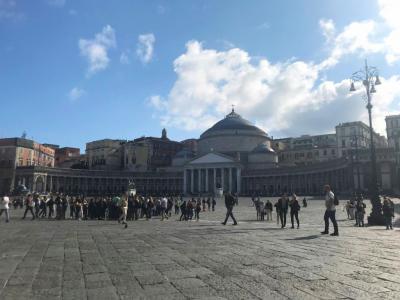
The Piazza Plebiscito is a square named after the plebiscite that resulted in the 1860 unification of Italy. It is the largest square in Naples.
The Piazza Plebiscito was laid under the orders of Joachim Murat, the brother in law of Napoleon who was installed as the King of Naples after the defeat of the Bourbon rulers. He ordered the demolition of an ancient abbey and a church to make way for the square. When the Bourbons returned to power after the defeat of Napoleon, Ferdinand I, the reinstated Bourbon ruler, completed the unfinished Piazza.
After World War II, the square was neglected and became a large parking lot until 1997, when it was restored to its former glory for the G7 summit held in Naples.
The Piazza Plebiscito has a semicircular shape. It has the Royal Palace at one end and the church of San Francesco di Paola on the other. The equestrian statues of the Bourbon kings, Ferdinand I and Charles III are placed in front of the church. Today, the square hosts New Years Eve and other festival celebrations and events like rock concerts. Large installations of contemporary art are also placed here periodically.
The Piazza Plebiscito was laid under the orders of Joachim Murat, the brother in law of Napoleon who was installed as the King of Naples after the defeat of the Bourbon rulers. He ordered the demolition of an ancient abbey and a church to make way for the square. When the Bourbons returned to power after the defeat of Napoleon, Ferdinand I, the reinstated Bourbon ruler, completed the unfinished Piazza.
After World War II, the square was neglected and became a large parking lot until 1997, when it was restored to its former glory for the G7 summit held in Naples.
The Piazza Plebiscito has a semicircular shape. It has the Royal Palace at one end and the church of San Francesco di Paola on the other. The equestrian statues of the Bourbon kings, Ferdinand I and Charles III are placed in front of the church. Today, the square hosts New Years Eve and other festival celebrations and events like rock concerts. Large installations of contemporary art are also placed here periodically.
2) San Francesco di Paola Church
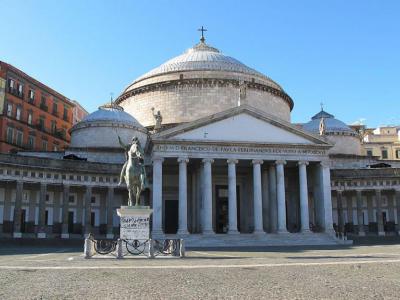
The church of San Francesco di Paola is a neoclassical style building flanking the west side of the Piazza del Plebiscito, the largest square in Naples. It lies directly opposite the royal palace.
The church of San Francesco di Paola was commissioned by Joachim Murat, King of Naples as a monument to Napoleon Bonaparte, his brother in law. It was expanded by Ferdinand I and converted into a church when he recovered the throne of Naples after the defeat of Napoleon. The building was designed by Leopoldo Lapera and was completed by the architect, Pietro Bianchi in 1846. The church was dedicated to Saint Francis of Paola who lived in an abbey on the site of the square in the 16th century.
The church of San Francesco di Paola has a 58 meter high dome resembling the pantheon of Rome. It is located above the altar and is supported by 34 thick columns that have a height of eleven meters each. The main portico is supported by a semicircular row of white Doric columns. There is another front portico with six Ionic columns supporting the roof. It is a basilica and an active place of worship today and a popular venue for weddings.
The church of San Francesco di Paola was commissioned by Joachim Murat, King of Naples as a monument to Napoleon Bonaparte, his brother in law. It was expanded by Ferdinand I and converted into a church when he recovered the throne of Naples after the defeat of Napoleon. The building was designed by Leopoldo Lapera and was completed by the architect, Pietro Bianchi in 1846. The church was dedicated to Saint Francis of Paola who lived in an abbey on the site of the square in the 16th century.
The church of San Francesco di Paola has a 58 meter high dome resembling the pantheon of Rome. It is located above the altar and is supported by 34 thick columns that have a height of eleven meters each. The main portico is supported by a semicircular row of white Doric columns. There is another front portico with six Ionic columns supporting the roof. It is a basilica and an active place of worship today and a popular venue for weddings.
3) Royal Palace (must see)
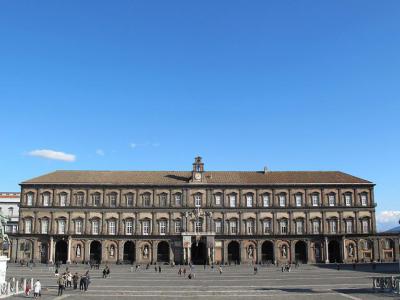
The Royal Palace is located opposite the Basilica of San Francesco di Paola on the Piazza Plebiscito. It was used as a residence by the Bourbon kings who ruled Naples between 1730 and 1860.
The palace is on the site of an earlier residence, which had housed the former viceroy Don Pedro de Toledo, Marquis of Villafranca. Construction on the present building was begun in the 17th century by the architect Domenico Fontana. It was intended to house the King Philip III of Spain on his visit to this part of his kingdom. However the visit never materialized. Instead the palace initially housed the Viceroy Fernando Ruiz de Castro, count of Lemos.
In 1734, with the arrival of Charles III of Spain to Naples, the palace became the royal residence of the Bourbons. It was greatly expanded and embellished during the reign of King Ferdinand II. The most recent refurbishment was after the damage caused to the structure during World War II.
Today the Royal Palace houses the National Library of Naples, several city offices including the tourist office and a small museum. A magnificent double staircase takes visitors up to the former royal apartments with their lavish furniture and furnishings. The Royal Chapel has a large 18th century Nativity scene that is regarded as the building’s art treasure.
The National Library of Naples has an impressive collection of papyrus scrolls found during excavations at Herculaneum and a 5th century Coptic Bible. The western facade of the palace that faces the Piazza Plebiscito has statues of many of the kings from different dynasties that ruled Naples from the 12th century.
The palace is on the site of an earlier residence, which had housed the former viceroy Don Pedro de Toledo, Marquis of Villafranca. Construction on the present building was begun in the 17th century by the architect Domenico Fontana. It was intended to house the King Philip III of Spain on his visit to this part of his kingdom. However the visit never materialized. Instead the palace initially housed the Viceroy Fernando Ruiz de Castro, count of Lemos.
In 1734, with the arrival of Charles III of Spain to Naples, the palace became the royal residence of the Bourbons. It was greatly expanded and embellished during the reign of King Ferdinand II. The most recent refurbishment was after the damage caused to the structure during World War II.
Today the Royal Palace houses the National Library of Naples, several city offices including the tourist office and a small museum. A magnificent double staircase takes visitors up to the former royal apartments with their lavish furniture and furnishings. The Royal Chapel has a large 18th century Nativity scene that is regarded as the building’s art treasure.
The National Library of Naples has an impressive collection of papyrus scrolls found during excavations at Herculaneum and a 5th century Coptic Bible. The western facade of the palace that faces the Piazza Plebiscito has statues of many of the kings from different dynasties that ruled Naples from the 12th century.
4) Via Chiaia (Chiaia street)
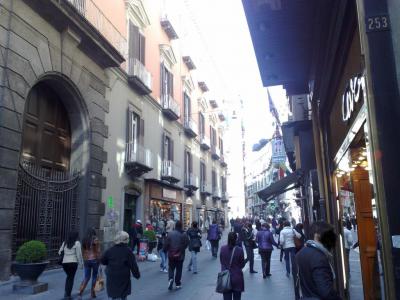
Chiala Street runs from Piazza Trieste e Trento to Piazza dei Martiri. The pedestrian street is home to various luxury shops, historical churches, and interesting buildings. Chiaia Street is wider and quieter than some Neapolitan streets. Known as an affluent area, visitors will find luxury shops here.
Visitors can stop at the Monument to the Martyrs in the Piazza dei Martiri. This 19th-century monument features four lions representing anti-Bourbon revolts in 1799, 1820, 1848, and 1860.
The Church of Sant'Orsola di Chiaia was restored in the 18th century and has treasured frescoes on the nave arches.
The 17th century Church of Santa Caterina di Chiaia features gorgeous frescoes by Antonio Sarelli. In addition, visitors can admire the 16th century Palazzo Cellamare, built for Giovan Francesco Carafa. The pink and white palace hosted Bourbon royal guests, including Casanova and Goethe.
The Teatro Sannazzaro was built in the 19th century. After serving for a time as a cinema, it was restored to use as a theater in 1971.
At the west end of Chiaia Street, visitors will find the Chiaia bridge used to connect Pizzofalcone and Mortella. This neoclassical bridge was built in 1636 and features marble decorations.
Visitors can stop at the Monument to the Martyrs in the Piazza dei Martiri. This 19th-century monument features four lions representing anti-Bourbon revolts in 1799, 1820, 1848, and 1860.
The Church of Sant'Orsola di Chiaia was restored in the 18th century and has treasured frescoes on the nave arches.
The 17th century Church of Santa Caterina di Chiaia features gorgeous frescoes by Antonio Sarelli. In addition, visitors can admire the 16th century Palazzo Cellamare, built for Giovan Francesco Carafa. The pink and white palace hosted Bourbon royal guests, including Casanova and Goethe.
The Teatro Sannazzaro was built in the 19th century. After serving for a time as a cinema, it was restored to use as a theater in 1971.
At the west end of Chiaia Street, visitors will find the Chiaia bridge used to connect Pizzofalcone and Mortella. This neoclassical bridge was built in 1636 and features marble decorations.
5) Galleria Borbonica (Bourbon Tunnel) (must see)
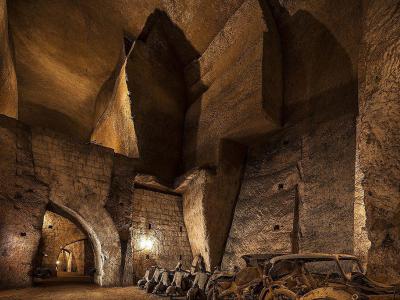
Visitors can find the Bourbon Tunnel 100 feet below the city of Naples. The tunnel was originally built in 1853 as an escape route for the Bourbon royal family.
King Ferdinand II of Bourbon commissioned the tunnel during a time of turmoil. Sicily and Naples were experiencing uprisings and riots, and the royal family wanted a way to escape the Royal Palace if needed.
The tunnel was connected to the 17th-century aqueduct system. Workers carved out the tunnel using hand tools such as picks, hammers, and wedges and used candlelight as illumination. Unfortunately, King Ferdinand II died before the tunnel was finished, and the underground space went unused until World War II.
During World War II, the space was used as an air-raid shelter and housed up to 10,000 Neapolitans.
After the war, the tunnel was used as a dump for wartime debris and impounded cars.
Today's visitors can see items left by wartime visitors, such as toys, hairbrushes, and beds. The impounded cars of the 1950s and 1960s are now classics and are an interesting addition to the underground tour.
King Ferdinand II of Bourbon commissioned the tunnel during a time of turmoil. Sicily and Naples were experiencing uprisings and riots, and the royal family wanted a way to escape the Royal Palace if needed.
The tunnel was connected to the 17th-century aqueduct system. Workers carved out the tunnel using hand tools such as picks, hammers, and wedges and used candlelight as illumination. Unfortunately, King Ferdinand II died before the tunnel was finished, and the underground space went unused until World War II.
During World War II, the space was used as an air-raid shelter and housed up to 10,000 Neapolitans.
After the war, the tunnel was used as a dump for wartime debris and impounded cars.
Today's visitors can see items left by wartime visitors, such as toys, hairbrushes, and beds. The impounded cars of the 1950s and 1960s are now classics and are an interesting addition to the underground tour.
6) Palazzo Serra di Cassano (Serra di Cassano Palace)
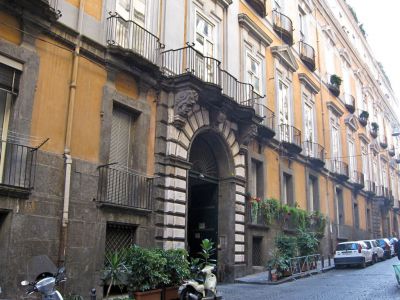
The Serra di Cassano Palace is a large mansion in Naples that belonged to the aristocratic Serra family. Today it houses the Italian Institute for Philosophical Studies.
The Serra di Cassano Palace was designed by architect, Ferdinando Sanfelice in the first half of the 18th century for the Duke of Cassano. The Dukes of Cassano were from the Serra family, one of the 54 aristocratic families of Genoa. Their wealth came from banking, insurance and law. Initially, the palace had two entrances, one of which faced the Royal Palace. This entrance was closed in 1799 by the Duke of Cassano, Luigi Francesco Serra, to protest the execution of his son, Gennaro Serra. Gennaro was involved in revolutionary activities against the Bourbons and was beheaded at the Piazza del Plebiscito, in full view of the palace.
The Serra di Cassano Palace has a simple double stairway made of grey volcanic stone flanked by a white marble balustrade. The interiors have many beautiful frescoes and most of the original furniture is preserved. The mansion once housed one of the finest libraries in Naples. The contents of the library were sold to Viscount Spencer in the 19th century and a portion is now in Althorp, the country home of the family of the late Diana, Princess of Wales.
The Serra di Cassano Palace was designed by architect, Ferdinando Sanfelice in the first half of the 18th century for the Duke of Cassano. The Dukes of Cassano were from the Serra family, one of the 54 aristocratic families of Genoa. Their wealth came from banking, insurance and law. Initially, the palace had two entrances, one of which faced the Royal Palace. This entrance was closed in 1799 by the Duke of Cassano, Luigi Francesco Serra, to protest the execution of his son, Gennaro Serra. Gennaro was involved in revolutionary activities against the Bourbons and was beheaded at the Piazza del Plebiscito, in full view of the palace.
The Serra di Cassano Palace has a simple double stairway made of grey volcanic stone flanked by a white marble balustrade. The interiors have many beautiful frescoes and most of the original furniture is preserved. The mansion once housed one of the finest libraries in Naples. The contents of the library were sold to Viscount Spencer in the 19th century and a portion is now in Althorp, the country home of the family of the late Diana, Princess of Wales.
7) Fountain of Giant
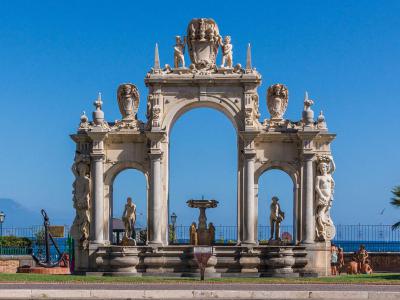
The Fountain of the Giant (Fontana del Gigante) is a historical fountain monument in Naples that dates back to the 17th century. Originally, it was constructed next to the Royal Palace of Naples and got its name from its proximity to a massive ancient statue. Over time, it underwent several relocations. First, it was moved to the location of the Palace of the Immacolatella and later, in 1905, it found its current picturesque spot on via Partenope, near the Castel dell'Ovo. Sometimes, it is also referred to as the Fontana dell'Immacolatella.
This fountain, commissioned by Antonio Álvarez de Toledo, the 5th Duke of Alba and Spanish viceroy of Naples, stood near the Royal Palace at the corner of Largo di Palazzo. It featured a colossal statue called "il Gigante" or Giant, seen in historical paintings, including one by Gaspar van Wittel at Palazzo Zevallos Stigliano. The Giant statue, created in 1670, was removed in 1807. The fountain was designed by Florentine artists Pietro Bernini and Michelangelo Naccherino.
The monumental fountain is characterized by its richly decorated Mannerist style. It consists of three rounded arches, each adorned with the heraldic symbols of the Viceroy of Naples and his king. In the central arch, there is a cup held up by two marine creatures, while the statues in the remaining two lateral arches depict river deities holding sea monsters. At the end of the last arches, you'll find two caryatid statues holding cornucopias.
This fountain, commissioned by Antonio Álvarez de Toledo, the 5th Duke of Alba and Spanish viceroy of Naples, stood near the Royal Palace at the corner of Largo di Palazzo. It featured a colossal statue called "il Gigante" or Giant, seen in historical paintings, including one by Gaspar van Wittel at Palazzo Zevallos Stigliano. The Giant statue, created in 1670, was removed in 1807. The fountain was designed by Florentine artists Pietro Bernini and Michelangelo Naccherino.
The monumental fountain is characterized by its richly decorated Mannerist style. It consists of three rounded arches, each adorned with the heraldic symbols of the Viceroy of Naples and his king. In the central arch, there is a cup held up by two marine creatures, while the statues in the remaining two lateral arches depict river deities holding sea monsters. At the end of the last arches, you'll find two caryatid statues holding cornucopias.
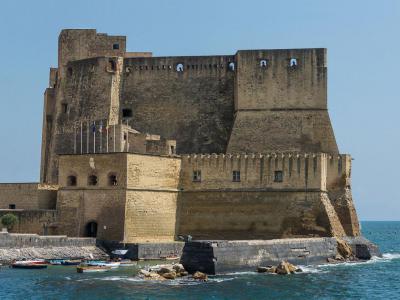
8) Castel dell'Ovo ( Egg Castle) (must see)
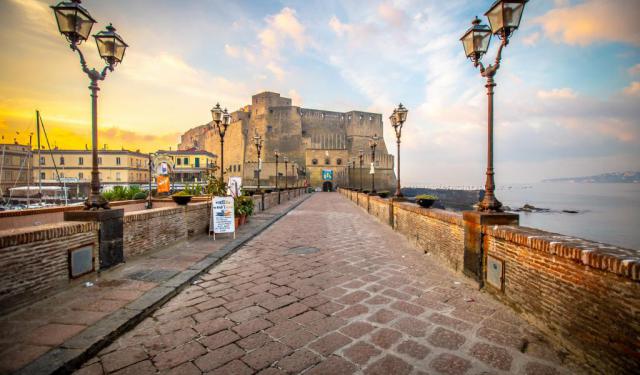
The Castel dell’Ovo or Egg Castle is a seaside castle in Naples, located on the former island of Megaride, now a peninsula, on the Gulf of Naples in Italy. The castle's name comes from a legend about the Roman poet Virgil, who had a reputation in the Middle Ages as a great sorcerer and predictor of the future. In the legend, Virgil put a magical egg into the foundations to support the fortifications. Had this egg been broken, the castle would have been destroyed and a series of disastrous events for Naples would have followed.
The Greeks from Cumae were the first inhabitants of the island and it was from the location of the fortress that they founded what later became the city of Naples. The present structure dates back to the 15th century and was built by the Aragonese rulers. It served both as a royal residence and the state treasury. A small fishing village grew around the Egg Castle in the 19th century and is well known today for its marina and seafood restaurants.
The castle's roof is beautifully paved with bricks, making an ideal platform for 360 views of the city, the Mediterranean, and Mount Vesuvius. The climb on foot is easy, via a wide, very gradually ascending thoroughfare. A few shops and one small art gallery occupy some castle space. There are myriad points for great scenic photos.
Tip:
Try to go towards the end of the day as the sun is setting, and be sure to bring a camera, binoculars, plus water! The castle is very close to the boat terminal and you can go back to Sorrento by boat if you stay there.
The Greeks from Cumae were the first inhabitants of the island and it was from the location of the fortress that they founded what later became the city of Naples. The present structure dates back to the 15th century and was built by the Aragonese rulers. It served both as a royal residence and the state treasury. A small fishing village grew around the Egg Castle in the 19th century and is well known today for its marina and seafood restaurants.
The castle's roof is beautifully paved with bricks, making an ideal platform for 360 views of the city, the Mediterranean, and Mount Vesuvius. The climb on foot is easy, via a wide, very gradually ascending thoroughfare. A few shops and one small art gallery occupy some castle space. There are myriad points for great scenic photos.
Tip:
Try to go towards the end of the day as the sun is setting, and be sure to bring a camera, binoculars, plus water! The castle is very close to the boat terminal and you can go back to Sorrento by boat if you stay there.
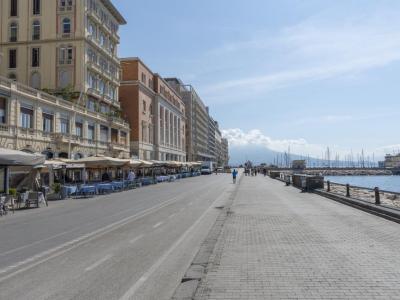
9) Napoli Lungomare (Naples Promenade) (must see)
When it's time to take a break from hectic Naples, consider taking yourself to Lungomare, a pedestrian seafront promenade, hugging the bay from Mergellina to Via Partenope to Via Caracciolo and offering exquisite panorama of the sea, Mount Vesuvius and Naples Villa Comunale Park. This oasis of green, blue and quiet amid a hyperactive metropolis comes complete with boat rentals, a number of free small beaches, and lots of white rocks to sprawl on and soak up the Naples sun. If you have an appetite for more, there're plenty of kiosks serving cold drinks and snacks, as well as restaurants and cafes offering al fresco seafood and traditional Neapolitan Pizza.
Via Caracciolo is a long and wide promenade in Naples, which, flanking the Park of the Villa Comunale and the Riviera di Chiaia, constitutes (with via Nazario Sauro, via Partenope and via Acton) part of the city's waterfront.
Its name recalls Admiral Francesco Caracciolo, hero of the Neapolitan Republic, hanged in 1799 by Nelson from the mast of his ship and thrown into the waters of the Gulf of Naples, whose corpse re-emerged and was collected on the coast of Santa Lucia.
Created on a landfill in 1869 - 1880, the great road is considered one of the most beautiful coastlines in the world, and runs up to Mergellina with panoramic views over the city and the hills of Vomero and Posillipo.
The stretch of road that goes from Piazza della Repubblica to the confluence of Viale Dohrn (commonly called "Rotunda Diaz"), has been a pedestrian area since May 2013.
Via Caracciolo is a long and wide promenade in Naples, which, flanking the Park of the Villa Comunale and the Riviera di Chiaia, constitutes (with via Nazario Sauro, via Partenope and via Acton) part of the city's waterfront.
Its name recalls Admiral Francesco Caracciolo, hero of the Neapolitan Republic, hanged in 1799 by Nelson from the mast of his ship and thrown into the waters of the Gulf of Naples, whose corpse re-emerged and was collected on the coast of Santa Lucia.
Created on a landfill in 1869 - 1880, the great road is considered one of the most beautiful coastlines in the world, and runs up to Mergellina with panoramic views over the city and the hills of Vomero and Posillipo.
The stretch of road that goes from Piazza della Repubblica to the confluence of Viale Dohrn (commonly called "Rotunda Diaz"), has been a pedestrian area since May 2013.
Walking Tours in Naples, Italy

Create Your Own Walk in Naples
Creating your own self-guided walk in Naples is easy and fun. Choose the city attractions that you want to see and a walk route map will be created just for you. You can even set your hotel as the start point of the walk.
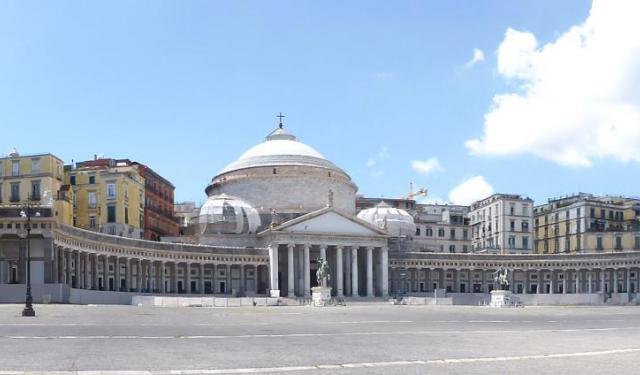
Historical Churches
Christianity in general and the Catholic faith in particular have always played an important role in the social and cultural life of Naples. Not everyone knows that the city boasts the highest number of churches in the world – almost 500 historic “houses of God” (1,000 in total) – accumulated over the course of 17(!) centuries. Hence the nickname – “the city of 500 domes”.
And... view more
Tour Duration: 2 Hour(s)
Travel Distance: 3.8 Km or 2.4 Miles
And... view more
Tour Duration: 2 Hour(s)
Travel Distance: 3.8 Km or 2.4 Miles
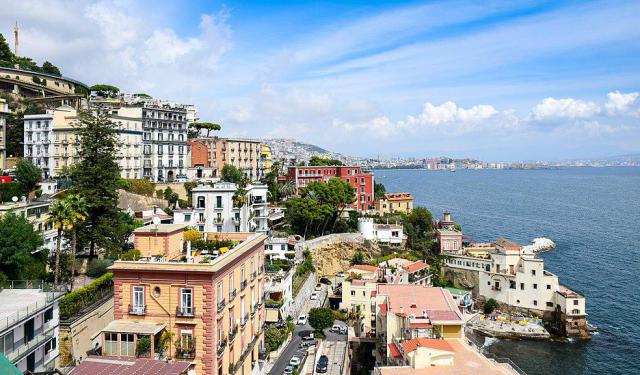
Naples Introduction Walking Tour
Located nearby the infamous volcano Vesuvius, Naples is a dream destination for tourists. Being Italy's third largest city, it is also one of the oldest continuously inhabited urban areas in the world – a true gem of ancient civilizations. Initially settled by Greeks as a colony, called Parthenope, in the 9th century BC, it was then re-founded as Neápolis (“New City” in Greek) three... view more
Tour Duration: 2 Hour(s)
Travel Distance: 3.6 Km or 2.2 Miles
Tour Duration: 2 Hour(s)
Travel Distance: 3.6 Km or 2.2 Miles
The Most Popular Cities
/ view all