


Audio Guide: Latin Quarter Walking Tour (Self Guided), Paris
The Latin Quarter of Paris, nestled on the Left Bank of the Seine, is a district steeped in academic history and artistic fervor, resonating with the echoes of scholarly discourse and bohemian lifestyle. This venerable area derives its name from the early use of Latin as the lingua franca in the universities, a tradition spearheaded by the Sorbonne University. This institution has shaped intellectual life by educating bright young minds since the 13th century.
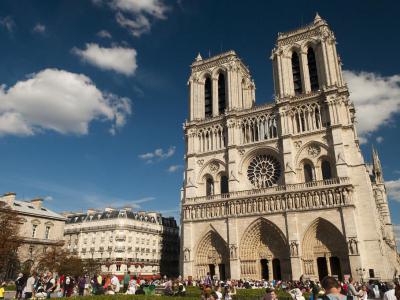
The Latin Quarter is still very lively, with a friendly village feel, graced with beautiful fountains and trees, as well as a clutch of outstanding historical sites. At the heart of it, the Notre-Dame Cathedral stands as an emblem of Gothic architecture, though it is currently under restoration from the 2019 fire. Nearby, just across the bridge, literary enthusiasts find solace in Shakespeare & Company, an iconic bookstore that has long been a sanctuary for writers. For those pursuing quaint Parisian charm, Fishing Cat Street offers a glimpse into medieval Paris as the narrowest street in the city.
Spiritual heritage in the quarter is rich, with the lovely historic Church of Saint Julian the Poor, one of the oldest in Paris, and the splendid Saint-Severin Church, known for its stunning stained glass and intricate stonework. Public squares like Saint Michael's Square with its vibrant fountain, and Contrescarpe Square, known for its lively atmosphere, provide welcoming spaces to watch people and get your bearings.
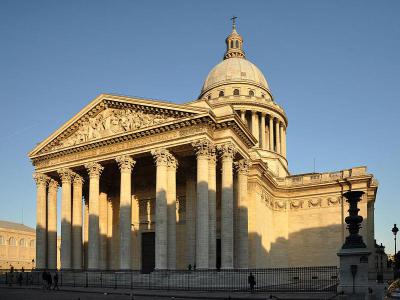
For higher cultural diversions in the quarter, visit the Cluny Museum (also known as the National Museum of the Middle Ages) where medieval art, including the famed tapestries of "The Lady and the Unicorn", are displayed. Just outside of the immediate neighborhood, up the hill, the majestic Panthéon serves as a mausoleum for distinguished French personalities. At the same time, the Church of Saint-Etienne-du-Mont houses the shrine of Saint Geneviève, the patron saint of Paris.
And of course, no lover of Hemingway’s books will find a walk through the Latin Quarter complete without a visit to Cardinal Lemoine Street. Here, the author’s apartment on the upper floor of the House of Verlaine still stands as a beacon for aspiring writers and fans alike.
For those drawn to the allure of history, art, and culture, the Latin Quarter offers an unparalleled journey into the heart of Parisian life. Engage with the past, revel in the present, and take inspiration from the enduring spirit of this historic area. Whether you are a scholar, a dreamer, or simply a curious traveler, the Latin Quarter of Paris awaits to share its stories with you!
The Latin Quarter is still very lively, with a friendly village feel, graced with beautiful fountains and trees, as well as a clutch of outstanding historical sites. At the heart of it, the Notre-Dame Cathedral stands as an emblem of Gothic architecture, though it is currently under restoration from the 2019 fire. Nearby, just across the bridge, literary enthusiasts find solace in Shakespeare & Company, an iconic bookstore that has long been a sanctuary for writers. For those pursuing quaint Parisian charm, Fishing Cat Street offers a glimpse into medieval Paris as the narrowest street in the city.
Spiritual heritage in the quarter is rich, with the lovely historic Church of Saint Julian the Poor, one of the oldest in Paris, and the splendid Saint-Severin Church, known for its stunning stained glass and intricate stonework. Public squares like Saint Michael's Square with its vibrant fountain, and Contrescarpe Square, known for its lively atmosphere, provide welcoming spaces to watch people and get your bearings.
For higher cultural diversions in the quarter, visit the Cluny Museum (also known as the National Museum of the Middle Ages) where medieval art, including the famed tapestries of "The Lady and the Unicorn", are displayed. Just outside of the immediate neighborhood, up the hill, the majestic Panthéon serves as a mausoleum for distinguished French personalities. At the same time, the Church of Saint-Etienne-du-Mont houses the shrine of Saint Geneviève, the patron saint of Paris.
And of course, no lover of Hemingway’s books will find a walk through the Latin Quarter complete without a visit to Cardinal Lemoine Street. Here, the author’s apartment on the upper floor of the House of Verlaine still stands as a beacon for aspiring writers and fans alike.
For those drawn to the allure of history, art, and culture, the Latin Quarter offers an unparalleled journey into the heart of Parisian life. Engage with the past, revel in the present, and take inspiration from the enduring spirit of this historic area. Whether you are a scholar, a dreamer, or simply a curious traveler, the Latin Quarter of Paris awaits to share its stories with you!
How it works: Download the app "GPSmyCity: Walks in 1K+ Cities" from Apple App Store or Google Play Store to your mobile phone or tablet. The app turns your mobile device into a personal tour guide and its built-in GPS navigation functions guide you from one tour stop to next. The app works offline, so no data plan is needed when traveling abroad.
Download The GPSmyCity App



Latin Quarter Walking Tour Map
Guide Name: Latin Quarter Walking Tour
Guide Location: France » Paris (See other walking tours in Paris)
Guide Type: Self-guided Walking Tour (Sightseeing)
Tour Duration: 2 Hour(s)
Travel Distance: 2.5 Km or 1.6 Miles
Guide Location: France » Paris (See other walking tours in Paris)
Guide Type: Self-guided Walking Tour (Sightseeing)
Tour Duration: 2 Hour(s)
Travel Distance: 2.5 Km or 1.6 Miles
Sights Featured in This Walk




Walking Tours in Paris, France

Create Your Own Walk in Paris
Creating your own self-guided walk in Paris is easy and fun. Choose the city attractions that you want to see and a walk route map will be created just for you. You can even set your hotel as the start point of the walk.
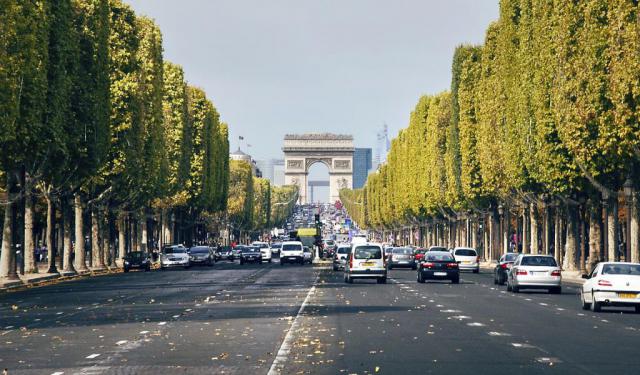
Champs-Elysees Walking Tour
On this self-guided walk you will witness the grandeur of the 8th arrondissement of the French capital – one of its busiest and chic neighborhoods, thanks to the presence of Avenue des Champs-Elysées, Arc de Triomphe, and Place de la Concorde.
Your best plan would be to start with the Triumphal Arch and walk up to its viewing area for great sights down the Champs-Élysées – a lovely... view more
Tour Duration: 2 Hour(s)
Travel Distance: 4.7 Km or 2.9 Miles
Your best plan would be to start with the Triumphal Arch and walk up to its viewing area for great sights down the Champs-Élysées – a lovely... view more
Tour Duration: 2 Hour(s)
Travel Distance: 4.7 Km or 2.9 Miles

Souvenirs Shopping Walk
Being one of the world's premier shopping destinations, the French capital attracts thousands of shopaholics every year. Even those who hate shopping, enjoy doing it here. Renowned for its luxury and sophistication, Paris is a great place for finding unique and elegant souvenirs to cherish. Here are some must-visit places for souvenir shopping in the City of Light.
Lafayette Galleries... view more
Tour Duration: 2 Hour(s)
Travel Distance: 5.0 Km or 3.1 Miles
Lafayette Galleries... view more
Tour Duration: 2 Hour(s)
Travel Distance: 5.0 Km or 3.1 Miles
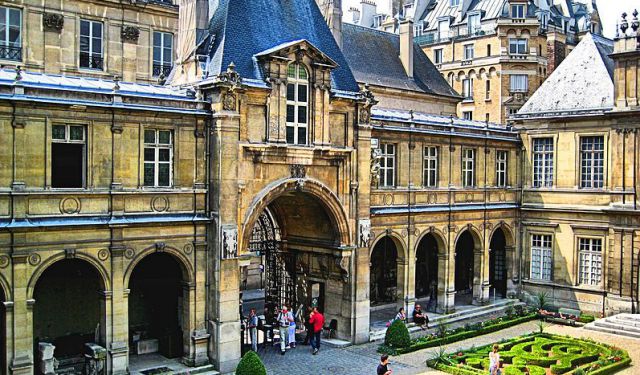
Le Marais Walking Tour
Once a bourgeois area and still a major center of the Paris Jewish community, the Le Marais district is one of the hippest neighborhoods in the city. Boasting a wealth of narrow medieval streets, unique boutiques, and quirky establishments, it represents an eclectic blend of historical sites and the bustling energy of today.
Start your acquaintance with the area at Paris's City Hall – a... view more
Tour Duration: 1 Hour(s)
Travel Distance: 2.4 Km or 1.5 Miles
Start your acquaintance with the area at Paris's City Hall – a... view more
Tour Duration: 1 Hour(s)
Travel Distance: 2.4 Km or 1.5 Miles
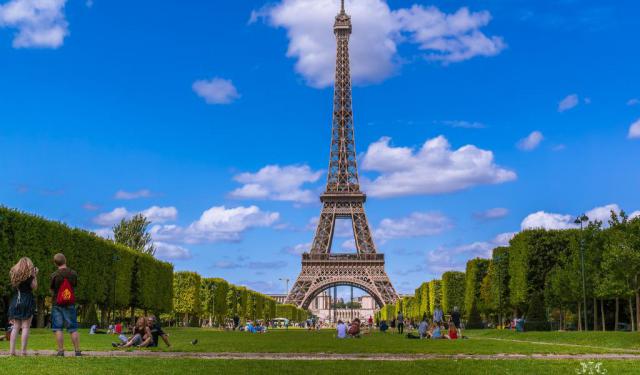
Paris Introduction Walking Tour I
Paris, the capital of France, has a history spanning over 2,000 years back to the Iron Age. The name “Paris” comes from the Parisii, a Gallic tribe that settled on the bank of the river Seine around the 3rd century BC. Having conquered the Galls, the Romans established on their land a garrison town known as Lutetia. By the end of the 5th century AD, it fell to the Franks and flourished under... view more
Tour Duration: 2 Hour(s)
Travel Distance: 5.1 Km or 3.2 Miles
Tour Duration: 2 Hour(s)
Travel Distance: 5.1 Km or 3.2 Miles
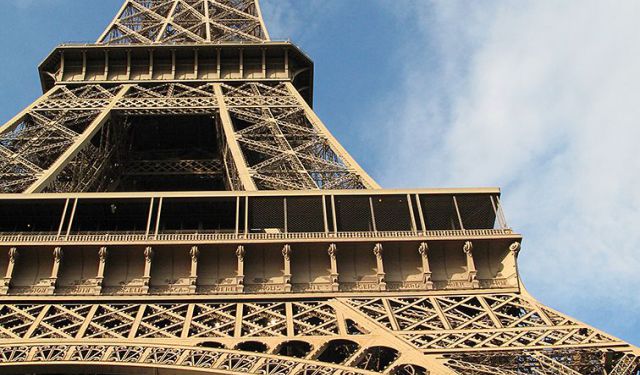
Eiffel Tower Walking Tour
The 7th administrative district of Paris, a beacon of affluence and prestige, hosts an elite residential community and numerous national institutions of France, government offices, and diplomatic missions. This historical neighborhood is famed for its quintessentially Parisian architecture, vibrant cafés, restaurants, and gourmet shops that attract food enthusiasts from around the world.
... view more
Tour Duration: 2 Hour(s)
Travel Distance: 4.6 Km or 2.9 Miles
... view more
Tour Duration: 2 Hour(s)
Travel Distance: 4.6 Km or 2.9 Miles
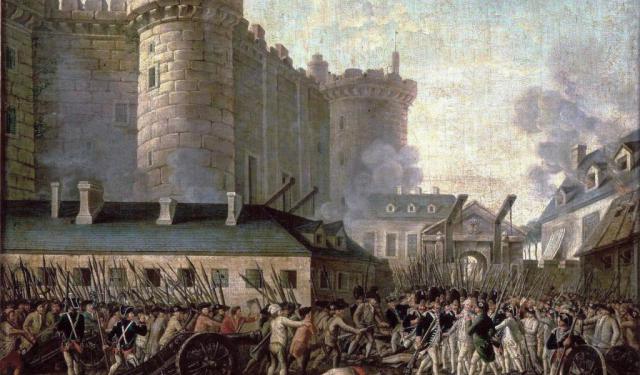
The French Revolution Landmarks Walking Tour
The French Revolution had a huge impact on France's history as it gave rise to a radical democratic republic and resulted in quite a bit of violence during the infamous "Reign of Terror". Even though many of Paris’ buildings were damaged in the course of the bloody conflicts, the sites they occupied – which you can find on this self-guided tour – are of a great historical... view more
Tour Duration: 3 Hour(s)
Travel Distance: 7.3 Km or 4.5 Miles
Tour Duration: 3 Hour(s)
Travel Distance: 7.3 Km or 4.5 Miles
Useful Travel Guides for Planning Your Trip
8 Must Try Cafes in Paris
Discovering the best coffee and cafes in Paris can be difficult. The city is filled to the brim with brasseries and cafes, but very few offer the Anglophone standard of a good cup of coffee. This is a guide to inform tourists and Parisians alike of the new and somewhat established cafes in Paris...
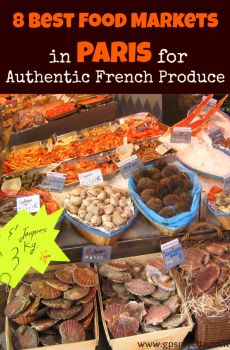
8 Best Food Markets in Paris for Authentic French Produce
The image of Parisians that you may have in your head as strolling through a colourful market with a basket on their arm, chatting to vendors and picking up fresh produce, is quite accurate. Most Parisians do visit local markets at least once a week to stock up on the freshest fruit, vegetables,...

Top 16 Vegetarian Restaurants in Paris
The French have great respect for the fresh, organic produce yet France isn’t famous for its vegetarian cooking. Hence it’s a good idea for vegetarian visitors to Paris to come prepared in advance. This guide shows you places around the city which serve vegetarian food, complete with the...

14 Places for Tasting Best French Desserts in Paris
If you have a sweet tooth and it wishes to "eat your way" through Paris, this guide will show you how! Featured here are some of the most famous and prominent dessert spots in the French capital, where you can grab something sweet to enjoy. With 20 listed recommendations, you should be...

Paris Souvenirs: 19 Distinctively French Products to Bring Home from Paris
You can hardly have enough money and luggage space to get all the takes your fancy in Paris. Luckily, with a little bit of tasteful advice and experience, you can save yourself some time and effort and pick up just about the right amount of things worth taking home. Listed here are some of the hints...
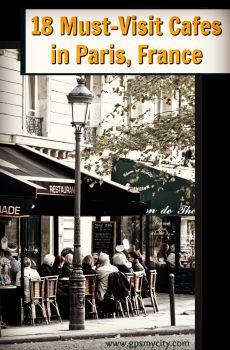
13 Must-Visit Cafes in Paris, France
Paris is home to thousands of cafes; there is a café on practically every street corner you turn, in every square you stumble across, on every boulevard you stroll along. The age-old Parisian tradition of sitting around at rickety tables and shooting back espressos is a fundamental part of everyday...
The Most Popular Cities
/ view all