

Cannes Old Town Walking Tour, Cannes

Cannes Old Town Walking Tour (Self Guided), Cannes

Cannes is often pictured as a place of film premieres and flashing cameras, with directors like Alfred Hitchcock once filming along its coast and actors gathering here each spring. But above the waterfront, in the Old Town known as Le Suquet, the atmosphere shifts. This hilltop quarter tells a quieter story, one that began centuries before cinema gave the city international fame.

The name “Cannes” is generally linked to the reeds that once covered the marshy shoreline. The word comes from terms meaning cane or reed, describing the natural environment that shaped the earliest settlement. What started as a modest harbor community gradually extended inland and uphill, forming the compact neighborhood that now makes up the Old Town.

In medieval times, the hill became a strategic point. Monks from the nearby islands played a role in establishing authority here, and defensive structures were built to protect the growing settlement from sea raids. Fishing and trade supported the local population for generations. Over time, as Cannes expanded in the 19th century into a fashionable resort, the lower town developed with grand hotels and wide avenues, while Le Suquet retained its tighter street pattern and historic character.

Today, the Old Town feels intimate and self-contained. Narrow lanes wind upward between pastel-colored houses, small restaurants, and everyday residences. The streets follow the natural slope of the hill, creating unexpected viewpoints and shaded corners. Unlike the open seafront, this quarter invites slower exploration, where details such as stone steps, shutters, and quiet squares define the experience.

Two landmarks anchor the district. The Museum of World Explorations occupies a former medieval castle complex and houses collections from across the globe, while its tower offers wide views over the bay. Just nearby stands Our Lady of Hope Church, built between the 16th and 17th centuries, positioned high enough to overlook the Old Port and coastline. Together, they highlight the hill’s historical and architectural importance.

Exploring Le Suquet provides a direct look at the foundations of Cannes. Its streets, landmarks, and harbor views reveal the earlier layers of the city, offering a clear contrast to the modern image found below.
How it works: Download the app "GPSmyCity: Walks in 1K+ Cities" from Apple App Store or Google Play Store to your mobile phone or tablet. The app turns your mobile device into a personal tour guide and its built-in GPS navigation functions guide you from one tour stop to next. The app works offline, so no data plan is needed when traveling abroad.

Download The GPSmyCity App

Cannes Old Town Walking Tour Map

Guide Name: Cannes Old Town Walking Tour
Guide Location: France » Cannes (See other walking tours in Cannes)
Guide Type: Self-guided Walking Tour (Sightseeing)
# of Attractions: 7
Tour Duration: 1 Hour(s)
Travel Distance: 1.0 Km or 0.6 Miles
Author: DanaOffice
Sight(s) Featured in This Guide:
  • Vieux Port (Old Port)
  • Cannes City Hall
  • Marche Forville (Forville Market)
  • Les Murs Peints (Painted Wall)
  • Notre Dame d'Esperance (Our Lady of Hope Church)
  • Musée des Explorations du Monde (Museum of World Explorations)
  • Tour du Masque (Mask Tower)
1
Vieux Port (Old Port)

1) Vieux Port (Old Port)

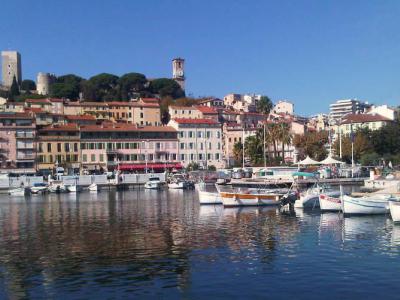
The Old Port lies just below the old quarter and reflects the maritime roots of Cannes. Long before luxury tourism defined the city, this harbor served as a working port for fishermen and traders. Ancient Italic settlers and later the Romans used it as a stopping point along Mediterranean routes, particularly between the mainland and the nearby Lérins Islands. For centuries, shipping was the main form of transportation, and the port functioned as the town’s economic center.

Today, the harbor presents a striking contrast. Traditional sailboats often anchor alongside large modern yachts, some of which belong to international visitors who arrive during major events. The atmosphere becomes especially lively during the Cannes Yachting Festival in September, when newly designed mega yachts, electric boats, and multihulls are displayed throughout the marina, turning the waterfront into an open-air exhibition.

One of the port’s most notable features is the renovated seawall now called the Joséphine Baker Jetty, named after Joséphine Baker. Baker was an American-born singer, dancer, and actress who became a major star in France and later served as a member of the French Resistance during World War II. The wide jetty offers open views across the Bay of Cannes and toward the Lérins Islands, and its accessible design makes it suitable for visitors of all ages. In summer, a large Ferris wheel nearby provides elevated views over the harbor.
2
Cannes City Hall

2) Cannes City Hall

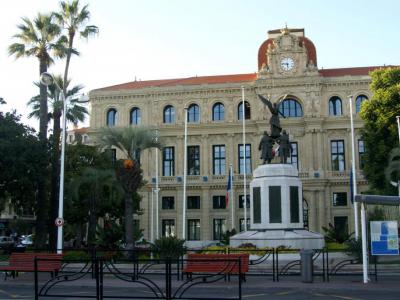
The Cannes City Hall, locally known as the Hôtel de Ville, stands beside the Old Port in the historic center. The city has had a communal building on this site since the early 16th century, but the present structure dates to 1876. It was built at a time when Cannes was expanding rapidly and needed a larger, more formal municipal headquarters. The project was entrusted to architect Louis Durand, who designed the building in a restrained neoclassical style.

Although it serves an administrative function, the building was clearly meant to make an impression. The façade is symmetrical and decorated with sculpted coats of arms and sixteen carved caryatids — stone female figures integrated into the structure. A central dome with two clocks rises above the roofline, making the City Hall easy to identify from the harbor side. Its location facing the port underlines the importance of maritime trade in the city’s development.

In front of the building, along the waterfront promenade, stands the Cannes War Memorial, completed in 1927 by sculptor Albert Cheuret. The monument commemorates local residents who died in the First World War. The square formed by the memorial and the City Hall has become one of the most photographed views in this part of town.
3
Marche Forville (Forville Market)

3) Marche Forville (Forville Market) (must see)

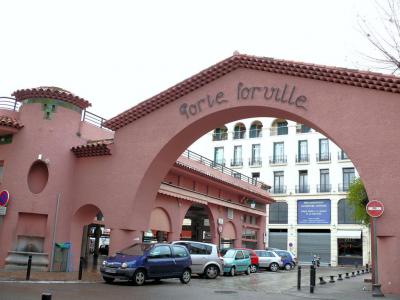
The Forville Market is one of the most authentic places to experience everyday life in Cannes. Located at the edge of the old quarter near the Old Port, this covered market has long been a favorite among residents. It operates only in the morning, opening at 7 a.m., and gradually becomes livelier as the day progresses. Unlike the polished boutiques along the waterfront, Forville reflects the practical rhythm of daily shopping.

The pedestrian-only surroundings make the market easy and comfortable to explore. Inside, seasonal produce dominates the stalls, highlighting the importance of freshness in regional cuisine. Strawberries appear in spring, tomatoes and melons in summer, and leeks and root vegetables in winter. Many vendors specialize in organic vegetables, reinforcing the local focus on quality ingredients. Fresh fish displayed on ice connects the market directly to the nearby sea, while flower stalls add color and fragrance to the covered hall.

Beyond raw ingredients, the market offers prepared foods that reflect both Provençal and broader Mediterranean influences. Cured meats such as tripe sausages, ham, and dried sausage are available alongside regional cheeses and local wines. Visitors looking for ready-to-eat dishes can find takeaway paella, while Italian-inspired options like ravioli Niçois and polenta show how culinary traditions overlap in this part of France. The variety allows shoppers to assemble anything from a simple picnic to a full dinner.

On Mondays, the food stalls give way to an all-day flea market, transforming the atmosphere entirely. Antiques, vintage objects, and second-hand items replace fresh produce, giving the space a different energy.
4
Les Murs Peints (Painted Wall)

4) Les Murs Peints (Painted Wall) (must see)

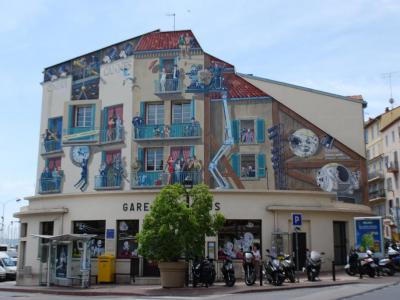
The Painted Walls of Cannes transform ordinary streets into a large-scale tribute to cinema. Since the city began hosting its international film festival in 1949, film culture has shaped its global image. In 2002, artists began creating monumental frescoes across building façades to reflect that connection. Today, around fifteen murals are scattered across different neighborhoods, each one reinforcing the city’s long-standing relationship with the world of film.

Rather than being grouped in a single area, the murals appear throughout residential streets, near schools, and along main roads. This layout encourages visitors to move through the city, discovering each artwork gradually. The paintings often use trompe-l’œil techniques, blending painted balconies, staircases, and curtains with real architectural features. From a distance, it can be difficult to tell where the building ends and the artwork begins, giving the scenes depth and movement.

Many of the murals portray well-known figures from cinema history. You might recognize Charlie Chaplin, whose silent comedies defined early twentieth-century film, or Alfred Hitchcock, known for shaping the suspense genre. Other walls feature actors such as Marilyn Monroe and James Dean, whose images remain instantly recognizable decades after their careers.

The most striking example is the large “Cinema Cannes” mural near City Hall and the central bus station. Covering an entire façade, it gathers together figures from across film history in one composition. Alongside Charlie Chaplin and Alfred Hitchcock, visitors can spot characters such as Mickey Mouse, Jessica Rabbit, Superman, Batman, R2-D2, and the fictional couple Jack Dawson and Rose DeWitt Bukater from Titanic. This combination of classic actors and beloved fictional figures reflects more than a century of cinematic storytelling. Its central location and scale make it a clear visual statement of how deeply cinema is woven into the city’s identity.
5
Notre Dame d'Esperance (Our Lady of Hope Church)

5) Notre Dame d'Esperance (Our Lady of Hope Church) (must see)

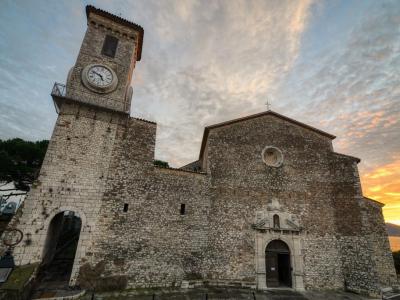
As you make your way up through the narrow streets of the old quarter, the climb gradually leads you to the Our Lady Of Hope Church, standing quietly at the top of Suquet Hill. Before you even step inside, pause and turn toward the view. From here, the Old Port curves below you, the coastline stretches outward, and the Lérins Islands sit calmly on the horizon. The church’s elevated position was not accidental — it anchors the historic district both physically and visually.

Now take a closer look at the building itself. Construction began in 1521 and continued for more than a century, which explains why the architecture reflects different influences. The main body follows a Provençal Gothic style, visible in its thick stone walls and tall, simple lines. There’s very little excess decoration; instead, the design feels solid and protective, well suited to a hilltop setting. Near the entrance, the Renaissance-style porch introduces more refined detailing, creating a subtle contrast with the heavier structure. Beside it rises the square bell tower, Romanesque in character, with five bells cast in 1921 that still mark time over the old quarter.

After stepping inside, begin to move slowly from chapel to chapel. In the Saint Peter Chapel, located on the right side of the church beneath the second arch from the entrance, the carved wooden altar immediately draws attention. Its layered design and fine craftsmanship reveal increasing detail the more closely you observe it. Above the high altar, a gilded 16th-century wooden statue of Our Lady of Hope draws attention upward, framed by a stained-glass window depicting the Annunciation.

In the baptismal chapel, a rare 14th-century Burgundy sculpture adds another historical layer, while a 15th-century statue of Saint Anne reflects the church’s long continuity. If you happen to visit during a service or summer concert, the Italian organ from 1857 fills the space with sound, giving the architecture a different dimension. Before leaving, step briefly into the small garden near the entrance — it offers a quiet transition back to the lively streets below.
6
Musée des Explorations du Monde (Museum of World Explorations)

6) Musée des Explorations du Monde (Museum of World Explorations) (must see)

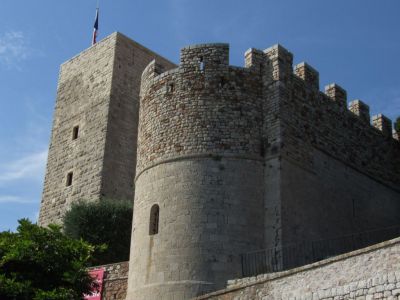
As you climb through the narrow lanes of Le Suquet, the old quarter, you’ll arrive at the Museum of World Explorations, housed within a medieval castle complex once used by the monks of the Lérins Islands. Construction of the castle began in the 11th century at the initiative of the monks, who had been established on Saint-Honorat Island since the 5th century. The thick stone walls and elevated position immediately tell you this was once a defensive and strategic site. In 2021, the former Castre Museum was renamed to reflect its broader focus on global cultures, but its historic setting remains an essential part of the experience.

The museum’s origins trace back to 1877, when Baron of Dutch origin Tinco Lycklama, donated his collection of antiquities and so-called “primitive” art to the city. By 1919, Cannes had acquired these old Suquet buildings to house the growing collection, creating a museum where the architecture itself feels like part of the exhibition.

Inside, the galleries guide you across continents. You’ll encounter artifacts from the Arctic, the Himalayas, Oceania, Africa, and the Americas. Pre-Columbian ceramics reveal how ancient American civilizations shaped clay into storytelling objects, while Mediterranean antiquities connect the local region to wider trade networks. In the 11th-century Saint Anne Chapel, pause to look closely at the collection of musical instruments. Instruments from Asia, Oceania, Africa, and the Americas are displayed in a sacred medieval space, showing how sound and craftsmanship vary across cultures yet share common purposes.

Before you leave, step into the inner courtyard and make sure to climb the 109 steps of the watchtower. From the top, the 360-degree view stretches over the Old Port, the bay, and the Lérins Islands, offering what is widely considered the highlight of the visit.
7
Tour du Masque (Mask Tower)

7) Tour du Masque (Mask Tower)

The Mask Tower is one of the few medieval structures still visible in the Old Town. Built around 1200 as part of the town’s defensive walls, it was originally a practical military structure. Its thick stone walls and narrow openings reflect that purpose. What makes it especially interesting today, however, is the story behind its name.

The tower is associated with the mystery of the “Man in the Iron Mask,” an unidentified state prisoner during the reign of Louis XIV from 1643 to 1715. The prisoner was arrested on 19 July 1669 under the name “Eustache Dauger” and spent 34 years in custody, moved between several prisons under the supervision of Bénigne Dauvergne de Saint-Mars. He eventually died in the Bastille on 19 November 1703. His burial record listed the name “Marchioly,” which has led some historians to suggest he may have been the Italian diplomat Ercole Antonio Mattioli.

Although the masked prisoner was most famously held on nearby Sainte-Marguerite Island and later in Paris, local tradition connects him to Cannes, and over time the legend became attached to this tower. His true identity has never been definitively proven, and the secrecy surrounding his imprisonment created one of France’s longest-running historical mysteries.

Writers such as Alexandre Dumas later turned the mysterious prisoner into a literary figure, ensuring that the story lived on far beyond historical documents. Today, the Mask Tower represents not just medieval fortifications, but one of France’s most debated historical enigmas.

Walking Tours in Cannes, France

Create Your Own Walk in Cannes

Create Your Own Walk in Cannes

Creating your own self-guided walk in Cannes is easy and fun. Choose the city attractions that you want to see and a walk route map will be created just for you. You can even set your hotel as the start point of the walk.
Cannes Introduction Walking Tour

Cannes Introduction Walking Tour

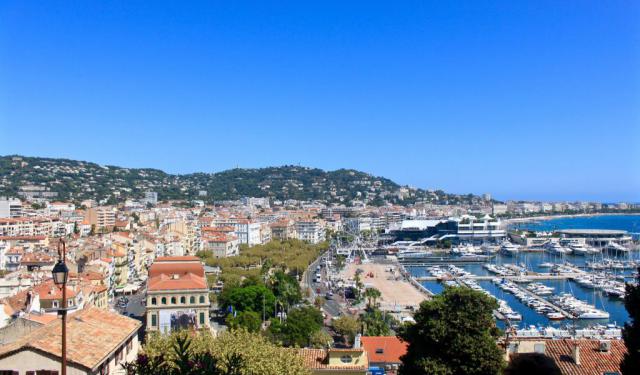
You may know this Mediterranean coastal town from its famous film festival, where actors, directors, and filmmakers from around the world gather each year. The red carpet and flashing cameras have made it a symbol of cinema glamour, but once you start walking through its streets, it feels much more approachable — a place where local life and international fame exist side by side. That balance...  view more

Tour Duration: 2 Hour(s)
Travel Distance: 3.1 Km or 1.9 Miles