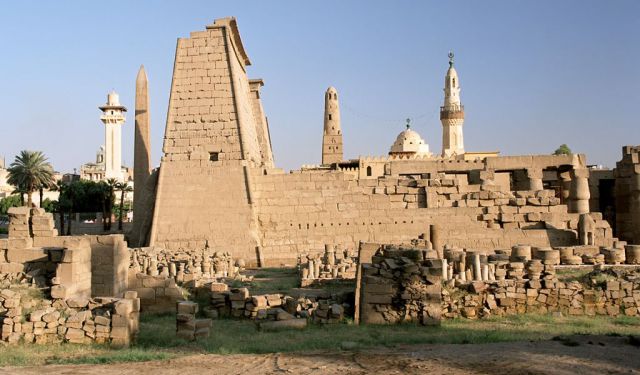
Luxor East Bank Walking Tour (Self Guided), Luxor
The East Bank area is located in the heart of Luxor city. It has plenty of top sights including wonderful working temples and museums, such as the Luxor Temple, the Karnak Temple Complex, the Luxor Museum and the Mummification Museum. Take our tour to experience the beauty of Luxor’s East Bank district.
How it works: Download the app "GPSmyCity: Walks in 1K+ Cities" from Apple App Store or Google Play Store to your mobile phone or tablet. The app turns your mobile device into a personal tour guide and its built-in GPS navigation functions guide you from one tour stop to next. The app works offline, so no data plan is needed when traveling abroad.
Download The GPSmyCity App



Luxor East Bank Walking Tour Map
Guide Name: Luxor East Bank Walking Tour
Guide Location: Egypt » Luxor (See other walking tours in Luxor)
Guide Type: Self-guided Walking Tour (Sightseeing)
# of Attractions: 7
Tour Duration: 2 Hour(s)
Travel Distance: 4.7 Km or 2.9 Miles
Author: ashley
Sight(s) Featured in This Guide:
Guide Location: Egypt » Luxor (See other walking tours in Luxor)
Guide Type: Self-guided Walking Tour (Sightseeing)
# of Attractions: 7
Tour Duration: 2 Hour(s)
Travel Distance: 4.7 Km or 2.9 Miles
Author: ashley
Sight(s) Featured in This Guide:
- Karnak Temples
- Karnak Open Air Museum
- Temple of Mut
- El Souk
- Abu El-Hagag Mosque
- Luxor Temple
- Luxor Museum

1) Karnak Temples (must see)
The Karnak Temples is a complex at Luxor and second only to the Great Pyramids in terms of popularity. The immense site was built mainly in dedicated to the god Amun Re, along with his wife Mut and son Khonsa, from around the 1600 B.C. Constructions and additions to the site continued for 1300 years with more than 30 pharaohs providing embellishments in order to appease the gods. The site, in its entirety, measures around one mile by two miles and within that space lie around 25 different temples. Along with the temples there are chapels, shrines, obelisks, sanctuaries friezes and colossal statues to marvel at.
One of the main highlights of the complex is the Hypostyle Hall, which is considered one of the ancient Egyptian’s chief architectural and engineering feats. The hall features 134 immense pillars rising to more than 75 feet. The Temple of Amun is truly spectacular; its size alone dwarfs all of Europe’s finest basilicas and entrance through the Avenue of Sphinxes makes for a dramatic experience. All Egyptian temples at the time had a lake and that of the Karnak Temples is the biggest – in ancient times golden barges were rowed across the lake during religious ceremonies devoted to Amun Re.
One of the main highlights of the complex is the Hypostyle Hall, which is considered one of the ancient Egyptian’s chief architectural and engineering feats. The hall features 134 immense pillars rising to more than 75 feet. The Temple of Amun is truly spectacular; its size alone dwarfs all of Europe’s finest basilicas and entrance through the Avenue of Sphinxes makes for a dramatic experience. All Egyptian temples at the time had a lake and that of the Karnak Temples is the biggest – in ancient times golden barges were rowed across the lake during religious ceremonies devoted to Amun Re.

2) Karnak Open Air Museum (must see)
The Karnak Open Air Museum is a fascinating site in Luxor, which contains many reconstructed ancient Egyptian buildings and temples. In ancient times, a new pharaoh would often dismantle previous constructions and then use the stone blocks for hard core to sure up new buildings or they were left as rubble infill. During later excavations these stone slabs were found forming parts of pylons, underneath paving or simply lying around and were pieced back together. The fruits of these archaeological jigsaw puzzles can be seen at this museum. There are always new projects happening at the museum as historians try to reconstruct newly found items and this makes it a dynamic and intriguing site.
Completed reconstructions here include the Chapel of Senusert I, which has remarkable hieroglyphics both inside and out. These hieroglyphics are early versions and are so precisely chiseled, that they may very well be the best example in Karnak even though they are roughly 1000 years older than many other panels. The alabaster chapel of Amenhotep I at the site is also truly remarkable, as is the red granite temple of Hatshepsut. A Tuthmosis IV temple façade is one of the newest additions to the Karnak Open Air Museum and you may still be able to see workers piecing the past back together.
Completed reconstructions here include the Chapel of Senusert I, which has remarkable hieroglyphics both inside and out. These hieroglyphics are early versions and are so precisely chiseled, that they may very well be the best example in Karnak even though they are roughly 1000 years older than many other panels. The alabaster chapel of Amenhotep I at the site is also truly remarkable, as is the red granite temple of Hatshepsut. A Tuthmosis IV temple façade is one of the newest additions to the Karnak Open Air Museum and you may still be able to see workers piecing the past back together.

3) Temple of Mut
The Temple of Mut at Luxor is dedicated to the wife of Amun-Re, who was considered the protective mother and defender of Egypt. If angered, she could turn on humankind and so, the construction of the grand temple at Thebes and many of the ceremonies carried out here during pharaonic times were aimed at appeasing her. The temple here was part of the triad of sacred religious sites at Thebes in the New Kingdom period. Built during the reign of Amenhotep III, it was later added to during the Ptolemaic period. The entrance of the site is linked to the Luxor Temple by the Avenue of Sphinxes.
The temple fell into disrepair for many centuries, but is currently undergoing restoration work to revitalize the many significant antiquities that can be seen there. Highlights of a visit include statues of the lion-headed goddess Sekhmet; a small temple devoted to Khonsu, the son of Amun-Re and Mut; friezes on the north wall showing birth scenes and ritual circumcisions and a small temple for Ramses III with ruined colossal statues of the king and his consort. Check with guards at the site for opening times and guided tours throughout the temple.
The temple fell into disrepair for many centuries, but is currently undergoing restoration work to revitalize the many significant antiquities that can be seen there. Highlights of a visit include statues of the lion-headed goddess Sekhmet; a small temple devoted to Khonsu, the son of Amun-Re and Mut; friezes on the north wall showing birth scenes and ritual circumcisions and a small temple for Ramses III with ruined colossal statues of the king and his consort. Check with guards at the site for opening times and guided tours throughout the temple.
4) El Souk
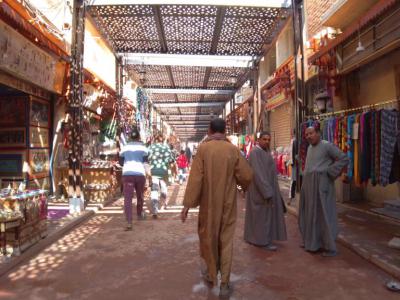
The Souks or the local markets are among the most interesting attractions of Egypt - it is no exception in Luxor. El Souk is a local market near the Luxor Temple. There are lots of merchandise on display: spices, scarves, leather goods, and much more. Locals also come here to shop for food and suppliers so you will also see stands selling fruits, vegetables, and meat.
Be prepared for every shop-owner to trying to entice you into their shop. It’s all part of the experience and enjoy it for what it is. If you are interested in buying something in the market, do not forget to bargain. Haggling can be a bit of fun for both sides.
Be prepared for every shop-owner to trying to entice you into their shop. It’s all part of the experience and enjoy it for what it is. If you are interested in buying something in the market, do not forget to bargain. Haggling can be a bit of fun for both sides.
Image Courtesy of Elonas Stravinskas.
5) Abu El-Hagag Mosque
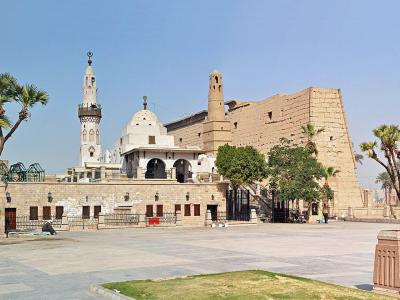
The Mosque of Abu Haggag is located in the Egyptian city of Luxor. Specifically, it stands atop the ruins of Luxor Temple, an Ancient Egyptian centre of worship dating back to the reign of Pharaoh Amenhotep III in the 14th century BC. Although its positioning atop the pharaonic columns seems both precarious and invasive, the Mosque of Abu Haggag (or Abu l-Haggag) must be seen as more than just a coincidental intruder. First, when the mosque was built, large parts of the temple were covered with earth. Secondly, it is not uncommon for a religious kinship between ancient Egyptian cult places and the local version of popular Islam to be recreated. When the pharaonic temple was unearthed in the late 19th century, locals fiercely resisted any attempt to tear down the mosque. For them, the geographical position was important, and a new mosque also dedicated to Abu Haggag has never become very popular.
Abu Haggag was a Sufi shaykh, born in Baghdad, but he spent the latter half of his 90 years in Luxor. He died here in 1243, but it is believed that the minaret is older than he was, dating back to the 11th century. The mosque itself has been rebuilt many times, and completely in the 19th century. Abu Haggag is Luxor's main saint, and his mosque is the core of local religious activities. Locals believe that his mosque is a particularly important religious spot, full of baraka, divine blessing.
When Shaikh Abu El Haggag came to Luxor, Islam at the time was not the major religion in Egypt; Coptic Christianity was the leading religion at the time. The city was a colony owned by a religious Coptic lady. She used to be called The Princess. Her soldiers saw Sheikh Abu El Haggag there and was immediately recognized as a foreigner, therefore he was taken to the Princess for questioning as they feared that he is a spy from a different tribe/region. He complained to her about the treatment he received and expressed that he wishes to become a local citizen. The lady was generous and offered him to stay as long as he wishes. He asked her to give him a land as big as a camel’s skin to sleep on it, she thought that would be maximum of 2 square meters, so she agreed as she was a generous Lady, he asked her to sign a contract confirming the deal which she agreed to.
At night, he took a camel’s skin and he cut it into a very thin line at the front of some local witnesses, something similar to a very thin washing line, he used it to border a big part of Luxor Temple. In the morning, soldiers saw this line and reported it to the Princess, and then she realised that he owns this bordered part of the temple as per their written agreement. As much as she was feeling deceived by his plan, they met few times afterwards, she was impressed by his knowledge and then she converted to Islam.
At the time, there was a church in the place of the mosque. Shaikh Abu El Haggag agreed with the princess to convert the building to a mosque, which stands till today. In the upper ground foundation the old part of the church, which is clear that it is not a part of the temple, can still be seen.
Lots of people claimed that he became a monk and was given a power to practice miracles, such as walking on water, healing rare diseases, and even people see him in the pilgrimage in Saudi Arabia while others sees him at the same time in Luxor. When he died he was buried in the mosque.
Abu Haggag was a Sufi shaykh, born in Baghdad, but he spent the latter half of his 90 years in Luxor. He died here in 1243, but it is believed that the minaret is older than he was, dating back to the 11th century. The mosque itself has been rebuilt many times, and completely in the 19th century. Abu Haggag is Luxor's main saint, and his mosque is the core of local religious activities. Locals believe that his mosque is a particularly important religious spot, full of baraka, divine blessing.
When Shaikh Abu El Haggag came to Luxor, Islam at the time was not the major religion in Egypt; Coptic Christianity was the leading religion at the time. The city was a colony owned by a religious Coptic lady. She used to be called The Princess. Her soldiers saw Sheikh Abu El Haggag there and was immediately recognized as a foreigner, therefore he was taken to the Princess for questioning as they feared that he is a spy from a different tribe/region. He complained to her about the treatment he received and expressed that he wishes to become a local citizen. The lady was generous and offered him to stay as long as he wishes. He asked her to give him a land as big as a camel’s skin to sleep on it, she thought that would be maximum of 2 square meters, so she agreed as she was a generous Lady, he asked her to sign a contract confirming the deal which she agreed to.
At night, he took a camel’s skin and he cut it into a very thin line at the front of some local witnesses, something similar to a very thin washing line, he used it to border a big part of Luxor Temple. In the morning, soldiers saw this line and reported it to the Princess, and then she realised that he owns this bordered part of the temple as per their written agreement. As much as she was feeling deceived by his plan, they met few times afterwards, she was impressed by his knowledge and then she converted to Islam.
At the time, there was a church in the place of the mosque. Shaikh Abu El Haggag agreed with the princess to convert the building to a mosque, which stands till today. In the upper ground foundation the old part of the church, which is clear that it is not a part of the temple, can still be seen.
Lots of people claimed that he became a monk and was given a power to practice miracles, such as walking on water, healing rare diseases, and even people see him in the pilgrimage in Saudi Arabia while others sees him at the same time in Luxor. When he died he was buried in the mosque.
Sight description based on Wikipedia.
6) Luxor Temple (must see)
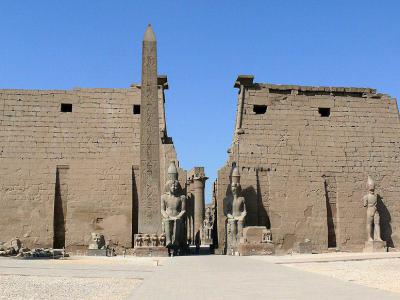
Luxor Temple, on the banks of the Nile River, is one of the many impressive ancient Egyptian constructions that can be seen in the area that was once known as Thebes, the ancient capital of Egypt. Pharaoh Amenhotep III built the temple during his reign in 1390-1353 B.C and it was dedicated to the Egyptian god Amun-Re and his wife Mut. Tutankhamen further decorated the temple and Ramses II later added the front aspect to the temple and although there were once two grand obelisks standing there, one of them was later taken to La Place de la Concorde in Paris. Alexander the Great rebuilt the sanctuary and chapel at the rear of the temple. To the right of the open court is a chapel that was built by Tuthmosis III and Queen Hatshepsut.
The Luxor Temple was a sacred site for the Egyptians of the New Kingdom and it featured heavily in religious festivals of the time, particularly the Opet Festival. During the Roman domination, the temple was converted into a place of worship for the Roman emperor cult. By the time of the Arab domination, the temple had fallen into disrepair and was buried under centuries of rubble and sand. There is much to see at the site including the Avenue of Sphinxes; two colossal statues of the seated Ramses II; the 25 meter granite obelisk and the Processional Colonnade featuring friezes depicting the Opet Festival.
The Luxor Temple was a sacred site for the Egyptians of the New Kingdom and it featured heavily in religious festivals of the time, particularly the Opet Festival. During the Roman domination, the temple was converted into a place of worship for the Roman emperor cult. By the time of the Arab domination, the temple had fallen into disrepair and was buried under centuries of rubble and sand. There is much to see at the site including the Avenue of Sphinxes; two colossal statues of the seated Ramses II; the 25 meter granite obelisk and the Processional Colonnade featuring friezes depicting the Opet Festival.

7) Luxor Museum (must see)
The Luxor Museum is small when compared to the scale of the Cairo Museum, but houses some highly significant pieces. The selection of artifacts on display, dating from the predynastic period until the arrival of Islam, makes visiting a must during any trip to Luxor. Multilingual information and well put together displays make finding your way through the various artifacts pleasurable and entertainingly educational. Some of the items that are on show include goods taken from the tomb of Tutankhamen; 26 well preserved stone statues from the period of the New Kingdom, that were found buried in a cache at the Luxor Temple, and mummies of the pharaohs Ahmose I and Ramses I. One of the most striking pieces from the Tutankhamen collection is a large red granite head of Amenhotep III, the cow goddess.
On the second floor of the museum is an impressive installation of 283 painted stone panels that were taken from the Amenhotep IV temple at Karnak. There are also several highly decorated pharaoh sarcophagi, jewelry, pottery and statues from pharaonic times.
On the second floor of the museum is an impressive installation of 283 painted stone panels that were taken from the Amenhotep IV temple at Karnak. There are also several highly decorated pharaoh sarcophagi, jewelry, pottery and statues from pharaonic times.
Walking Tours in Luxor, Egypt

Create Your Own Walk in Luxor
Creating your own self-guided walk in Luxor is easy and fun. Choose the city attractions that you want to see and a walk route map will be created just for you. You can even set your hotel as the start point of the walk.
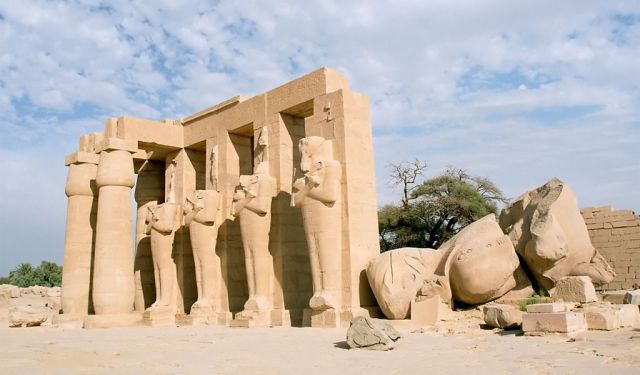
Luxor Archaeology Tour Part 1
The Theban necropolis area - located in Upper Egypt, across the River Nile from the modern city of Luxor - is considered to be one of the most significant archaeological sites in the world. You will be amazed by the many splendid temples, tombs and other historic attractions in this area, which is now known as Luxor's West Bank. The ruins of the Workers Village, the Colossi of Memnon, and... view more
Tour Duration: 3 Hour(s)
Travel Distance: 6.5 Km or 4 Miles
Tour Duration: 3 Hour(s)
Travel Distance: 6.5 Km or 4 Miles
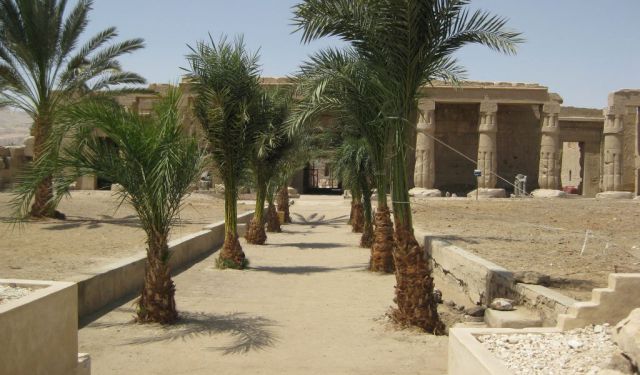
Luxor Archaeology Tour Part 2
The West Bank area of Luxor - located across the River Nile from the modern city itself - is a true archaeological paradise full of must-see sights for any visitor. There are a number of ancient Egyptian pharaoh tombs, necropolises and temples here, dating from the time of the ancient city of Thebes. Take our walking tour to see all the best sights in the area.
Tour Duration: 2 Hour(s)
Travel Distance: 3.9 Km or 2.4 Miles
Tour Duration: 2 Hour(s)
Travel Distance: 3.9 Km or 2.4 Miles
The Most Popular Cities
/ view all