


Audio Guide: Melbourne Introduction Walking Tour (Self Guided), Melbourne
Melbourne likes to present itself as a city of cool cafés and clever ideas, but its story reaches far deeper than flat whites and laneways. Long before colonial maps appeared, the lands around Port Phillip Bay belonged to the indigenous Kulin Nation, including the Wurundjeri people, who shaped the region with sophisticated social systems, spiritual connections to country, and land-care practices refined over tens of thousands of years. In other words, Melbourne had strong foundations long before it had a name...
Jump ahead to 1835, when European settlers, sailing from Tasmania, decided to try their luck-despite official instructions not to. Entrepreneur John Batman attempted a land deal with local Aboriginal groups, a move quickly overturned by the British colonial government but influential enough to spark permanent settlement along the Yarra River. Soon after, the surveyor Robert Hoddle drew up the city grid that still structures Melbourne today, and by 1837, the settlement had been named after the ruling British Prime Minister William Lamb, better known as Lord Melbourne.
Then came the 1850s gold rush, when the world suddenly showed up with shovels, ambition, and very mixed luck. The influx of migrants from Europe, China, and the Americas turned Melbourne into one of the wealthiest cities in the British Empire, inspiring grand boulevards, ornate public buildings, and institutions like the State Library and the University of Melbourne.
Following Federation in 1901, Melbourne briefly acted as Australia’s capital, and throughout the 20th century, manufacturing growth and post-war migration from Greece, Italy, and later Asia added new layers to its cultural landscape-layers still visible in its neighbourhoods, food, and arts scene.
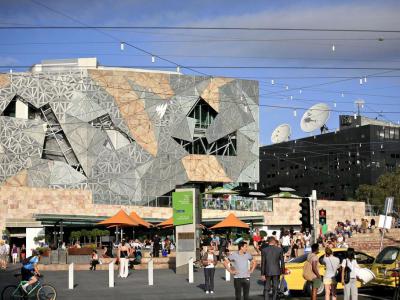
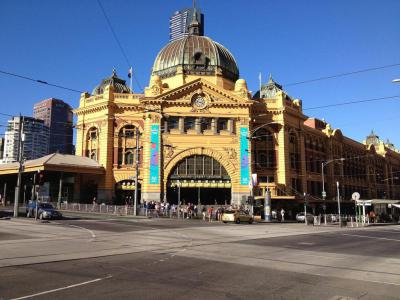
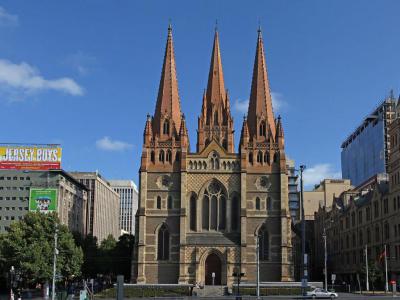
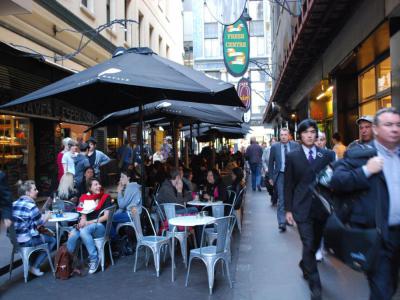
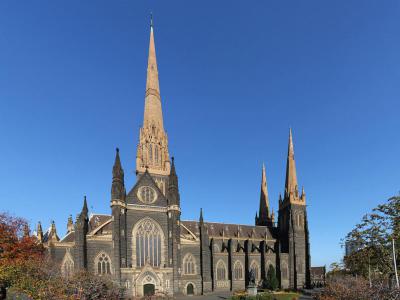
Visitors feel this blend of eras immediately. Federation Square delivers bold contemporary architecture, directly across from the classic yellow façade of Flinders Street Station. St. Paul’s Cathedral adds Gothic calm to the mix, while Degraves Street brings the coffee-and-laneway energy Melbourne is famous for. The Block Arcade and Collins Street preserve late-19th-century elegance, and Little Bourke Street leads into Chinatown, one of the oldest of its kind outside Asia.
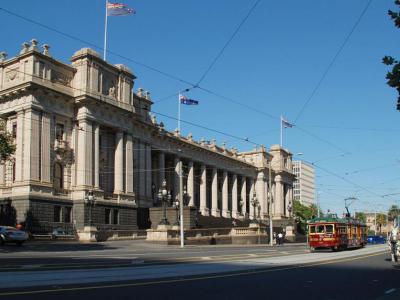
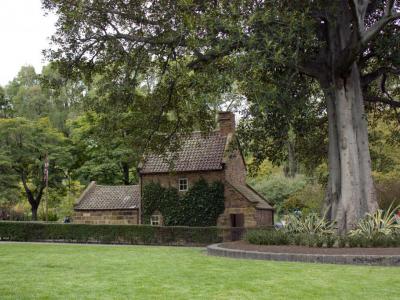
Head east and the tone shifts again: Parliament House, St. Patrick’s Cathedral, and the green tranquillity of Fitzroy Gardens-with Captain Cook’s Cottage tucked inside-show the city’s political and colonial layers.
Together, these places reveal a city that never settles on just one identity. Melbourne thrives in the tension between heritage and innovation, inviting you to wander through its past and present at the same time...
Jump ahead to 1835, when European settlers, sailing from Tasmania, decided to try their luck-despite official instructions not to. Entrepreneur John Batman attempted a land deal with local Aboriginal groups, a move quickly overturned by the British colonial government but influential enough to spark permanent settlement along the Yarra River. Soon after, the surveyor Robert Hoddle drew up the city grid that still structures Melbourne today, and by 1837, the settlement had been named after the ruling British Prime Minister William Lamb, better known as Lord Melbourne.
Then came the 1850s gold rush, when the world suddenly showed up with shovels, ambition, and very mixed luck. The influx of migrants from Europe, China, and the Americas turned Melbourne into one of the wealthiest cities in the British Empire, inspiring grand boulevards, ornate public buildings, and institutions like the State Library and the University of Melbourne.
Following Federation in 1901, Melbourne briefly acted as Australia’s capital, and throughout the 20th century, manufacturing growth and post-war migration from Greece, Italy, and later Asia added new layers to its cultural landscape-layers still visible in its neighbourhoods, food, and arts scene.
Visitors feel this blend of eras immediately. Federation Square delivers bold contemporary architecture, directly across from the classic yellow façade of Flinders Street Station. St. Paul’s Cathedral adds Gothic calm to the mix, while Degraves Street brings the coffee-and-laneway energy Melbourne is famous for. The Block Arcade and Collins Street preserve late-19th-century elegance, and Little Bourke Street leads into Chinatown, one of the oldest of its kind outside Asia.
Head east and the tone shifts again: Parliament House, St. Patrick’s Cathedral, and the green tranquillity of Fitzroy Gardens-with Captain Cook’s Cottage tucked inside-show the city’s political and colonial layers.
Together, these places reveal a city that never settles on just one identity. Melbourne thrives in the tension between heritage and innovation, inviting you to wander through its past and present at the same time...
How it works: Download the app "GPSmyCity: Walks in 1K+ Cities" from Apple App Store or Google Play Store to your mobile phone or tablet. The app turns your mobile device into a personal tour guide. For US$14.99 per year (with a 3-day free trial), you get access to walking tours in 630+ cities worldwide for an entire year. In comparison, a guided tour often costs dozens of dollars per person for a single tour. The app works offline, so no data plan is needed when traveling abroad.
Download The GPSmyCity App



Melbourne Introduction Walking Tour Map
Guide Name: Melbourne Introduction Walking Tour
Guide Location: Australia » Melbourne (See other walking tours in Melbourne)
Guide Type: Self-guided Walking Tour (Sightseeing)
Tour Duration: 2 Hour(s)
Travel Distance: 3.5 Km or 2.2 Miles
Guide Location: Australia » Melbourne (See other walking tours in Melbourne)
Guide Type: Self-guided Walking Tour (Sightseeing)
Tour Duration: 2 Hour(s)
Travel Distance: 3.5 Km or 2.2 Miles
Sights Featured in This Walk
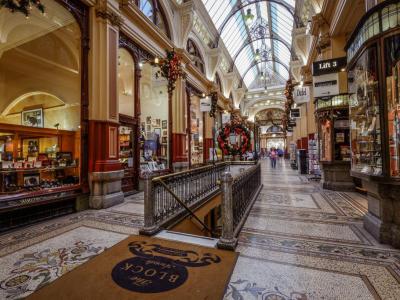
5) Block Arcade (must see)
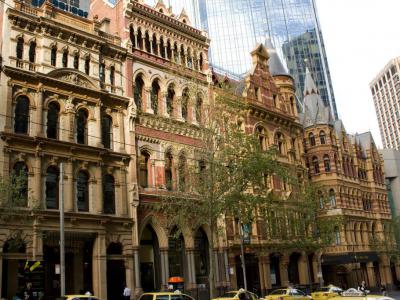
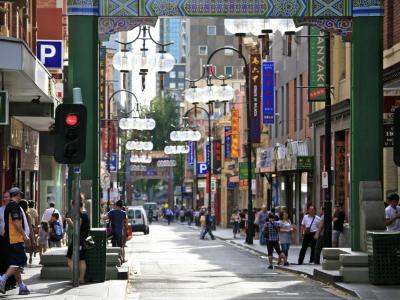

8) Chinese Museum (must see)
Walking Tours in Melbourne, Australia

Create Your Own Walk in Melbourne
Creating your own self-guided walk in Melbourne is easy and fun. Choose the city attractions that you want to see and a walk route map will be created just for you. You can even set your hotel as the start point of the walk.

Historical Buildings Walking Tour
Melbourne's architecture is a rich cocktail of styles ranging from those practiced in the early years of European settlement of Australia to the more modern ones. Among the historical buildings particularly noticeable here are those from the Victorian era, forming an essential part of the city's heritage.
The Old Melbourne Gaol once served as a prison, from 1842 to 1929, and is... view more
Tour Duration: 2 Hour(s)
Travel Distance: 4.1 Km or 2.5 Miles
The Old Melbourne Gaol once served as a prison, from 1842 to 1929, and is... view more
Tour Duration: 2 Hour(s)
Travel Distance: 4.1 Km or 2.5 Miles

St. Kilda District Walking Tour
A cosmopolitan seaside suburb of Melbourne overlooking Port Phillip Bay, Saint Kilda District is a charming and culturally rich neighborhood graced with a blend of historical landmarks and contemporary attractions.
One of its prominent sites is the Saint Kilda Town Hall, an imposing municipal building that serves as a hub for various community events and gatherings.
Eildon Mansion, another... view more
Tour Duration: 2 Hour(s)
Travel Distance: 3.5 Km or 2.2 Miles
One of its prominent sites is the Saint Kilda Town Hall, an imposing municipal building that serves as a hub for various community events and gatherings.
Eildon Mansion, another... view more
Tour Duration: 2 Hour(s)
Travel Distance: 3.5 Km or 2.2 Miles

Laneways and Arcades Walking Tour
Melbourne’s laneways and arcades form a defining part of the city’s urban identity. With more than forty of them weaving through the Central Business District, they are the city’s unofficial alternate transport system, allowing visitors to wander half the downtown without ever stepping onto a main street.
Many of these passages began life in the Victorian era during Melbourne’s rapid... view more
Tour Duration: 1 Hour(s)
Travel Distance: 1.6 Km or 1 Miles
Many of these passages began life in the Victorian era during Melbourne’s rapid... view more
Tour Duration: 1 Hour(s)
Travel Distance: 1.6 Km or 1 Miles

Melbourne Food Tour
Relatively small compared to the likes of New York City and London, Melbourne consistently punches above its weight as a food destination. Built on successive waves of European and Southeast Asian migration, a love of culinary innovation, and a strong sentiment that eating out counts as a hobby, the city offers a dining scene that feels both approachable and globally attuned. These days, you’ll... view more
Tour Duration: 1 Hour(s)
Travel Distance: 2.2 Km or 1.4 Miles
Tour Duration: 1 Hour(s)
Travel Distance: 2.2 Km or 1.4 Miles
Useful Travel Guides for Planning Your Trip

Chocolate Indulgence Tour of Melbourne
Melbourne has a reputation for cafés and fine restaurants, and lately a chocolate fever has taken over the city. This tour takes you through the alleyways and arcades of the city center whilst stopping at selected chocolate indulgence points. Take your senses on a unique experience through six of...
The Most Popular Cities
/ view all