
Michelangelo's Masterpieces Walking Tour (Self Guided), Florence
Michelangelo spent over 20 years of his life in Florence – the birthplace of the Renaissance – during which time he created some of the most beautiful masterpieces the city had ever seen. The most famous of them – the David – was larger than life, and brought a larger-than-life image to the artist. No amount of photos or copies of the statue will do it justice, so to see it with your own eyes, start this walking tour with a visit to Galleria dell’Accademia located right next to Piazza di San Marco.
Other precious works by Michelangelo can be admired in the Bargello National Museum (Bacchus, Madonna and Child, Brutus, David-Apollo), Palazzo Vecchio (The Genius of Victory), the Uffizi Gallery (Doni Tondo, or "Holy Family"), the Museo dell'Opera del Duomo (The Deposition). Meanwhile, the most interesting pieces on display at Casa Buonarroti – once the master’s own property – are two of the earliest sculptures: Madonna of the Steps and the Battle of the Centaurs, the first of which he is thought to have carved when he was 15 and the latter around the age of 17.
In between all these museums and galleries, make sure to stop by the several churches on the itinerary. In 1530, at age 55, Michelangelo is said to have holed up in a tiny secret room under the Medici Chapel of the Basilica di San Lorenzo, to escape the wrath of the then-Pope. The Medici family were, in fact, responsible for much of the sculptor’s early education, some of his major commissions in Florence, and ultimately, his exile from the city as an elderly man. His ashes had to be brought from Rome to Basilica di Santa Croce, where you can pay him proper homage.
Take this self-guided walk to admire Michelangelo's artistic mastership in Florence as well as the beautiful church where he was laid to rest with other famous Italians such as Galileo and Machiavelli.
Other precious works by Michelangelo can be admired in the Bargello National Museum (Bacchus, Madonna and Child, Brutus, David-Apollo), Palazzo Vecchio (The Genius of Victory), the Uffizi Gallery (Doni Tondo, or "Holy Family"), the Museo dell'Opera del Duomo (The Deposition). Meanwhile, the most interesting pieces on display at Casa Buonarroti – once the master’s own property – are two of the earliest sculptures: Madonna of the Steps and the Battle of the Centaurs, the first of which he is thought to have carved when he was 15 and the latter around the age of 17.
In between all these museums and galleries, make sure to stop by the several churches on the itinerary. In 1530, at age 55, Michelangelo is said to have holed up in a tiny secret room under the Medici Chapel of the Basilica di San Lorenzo, to escape the wrath of the then-Pope. The Medici family were, in fact, responsible for much of the sculptor’s early education, some of his major commissions in Florence, and ultimately, his exile from the city as an elderly man. His ashes had to be brought from Rome to Basilica di Santa Croce, where you can pay him proper homage.
Take this self-guided walk to admire Michelangelo's artistic mastership in Florence as well as the beautiful church where he was laid to rest with other famous Italians such as Galileo and Machiavelli.
How it works: Download the app "GPSmyCity: Walks in 1K+ Cities" from Apple App Store or Google Play Store to your mobile phone or tablet. The app turns your mobile device into a personal tour guide and its built-in GPS navigation functions guide you from one tour stop to next. The app works offline, so no data plan is needed when traveling abroad.
Download The GPSmyCity App



Michelangelo's Masterpieces Walking Tour Map
Guide Name: Michelangelo's Masterpieces Walking Tour
Guide Location: Italy » Florence (See other walking tours in Florence)
Guide Type: Self-guided Walking Tour (Sightseeing)
# of Attractions: 9
Tour Duration: 2 Hour(s)
Travel Distance: 4.0 Km or 2.5 Miles
Author: greghasleft
Sight(s) Featured in This Guide:
Guide Location: Italy » Florence (See other walking tours in Florence)
Guide Type: Self-guided Walking Tour (Sightseeing)
# of Attractions: 9
Tour Duration: 2 Hour(s)
Travel Distance: 4.0 Km or 2.5 Miles
Author: greghasleft
Sight(s) Featured in This Guide:
- Galleria dell'Accademia (Gallery of the Academy of Florence)
- Basilica di San Lorenzo (Basilica of St. Lawrence)
- Museo dell'Opera del Duomo (Museum of the Works of the Cathedral)
- Casa Buonarroti (Michelangelo Buonarroti House-Museum)
- Basilica di Santa Croce (Basilica of the Holy Cross)
- Palazzo del Bargello (Bargello National Museum)
- Palazzo Vecchio (Old Palace)
- Galleria degli Uffizi (Uffizi Gallery)
- Basilica di Santo Spirito (Basilica of the Holy Spirit)
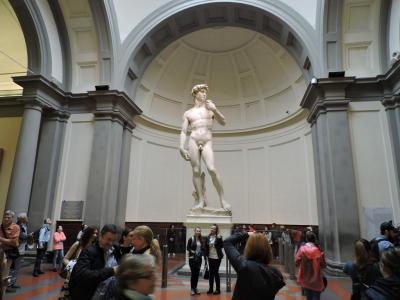
1) Galleria dell'Accademia (Gallery of the Academy of Florence) (must see)
Smaller and more specialized than the Uffizi, this gallery adjoins Florence's Academy of Fine Arts ("Accademia di Belle Arti"), but despite the name has no other connection with it. It houses a large collection of paintings by Florentine artists (Uccello, Ghirlandaio, Botticelli and others), mostly from the period 1300–1600, as well as plaster sculptures by Bartolini, Pampaloni and Giambologna, to name a few.
However, the real show here is Michelangelo's original "David", which is utterly staggering. Leading up to it are a series of other incomplete sculptures by the artist that are beautiful in their own right, and speak volumes about the technical, conceptual and emotional approach to his work (look for the mallet and chisel grooves on the stone). Among these are four Prisoners, intended for the tomb of Pope Julius II, and a statue of Saint Matthew, joined by a Pietà discovered in the Barberini chapel in Palestrina. "David" itself has often been reproduced, in plaster and imitation marble fiberglass, signifying an attempt to lend an atmosphere of culture even in some unlikely settings such as beach resorts, gambling casinos and model railroads.
A room is dedicated to a series of gold-ground polyptychs taken from various churches in and around Florence, while the 2nd floor has a really interesting display of fabrics from the 13th-14th centuries and amazing tapestry from the same period. The musical section is also tremendous, with strings by Casini, Amati and Stradivari, harpsichords and some rarer items. Every piece has a written explanation and a few have a number where you may punch for information on audio phones.
Tip:
A good time to go during high season is on Tuesdays and Thursdays when the Galleria is open late (until 10pm) and lines are relatively short. Consider pre-booking otherwise. You'll have to take your online booking to a doorway just opposite and a little down the street to turn the booking into your tickets (ask the guards to direct you).
However, the real show here is Michelangelo's original "David", which is utterly staggering. Leading up to it are a series of other incomplete sculptures by the artist that are beautiful in their own right, and speak volumes about the technical, conceptual and emotional approach to his work (look for the mallet and chisel grooves on the stone). Among these are four Prisoners, intended for the tomb of Pope Julius II, and a statue of Saint Matthew, joined by a Pietà discovered in the Barberini chapel in Palestrina. "David" itself has often been reproduced, in plaster and imitation marble fiberglass, signifying an attempt to lend an atmosphere of culture even in some unlikely settings such as beach resorts, gambling casinos and model railroads.
A room is dedicated to a series of gold-ground polyptychs taken from various churches in and around Florence, while the 2nd floor has a really interesting display of fabrics from the 13th-14th centuries and amazing tapestry from the same period. The musical section is also tremendous, with strings by Casini, Amati and Stradivari, harpsichords and some rarer items. Every piece has a written explanation and a few have a number where you may punch for information on audio phones.
Tip:
A good time to go during high season is on Tuesdays and Thursdays when the Galleria is open late (until 10pm) and lines are relatively short. Consider pre-booking otherwise. You'll have to take your online booking to a doorway just opposite and a little down the street to turn the booking into your tickets (ask the guards to direct you).
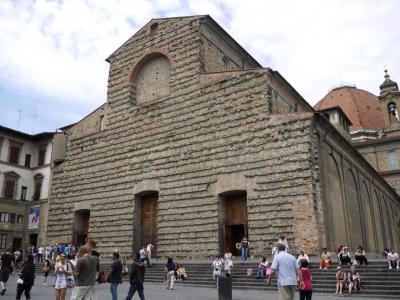
2) Basilica di San Lorenzo (Basilica of St. Lawrence) (must see)
Amidst the hustle-bustle of the Central Market ("Mercato Centrale") stands arguably one of the oldest churches in the history of Florence. San Lorenzo is said to date back to the late Roman era and is also the city's largest basilica. Inside, it is as ornate and magnificent as you'd expect for the main worship site and burial ground of the Medici family, despite the unfinished façade that belies its significance.
The influential Medici family, known as one of the most powerful dynasties in Florence's history, entrusted the brilliant architect Filippo Brunelleschi with the task of redesigning San Lorenzo in a modern Renaissance style. The esteemed Michelangelo, on the other hand, was charged with completing an elaborate marble façade. Sadly, the untimely demise of Brunelleschi and Giovanni di Bicci de' Medici resulted in the project's abandonment, leaving Michelangelo to bear the frustration of an unfulfilled vision. Nevertheless, he managed to create the internal façade, visible from the nave when gazing back towards the entrances.
Within the church's remarkable interiors, Renaissance aesthetics prevail, evident in the white and grey columns and the splendid marble embellishments adorning the altar, which serves as the resting place of the first Medici ruler. Along the central nave, visitors will encounter two bronze pulpits crafted by Donatello (his very last works), whose tomb can be found in the crypt along with that of Cosimo I de' Medici. The complex also encompasses the New Sacristy, a space that showcases Michelangelo's masterful Medici tombs, which depict the themes of day and night, dusk and dawn. Additionally, the Chapel of the Princes, dating back to the 17th century, captivates with its monumental dome and exquisite fresco arrangements.
There is an abundance of sights to behold, from the stunning frescoes that grace the walls to the enchanting dome adorned with lovely artwork. Exploring the various cloisters, intimate gardens, and the Laurentian Library—another architectural marvel attributed to Michelangelo—will undoubtedly transport you into a realm of serenity, offering a tranquil respite from the bustling tourist attractions that characterize Florence.
Tip:
Different sections of the church have separate entrances, and it is necessary to present your Florence Card or pay for each section individually. Please note that the Chapel of the Princes and the New Sacristy, housing Michelangelo's tombs, close after 1:30pm.
Take advantage of the lovely market area surrounding San Lorenzo, and consider enjoying a refreshing drink or meal in the picturesque square in front of the Central Market.
The influential Medici family, known as one of the most powerful dynasties in Florence's history, entrusted the brilliant architect Filippo Brunelleschi with the task of redesigning San Lorenzo in a modern Renaissance style. The esteemed Michelangelo, on the other hand, was charged with completing an elaborate marble façade. Sadly, the untimely demise of Brunelleschi and Giovanni di Bicci de' Medici resulted in the project's abandonment, leaving Michelangelo to bear the frustration of an unfulfilled vision. Nevertheless, he managed to create the internal façade, visible from the nave when gazing back towards the entrances.
Within the church's remarkable interiors, Renaissance aesthetics prevail, evident in the white and grey columns and the splendid marble embellishments adorning the altar, which serves as the resting place of the first Medici ruler. Along the central nave, visitors will encounter two bronze pulpits crafted by Donatello (his very last works), whose tomb can be found in the crypt along with that of Cosimo I de' Medici. The complex also encompasses the New Sacristy, a space that showcases Michelangelo's masterful Medici tombs, which depict the themes of day and night, dusk and dawn. Additionally, the Chapel of the Princes, dating back to the 17th century, captivates with its monumental dome and exquisite fresco arrangements.
There is an abundance of sights to behold, from the stunning frescoes that grace the walls to the enchanting dome adorned with lovely artwork. Exploring the various cloisters, intimate gardens, and the Laurentian Library—another architectural marvel attributed to Michelangelo—will undoubtedly transport you into a realm of serenity, offering a tranquil respite from the bustling tourist attractions that characterize Florence.
Tip:
Different sections of the church have separate entrances, and it is necessary to present your Florence Card or pay for each section individually. Please note that the Chapel of the Princes and the New Sacristy, housing Michelangelo's tombs, close after 1:30pm.
Take advantage of the lovely market area surrounding San Lorenzo, and consider enjoying a refreshing drink or meal in the picturesque square in front of the Central Market.
3) Museo dell'Opera del Duomo (Museum of the Works of the Cathedral) (must see)
It would be a colossal mistake to go to the Duomo and not explore this museum. Due to the abundance of wonderful attractions in Florence, it gets less attention, but there are quite a few things to like here, including the relative lack of crowds, reasonable size and hours of operation, large open spaces with exhibits spaced out (so that one's viewing is not distracted), and a broad range of artifacts from the very old to the very new. Surprisingly modern inside, it's also one of the very few air-conditioned museums in Florence, which is a plus if you visit during the summer months.
As many of the items that you see around the Duomo are actually copies, the originals are housed in this museum for safekeeping. The most astounding item is, perhaps, the time-machine-like recreation of the Duomo's ancient facade, displayed in original scale and well-supplied with many astounding fine details (the original huge gold door is particularly unforgettable).
Other original masterworks that once adorned the Duomo, such as its baptistry and bell tower, are presented in brightly illuminated displays with a good sequence where one can check each closely. Fortunately, a number of long benches were thoughtfully placed so that visitors can sit down and feast the eyes without becoming dizzy, as happens outside when trying to take it all it at once.
The whole museum can be easily covered in about two hours but, of course, art lovers may want to leave a little more room. Descriptions are in Italian and English so that you can be your own tour guide.
***MICHELANGELO'S MASTERPIECES***
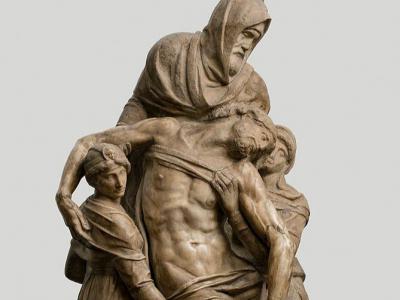
Michelangelo's pietà displayed here, known as "The Deposition" or "The Lamentation over the Dead Christ", is quite different from the one in St. Peter's Basilica (Rome), but just as beautiful and very well presented in a simple room that truly allows one to immerse themselves in the art. Crafted during the last days of the maestro's life, this sculpture portrays Jesus' lifeless body being tenderly cradled by his mother Mary, accompanied by Mary Magdalene and Nicodemus, whose face, concealed by a hood, is believed to be a self-portrait. Regrettably left unfinished due to Michelangelo's relentless carving, which consumed the available stone, this artwork carries an abstract quality that resonates with the artistic concepts of the 20th century.
Tip:
Make sure not to overlook the rooftop terrace, where you can enjoy a prime view of the Duomo!
As many of the items that you see around the Duomo are actually copies, the originals are housed in this museum for safekeeping. The most astounding item is, perhaps, the time-machine-like recreation of the Duomo's ancient facade, displayed in original scale and well-supplied with many astounding fine details (the original huge gold door is particularly unforgettable).
Other original masterworks that once adorned the Duomo, such as its baptistry and bell tower, are presented in brightly illuminated displays with a good sequence where one can check each closely. Fortunately, a number of long benches were thoughtfully placed so that visitors can sit down and feast the eyes without becoming dizzy, as happens outside when trying to take it all it at once.
The whole museum can be easily covered in about two hours but, of course, art lovers may want to leave a little more room. Descriptions are in Italian and English so that you can be your own tour guide.
***MICHELANGELO'S MASTERPIECES***
Michelangelo's pietà displayed here, known as "The Deposition" or "The Lamentation over the Dead Christ", is quite different from the one in St. Peter's Basilica (Rome), but just as beautiful and very well presented in a simple room that truly allows one to immerse themselves in the art. Crafted during the last days of the maestro's life, this sculpture portrays Jesus' lifeless body being tenderly cradled by his mother Mary, accompanied by Mary Magdalene and Nicodemus, whose face, concealed by a hood, is believed to be a self-portrait. Regrettably left unfinished due to Michelangelo's relentless carving, which consumed the available stone, this artwork carries an abstract quality that resonates with the artistic concepts of the 20th century.
Tip:
Make sure not to overlook the rooftop terrace, where you can enjoy a prime view of the Duomo!
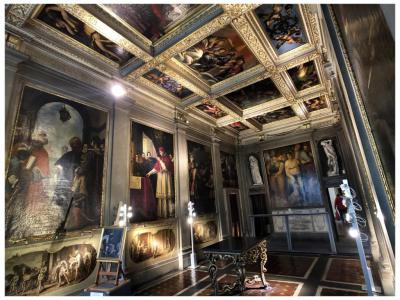
4) Casa Buonarroti (Michelangelo Buonarroti House-Museum)
A short distance from Piazza Santa Croce but away from its crowds, Casa Buonarroti is a haven of peace. Once the property of Michelangelo and later inherited by his nephew Leonardo, it was Michelangelo Buonarroti the Younger, the great-nephew of the renowned artist, who transformed it into a place of memory and celebration of the Renaissance genius.
Although photography is not allowed, visitors are free to spend as much time as they desire in close proximity to two of Michelangelo's earliest sculptures. Additionally, they can admire his wooden model for the planned marble façade of San Lorenzo – intended to serve as a "reflection of architecture and sculpture for all of Italy", but one that was ultimately taken away from him, stirring bitter complaints.
The two aforementioned early masterpieces are known as the "Madonna of the Stairs" and the "Battle of the Centaurs". The former, believed to have been carved when Michelangelo was just 15 years old, pays homage to Donatello's reliefs, while the latter, created around the age of 17, represents a departure from the techniques employed by earlier masters, the many dynamically-carved human figures leading Michelangelo to his "own personal revolution". Considering it to be one of his finest early works, he kept it in his possession throughout his life, despite destroying or abandoning many other pieces.
The museum also houses a remarkable collection of over two hundred restored drawings, letters, sketches, and personal belongings, including shoes, canes, a sword, chairs, and a purported self-portrait. Subsequent generations contributed to the collections, which now also feature numerous paintings depicting significant events from Michelangelo's life.
Tip:
While here, you can purchase a combination ticket that includes admission to the Santa Croce complex.
Although photography is not allowed, visitors are free to spend as much time as they desire in close proximity to two of Michelangelo's earliest sculptures. Additionally, they can admire his wooden model for the planned marble façade of San Lorenzo – intended to serve as a "reflection of architecture and sculpture for all of Italy", but one that was ultimately taken away from him, stirring bitter complaints.
The two aforementioned early masterpieces are known as the "Madonna of the Stairs" and the "Battle of the Centaurs". The former, believed to have been carved when Michelangelo was just 15 years old, pays homage to Donatello's reliefs, while the latter, created around the age of 17, represents a departure from the techniques employed by earlier masters, the many dynamically-carved human figures leading Michelangelo to his "own personal revolution". Considering it to be one of his finest early works, he kept it in his possession throughout his life, despite destroying or abandoning many other pieces.
The museum also houses a remarkable collection of over two hundred restored drawings, letters, sketches, and personal belongings, including shoes, canes, a sword, chairs, and a purported self-portrait. Subsequent generations contributed to the collections, which now also feature numerous paintings depicting significant events from Michelangelo's life.
Tip:
While here, you can purchase a combination ticket that includes admission to the Santa Croce complex.
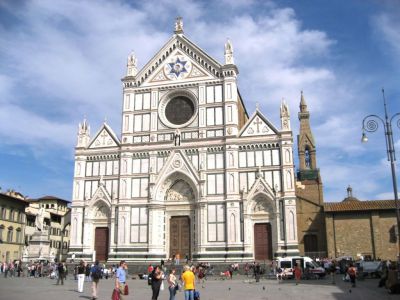
5) Basilica di Santa Croce (Basilica of the Holy Cross) (must see)
One of the most renowned and largest Franciscan churches worldwide, Santa Croce was constructed in the 13th and 14th centuries, flaunting a rich Gothic style of architecture. Also known as the "Temple of the Italian Glories", it has the final resting places of numerous illustrious Italians, including Michelangelo, Galileo, Machiavelli, poet Foscolo, and composer Rossini.
Elaborate sculptures embellish the tombs, while paintings adorn the altar and walls. Some of the finest artisans, sculptors and painters have left their marks upon the church, which is sure to grip visitors with its grandeur and presence. Artists with work in the church include Giotto, Donatello, Giorgio Vasari, Domenico Veneziano, Antonio Canova, Cimabue, Benedetto da Maiano, Andrea and Luca della Robbia, Desiderio da Settignano, Giovanni da Milano, Maso di Banco, Agnolo and Taddeo Gaddi, Andrea Orcagna, Antonio Rossellino, Santi di Tito, and Henry Moore. Legend even has it that Santa Croce was founded by Saint Francis himself!
The surrounding grounds are equally enchanting, and the grassy inner courtyard, with its columns and statuary, invites visitors to explore and perhaps spend an entire day with a sketchbook. The exterior plaza hosts various events, ranging from concerts by visiting musicians to Florentine "rugby" matches.
***MICHELANGELO'S MASTERPIECES***
Despite Michelangelo's wishes, his body was transported from Rome to Florence, where Cosimo de' Medici and the artist/biographer Vasari organized an opulent funeral on March 10, 1564. Since de' Medici could not honor Michelangelo in Florence during his lifetime, he declared that he would pay homage to the artist in death, commissioning an elaborate tomb as a fitting tribute.
The monumental tomb inside the church – which ended up being a costly endeavor, taking 14 years to complete due to various delays – was commissioned to the same Vasari, who incorporated traditional symbols and imagery associated with Michelangelo. Adjacent to the artist's bust, three intertwined laurel wreaths symbolize the fusion of Painting, Sculpture, and Architecture, which are also depicted below as three muses mourning the loss of the great artist.
***DANTE'S FLORENCE WALK***
After years of efforts to repatriate Dante's remains to his birth city, Florence, his empty sarcophagus was eventually placed here. Rejected when he was alive, Dante now rests in his adopted city of Ravenna, despite Florence's posthumous forgiveness and acceptance of the exiled poet. In commemoration of the 600th anniversary of his birth, a monument of Dante was erected outside in Santa Croce Square, named after the basilica that overlooks it.
Tip:
Do not miss the Leather school located behind the church, where young apprentices learn the craft, and where you can purchase some fantastic handmade one-offs.
Remember to dress appropriately, with shorts below the knee and women's shoulders covered, as they strictly enforce the dress code, particularly for women regarding shorts.
Elaborate sculptures embellish the tombs, while paintings adorn the altar and walls. Some of the finest artisans, sculptors and painters have left their marks upon the church, which is sure to grip visitors with its grandeur and presence. Artists with work in the church include Giotto, Donatello, Giorgio Vasari, Domenico Veneziano, Antonio Canova, Cimabue, Benedetto da Maiano, Andrea and Luca della Robbia, Desiderio da Settignano, Giovanni da Milano, Maso di Banco, Agnolo and Taddeo Gaddi, Andrea Orcagna, Antonio Rossellino, Santi di Tito, and Henry Moore. Legend even has it that Santa Croce was founded by Saint Francis himself!
The surrounding grounds are equally enchanting, and the grassy inner courtyard, with its columns and statuary, invites visitors to explore and perhaps spend an entire day with a sketchbook. The exterior plaza hosts various events, ranging from concerts by visiting musicians to Florentine "rugby" matches.
***MICHELANGELO'S MASTERPIECES***
Despite Michelangelo's wishes, his body was transported from Rome to Florence, where Cosimo de' Medici and the artist/biographer Vasari organized an opulent funeral on March 10, 1564. Since de' Medici could not honor Michelangelo in Florence during his lifetime, he declared that he would pay homage to the artist in death, commissioning an elaborate tomb as a fitting tribute.
The monumental tomb inside the church – which ended up being a costly endeavor, taking 14 years to complete due to various delays – was commissioned to the same Vasari, who incorporated traditional symbols and imagery associated with Michelangelo. Adjacent to the artist's bust, three intertwined laurel wreaths symbolize the fusion of Painting, Sculpture, and Architecture, which are also depicted below as three muses mourning the loss of the great artist.
***DANTE'S FLORENCE WALK***
After years of efforts to repatriate Dante's remains to his birth city, Florence, his empty sarcophagus was eventually placed here. Rejected when he was alive, Dante now rests in his adopted city of Ravenna, despite Florence's posthumous forgiveness and acceptance of the exiled poet. In commemoration of the 600th anniversary of his birth, a monument of Dante was erected outside in Santa Croce Square, named after the basilica that overlooks it.
Tip:
Do not miss the Leather school located behind the church, where young apprentices learn the craft, and where you can purchase some fantastic handmade one-offs.
Remember to dress appropriately, with shorts below the knee and women's shoulders covered, as they strictly enforce the dress code, particularly for women regarding shorts.
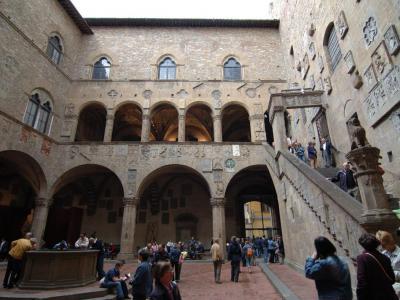
6) Palazzo del Bargello (Bargello National Museum) (must see)
If Florence, in general, is a haven for architecture enthusiasts and art lovers, then the Bargello Museum takes this experience to even greater heights. Occupying a medieval fortress, houses some of Italy's most treasured sculptures and artworks.
Also known as the People's Palace ("Palazzo del Popolo"), this is one of the city's oldest structures, dating back to 1255. Throughout its rich history, the building has served various purposes. Initially, in the 16th century, it accommodated the renowned "Captain of the People", the chief of police in Florence, known as the "bargello," hence the name of the palace. Later, the Bargello Fortress functioned as a prison until the mid-19th century, when it was transformed into a museum showcasing an extensive array of Gothic and Renaissance sculptures.
Displayed here are the works of renowned artists such as Michelangelo, Verrochio, Brunelleschi, and Donatello among others. Notably, the latter's statue of David holds great significance as the first male nude sculpture publicly exhibited since ancient times, marking a pivotal moment in the evolution of European art. The inner courtyard provides an elegant space adorned with relief and freestanding sculptures, while the gallery, located off the courtyard, and the spacious exhibition area above house the most famous pieces.
Apart from the Renaissance treasures, the collection includes rare artifacts from the Byzantine, Roman, and Medieval eras. Alongside the sculptures, you'll find jewelry pieces of European Renaissance and Islamic origins. To enhance the visitor experience, all exhibits are accompanied by English descriptions.
***MICHELANGELO'S MASTERPIECES***
Among the museum's prized possessions are masterpieces by Michelangelo, including Bacchus, Pitti Tondo (or "Madonna and Child"), Brutus, and David-Apollo. Bacchus is depicted with eyes that seem to roll, his staggering body appearing on the verge of toppling off the rocky pedestal on which he stands. Giorgio Vasari observed that the figure conveyed "both the slenderness of a young man and the fleshiness and roundness of a woman", showcasing its androgynous qualities. The sense of instability resulting from a high center of gravity can be found in several later works by the artist, most notably in the David and the figures on the Sistine Chapel ceiling. Michelangelo carved Bacchus when he was only 22 years old.
Tip:
To make the most of your visit to the Bargello, checking out the museum's website in advance for opening hours, as on special occasions, it may close later than usual. For those brave enough to explore the eerie, deserted medieval building in the late evening, you'll have the opportunity to enjoy the sculptures in solitude.
Also known as the People's Palace ("Palazzo del Popolo"), this is one of the city's oldest structures, dating back to 1255. Throughout its rich history, the building has served various purposes. Initially, in the 16th century, it accommodated the renowned "Captain of the People", the chief of police in Florence, known as the "bargello," hence the name of the palace. Later, the Bargello Fortress functioned as a prison until the mid-19th century, when it was transformed into a museum showcasing an extensive array of Gothic and Renaissance sculptures.
Displayed here are the works of renowned artists such as Michelangelo, Verrochio, Brunelleschi, and Donatello among others. Notably, the latter's statue of David holds great significance as the first male nude sculpture publicly exhibited since ancient times, marking a pivotal moment in the evolution of European art. The inner courtyard provides an elegant space adorned with relief and freestanding sculptures, while the gallery, located off the courtyard, and the spacious exhibition area above house the most famous pieces.
Apart from the Renaissance treasures, the collection includes rare artifacts from the Byzantine, Roman, and Medieval eras. Alongside the sculptures, you'll find jewelry pieces of European Renaissance and Islamic origins. To enhance the visitor experience, all exhibits are accompanied by English descriptions.
***MICHELANGELO'S MASTERPIECES***
Among the museum's prized possessions are masterpieces by Michelangelo, including Bacchus, Pitti Tondo (or "Madonna and Child"), Brutus, and David-Apollo. Bacchus is depicted with eyes that seem to roll, his staggering body appearing on the verge of toppling off the rocky pedestal on which he stands. Giorgio Vasari observed that the figure conveyed "both the slenderness of a young man and the fleshiness and roundness of a woman", showcasing its androgynous qualities. The sense of instability resulting from a high center of gravity can be found in several later works by the artist, most notably in the David and the figures on the Sistine Chapel ceiling. Michelangelo carved Bacchus when he was only 22 years old.
Tip:
To make the most of your visit to the Bargello, checking out the museum's website in advance for opening hours, as on special occasions, it may close later than usual. For those brave enough to explore the eerie, deserted medieval building in the late evening, you'll have the opportunity to enjoy the sculptures in solitude.
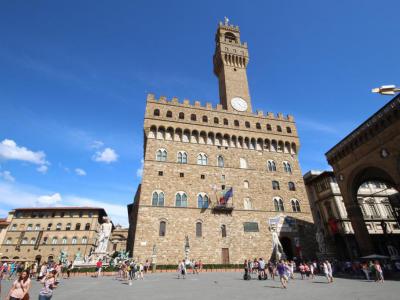
7) Palazzo Vecchio (Old Palace) (must see)
Similar to the Duomo complex, the Pitti Palace, and major local art galleries, the Old Palace, known as Palazzo Vecchio, is an indispensable site in Florence for understanding the city's history and culture. This colossal Romanesque-style palace stands as one of the most impressive town halls in Tuscany and has served as the office of the Florence mayor since 1872. Prior to that, since its construction in 1299, it was the seat of Florentine government for centuries. When Cosimo I de' Medici became the Grand Duke and moved in with his family in 1540, he decided to enlarge and renovate the Medieval building in Renaissance style.
Adorned with shields recounting the city's political history, the imposing facade is also embellished with a series of sculptures, including notable works such as Michelangelo's "David", the heraldic lion known as "Marzocco" symbolizing Florence, Donatello's original "Judith and Holofernes", and "Hercules and Cacus". Within the palace, the Tower of Arnolfo stands as a separate attraction, requiring an additional fee for access.
Wandering through the palace, from the grand Hall of the Five Hundred ("Salone dei Cinquecento") designed to celebrate the Duke's glories and victories, to the more intimate quarters, you'll be transported back in time. This journey provides a glimpse into the secluded privacy of the Medici rulers, adorned with magnificent decorations as part of Giorgio Vasari's iconographic program. It is recommended to take your time and explore the property leisurely, allowing for an immersive experience enriched with historical intensity and artistic wonders. However, be prepared for a potential crick in the neck from gazing at the breathtaking ceilings in each room.
Various optional tours of the palace are available, including family-friendly options that offer an extra dose of fun without costing too much extra. For example, the 'Secret Paths' tour lasts approximately 1.5 hours and is led by knowledgeable guides. It provides access to parts of the palace typically closed to the public, including the renowned "studiolo" with its secret doors, enchanting objects, and intriguing exotic substances.
***MICHELANGELO'S MASTERPIECES***
In the central niche at the southern end of the grand hall ("Salone dei Cinquecento"), you'll find Michelangelo's notable marble group, "The Genius of Victory" (1533-1534). Originally intended for Julius II's tomb, this sculpture represents an allegory of triumph rather than depicting a moment of battle. It portrays a victorious figure displaying remarkable agility, dominating a submissive captive. The young and elegant genius stands poised, while the dominated older man bears a resigned expression with a flabby body and a beard, emphasizing the contrast between the two figures. The expressive treatment of the surfaces enhances this contrast further, with the young figure polished to perfection and the old figure left rough and incomplete, still bearing the impression of the heavy stone from which it was sculpted.
***DANTE'S FLORENCE TOUR***
Although Dante's burial place is not in Florence, the city possesses one of the poet's death masks, which you can see here, displayed between the Apartments of Eleanor and the Halls of Priors. Preserved behind glass, it has become a symbol of Dante's political contribution to Florence and his pivotal role in the development of Italian literature and culture. Interestingly, this same mask makes an appearance in Dan Brown's "Inferno".
Tip:
If you plan to take a tour, it is advisable to book directly with the museum via email, indicating your preferred date and time, and wait for confirmation. Payment for the tour will be collected on the day of your visit. Once the tour concludes, you are free to explore the palace at your leisure. However, please note that since the palace is an active municipal office, it may be temporarily closed to the public on special occasions. It is recommended to check the palace's website for any announcements before your visit.
Adorned with shields recounting the city's political history, the imposing facade is also embellished with a series of sculptures, including notable works such as Michelangelo's "David", the heraldic lion known as "Marzocco" symbolizing Florence, Donatello's original "Judith and Holofernes", and "Hercules and Cacus". Within the palace, the Tower of Arnolfo stands as a separate attraction, requiring an additional fee for access.
Wandering through the palace, from the grand Hall of the Five Hundred ("Salone dei Cinquecento") designed to celebrate the Duke's glories and victories, to the more intimate quarters, you'll be transported back in time. This journey provides a glimpse into the secluded privacy of the Medici rulers, adorned with magnificent decorations as part of Giorgio Vasari's iconographic program. It is recommended to take your time and explore the property leisurely, allowing for an immersive experience enriched with historical intensity and artistic wonders. However, be prepared for a potential crick in the neck from gazing at the breathtaking ceilings in each room.
Various optional tours of the palace are available, including family-friendly options that offer an extra dose of fun without costing too much extra. For example, the 'Secret Paths' tour lasts approximately 1.5 hours and is led by knowledgeable guides. It provides access to parts of the palace typically closed to the public, including the renowned "studiolo" with its secret doors, enchanting objects, and intriguing exotic substances.
***MICHELANGELO'S MASTERPIECES***
In the central niche at the southern end of the grand hall ("Salone dei Cinquecento"), you'll find Michelangelo's notable marble group, "The Genius of Victory" (1533-1534). Originally intended for Julius II's tomb, this sculpture represents an allegory of triumph rather than depicting a moment of battle. It portrays a victorious figure displaying remarkable agility, dominating a submissive captive. The young and elegant genius stands poised, while the dominated older man bears a resigned expression with a flabby body and a beard, emphasizing the contrast between the two figures. The expressive treatment of the surfaces enhances this contrast further, with the young figure polished to perfection and the old figure left rough and incomplete, still bearing the impression of the heavy stone from which it was sculpted.
***DANTE'S FLORENCE TOUR***
Although Dante's burial place is not in Florence, the city possesses one of the poet's death masks, which you can see here, displayed between the Apartments of Eleanor and the Halls of Priors. Preserved behind glass, it has become a symbol of Dante's political contribution to Florence and his pivotal role in the development of Italian literature and culture. Interestingly, this same mask makes an appearance in Dan Brown's "Inferno".
Tip:
If you plan to take a tour, it is advisable to book directly with the museum via email, indicating your preferred date and time, and wait for confirmation. Payment for the tour will be collected on the day of your visit. Once the tour concludes, you are free to explore the palace at your leisure. However, please note that since the palace is an active municipal office, it may be temporarily closed to the public on special occasions. It is recommended to check the palace's website for any announcements before your visit.
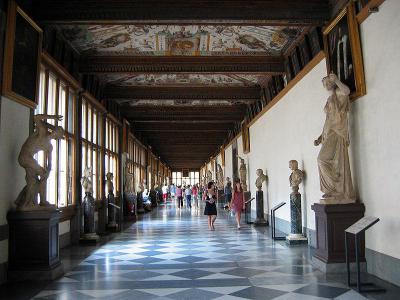
8) Galleria degli Uffizi (Uffizi Gallery) (must see)
If you had to choose just one Renaissance location to visit in Florence, or even in the entire world, the most obvious and compelling choice would be the Uffizi Gallery. Housed in the Palazzo degli Uffizi, originally intended as the offices of magistrates (hence the name "uffizi"), this magnificent structure was constructed in the 16th century by Giorgio Vasari for Cosimo Medici, the first Duke of Florence. Not only did it serve as a governmental building, but it also became an ideal space to house the Medici family's remarkable art collection. Since 1765, the gallery has been open to the public and has grown to become one of Florence's most popular tourist attractions.
The displayed here must-see works of art include Sandro Botticelli's "Birth of Venus" and "Adoration of the Magi", not to mention the works of Leonardo da Vinci, Michelangelo, Caravaggio and other eternal greats. The collection is truly magnificent and it's easy to lose track of time while immersing oneself in its splendor.
While paintings and sculptures are the main draw for visitors, the gallery's interior decoration, particularly the intricate ceilings, is equally spectacular and deserves attention. With over 50 lavish rooms to explore, it can be challenging to absorb everything in one visit. Therefore, taking a break and recharging at the on-site café with a terrace is highly recommended. Among other delights, you'll be treated to unparalleled views that cannot be experienced elsewhere.
Due to its world-class status, the museum is perpetually bustling with visitors, and long queues, sometimes lasting hours, are not uncommon, especially during peak seasons. Those who book their tickets in advance through the official website enjoy a significantly shorter wait time and may even get discounted rates.
***FLORENCE PALACES WALK***
The Uffizi's internal courtyard is a long and narrow space that opens towards the Arno River through a Doric screen. This unique architectural feature, which allows for an uninterrupted view, is considered by historians as the first standardized streetscape in Europe. Vasari, who was both a painter and an architect, accentuated the perspective length of the courtyard by adorning it with the matching facades' continuous roof cornices, unbroken cornices between storeys, and the three continuous steps on which the palace-fronts stand. In the 19th century, niches in the piers alternating with columns of the Loggiato were filled with sculptures of famous artists.
***MICHELANGELO'S MASTERPIECES***
During the first eight years of the 1500s, Michelangelo not only sculpted his iconic "David" and the "Bruges Madonna" but also chiseled seven additional sculptures and four smaller statues for an altar. He also accepted painting commissions, and one of his works displayed in the Uffizi is the "Doni Tondo" ("Holy Family"), completed in 1504. This round-shaped painting, nearly four feet in diameter, vividly portrays the Virgin Mary, the Christ Child, and St. Joseph. The juxtaposition of vibrant colors in this artwork foreshadows Michelangelo's later use of color in his renowned frescoes on the Sistine Ceiling.
It is argued that Michelangelo used this painting to defend the Maculist perspective, a philosophy of the Dominican order that rejects the concept of the Immaculate Conception of Mary. According to the Maculist view, Mary's sanctification occurred at the moment of Christ's incarnation, rather than at her birth. Thus, the image depicts the moment of Mary's sanctification, as the Christ Child blesses her. Michelangelo portrays Christ as if he is emerging from Mary's shoulder to take human form, with one leg hanging limply and the other not visible, emphasizing his integration with Mary.
Tip:
If you decide to visit, please note that no liquids are permitted on the premises. You may consider arriving an hour or two before closing time to obtain a ticket without having to wait in line. Good luck!
The displayed here must-see works of art include Sandro Botticelli's "Birth of Venus" and "Adoration of the Magi", not to mention the works of Leonardo da Vinci, Michelangelo, Caravaggio and other eternal greats. The collection is truly magnificent and it's easy to lose track of time while immersing oneself in its splendor.
While paintings and sculptures are the main draw for visitors, the gallery's interior decoration, particularly the intricate ceilings, is equally spectacular and deserves attention. With over 50 lavish rooms to explore, it can be challenging to absorb everything in one visit. Therefore, taking a break and recharging at the on-site café with a terrace is highly recommended. Among other delights, you'll be treated to unparalleled views that cannot be experienced elsewhere.
Due to its world-class status, the museum is perpetually bustling with visitors, and long queues, sometimes lasting hours, are not uncommon, especially during peak seasons. Those who book their tickets in advance through the official website enjoy a significantly shorter wait time and may even get discounted rates.
***FLORENCE PALACES WALK***
The Uffizi's internal courtyard is a long and narrow space that opens towards the Arno River through a Doric screen. This unique architectural feature, which allows for an uninterrupted view, is considered by historians as the first standardized streetscape in Europe. Vasari, who was both a painter and an architect, accentuated the perspective length of the courtyard by adorning it with the matching facades' continuous roof cornices, unbroken cornices between storeys, and the three continuous steps on which the palace-fronts stand. In the 19th century, niches in the piers alternating with columns of the Loggiato were filled with sculptures of famous artists.
***MICHELANGELO'S MASTERPIECES***
During the first eight years of the 1500s, Michelangelo not only sculpted his iconic "David" and the "Bruges Madonna" but also chiseled seven additional sculptures and four smaller statues for an altar. He also accepted painting commissions, and one of his works displayed in the Uffizi is the "Doni Tondo" ("Holy Family"), completed in 1504. This round-shaped painting, nearly four feet in diameter, vividly portrays the Virgin Mary, the Christ Child, and St. Joseph. The juxtaposition of vibrant colors in this artwork foreshadows Michelangelo's later use of color in his renowned frescoes on the Sistine Ceiling.
It is argued that Michelangelo used this painting to defend the Maculist perspective, a philosophy of the Dominican order that rejects the concept of the Immaculate Conception of Mary. According to the Maculist view, Mary's sanctification occurred at the moment of Christ's incarnation, rather than at her birth. Thus, the image depicts the moment of Mary's sanctification, as the Christ Child blesses her. Michelangelo portrays Christ as if he is emerging from Mary's shoulder to take human form, with one leg hanging limply and the other not visible, emphasizing his integration with Mary.
Tip:
If you decide to visit, please note that no liquids are permitted on the premises. You may consider arriving an hour or two before closing time to obtain a ticket without having to wait in line. Good luck!

9) Basilica di Santo Spirito (Basilica of the Holy Spirit)
The Santo Spirito is another Florence building credited to the brilliant Renaissance architect – Filippo Brunelleschi. At first glance, with its plain exteriors, it may not look very impressive, but the true beauty and design can be appreciated in the interiors featuring numerous Baroque embellishments and an impressive Baldachin with polychrome marbles over the high-raised altar. The side chapels, in the form of niches all the same size (forty in all), run along the entire perimeter of the space and contain a noteworthy amount of artworks by Renaissance artists such as Sansovino and Rosselli. Some of the pieces that have been restored are fantastic in color and definition.
The two cloisters – accessed for a small fee – have walls decorated with a great number of tombstones and impressive Late Gothic frescoes, as well as a collection of sculptures from the 11th-15th centuries, including two low reliefs by Donatello, a high relief by Jacopo della Quercia (Madonna with Child), and two marble sculptures by Tino da Camaino (1320–22).
***MICHELANGELO'S MASTERPIECES***
In a side chapel is a very special find—a wooden crucifix sculpted by a young Michelangelo before he relocated to Rome. Aged seventeen, he was allowed to make anatomical studies on the corpses coming from the convent's hospital; in exchange, he sculpted the crucifix which was placed over the high altar. Today the crucifix is in the octagonal sacristy that can be reached from the west aisle of the church. Also, don't miss the copies of his "Pietà" (1549) and "Christ" (1579).
Tip:
Be sure to visit the "Fondazione Salvatore Romano" museum to the side of the Basilica in the old refectory.
The two cloisters – accessed for a small fee – have walls decorated with a great number of tombstones and impressive Late Gothic frescoes, as well as a collection of sculptures from the 11th-15th centuries, including two low reliefs by Donatello, a high relief by Jacopo della Quercia (Madonna with Child), and two marble sculptures by Tino da Camaino (1320–22).
***MICHELANGELO'S MASTERPIECES***
In a side chapel is a very special find—a wooden crucifix sculpted by a young Michelangelo before he relocated to Rome. Aged seventeen, he was allowed to make anatomical studies on the corpses coming from the convent's hospital; in exchange, he sculpted the crucifix which was placed over the high altar. Today the crucifix is in the octagonal sacristy that can be reached from the west aisle of the church. Also, don't miss the copies of his "Pietà" (1549) and "Christ" (1579).
Tip:
Be sure to visit the "Fondazione Salvatore Romano" museum to the side of the Basilica in the old refectory.
Walking Tours in Florence, Italy

Create Your Own Walk in Florence
Creating your own self-guided walk in Florence is easy and fun. Choose the city attractions that you want to see and a walk route map will be created just for you. You can even set your hotel as the start point of the walk.

Florence Introduction Walking Tour
The city of Florence was founded by Julius Caesar in 59 BC as a settlement for veteran soldiers. It was built initially in the style of an army garrison – with main streets intersecting at today's Piazza della Repubblica. The original name, Fluentia, stems from its location between the two rivers; later, it was renamed Florentia, which means “flowering” or “flourishing”.
The... view more
Tour Duration: 2 Hour(s)
Travel Distance: 4.1 Km or 2.5 Miles
The... view more
Tour Duration: 2 Hour(s)
Travel Distance: 4.1 Km or 2.5 Miles

Arno South Bank Walking Tour
The area south of Arno river, also called Oltrarno ("Beyond the Arno"), is a quieter place but not less interesting. Here you can find the Pitti Palace whose collection of paintings is second only to the Uffizi, and the vast Boboli Gardens once enjoyed by the Medici and the royal family. One of the first and most important examples of "Italian Gardens", they later served as... view more
Tour Duration: 2 Hour(s)
Travel Distance: 2.4 Km or 1.5 Miles
Tour Duration: 2 Hour(s)
Travel Distance: 2.4 Km or 1.5 Miles

Dante's Florence Walking Tour
Dante Alighieri was arguably the greatest – albeit also most controversial – of Italy's poets. After having served as one of the six priors governing Florence, his political activities – including the banishing of several rivals – led to his own banishment, upon which he wrote his masterpiece, “The Divine Comedy”, as a wanderer, seeking protection for his family in one town after... view more
Tour Duration: 1 Hour(s)
Travel Distance: 2.1 Km or 1.3 Miles
Tour Duration: 1 Hour(s)
Travel Distance: 2.1 Km or 1.3 Miles
Medici Landmarks Walking Tour
The Medici family helped to establish Florence as the single most important art capital of Renaissance Europe. In order to prove wealth and power, they built numerous palaces, libraries, churches, chapels and personal residences. The Medicis were big lovers of art and they acquired huge, expensive collections, as well as supporting many sculptors and painters of the time.
Designed by... view more
Tour Duration: 1 Hour(s)
Travel Distance: 2.7 Km or 1.7 Miles
Designed by... view more
Tour Duration: 1 Hour(s)
Travel Distance: 2.7 Km or 1.7 Miles

Duomo Walking Tour
Located in the very heart of historic Florence, the Duomo area is deservedly considered the city’s religious and civic center, replete with numerous landmarks. Piazza del Duomo and Piazza della Signoria, the two most important squares in the city, are steeped in history and the sights and activities found here are truly endless.
The most prominent of these, undoubtedly, is the breathtaking... view more
Tour Duration: 2 Hour(s)
Travel Distance: 2.8 Km or 1.7 Miles
The most prominent of these, undoubtedly, is the breathtaking... view more
Tour Duration: 2 Hour(s)
Travel Distance: 2.8 Km or 1.7 Miles

Florence's Hidden Art Treasures
The “Cradle of the Renaissance,” Florence is one of Europe’s most beautiful and busiest destinations, home to some of the world's greatest pieces of art and architecture. The iconic masters like Giotto, Botticelli, Raphael and Michelangelo, as well as their somewhat less-known but equally talented counterparts, such as Ghirlandaio, Sangallo and Castagno, have blessed this city with... view more
Tour Duration: 2 Hour(s)
Travel Distance: 3.2 Km or 2 Miles
Tour Duration: 2 Hour(s)
Travel Distance: 3.2 Km or 2 Miles
Useful Travel Guides for Planning Your Trip

Souvenir Shopping Guide: 16 Unique Products to Buy in Florence
Compared to other Italian "grands" like Rome, Venice, or Milan, Florence is relatively less-known to an outsider for any local products, save, perhaps, Florentine mosaics and Fiorentina FC. Fortunately, there are tonnes of locally-originated things that this Italian city is rightfully...

Top 14 Pubs in Florence
Florence, the city of art and beauty has no problem in mastering the art of the nightlife as well. Local pubs are very popular and appreciated among the Florentines and the tourists. Locals and native English speakers that study or live in the city cannot wait to welcome tourists in their cozy...

Florence's Tasty Coffee Shop Guide
The caffe scene throughout Italy is an important factor of everyday life. People will pop in to their favorite bar on their way to work for a quick espresso breakfast with a pastry, they’ll grab a slice of pizza for lunch or drop by for an aperitivo before dining out and take a peaceful digestivo...
The Most Popular Cities
/ view all