


Red Square Walking Tour (Self Guided), Moscow
There's hardly any place in Russia more popular than Moscow's Red Square. Marking the center of the city, Red Square indeed represents in many ways the very heart of the Russian capital and the whole country. Built in the late 15th century, it has been a focal point in Russia's social and political life ever since, witnessing many historic and sometimes dramatic events including executions, demonstrations, and military parades.
As a designated UNESCO World Heritage Site, the square is home to some of the most important landmarks in Russia. One of them is the Iberian Gate, the only gate still in place leading into the square. Complete with a small chapel, it was reconstructed after demolition during the Soviet era.
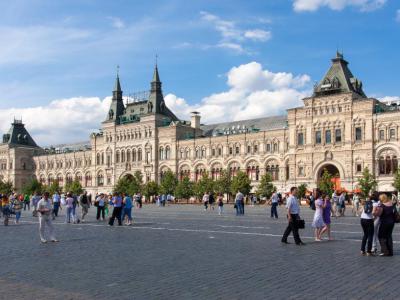
Kazan Cathedral is another stunning site next to it. This impressive Russian Orthodox church is a replica of the original destroyed by the Bolsheviks in the 1930s. Nearby, there's the GUM Department Store, a massive shopping center that offers a mix of high-end and more affordable merchandise.
Lobnoye Mesto is a raised platform in the square where important announcements and ceremonies took place in the past. Right beside it stands the Monument to Minin and Pozharsky, which honors two national heroes of Russia.
Saint Basil's Cathedral, with its colorful and intricate domes, is perhaps the most recognizable building in Red Square. This iconic symbol of Russia makes a perfect photo-op.
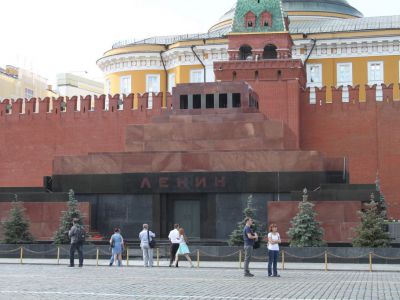
Two grand towers, the Spasskaya and Senatskaya Towers, form parts of the Kremlin Wall. The Spasskaya Tower is known for its chimes, marking time for Muscovites for centuries. In front of them, Lenin's Mausoleum is a solemn place where you can pay respects to Vladimir Lenin, a prominent figure in Russian history.
Nikolskaya Tower is yet another impressive bastion, and nearby, you can explore the State Historical Museum to learn more about Russia's past.
If you ever get the chance to visit Moscow at least for one day, don't miss the opportunity to explore Red Square and its remarkable sites. You'll be immersed in the history and beauty of Russia, and it's an experience worth cherishing forever!
As a designated UNESCO World Heritage Site, the square is home to some of the most important landmarks in Russia. One of them is the Iberian Gate, the only gate still in place leading into the square. Complete with a small chapel, it was reconstructed after demolition during the Soviet era.
Kazan Cathedral is another stunning site next to it. This impressive Russian Orthodox church is a replica of the original destroyed by the Bolsheviks in the 1930s. Nearby, there's the GUM Department Store, a massive shopping center that offers a mix of high-end and more affordable merchandise.
Lobnoye Mesto is a raised platform in the square where important announcements and ceremonies took place in the past. Right beside it stands the Monument to Minin and Pozharsky, which honors two national heroes of Russia.
Saint Basil's Cathedral, with its colorful and intricate domes, is perhaps the most recognizable building in Red Square. This iconic symbol of Russia makes a perfect photo-op.
Two grand towers, the Spasskaya and Senatskaya Towers, form parts of the Kremlin Wall. The Spasskaya Tower is known for its chimes, marking time for Muscovites for centuries. In front of them, Lenin's Mausoleum is a solemn place where you can pay respects to Vladimir Lenin, a prominent figure in Russian history.
Nikolskaya Tower is yet another impressive bastion, and nearby, you can explore the State Historical Museum to learn more about Russia's past.
If you ever get the chance to visit Moscow at least for one day, don't miss the opportunity to explore Red Square and its remarkable sites. You'll be immersed in the history and beauty of Russia, and it's an experience worth cherishing forever!
How it works: Download the app "GPSmyCity: Walks in 1K+ Cities" from Apple App Store or Google Play Store to your mobile phone or tablet. The app turns your mobile device into a personal tour guide. For US$14.99 per year, you get access to walking tours in 630+ cities worldwide. In comparison, a guided tour often costs dozens of dollars per person for a single tour. The app works offline, so no data plan is needed when traveling abroad.
Download The GPSmyCity App



Red Square Walking Tour Map
Guide Name: Red Square Walking Tour
Guide Location: Russia » Moscow (See other walking tours in Moscow)
Guide Type: Self-guided Walking Tour (Sightseeing)
Tour Duration: 1 Hour(s)
Travel Distance: 1.0 Km or 0.6 Miles
Guide Location: Russia » Moscow (See other walking tours in Moscow)
Guide Type: Self-guided Walking Tour (Sightseeing)
Tour Duration: 1 Hour(s)
Travel Distance: 1.0 Km or 0.6 Miles
Sights Featured in This Walk



4) Lobnoye Mesto
Sight description based on Wikipedia.

5) Monument to Minin and Pozharsky
Sight description based on Wikipedia.


9) Lenin's Mausoleum (must see)

10) Nikolskaya Tower
Sight description based on Wikipedia.

Walking Tours in Moscow, Russia

Create Your Own Walk in Moscow
Creating your own self-guided walk in Moscow is easy and fun. Choose the city attractions that you want to see and a walk route map will be created just for you. You can even set your hotel as the start point of the walk.

Arbat Street Walking Tour
The historic center of Moscow is mainly associated with Arbat, one of the oldest streets in the city, emerged as far back as the early 15th century. The origin of the name “Arbat” is subject to numerous theories suggesting the Russian, Tatar, Persian, or even Arab roots, meaning the "bumpy road", the "cart road", the "suburb", or the "outskirts".
The... view more
Tour Duration: 1 Hour(s)
Travel Distance: 1.3 Km or 0.8 Miles
The... view more
Tour Duration: 1 Hour(s)
Travel Distance: 1.3 Km or 0.8 Miles

Moscow Introduction Walking Tour
Moscow (Russian: Moskva) is the capital and the largest city in Russia. Cosmopolitan as such, it is the nation’s political, economic, cultural, scientific and religious center. The city's name is thought to have derived from that of the Moskva River upon which it stands.
The first known reference to Moscow dates from 1147 and is associated with Prince Yuri Dolgoruky, the city's... view more
Tour Duration: 2 Hour(s)
Travel Distance: 3.2 Km or 2 Miles
The first known reference to Moscow dates from 1147 and is associated with Prince Yuri Dolgoruky, the city's... view more
Tour Duration: 2 Hour(s)
Travel Distance: 3.2 Km or 2 Miles

Communist Moscow Tour
The arrival of communist ideology left an indelible imprint in the history of the 20th century, largely affecting the lives of people, arts, and architecture. Having been at the heart of the Soviet empire for almost 70 years, Moscow is a great destination for everyone interested in the Soviet heritage, the traces of which are found throughout the city.
By far, the most iconic site associated... view more
Tour Duration: 1 Hour(s)
Travel Distance: 2.1 Km or 1.3 Miles
By far, the most iconic site associated... view more
Tour Duration: 1 Hour(s)
Travel Distance: 2.1 Km or 1.3 Miles
Useful Travel Guides for Planning Your Trip

16 Best Russian Things to Buy as Souvenirs in Moscow
While it's easier to list the riches Russia does not have, if there are such, the variety of authentic Russian stuff available in Moscow is truly mind-blowing. Some items are obscenely expensive, others - affordable, but both can make a memorable gift from the largest country in the world. To...
The Most Popular Cities
/ view all