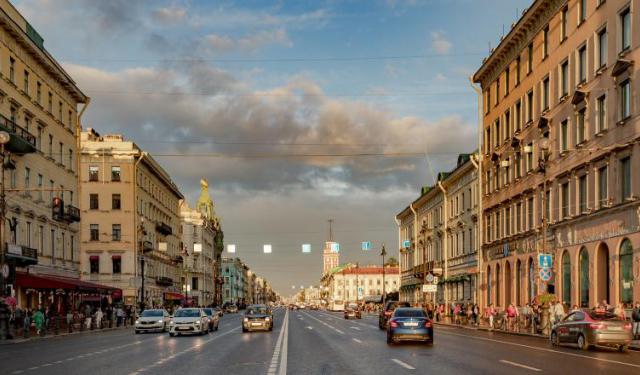
Nevsky Prospekt Walking Tour (Self Guided), St. Petersburg
Nevsky Prospekt (Avenue) is the main artery of Saint Petersburg, named after the Alexander Nevsky Lavra (monastery) found at the eastern end of it. The monastery commemorates a prominent warlord and legendary figure in the Russian history, Prince Saint Alexander Nevsky (1221–1263).
Upon his founding of the city in 1703, Tsar Peter the Great planned the course of the street as the outset of the road to Novgorod and Moscow. Nevsky Prospect is undoubtedly the most fascinating place in St. Petersburg, where literally every house breathes history. The avenue has been mentioned in numerous writings of the great Russian classics and, over the years, has largely retained its appearance undesecrated by any modern addition.
Those visiting St. Petersburg for the first time should definitely start their acquaintance with the city from here. The avenue hosts a plethora of historic and cultural attractions, as well as shopping and entertainment venues.
The undisputed must-visit sights include the Admiralty Building – home to the Russian Navy Command and one of St. Petersburg's most conspicuous landmarks – the sail warship weather-vane; the Literary cafe, where Alexander Pushkin can still be found sitting at the table; the notable Singer House (aka the House of Book) with its noticeable glass dome on top; the magnificent Kazan Cathedral housing a wonder-making icon, one of the most venerated in Russia; the Gostiny Dvor supermarket – the world's oldest, operational for over 250 years; the Anichkov Bridge with its famous Horse Tamers sculptures; and many more.
To explore these and other attractions of the Nevsky Avenue at a comfortable pace, follow our self-guided walking tour.
Upon his founding of the city in 1703, Tsar Peter the Great planned the course of the street as the outset of the road to Novgorod and Moscow. Nevsky Prospect is undoubtedly the most fascinating place in St. Petersburg, where literally every house breathes history. The avenue has been mentioned in numerous writings of the great Russian classics and, over the years, has largely retained its appearance undesecrated by any modern addition.
Those visiting St. Petersburg for the first time should definitely start their acquaintance with the city from here. The avenue hosts a plethora of historic and cultural attractions, as well as shopping and entertainment venues.
The undisputed must-visit sights include the Admiralty Building – home to the Russian Navy Command and one of St. Petersburg's most conspicuous landmarks – the sail warship weather-vane; the Literary cafe, where Alexander Pushkin can still be found sitting at the table; the notable Singer House (aka the House of Book) with its noticeable glass dome on top; the magnificent Kazan Cathedral housing a wonder-making icon, one of the most venerated in Russia; the Gostiny Dvor supermarket – the world's oldest, operational for over 250 years; the Anichkov Bridge with its famous Horse Tamers sculptures; and many more.
To explore these and other attractions of the Nevsky Avenue at a comfortable pace, follow our self-guided walking tour.
How it works: Download the app "GPSmyCity: Walks in 1K+ Cities" from Apple App Store or Google Play Store to your mobile phone or tablet. The app turns your mobile device into a personal tour guide and its built-in GPS navigation functions guide you from one tour stop to next. The app works offline, so no data plan is needed when traveling abroad.
Download The GPSmyCity App



Nevsky Prospekt Walking Tour Map
Guide Name: Nevsky Prospekt Walking Tour
Guide Location: Russia » St. Petersburg (See other walking tours in St. Petersburg)
Guide Type: Self-guided Walking Tour (Sightseeing)
# of Attractions: 18
Tour Duration: 3 Hour(s)
Travel Distance: 3.1 Km or 1.9 Miles
Author: emily
Sight(s) Featured in This Guide:
Guide Location: Russia » St. Petersburg (See other walking tours in St. Petersburg)
Guide Type: Self-guided Walking Tour (Sightseeing)
# of Attractions: 18
Tour Duration: 3 Hour(s)
Travel Distance: 3.1 Km or 1.9 Miles
Author: emily
Sight(s) Featured in This Guide:
- Admiralty Building
- Wawelberg Bank
- Kotomin House. Literary Cafe
- Stroganov Palace
- Kazan Cathedral
- House of Book
- St. Catherine Catholic Church
- Saint Petersburg Duma
- Saint Catherine's Armenian Church
- Gostiny Dvor
- Passazh
- National Library of Russia
- Ostrovsky Square
- Malaya Sadovaya Street (Small Garden Street)
- Elisseeff Emporium
- Anichkov Palace
- Anichkov Bridge
- Beloselsky-Belozersky Palace

1) Admiralty Building
Rising over the west end of Nevsky Prospekt with its gilded 72.5 meter spire, topped by a golden weather-vane shaped as a small sail warship (Korablik), is one of St. Petersburg's most conspicuous landmarks – the Admiralty building. The former headquarters of the Admiralty Board and the Imperial Russian Navy, this is now home to the Chief Command of the Russian Federation's Navy and a naval college.
The building sits at the focal point of St. Petersburg's three main streets – Nevsky Prospekt, Gorokhovaya Ulitsa (Pea Street), and Voznesenskiy Prospekt – and was once jestingly called a "Pole Star" or "Nevsky trident".The site was chosen deliberately to be within a range of canon fire from the nearby Peter & Paul Fortress, so that the Admiralty could be destroyed if ever captured by enemy. First built in 1704 as a fortified shipyard, it provided backbone for the nascent Russian fleet. The first warship here was launched in 1706. By the time the shipyard was closed in 1844, it had churned out 262 vessels.
The tower and the metal spire with a weather-vane on top were installed in 1719. Underneath the spire there are 28 statues depicting four seasons, four elements, and four prevailing winds, as well as the goddess Isis – patroness of shipbuilders, and Urania – the muse of astronomy. Further below stand the statues of Alexander the Great, Pyrrhus, Ajax, and Achilles. A 22-meter high relief, called the Establishment of the Russian Fleet, depicts Neptune, the god of sea, handing over his trident to the Russian Emperor, Peter the Great.
In 1977, when the spire was gilded, a special box was installed inside the ball beneath the weather-vane, containing draft of the Soviet Constitution.
Tip:
Check out the giant fountain in the park in front of the Admiralty.
The building sits at the focal point of St. Petersburg's three main streets – Nevsky Prospekt, Gorokhovaya Ulitsa (Pea Street), and Voznesenskiy Prospekt – and was once jestingly called a "Pole Star" or "Nevsky trident".The site was chosen deliberately to be within a range of canon fire from the nearby Peter & Paul Fortress, so that the Admiralty could be destroyed if ever captured by enemy. First built in 1704 as a fortified shipyard, it provided backbone for the nascent Russian fleet. The first warship here was launched in 1706. By the time the shipyard was closed in 1844, it had churned out 262 vessels.
The tower and the metal spire with a weather-vane on top were installed in 1719. Underneath the spire there are 28 statues depicting four seasons, four elements, and four prevailing winds, as well as the goddess Isis – patroness of shipbuilders, and Urania – the muse of astronomy. Further below stand the statues of Alexander the Great, Pyrrhus, Ajax, and Achilles. A 22-meter high relief, called the Establishment of the Russian Fleet, depicts Neptune, the god of sea, handing over his trident to the Russian Emperor, Peter the Great.
In 1977, when the spire was gilded, a special box was installed inside the ball beneath the weather-vane, containing draft of the Soviet Constitution.
Tip:
Check out the giant fountain in the park in front of the Admiralty.
Sight description based on Wikipedia.

2) Wawelberg Bank
The Wawelberg Bank Building is an important landmark of St. Petersburg, constructed by a prominent Polish-Jewish banker family who settled here in the 1840s. The massive edifice – stretching for an entire city block – incorporates the foundation and elements of two separate 18th century buildings.
Upon its completion in 1912, the building was compared to the Doge's Palace in Venice and the Banco di Santo Spirito in Rome. Despite its dark granite facade, producing a somewhat medieval appearance, many contemporaries considered the building a bit too “American”, if not tasteless.
Aside from the bank, throughout its century-plus history, the Wawelberg Building has consecutively accommodated a retail establishment, a restaurant, an employment agency, and an art studio. For most of the Soviet period, between 1960 and 1992, it was occupied by the regional Aeroflot office; hence the local nick "Aeroflot Building" that is still in use. Today, it houses a collection of travel agencies and cafes. In perspective, there are plans to convert the property into a boutique hotel.
Upon its completion in 1912, the building was compared to the Doge's Palace in Venice and the Banco di Santo Spirito in Rome. Despite its dark granite facade, producing a somewhat medieval appearance, many contemporaries considered the building a bit too “American”, if not tasteless.
Aside from the bank, throughout its century-plus history, the Wawelberg Building has consecutively accommodated a retail establishment, a restaurant, an employment agency, and an art studio. For most of the Soviet period, between 1960 and 1992, it was occupied by the regional Aeroflot office; hence the local nick "Aeroflot Building" that is still in use. Today, it houses a collection of travel agencies and cafes. In perspective, there are plans to convert the property into a boutique hotel.
Sight description based on Wikipedia.

3) Kotomin House. Literary Cafe
The illustrious Kotomin House (Russian: Dom Kotomina) is a historic landmark, named after its prominent entrepreneur-owner Konon Kotomin, who acquired the property in 1807, some 20 years after being released from serfdom.
At one point, there was a Wolf & Beranget confectionery here, located on the ground floor, which gained popularity and made history on 27 January 1837 when Alexander Pushkin (Russia's #1 poet) visited here about 4pm, en route to his duel with Georges d'Anthès. In less than an hour the poet was mortally wounded and died the following day. The confectionery closed down in the late 1840s.
In 1834, a Chinese cafe operated on the premises, also popular with the local literati, such as Alexander Pushkin, Mikhail Lermontov, Taras Shevchenko, Nikolai Chernyshevsky, Fyodor Dostoevsky and others. Towards the end of the 19th century, another eatery – the French restaurant Albert, renowned for its exquisite cuisine and high prices – opened here, frequented by literary luminaries and even royals.
Around the same time, in 1877, Leiner's restaurant, on the second floor, gained popularity with the theatrical lot. Among its habitués were Pyotr Ilyich Tchaikovsky and Fyodor Shalyapin. Reportedly, Tchaikovsky contracted cholera at this very restaurant after drinking a sip of raw water on October 20, 1893; he died several days later.
In 1978-1981 the Kotomin House was reconstructed and since 1983 the Literary Café has been occupying its two floors. Inside, hung with pictures of Russian writers, it has, among other things, a wax figure of Pushkin sat at one of the tables on the upper floor. In keeping with tradition, the place regularly organizes poetry and music evenings, as well as other artistic events.
The traditional drink of Russia, black tea, is served here in a samovar.
At one point, there was a Wolf & Beranget confectionery here, located on the ground floor, which gained popularity and made history on 27 January 1837 when Alexander Pushkin (Russia's #1 poet) visited here about 4pm, en route to his duel with Georges d'Anthès. In less than an hour the poet was mortally wounded and died the following day. The confectionery closed down in the late 1840s.
In 1834, a Chinese cafe operated on the premises, also popular with the local literati, such as Alexander Pushkin, Mikhail Lermontov, Taras Shevchenko, Nikolai Chernyshevsky, Fyodor Dostoevsky and others. Towards the end of the 19th century, another eatery – the French restaurant Albert, renowned for its exquisite cuisine and high prices – opened here, frequented by literary luminaries and even royals.
Around the same time, in 1877, Leiner's restaurant, on the second floor, gained popularity with the theatrical lot. Among its habitués were Pyotr Ilyich Tchaikovsky and Fyodor Shalyapin. Reportedly, Tchaikovsky contracted cholera at this very restaurant after drinking a sip of raw water on October 20, 1893; he died several days later.
In 1978-1981 the Kotomin House was reconstructed and since 1983 the Literary Café has been occupying its two floors. Inside, hung with pictures of Russian writers, it has, among other things, a wax figure of Pushkin sat at one of the tables on the upper floor. In keeping with tradition, the place regularly organizes poetry and music evenings, as well as other artistic events.
The traditional drink of Russia, black tea, is served here in a samovar.

4) Stroganov Palace
The Stroganov Palace – one of the few Baroque structures on Nevsky Prospect preserved in its original appearance – was built by Italian architect Francesco-Bartholomeo Rastrelli in 1752-1754. Its first owner, Baron Sergei Stroganov, and his family were known in artistic circles and associated with prominent artists, writers, and composers of the day. Many of the Stroganovs were art connoisseurs and major political figures. The world-famous Beef Stroganoff is also their culinary creation.
Sergei Stroganov's son Alexander became President of the Imperial Academy of Arts in 1800. He completed decoration of the palace, and several years later, when the new Empress Catherine II introduced Neoclassical style, commissioned architect Andrei Voronikhin to redo the interiors. Rumors have it that Alexander Stroganov was the architect's father, whose mother was his serf. The first suites decorated by Voronikhin were the Mineral Study, Picture Gallery, Library and Alexander Stroganov's Physics Cabinet. Another two enfilades in the west wing were created for Pavel Stroganov (son of Alexander), of which only the Small Drawing Room has survived.
After the Revolution of 1917, the Stroganovs emigrated from Russia and the palace was nationalized. The Soviets made it a museum of the Russian nobility's lifestyle. In 1929 the museum was shut down and much of its contents taken to the Hermitage. In 1988, the building became property of the Russian Museum which undertook its restoration. The latter saw, among other things, the outside walls of the palace repainted light pink, in keeping with Rastrelli's original design.
An extensive art collection garnered by the Stroganovs over the centuries is currently displayed here alongside a collection of wax figures of the Romanov royal family. Tours in English are available and can be scheduled in advance.
Sergei Stroganov's son Alexander became President of the Imperial Academy of Arts in 1800. He completed decoration of the palace, and several years later, when the new Empress Catherine II introduced Neoclassical style, commissioned architect Andrei Voronikhin to redo the interiors. Rumors have it that Alexander Stroganov was the architect's father, whose mother was his serf. The first suites decorated by Voronikhin were the Mineral Study, Picture Gallery, Library and Alexander Stroganov's Physics Cabinet. Another two enfilades in the west wing were created for Pavel Stroganov (son of Alexander), of which only the Small Drawing Room has survived.
After the Revolution of 1917, the Stroganovs emigrated from Russia and the palace was nationalized. The Soviets made it a museum of the Russian nobility's lifestyle. In 1929 the museum was shut down and much of its contents taken to the Hermitage. In 1988, the building became property of the Russian Museum which undertook its restoration. The latter saw, among other things, the outside walls of the palace repainted light pink, in keeping with Rastrelli's original design.
An extensive art collection garnered by the Stroganovs over the centuries is currently displayed here alongside a collection of wax figures of the Romanov royal family. Tours in English are available and can be scheduled in advance.
Sight description based on Wikipedia.

5) Kazan Cathedral (must see)
The Kazan Cathedral (Russian: Kazanskiy Kafedralniy Sobor), also known as the Cathedral of Our Lady of Kazan, is a Russian Orthodox temple dedicated to Our Lady of Kazan, one of the most venerated icons in Russia, accredited with many miracles.
The architect Andrey Voronikhin modeled the building on St. Peter's Basilica in Rome despite strong opposition from the church authorities who disliked the idea of replicating a Catholic basilica in Russia's then capital. The construction started in 1801 and lasted ten years.
Many leading Russian artists of the day contributed to the design, producing the interior grand with arched ceilings and ornate carvings, and numerous columns echoing the majestic exterior colonnade reminiscent of a palatial hall – 69 meters long and 62 meters high. In addition to the spectacular stone colonnade accented with gold, the cathedral's exterior features a small fountain encircled by a garden and a wrought-iron grille separating it from a small square. The cathedral's huge bronze doors were copied from the doors of the Baptistery in Florence, Italy.
The Kazan Cathedral became a symbol of and a memorial to the Russian victory in the Patriotic War of 1812. When Napoleon invaded the country, the Russian commander-in-chief General Mikhail Kutuzov sought divine help from Our Lady of Kazan. In 1813, he himself was interred in the cathedral. After the war, in 1815, keys to 17 cities and eight fortresses brought from Europe by the victorious Russian army were placed inside the cathedral's sacristy. In 1837, Boris Orlovsky designed two bronze statues – of Kutuzov and Barclay de Tolly – standing out front.
In January 1932 the authorities closed the cathedral and reopened it in November as the pro-Marxist "Museum of the History of Religion and Atheism". Religious services resumed in 1992, and four years later the cathedral was returned to the Russian Orthodox Church. As of 2017 it functions as the mother cathedral of the metropolis of St. Petersburg.
Why You Should Visit:
For anyone who hasn't been inside an active Eastern Orthodox Church, this is recommended as worshipers abound and the building's architecture is something truly admirable.
Tip:
Try to visit during a service (6 pm) and focus on the service and voices of the quire to get a better feel for the soul of the country and Russian people.
Majestic during the day, the cathedral is exceptionally spectacular at night.
The architect Andrey Voronikhin modeled the building on St. Peter's Basilica in Rome despite strong opposition from the church authorities who disliked the idea of replicating a Catholic basilica in Russia's then capital. The construction started in 1801 and lasted ten years.
Many leading Russian artists of the day contributed to the design, producing the interior grand with arched ceilings and ornate carvings, and numerous columns echoing the majestic exterior colonnade reminiscent of a palatial hall – 69 meters long and 62 meters high. In addition to the spectacular stone colonnade accented with gold, the cathedral's exterior features a small fountain encircled by a garden and a wrought-iron grille separating it from a small square. The cathedral's huge bronze doors were copied from the doors of the Baptistery in Florence, Italy.
The Kazan Cathedral became a symbol of and a memorial to the Russian victory in the Patriotic War of 1812. When Napoleon invaded the country, the Russian commander-in-chief General Mikhail Kutuzov sought divine help from Our Lady of Kazan. In 1813, he himself was interred in the cathedral. After the war, in 1815, keys to 17 cities and eight fortresses brought from Europe by the victorious Russian army were placed inside the cathedral's sacristy. In 1837, Boris Orlovsky designed two bronze statues – of Kutuzov and Barclay de Tolly – standing out front.
In January 1932 the authorities closed the cathedral and reopened it in November as the pro-Marxist "Museum of the History of Religion and Atheism". Religious services resumed in 1992, and four years later the cathedral was returned to the Russian Orthodox Church. As of 2017 it functions as the mother cathedral of the metropolis of St. Petersburg.
Why You Should Visit:
For anyone who hasn't been inside an active Eastern Orthodox Church, this is recommended as worshipers abound and the building's architecture is something truly admirable.
Tip:
Try to visit during a service (6 pm) and focus on the service and voices of the quire to get a better feel for the soul of the country and Russian people.
Majestic during the day, the cathedral is exceptionally spectacular at night.
Sight description based on Wikipedia.

6) House of Book
The House of Book (Russian: Dom Knigi) is one of the first bookstores in Russia and the most prominent one in St. Petersburg.
Originally, the building was meant to accommodate the Russian branch of the Singer Sewing Machine Company, and was initially conceived as a skyscraper, similar to the Singer headquarters in New York City, then still under construction. However, the architectural regulations of Saint Petersburg of the day prohibited building anything taller than the Winter Palace (Imperial residence).
The architect Pavel Suzor came up with an elegant solution – a six-story, loft-style modernist Art Nouveau building crowned with a glass tower, topped with a glass globe created by Estonian artist Amandus Adamson. This gave the impression of a substantially taller structure, without physically obstructing anything nearby.
Constructed between 1902 and 1904, the building remained property of the Singer family until 1919, and was briefly occupied by the US Embassy during World War I. In 1919, it was passed to the Petrograd State Publishing House to become the city's largest bookstore, and was subsequently renamed "The House of Book" in 1938.
Other than the bookstore, it had also housed several of Leningrad’s publishing houses, a music store, and a store for foreign literature. Remarkably, the bookstore remained operatinal even during the Siege of Leningrad, up until November 1942; it reopened again in 1948. After the most recent reconstruction in 2004-2006, it is now also home, apart from the House of Book (on the two lower floors), to the Café Singer and Vkontakte – the Russian social media service – occupying the top five floors.
The store sells books in English, French, German, and many other languages, as well as postcards, calendars, handbooks, greeting cards, and children’s books. English speaking staff are available to help foreign visitors.
Originally, the building was meant to accommodate the Russian branch of the Singer Sewing Machine Company, and was initially conceived as a skyscraper, similar to the Singer headquarters in New York City, then still under construction. However, the architectural regulations of Saint Petersburg of the day prohibited building anything taller than the Winter Palace (Imperial residence).
The architect Pavel Suzor came up with an elegant solution – a six-story, loft-style modernist Art Nouveau building crowned with a glass tower, topped with a glass globe created by Estonian artist Amandus Adamson. This gave the impression of a substantially taller structure, without physically obstructing anything nearby.
Constructed between 1902 and 1904, the building remained property of the Singer family until 1919, and was briefly occupied by the US Embassy during World War I. In 1919, it was passed to the Petrograd State Publishing House to become the city's largest bookstore, and was subsequently renamed "The House of Book" in 1938.
Other than the bookstore, it had also housed several of Leningrad’s publishing houses, a music store, and a store for foreign literature. Remarkably, the bookstore remained operatinal even during the Siege of Leningrad, up until November 1942; it reopened again in 1948. After the most recent reconstruction in 2004-2006, it is now also home, apart from the House of Book (on the two lower floors), to the Café Singer and Vkontakte – the Russian social media service – occupying the top five floors.
The store sells books in English, French, German, and many other languages, as well as postcards, calendars, handbooks, greeting cards, and children’s books. English speaking staff are available to help foreign visitors.
Sight description based on Wikipedia.

7) St. Catherine Catholic Church
The Catholic Church of St Catherine in St. Petersburg is the oldest Catholic church in the Russian Federation.
In 1738 Empress Anna granted permission for the structure to be erected on Nevsky Prospekt, upon which the project changed several hands before it fell to the Italian architect Antonio Rinaldi who finished it in 1783. Because the Empress at the time was Catherine II (also known as Catherine the Great), the church was named after St. Catherine of Alexandria.
Under the Soviets, the activities of the church were repressed: the rector was shot in 1923 and the church itself was closed and ransacked in 1938. The building was further damaged by fire in 1947, destroying the internal decorations and organ. For the next 30 years, it was used solely as storage space for the nearby Museum of History of Religion and of Atheism. In 1984 the building was ravaged by fire again, following which it was used as offices and apartments.
Following the collapse of the Soviet Union, the building was returned to the Catholic Church in February 1992. Remarkably, during the ensued reconstruction, a crucifix previously retrieved from the sanctuary in 1938, was returned by a woman who had gone into the ransacked temple and taken it. The restoration of the church was mostly completed in 2003.
The temple stands 44 m in length, 25 m in width, and 42 m in height, and can hold up to 2,000 people. Mass services are available in English, Latin, Polish, and Russian to address the needs of the multi-ethnic congregation. The church also has a shop that sells an assortment of religious literature. Visitors and tour groups are welcome, but the parish request that you notify them in advance.
In 1738 Empress Anna granted permission for the structure to be erected on Nevsky Prospekt, upon which the project changed several hands before it fell to the Italian architect Antonio Rinaldi who finished it in 1783. Because the Empress at the time was Catherine II (also known as Catherine the Great), the church was named after St. Catherine of Alexandria.
Under the Soviets, the activities of the church were repressed: the rector was shot in 1923 and the church itself was closed and ransacked in 1938. The building was further damaged by fire in 1947, destroying the internal decorations and organ. For the next 30 years, it was used solely as storage space for the nearby Museum of History of Religion and of Atheism. In 1984 the building was ravaged by fire again, following which it was used as offices and apartments.
Following the collapse of the Soviet Union, the building was returned to the Catholic Church in February 1992. Remarkably, during the ensued reconstruction, a crucifix previously retrieved from the sanctuary in 1938, was returned by a woman who had gone into the ransacked temple and taken it. The restoration of the church was mostly completed in 2003.
The temple stands 44 m in length, 25 m in width, and 42 m in height, and can hold up to 2,000 people. Mass services are available in English, Latin, Polish, and Russian to address the needs of the multi-ethnic congregation. The church also has a shop that sells an assortment of religious literature. Visitors and tour groups are welcome, but the parish request that you notify them in advance.
Sight description based on Wikipedia.

8) Saint Petersburg Duma
The Saint Petersburg City Duma was established as a municipal council in 1785 under the reign of Catherine the Great. The body was responsible for collecting local taxes spent on public needs: education, healthcare, etc.
The building itself was erected between 1784 and 1787 to a design by Giacomo Quarenghi. A stunning feature of it is the Italianate tower, added in 1799–1804, designed by Giacomo Ferrari. Visible from both ends of Nevsky Prospekt, the tower has a pentagonal shape and is very beautiful at night. From the 1850s to the 1920s, it was also used as a fire tower and an optical telegraph.
Over the years, the Duma building has endured numerous modifications. In 1847–52 the edifice was rebuilt in Neo-Renaissance style, favoured by Nicholas I – it was added with public halls and its overall height increased. Additionally, two more floors were constructed in 1913–14.
A spacious central hall of the City Duma was frequently used for high-profile social events. Among these were public lectures of the Free University in 1862, read by the likes of I. M. Sechenov and D. I. Mendeleev; concerts of the Russian Musical Society, founded by A. G. Rubinstein; and the first time public shows by composers like M. A. Balakirev, M. P. Mussorgsky, and N. A. Rimsky-Korsakov. Fyodor Dostoevsky, Alexander Blok, and Sergey Yesenin read their works here, too.
After the 1917 Revolution, the municipal government moved out and the building subsequently housed the Experimental Theater (1920s), the Academy of Consumer Cooperatives (1930s), a public catering college, and the Central Railway Ticket Office. In the years that followed, most of the historical interiors were lost, except for the relatively well-preserved Nikolaevsky and Mirror Halls that were occupied by the Children's Philharmonic.
Nowadays, the building houses the Rimsky-Korsakov Music School and, since 1998, a branch of Sberbank of Russia.
The building itself was erected between 1784 and 1787 to a design by Giacomo Quarenghi. A stunning feature of it is the Italianate tower, added in 1799–1804, designed by Giacomo Ferrari. Visible from both ends of Nevsky Prospekt, the tower has a pentagonal shape and is very beautiful at night. From the 1850s to the 1920s, it was also used as a fire tower and an optical telegraph.
Over the years, the Duma building has endured numerous modifications. In 1847–52 the edifice was rebuilt in Neo-Renaissance style, favoured by Nicholas I – it was added with public halls and its overall height increased. Additionally, two more floors were constructed in 1913–14.
A spacious central hall of the City Duma was frequently used for high-profile social events. Among these were public lectures of the Free University in 1862, read by the likes of I. M. Sechenov and D. I. Mendeleev; concerts of the Russian Musical Society, founded by A. G. Rubinstein; and the first time public shows by composers like M. A. Balakirev, M. P. Mussorgsky, and N. A. Rimsky-Korsakov. Fyodor Dostoevsky, Alexander Blok, and Sergey Yesenin read their works here, too.
After the 1917 Revolution, the municipal government moved out and the building subsequently housed the Experimental Theater (1920s), the Academy of Consumer Cooperatives (1930s), a public catering college, and the Central Railway Ticket Office. In the years that followed, most of the historical interiors were lost, except for the relatively well-preserved Nikolaevsky and Mirror Halls that were occupied by the Children's Philharmonic.
Nowadays, the building houses the Rimsky-Korsakov Music School and, since 1998, a branch of Sberbank of Russia.

9) Saint Catherine's Armenian Church
St. Catherine's Armenian Church on Nevsky Prospect is an Armenian Apostolic church and one of the earliest such temples in Russia, built in the 1770s.
Back in the mid-18th century, the site was occupied by private stables of Empress Elizabeth of Russia. On May 2, 1770 Empress Catherine the Great granted permission to the local Armenian community to raise a church, upon the request of her ethnic Armenian jeweler Ivan Lazarev. The project was funded primarily by Lazarev himself, who provided 30,000 rubles out of the total 33,000 needed. The design – an early example of Russian Classicism – was made by Yury Felten. The construction started in the spring of 1771 and was completed in 1776. The church was consecrated on February 18, 1780, and was named after Catherine of Alexandria, a namesake of the Russian Empress. Colored white and blue, it has a neoclassical portico and single cupola.
The church had soon become the center of Armenian cultural activity in the Russian imperial capital; the first Armenian publishing house in Russia functioned nearby. In 1865 the temple received permission to install bells. It was completely renovated by the Russian-Armenian architect Alexander Tamanian in 1906–09.
Under the Soviet rule, the church was closed down in May 1930. During the Second World War, the building served as the headquarters of anti-aircraft defense, and later, as a decoration room for the Leningrad Theater of Musical Comedy. The Armenian community regained ownership of the property in August 1992 and the first mass took place here in March 1993. After an extensive restoration, the church was reconsecrated on July 12, 2000 and was renovated again in 2014.
Back in the mid-18th century, the site was occupied by private stables of Empress Elizabeth of Russia. On May 2, 1770 Empress Catherine the Great granted permission to the local Armenian community to raise a church, upon the request of her ethnic Armenian jeweler Ivan Lazarev. The project was funded primarily by Lazarev himself, who provided 30,000 rubles out of the total 33,000 needed. The design – an early example of Russian Classicism – was made by Yury Felten. The construction started in the spring of 1771 and was completed in 1776. The church was consecrated on February 18, 1780, and was named after Catherine of Alexandria, a namesake of the Russian Empress. Colored white and blue, it has a neoclassical portico and single cupola.
The church had soon become the center of Armenian cultural activity in the Russian imperial capital; the first Armenian publishing house in Russia functioned nearby. In 1865 the temple received permission to install bells. It was completely renovated by the Russian-Armenian architect Alexander Tamanian in 1906–09.
Under the Soviet rule, the church was closed down in May 1930. During the Second World War, the building served as the headquarters of anti-aircraft defense, and later, as a decoration room for the Leningrad Theater of Musical Comedy. The Armenian community regained ownership of the property in August 1992 and the first mass took place here in March 1993. After an extensive restoration, the church was reconsecrated on July 12, 2000 and was renovated again in 2014.
Sight description based on Wikipedia.

10) Gostiny Dvor
Gostinyi Dvor – a historic Russian term for "indoor market", "guest court" or "merchant yard" – is the name commonly applied to the vast department store in St. Petersburg. The latter holds the distinction of being the world’s first shopping center, operational for over 250 years.
Sprawling at the intersection of Nevsky Prospekt and Sadovaya Street for over one kilometer and encompassing the area of 53,000 m2 (570,000 sq ft), this indoor complex originally comprised more than 100 outlets. It took 28 years to build, starting from 1757, during which the initial elaborate design by Bartolomeo Rastrelli was discarded in favour of a more cost-effective Neoclassical solution by Jean-Baptiste Vallin de la Mothe.
In the course of the 19th century, Gostiny Dvor was continuously augmented, ultimately incorporating ten indoor streets with as many as 178 shops. By the turn of the 20th century, the place, however, had lost much of its popularity to the more fashionable Passage located nearby.
After the October Revolution of 1917, Gostiny Dvor remained boarded up for several years and was severely damaged during World War II. The post-war reconstruction of 1945-1955 had its inner walls demolished, producing a vast commercial space. The massive structure got another face-lift later in the century and entered the new millennium as one of the most fashionable shopping centers in Eastern Europe.
Here, you can buy practically anything, from knitting needles to party supplies. Among other amenities, there are tailor services, foreign exchange, and a food court. Additionally, the place offers art and craft classes for children and parents to enjoy. The mall is open until 10 o’clock every night.
Sprawling at the intersection of Nevsky Prospekt and Sadovaya Street for over one kilometer and encompassing the area of 53,000 m2 (570,000 sq ft), this indoor complex originally comprised more than 100 outlets. It took 28 years to build, starting from 1757, during which the initial elaborate design by Bartolomeo Rastrelli was discarded in favour of a more cost-effective Neoclassical solution by Jean-Baptiste Vallin de la Mothe.
In the course of the 19th century, Gostiny Dvor was continuously augmented, ultimately incorporating ten indoor streets with as many as 178 shops. By the turn of the 20th century, the place, however, had lost much of its popularity to the more fashionable Passage located nearby.
After the October Revolution of 1917, Gostiny Dvor remained boarded up for several years and was severely damaged during World War II. The post-war reconstruction of 1945-1955 had its inner walls demolished, producing a vast commercial space. The massive structure got another face-lift later in the century and entered the new millennium as one of the most fashionable shopping centers in Eastern Europe.
Here, you can buy practically anything, from knitting needles to party supplies. Among other amenities, there are tailor services, foreign exchange, and a food court. Additionally, the place offers art and craft classes for children and parents to enjoy. The mall is open until 10 o’clock every night.
Sight description based on Wikipedia.

11) Passazh
The Passazh (from the French word “passage”) is an elite department store on Nevsky Prospekt. Historically, this site had been devoted to trade since the city's foundation in the early 18th century. It had been occupied by various shops and warehouses until 1846 when Count Essen-Stenbock-Fermor acquired the grounds to build an elite shopping mall for the highest echelons of the Russian nobility and bourgeoisie.
The name came from a vast gallery between Nevsky Prospekt and Italianskaya Street which provided the main passage through the mall. The gallery was covered over by an arching glass and steel roof, thus giving it a claim to being one of the world's first shopping malls.
The Passage opened its doors to consumers on May 9, 1848. It was one of the first structures in Russia to employ gas for lighting. Another innovation was an underground floor, where an electric station would be installed in 1900.
After the Russian Revolution of 1917, the store reopened as the Passage Supermarket in 1922. It remained a showcase of the Soviet retail industry until the onset of World War II. During the Siege of Leningrad, the building's glass roof was intensively bombed, but remarkably the interior sustained little damage. The Passage was restored and reopened for business in 1947. Since 1961, it has been specializing in goods for women.
The store is now privately owned and the building has been renovated to meet modern standards. Apart from the expanded showrooms of international department stores, it houses an upscale food market in the basement, offering a wide variety of international produce. There's also a restaurant on the upper floor with a panoramic view of Nevsky Prospekt. Furthermore, the premises – also long associated with the entertainment industry – are still home to the Komissarzhevskaya Theatre.
The name came from a vast gallery between Nevsky Prospekt and Italianskaya Street which provided the main passage through the mall. The gallery was covered over by an arching glass and steel roof, thus giving it a claim to being one of the world's first shopping malls.
The Passage opened its doors to consumers on May 9, 1848. It was one of the first structures in Russia to employ gas for lighting. Another innovation was an underground floor, where an electric station would be installed in 1900.
After the Russian Revolution of 1917, the store reopened as the Passage Supermarket in 1922. It remained a showcase of the Soviet retail industry until the onset of World War II. During the Siege of Leningrad, the building's glass roof was intensively bombed, but remarkably the interior sustained little damage. The Passage was restored and reopened for business in 1947. Since 1961, it has been specializing in goods for women.
The store is now privately owned and the building has been renovated to meet modern standards. Apart from the expanded showrooms of international department stores, it houses an upscale food market in the basement, offering a wide variety of international produce. There's also a restaurant on the upper floor with a panoramic view of Nevsky Prospekt. Furthermore, the premises – also long associated with the entertainment industry – are still home to the Komissarzhevskaya Theatre.
Sight description based on Wikipedia.

12) National Library of Russia
The National Library of Russia in Saint Petersburg is the oldest public library in the country and one of the largest in the world. Formerly known as the Imperial Public Library, it was established in 1795 by Catherine the Great and inaugurated on 14 January 1814. The Neoclassical building was designed by architect Yegor Sokolov.
At various times, the library's staff included prominent men of letters and scholars like Ivan Krylov, Anton Delvig and others. Throughout the 1850s, the NLR book collection grew exponentially, along with its readership. The influx of new visitors demanded larger facilities and prompted the arrival of such novelties as a reference desk, printed catalogs and guide books, lists of new acquisitions, and longer hours of service.
By 1913, the library had one million Russian publications (out of the total collection of three million titles), emerging as one of the world’s greatest libraries and the richest manuscript collection in the country. The latter included Bede – an Anglo-Saxon manuscript, the Ostromir Gospel – the second oldest East Slavic book in existence, the Codex Zographenis – an illuminated manuscript Gospel Book, and the personal collection of Voltaire.
During the Soviet period, the library was decorated with the Order of the Red Banner of Labour in 1939 and remained operational even during the gruesome Siege of Leningrad. Towards the end of the 20th century, it undertook a large-scale digitization effort.
Today, as an all-Russian center of librarianship, the National Library contains over 33 million volumes, complete with the archives of Peter I, Catherine II, Nicholas II, Peter Tchaikovsky, Fyodor Chaliapin, and many other historic individuals.
At various times, the library's staff included prominent men of letters and scholars like Ivan Krylov, Anton Delvig and others. Throughout the 1850s, the NLR book collection grew exponentially, along with its readership. The influx of new visitors demanded larger facilities and prompted the arrival of such novelties as a reference desk, printed catalogs and guide books, lists of new acquisitions, and longer hours of service.
By 1913, the library had one million Russian publications (out of the total collection of three million titles), emerging as one of the world’s greatest libraries and the richest manuscript collection in the country. The latter included Bede – an Anglo-Saxon manuscript, the Ostromir Gospel – the second oldest East Slavic book in existence, the Codex Zographenis – an illuminated manuscript Gospel Book, and the personal collection of Voltaire.
During the Soviet period, the library was decorated with the Order of the Red Banner of Labour in 1939 and remained operational even during the gruesome Siege of Leningrad. Towards the end of the 20th century, it undertook a large-scale digitization effort.
Today, as an all-Russian center of librarianship, the National Library contains over 33 million volumes, complete with the archives of Peter I, Catherine II, Nicholas II, Peter Tchaikovsky, Fyodor Chaliapin, and many other historic individuals.
Sight description based on Wikipedia.
13) Ostrovsky Square
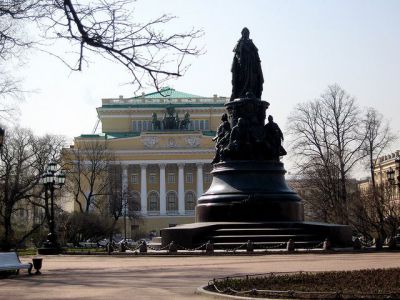
Situated at the heart of a grand architectural ensemble – linking Nevsky Prospekt to the Fontanka Embankment and embracing the Catherine Gardens, the Alexandrinsky Theatre, Architect Rossi Street (Russian: Ulitsa Zodchego Rossi) and Lomonosov Square (Ploshchad Lomonosova) – is Ostrovsky Square (Ploshchad Ostrovskogo), a beautiful creation by Italian architect Carlo Rossi. Although the elaborate plan of Rossi to produce a large urban district between Anichkov Palace and the Imperial Public Library (now the Russian National Library) was never fully realized, the area still turned out to be remarkably interesting, architecture-wise.
Originally, the square was named after the Alexandrinskiy Theater, whose neoclassical building, completed in 1832 with the Alexandrinsky Garden laid out in front, is its focal point. In 1923, the square was renamed Ploshchad Ostrovskogo in honor of the 19th-century Russian playwright Alexander Ostrovsky.
Another local landmark is the magnificent monument of Catherine the Great, unveiled in 1873, surrounded on both sides with the statues of her confidants and prominent public figures of her reign, such as Alexander Suvorov, Gavrila Derzhavin, Yekaterina Dashkova, Peter Rumyantsev, Ivan Betsky, Alexei Orlov, and Grigory Potemkin.
Also worth the mention is Architect Rossi Street, famous for its "golden ratio" proportions: 220 meters in length, and 22 meters in both width and height. It is the only street in St. Petersburg where only two buildings are located. One of them now houses the Theatre Museum and the famous Vaganova Ballet School.
A rare treat is to see Ostrovsky Square’s lights and decorations at night during New Year’s Eve. The annual 25-day Christmas Market, where vendors from around the world offer their wares and cuisine, is also a unique and recommended experience.
Originally, the square was named after the Alexandrinskiy Theater, whose neoclassical building, completed in 1832 with the Alexandrinsky Garden laid out in front, is its focal point. In 1923, the square was renamed Ploshchad Ostrovskogo in honor of the 19th-century Russian playwright Alexander Ostrovsky.
Another local landmark is the magnificent monument of Catherine the Great, unveiled in 1873, surrounded on both sides with the statues of her confidants and prominent public figures of her reign, such as Alexander Suvorov, Gavrila Derzhavin, Yekaterina Dashkova, Peter Rumyantsev, Ivan Betsky, Alexei Orlov, and Grigory Potemkin.
Also worth the mention is Architect Rossi Street, famous for its "golden ratio" proportions: 220 meters in length, and 22 meters in both width and height. It is the only street in St. Petersburg where only two buildings are located. One of them now houses the Theatre Museum and the famous Vaganova Ballet School.
A rare treat is to see Ostrovsky Square’s lights and decorations at night during New Year’s Eve. The annual 25-day Christmas Market, where vendors from around the world offer their wares and cuisine, is also a unique and recommended experience.
14) Malaya Sadovaya Street (Small Garden Street)
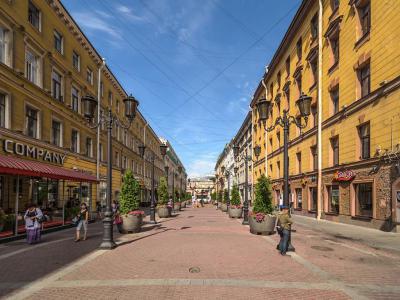
Malaya Sadovaya (Russian: Small Garden) Street is a pedestrian zone, running between Italian Street and Nevsky Prospekt. Spanning a block of about 175 meters (574 ft), it is the shortest street in St. Petersburg. Short as it may be, the street has no shortage of places to sit (cafes, terraces and a fountain) and take a break with a cup of coffee in hand or a bite to eat, and, perhaps, enjoy the view of some nearby sculptures and leisurely folk.
Upon its construction in the 1740s, the street was called New Lane (Russian: Novyi Pereulok), and was much favored by Emperor Alexander II as a walking venue. In 1873, it was renamed Catherine Street, after Catherine the Great, and kept this title until the Revolution of 1917. In September 1918, a number of streets and squares in the city were renamed, including this one, which became Proletkult (Proletarian Culture) Street. However, after World War II, most of the historical names of streets in St. Petersburg (then Leningrad) were restored. Thus, in 1949, Malaya Sadovaya Street once again emerged on the map.
In 1999 it was made a pedestrian zone: paved with tiles, sidewalk boundaries removed, and benches added, along with a fountain placed in the center, featuring a clock with a Kugel ball (a huge ball of marble – weighing 739 kilos! – freely rotating in jets of water).
More recently, several small sculptures have been added to the setting, including that of "Dog Gavryusha" in the courtyard of a house, and two cast-iron cats – “tomcat Elisey” and “cat Vasilisa” – placed respectively on the cornices of houses no.8 and no.3. Some of the passers-by attempt to throw coins at the cats for good luck, hoping that some of them will land nearby. Also, at the house no.3, there is a bronze monument of photographer Karl Bulla, whose workshop was once here.
Upon its construction in the 1740s, the street was called New Lane (Russian: Novyi Pereulok), and was much favored by Emperor Alexander II as a walking venue. In 1873, it was renamed Catherine Street, after Catherine the Great, and kept this title until the Revolution of 1917. In September 1918, a number of streets and squares in the city were renamed, including this one, which became Proletkult (Proletarian Culture) Street. However, after World War II, most of the historical names of streets in St. Petersburg (then Leningrad) were restored. Thus, in 1949, Malaya Sadovaya Street once again emerged on the map.
In 1999 it was made a pedestrian zone: paved with tiles, sidewalk boundaries removed, and benches added, along with a fountain placed in the center, featuring a clock with a Kugel ball (a huge ball of marble – weighing 739 kilos! – freely rotating in jets of water).
More recently, several small sculptures have been added to the setting, including that of "Dog Gavryusha" in the courtyard of a house, and two cast-iron cats – “tomcat Elisey” and “cat Vasilisa” – placed respectively on the cornices of houses no.8 and no.3. Some of the passers-by attempt to throw coins at the cats for good luck, hoping that some of them will land nearby. Also, at the house no.3, there is a bronze monument of photographer Karl Bulla, whose workshop was once here.
Sight description based on Wikipedia.
15) Elisseeff Emporium
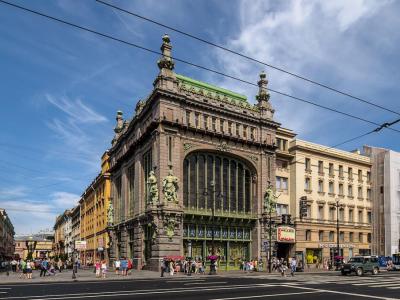
Elisseeff Emporium (aka Yeliseyevsky store) in St. Petersburg is one of the two retail complexes in Russia (the other one being in Moscow) opened by the merchant brothers Elisseeff at the turn of the 20th century. Renowned primarily for its landmark food hall, this is one of the most striking examples of St. Petersburg's Art Nouveau architecture, designed by Gabriel Baranovskii.
The architect made the entire building look like a giant stained glass shop window, which spans several floors and starkly contrasts the granite façade adorned with allegorical sculptures of Commerce, Industry, Science and Arts, created by Estonian sculptor Amandus Adamson.
Built in 1902–1903, the five-story edifice contained pretty much every feature befitting a premium choice for commerce: large retail halls and storage rooms, walk-in/drive-in coolers and refrigerator rooms, some of Europe's best wine cellars, not to mention a performance theater. The latter is still in place, albeit its lavish Art Nouveau interiors didn't survive a 1960s renovation.
In between 1917 and the 1990s, the shop was state-owned and, similarly to its Moscow cousin, was known as Gastronome No.1. Following the collapse of the Soviet Union and ensued long period of restoration, the store reopened to the public on 8 March 2012.
Now fully back to its former glory, the shop goes by the title of Kupetz (Merchant) Eliseev's Food Hall, complete with seven departments featuring 33 meters of display counters of loose produce and exquisite delicacies. The largest display is dedicated to confectionery and home-made patisserie including classic macaroons. Each department is beautifully decorated with gilded stucco ceilings and glitzy chandeliers, plus many of the original features and equipment used back in the “golden” era!
The architect made the entire building look like a giant stained glass shop window, which spans several floors and starkly contrasts the granite façade adorned with allegorical sculptures of Commerce, Industry, Science and Arts, created by Estonian sculptor Amandus Adamson.
Built in 1902–1903, the five-story edifice contained pretty much every feature befitting a premium choice for commerce: large retail halls and storage rooms, walk-in/drive-in coolers and refrigerator rooms, some of Europe's best wine cellars, not to mention a performance theater. The latter is still in place, albeit its lavish Art Nouveau interiors didn't survive a 1960s renovation.
In between 1917 and the 1990s, the shop was state-owned and, similarly to its Moscow cousin, was known as Gastronome No.1. Following the collapse of the Soviet Union and ensued long period of restoration, the store reopened to the public on 8 March 2012.
Now fully back to its former glory, the shop goes by the title of Kupetz (Merchant) Eliseev's Food Hall, complete with seven departments featuring 33 meters of display counters of loose produce and exquisite delicacies. The largest display is dedicated to confectionery and home-made patisserie including classic macaroons. Each department is beautifully decorated with gilded stucco ceilings and glitzy chandeliers, plus many of the original features and equipment used back in the “golden” era!
Sight description based on Wikipedia.
16) Anichkov Palace
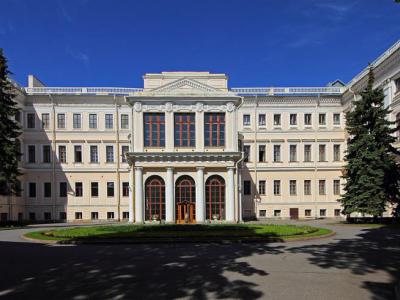
Anichkov Palace is the former residence of Empress Elizabeth of Russia. Named after the nearby Anichkov Bridge, it occupies an entire city block. The Baroque style palace was built from 1741 to 1754. Its original designer was Mikhail Zemtsov, while the remaining construction was completed by Bartolomeo Francesco Rastrelli. The palace was renovated in 1778 by Ivan Starov.
Over the years, the property was gifted several times from one person to another. Empress Elisabeth first gave it to Count Aleksey Razumovsky, after whose death Catherine the Great gave it to Prince Potemkin, upon which Alexander I presented the palace to his sister, Grand Duchess Elena Pavlovna of Russia. Following his marriage in 1866, the future Tsar Alexander III and his wife, Maria Feodorovna, made the Anichkov Palace their St. Petersburg residence.
After the October Revolution of 1917, the palace was nationalized and used briefly as a city museum. In the mid 1930s it became Leningrad's Pioneers' Palace housing over 100 after-school clubs for more than 10,000 children. Now named the Palace of Youth Creativity, it is home to a variety of organizations offering after-school education in arts and crafts, sport, sciences, and engineering. Part of the building is also used for the Anichkov Lyceum, one of St. Petersburg's most prestigious secondary schools.
The palace has two pavilions and a small museum. While the museum is open to the public at selected times, the edifice is normally not accessible to tourists. Visitors to the museum must call in advance, providing date and time of visit, the number of people, and contact information.
Over the years, the property was gifted several times from one person to another. Empress Elisabeth first gave it to Count Aleksey Razumovsky, after whose death Catherine the Great gave it to Prince Potemkin, upon which Alexander I presented the palace to his sister, Grand Duchess Elena Pavlovna of Russia. Following his marriage in 1866, the future Tsar Alexander III and his wife, Maria Feodorovna, made the Anichkov Palace their St. Petersburg residence.
After the October Revolution of 1917, the palace was nationalized and used briefly as a city museum. In the mid 1930s it became Leningrad's Pioneers' Palace housing over 100 after-school clubs for more than 10,000 children. Now named the Palace of Youth Creativity, it is home to a variety of organizations offering after-school education in arts and crafts, sport, sciences, and engineering. Part of the building is also used for the Anichkov Lyceum, one of St. Petersburg's most prestigious secondary schools.
The palace has two pavilions and a small museum. While the museum is open to the public at selected times, the edifice is normally not accessible to tourists. Visitors to the museum must call in advance, providing date and time of visit, the number of people, and contact information.
Sight description based on Wikipedia.
17) Anichkov Bridge
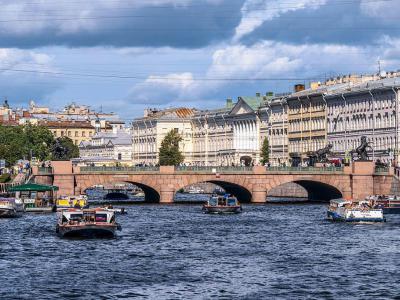
The Anichkov Bridge is a prominent overpass that graces the Fontanka River on Nevsky Prospekt. Well-known Russian authors, such as Pushkin, Gogol and Dostoevsky, referred to this bridge in their writings.
The original bridge was constructed from 1715 to 1716 by order of Peter the Great, and was named after its engineer, Mikhail Anichkov. Designed by Domenico Trezzini, the structure was made of wood. In 1841, it was replaced with a stone bridge to meet the demands of increased traffic.
A stunningly simplistic design, the pink granite bridge features three arched spans and cast iron railings adorned with mermaid and seahorse decorations. Its most stunning elements, however, are The Horse Tamers, four bronze sculptures designed by Baron Peter Klodt von Urgensburg. Prior to their installation in 1851, the statues were replicated several times, with some of the copies sent to Prussian King Frederick William IV, as a present, by Nicholas I. An urban legend has it that Klodt depicted his powerful enemy's face under the tail of one of the bronze stallions...
During World War II, the bridge came under heavy artillery fire, so the sculptures were removed and buried in the nearby Anichkov Palace garden. The bridge itself sustained serious damage but was fully restored after the war. As a memorial, the pedestal of one of the statues retains the scars of German shelling, accompanied by a commemorative plaque. Prior to the tercentenary of Saint Petersburg, the statues were removed from the bridge again and underwent thorough restoration.
Why You Should Visit:
Nice sculptures and full atmosphere of Nevsky Prospekt. The palaces facing the bridge are splendid. Also, you can schedule a boat trip from this bridge (no need to go to the Neva river).
The original bridge was constructed from 1715 to 1716 by order of Peter the Great, and was named after its engineer, Mikhail Anichkov. Designed by Domenico Trezzini, the structure was made of wood. In 1841, it was replaced with a stone bridge to meet the demands of increased traffic.
A stunningly simplistic design, the pink granite bridge features three arched spans and cast iron railings adorned with mermaid and seahorse decorations. Its most stunning elements, however, are The Horse Tamers, four bronze sculptures designed by Baron Peter Klodt von Urgensburg. Prior to their installation in 1851, the statues were replicated several times, with some of the copies sent to Prussian King Frederick William IV, as a present, by Nicholas I. An urban legend has it that Klodt depicted his powerful enemy's face under the tail of one of the bronze stallions...
During World War II, the bridge came under heavy artillery fire, so the sculptures were removed and buried in the nearby Anichkov Palace garden. The bridge itself sustained serious damage but was fully restored after the war. As a memorial, the pedestal of one of the statues retains the scars of German shelling, accompanied by a commemorative plaque. Prior to the tercentenary of Saint Petersburg, the statues were removed from the bridge again and underwent thorough restoration.
Why You Should Visit:
Nice sculptures and full atmosphere of Nevsky Prospekt. The palaces facing the bridge are splendid. Also, you can schedule a boat trip from this bridge (no need to go to the Neva river).
Sight description based on Wikipedia.
18) Beloselsky-Belozersky Palace
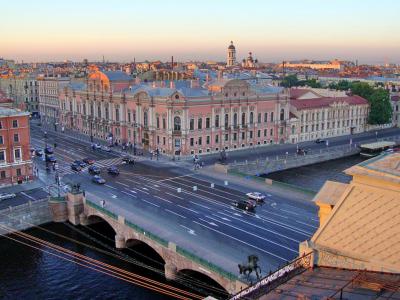
Beloselsky Belozersky Palace is a three-storied, pink-colored Neo-Baroque mansion at the intersection of the Fontanka Embankment and Nevsky Prospekt. The palace was built in 1747 during the reign of Elizabeth of Russia for Prince Mikhail Andreevitch Belosselsky, and was designed by French architect Thomas de Thomon.
Following its major renovation in 1847-1848 by Andrei Stackenschneider, new wings were added to the building and figures of atlases and caryatids placed at the façade, upon which the palace gained a reputation of one of the most opulent in Russia. Largely responsible for its sumptuous appearance was Princess Elena Pavlovna Belosselskaya-Belozerskaya. The palace also became the venue of the most lavish balls and concerts in St. Petersburg.
During World War I, the palace housed a voluntary British Red Cross hospital set up to treat Russian soldiers. It was staffed by British doctors and nurses, and was led by Lady Muriel Paget and Lady Sybil Grey. Shortly after the Revolution of 1917, the property was nationalized.
Unlike many other similar structures, the palace had survived the Soviet rule virtually intact, used as the Regional Soviet Council and the Communist Party District Headquarters until 1991. During World War II, the Rococo interiors sustained considerable damage, but were restored to the original state in 1954.
Nowadays, opulence and beauty abound everywhere on the premises: gorgeous wetlands, a beautiful staircase, silk-lined rooms, carved walls, and cherub bas-reliefs. Inside there's a wax museum, an art gallery, and a concert hall for chamber music.
Tours of the palace are available from noon to 6 pm daily.
Following its major renovation in 1847-1848 by Andrei Stackenschneider, new wings were added to the building and figures of atlases and caryatids placed at the façade, upon which the palace gained a reputation of one of the most opulent in Russia. Largely responsible for its sumptuous appearance was Princess Elena Pavlovna Belosselskaya-Belozerskaya. The palace also became the venue of the most lavish balls and concerts in St. Petersburg.
During World War I, the palace housed a voluntary British Red Cross hospital set up to treat Russian soldiers. It was staffed by British doctors and nurses, and was led by Lady Muriel Paget and Lady Sybil Grey. Shortly after the Revolution of 1917, the property was nationalized.
Unlike many other similar structures, the palace had survived the Soviet rule virtually intact, used as the Regional Soviet Council and the Communist Party District Headquarters until 1991. During World War II, the Rococo interiors sustained considerable damage, but were restored to the original state in 1954.
Nowadays, opulence and beauty abound everywhere on the premises: gorgeous wetlands, a beautiful staircase, silk-lined rooms, carved walls, and cherub bas-reliefs. Inside there's a wax museum, an art gallery, and a concert hall for chamber music.
Tours of the palace are available from noon to 6 pm daily.
Sight description based on Wikipedia.
Walking Tours in St. Petersburg, Russia

Create Your Own Walk in St. Petersburg
Creating your own self-guided walk in St. Petersburg is easy and fun. Choose the city attractions that you want to see and a walk route map will be created just for you. You can even set your hotel as the start point of the walk.
Vasilyevsky Island Walking Tour
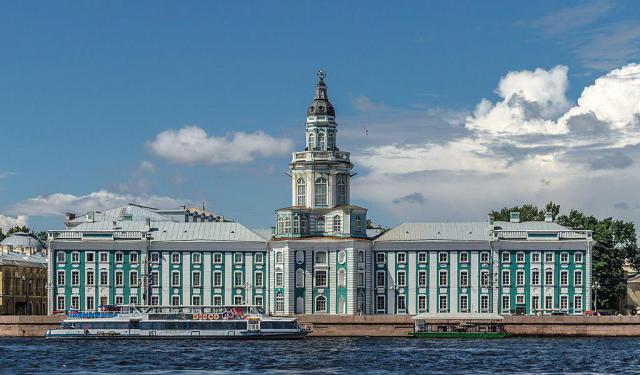
Situated just across the river from the Winter Palace, Vasilyevsky Island constitutes a large part of Saint Petersburg's historic center.
There are various versions of the origin of the island's name suggesting either Vasily-related etymology or perhaps just a corruption of the previous Swedish or Finnish name, e.g. Vasikkasaari (“Calf Island”). Legend has it, however, that some... view more
Tour Duration: 2 Hour(s)
Travel Distance: 2.7 Km or 1.7 Miles
There are various versions of the origin of the island's name suggesting either Vasily-related etymology or perhaps just a corruption of the previous Swedish or Finnish name, e.g. Vasikkasaari (“Calf Island”). Legend has it, however, that some... view more
Tour Duration: 2 Hour(s)
Travel Distance: 2.7 Km or 1.7 Miles
St. Petersburg Introduction Walking Tour
Russia's northern capital, Saint Petersburg is the country's second largest city where nearly every stone breathes history. It is named after apostle Saint Peter and traditionally dubbed by the Russians as “the Window to Europe” “opened” by Peter the Great on 27 May 1703 on the site of a captured Swedish fortress amid the swamp and the Neva River.
The city is integral with... view more
Tour Duration: 2 Hour(s)
Travel Distance: 4.3 Km or 2.7 Miles
The city is integral with... view more
Tour Duration: 2 Hour(s)
Travel Distance: 4.3 Km or 2.7 Miles
Russian Literary Heritage Walking Tour
If you're an ardent fan of Russian literature, St. Petersburg is undoubtedly your dream destination. Pushkin, Dostoevsky, Tolstoy, Gogol, Nabokov and many other Russia's literary greats have blessed this city with their presence – born, lived, worked, or set their characters here. To a great extent, St. Petersburg is a huge stone book, whose pages have been created by prominent Russian... view more
Tour Duration: 3 Hour(s)
Travel Distance: 5.9 Km or 3.7 Miles
Tour Duration: 3 Hour(s)
Travel Distance: 5.9 Km or 3.7 Miles
Bolshevik Revolution Walking Tour
When thinking of the events that changed the course of history in the 20th century, one of the first places that comes to mind is St. Petersburg. The “cradle of three revolutions” waged against the Tsarist autocracy saw the country's most important revolutionary events unravel, sending shock waves across the entire globe. What started in February 1917, reached its climax in October when... view more
Tour Duration: 4 Hour(s)
Travel Distance: 9.8 Km or 6.1 Miles
Tour Duration: 4 Hour(s)
Travel Distance: 9.8 Km or 6.1 Miles
Useful Travel Guides for Planning Your Trip
16 Unique Russian Things to Seek in St. Petersburg
The "cradle of two revolutions", St. Petersburg bears cultural and historic significance for Russia that is hard to overestimate. Perhaps, nearly every stone in the downtown part of the city breathes history and can qualify as a memorable souvenir, although picking up them for such purpose...
The Most Popular Cities
/ view all