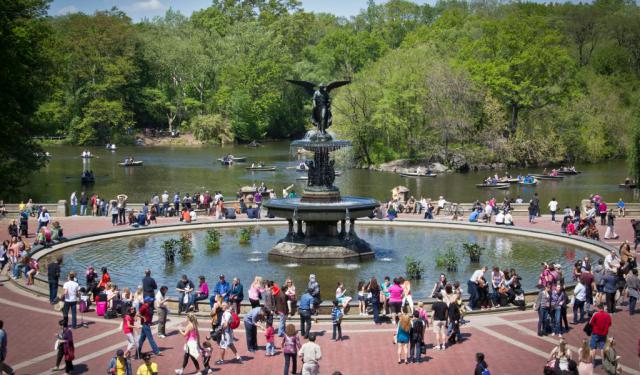
New York's Central Park Walking Tour (Self Guided), New York
Arguably the most famous public park in the world today, Central Park has been called the lungs of New York City – literally “central”, it is where Manhattanites go to get a sense of space and air. Plan for at least half a day to wander along its many pathways, take a rowboat on the water, enjoy the landscaping and the numerous man-made wonders, spend some time at the zoo or bring a pair of binoculars and enjoy some spectacular urban birding.
No two bridges in the park are alike, and the first on the itinerary is the arching Gapstow Bridge, which feels almost magical. The views around it are amazing, and there are a few rocks around the lake which produce lovely photos.
Take a picnic to Sheep Meadow and relax under the sun or reminisce about the ‘60s in the Strawberry Fields and its John Lennon “Imagine” mosaic. Then, walk along the amazing Bethesda Terrace and the beautiful Minton tiles at the Bethesda Arcade.
Further on, the Shakespeare Garden, where you can see and sniff botanical beauties mentioned in the bard’s works, is adjacent to steps that in one direction lead to the unique pseudo-medieval Belvedere Castle and a fine view uptown, over Turtle Pond.
Among other monuments, don’t miss a trip to Cleopatra’s Needle – an authentic piece of the ancient world, dating back to 1475 BC. While it can easily be spotted from afar, up close its gigantic size and Egyptian hieroglyphs are impressive.
This self-guided tour will guide you through these and other Central Park landmarks/attractions as you mingle with artists, musicians, street performers, families, and people from all walks of life. Enjoy every second!
No two bridges in the park are alike, and the first on the itinerary is the arching Gapstow Bridge, which feels almost magical. The views around it are amazing, and there are a few rocks around the lake which produce lovely photos.
Take a picnic to Sheep Meadow and relax under the sun or reminisce about the ‘60s in the Strawberry Fields and its John Lennon “Imagine” mosaic. Then, walk along the amazing Bethesda Terrace and the beautiful Minton tiles at the Bethesda Arcade.
Further on, the Shakespeare Garden, where you can see and sniff botanical beauties mentioned in the bard’s works, is adjacent to steps that in one direction lead to the unique pseudo-medieval Belvedere Castle and a fine view uptown, over Turtle Pond.
Among other monuments, don’t miss a trip to Cleopatra’s Needle – an authentic piece of the ancient world, dating back to 1475 BC. While it can easily be spotted from afar, up close its gigantic size and Egyptian hieroglyphs are impressive.
This self-guided tour will guide you through these and other Central Park landmarks/attractions as you mingle with artists, musicians, street performers, families, and people from all walks of life. Enjoy every second!
How it works: Download the app "GPSmyCity: Walks in 1K+ Cities" from Apple App Store or Google Play Store to your mobile phone or tablet. The app turns your mobile device into a personal tour guide and its built-in GPS navigation functions guide you from one tour stop to next. The app works offline, so no data plan is needed when traveling abroad.
Download The GPSmyCity App



New York's Central Park Walking Tour Map
Guide Name: New York's Central Park Walking Tour
Guide Location: USA » New York (See other walking tours in New York)
Guide Type: Self-guided Walking Tour (Sightseeing)
# of Attractions: 12
Tour Duration: 3 Hour(s)
Travel Distance: 4.6 Km or 2.9 Miles
Author: doris
Sight(s) Featured in This Guide:
Guide Location: USA » New York (See other walking tours in New York)
Guide Type: Self-guided Walking Tour (Sightseeing)
# of Attractions: 12
Tour Duration: 3 Hour(s)
Travel Distance: 4.6 Km or 2.9 Miles
Author: doris
Sight(s) Featured in This Guide:
- Gapstow Bridge and The Pond
- Central Park Zoo
- Central Park Carousel
- Sheep Meadow
- Strawberry Fields – John Lennon Monument
- Bethesda Terrace
- Bow Bridge
- Shakespeare Garden
- Belvedere Castle
- Cleopatra's Needle
- Alexander Hamilton Monument
- Jacqueline Kennedy Onassis Reservoir
1) Gapstow Bridge and The Pond
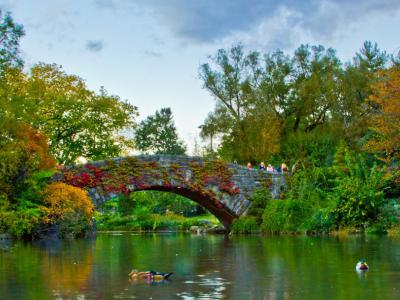
One of the first landmarks to discover after entering Central Park's southeast corner, the robust Gapstow Bridge just so happens to be among the best spots for photography within the Park as well, along with Bethesda Fountain and the Belvedere Castle. Although not far off from several similar bridges, this one wins for the commanding and breathtaking views it offers, with natural scenery on one side and Manhattan's skyline on the other.
Originally wooden and cast-iron, though for the last hundred-plus years made of stone, the bridge itself may not be an architectural marvel but has a beautiful aesthetic presence to it. It's apparently also quite popular with locals, who come to watch the ducks in the pond and relax after work.
Originally wooden and cast-iron, though for the last hundred-plus years made of stone, the bridge itself may not be an architectural marvel but has a beautiful aesthetic presence to it. It's apparently also quite popular with locals, who come to watch the ducks in the pond and relax after work.
2) Central Park Zoo
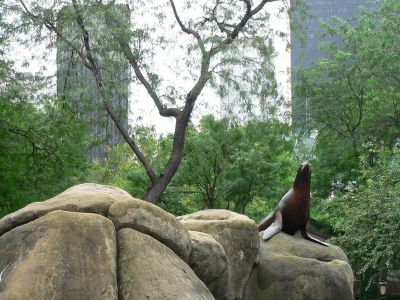
One of the first experiments in creating natural habitats for diverse animals in an urban setting, the Central Park Zoo is, expectedly, small-scale and very compact, but hosts a surprisingly good variety of animals from tropical, temperate, and polar parts of the world in well laid out exhibits. The main attractions are the sea lions, snow leopards, penguins, and bears, though some would rather pick the rainforest-inspired "Tropic Zone" as their favorite – it is a house filled with rare tropical birds, reptiles, and small mammals. One can spend more than a couple of hours here to enjoy every part.
The zoo is certainly the perfect size for children, as it has just the right number of attractions and exhibits to keep up their curiosity, including a separate petting zoo with animals such as goats, sheep or llamas (bring quarters buy food to feed them). There is also a 4D cinema experience – only 15mins long but worth a watch and pretty entertaining.
To get the most out of a visit, it's best to try to get to see all the scheduled 'highlight' events such as the feeding of penguins and sea lions, because the animals are a joy to watch working with their trainers.
Tip:
Online tickets are only available for the "Total Experience", which includes admission to the main zoo, the children's zoo, and the one entry to the 4D theatre. If that doesn't suit your needs, step right up to the ticket window to purchase a general admission ticket.
The zoo is certainly the perfect size for children, as it has just the right number of attractions and exhibits to keep up their curiosity, including a separate petting zoo with animals such as goats, sheep or llamas (bring quarters buy food to feed them). There is also a 4D cinema experience – only 15mins long but worth a watch and pretty entertaining.
To get the most out of a visit, it's best to try to get to see all the scheduled 'highlight' events such as the feeding of penguins and sea lions, because the animals are a joy to watch working with their trainers.
Tip:
Online tickets are only available for the "Total Experience", which includes admission to the main zoo, the children's zoo, and the one entry to the 4D theatre. If that doesn't suit your needs, step right up to the ticket window to purchase a general admission ticket.
3) Central Park Carousel
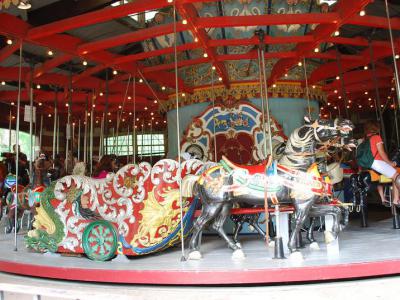
While in Central Park you can wander over to one of the largest and most popular carousels in the country. The one you see today is the fourth to occupy this spot. Two earlier ones were destroyed by fires. The current is a gift "to the children of New York" from the Michael Friedsam Foundation. It was built in 1951, though it looks much older – which is very likely what the architect intended, as it was replacing models from early in the 20th century.
There is no gravity-defying surge, no virtual reality, no computerized light show, no 3D projection – just simple mechanical horses that go round and round, and up and down while lovely-cheesy old-timey music plays on, which is the same ride people have been having for decades and decades! While there's a fee for rides, watching and listening to the music is free.
There are rarely queues that build up more than one ride long, so waiting times are quite short.
There is no gravity-defying surge, no virtual reality, no computerized light show, no 3D projection – just simple mechanical horses that go round and round, and up and down while lovely-cheesy old-timey music plays on, which is the same ride people have been having for decades and decades! While there's a fee for rides, watching and listening to the music is free.
There are rarely queues that build up more than one ride long, so waiting times are quite short.

4) Sheep Meadow
Sheep Meadow is the best spot in Central Park to lay out for a sunny afternoon. It has enough room to throw a ball or stretch out and is close to a food option if you find yourself hungry. It's also a beautiful place where one can see the seasons change from spring through fall, with the city's towering skyscrapers in the background. Folks of all flavors can be found here playing games, picnicking, sunbathing, reading, and napping. There's something for everyone.
With an expanse of 15 acres, the meadow was originally designed as a parade ground and became part of the park in 1864. However, park commissioners soon instituted a ban on military parades and, instead, introduced hundreds of sheep to enhance the park's "romantic English quality" and to quietly fertilize the lawn. The sheep were housed in a fanciful Victorian-style sheepfold created in 1870, and twice a day a shepherd would stop traffic as they traveled between the sheepfold and the meadow.
After the sheep were removed in 1934, the sheepfold was converted into what later became the Tavern on the Green restaurant. Starting in the 1960s, the meadow was used for events of unprecedented scale. Concerts, Vietnam War protests, and hippie "love-ins" and "be-ins" were attended by hundreds of thousands of people.
Sheep Meadow is reportedly one of the only open areas of Central Park free of glare from local lighting and where almost the entire sky can be seen. Bring a blanket and some food, and you can spend hours enjoying the fresh air and greenery all around.
Tip:
If staying late, keep watch of when they start locking the gates, or you might find yourself jogging to the meadow's very furthest side in order to exit.
With an expanse of 15 acres, the meadow was originally designed as a parade ground and became part of the park in 1864. However, park commissioners soon instituted a ban on military parades and, instead, introduced hundreds of sheep to enhance the park's "romantic English quality" and to quietly fertilize the lawn. The sheep were housed in a fanciful Victorian-style sheepfold created in 1870, and twice a day a shepherd would stop traffic as they traveled between the sheepfold and the meadow.
After the sheep were removed in 1934, the sheepfold was converted into what later became the Tavern on the Green restaurant. Starting in the 1960s, the meadow was used for events of unprecedented scale. Concerts, Vietnam War protests, and hippie "love-ins" and "be-ins" were attended by hundreds of thousands of people.
Sheep Meadow is reportedly one of the only open areas of Central Park free of glare from local lighting and where almost the entire sky can be seen. Bring a blanket and some food, and you can spend hours enjoying the fresh air and greenery all around.
Tip:
If staying late, keep watch of when they start locking the gates, or you might find yourself jogging to the meadow's very furthest side in order to exit.
5) Strawberry Fields – John Lennon Monument
A place of pilgrimage for Beatles fans the world over, Strawberry Fields – named after the famous song – is a deliberately informal and often crowded section of Central Park. It is located right opposite the Dakota apartment building where John Lennon lived and where he was murdered in 1980.
Dedicated in 1985 on the 45th birth anniversary of John Lennon, it provides a bit of solace to all who visit. On a normal day, you will see people placing flowers and candles, guitarists singing Beatles tracks, with most everyone singing and joining in, or simply taking a moment to reflect.
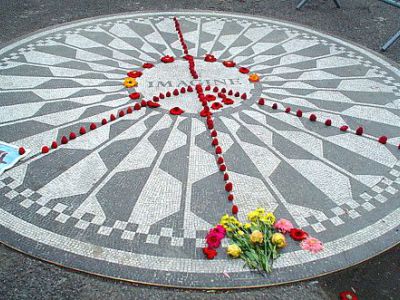
The site's prominent feature is an intricately designed – though rather subtle/unassuming – black and white mosaic given as a gift by the city of Naples, that bears the word of Lennon's song: "Imagine". The memorial is shaded by stately American elms and lined with benches. Go early if you want good pictures.
In warmer months, flowers bloom all around the area, turning it into a favorite spot for picnickers. Along a path, there's also a plaque listing all countries that endorse Strawberry Fields as a "Garden of Peace".
On Lennon's birthday, October 9th, and on the anniversary of his death, December 8th, expect to find a huge crowd of Beatles fans who gather to sing songs in his memory late into the night.
Tip:
The Dakota Building where John Lennon lived and was later murdered is just outside the park entrance nearest the memorial (at 72nd Street), so you can pass there, too.
Dedicated in 1985 on the 45th birth anniversary of John Lennon, it provides a bit of solace to all who visit. On a normal day, you will see people placing flowers and candles, guitarists singing Beatles tracks, with most everyone singing and joining in, or simply taking a moment to reflect.
The site's prominent feature is an intricately designed – though rather subtle/unassuming – black and white mosaic given as a gift by the city of Naples, that bears the word of Lennon's song: "Imagine". The memorial is shaded by stately American elms and lined with benches. Go early if you want good pictures.
In warmer months, flowers bloom all around the area, turning it into a favorite spot for picnickers. Along a path, there's also a plaque listing all countries that endorse Strawberry Fields as a "Garden of Peace".
On Lennon's birthday, October 9th, and on the anniversary of his death, December 8th, expect to find a huge crowd of Beatles fans who gather to sing songs in his memory late into the night.
Tip:
The Dakota Building where John Lennon lived and was later murdered is just outside the park entrance nearest the memorial (at 72nd Street), so you can pass there, too.
6) Bethesda Terrace
Featured in many Hollywood movies and TV shows, the Bethesda Terrace is one of the most easily recognizable landmarks of Central Park. It is a perfect place to unwind, watch street performers, enjoy music, or simply hang out and pass the time.
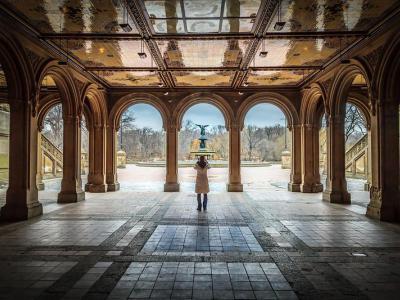
With its beautiful arcaded structure and carved limestone decorations, it stands as a fine example of 19th-century architecture, treating visitors to a lower and upper terrace surrounded by three staircases. This is all further highlighted by an attractive, large-scale fountain with the famous "Angel of the Water" statue on top and a beautifully tiled underpass, both of which are worth many pictures.
The "Angel of the Water" statue refers to "Healing the Paralytic", a story from the Gospel of John about an angel blessing the Pool of Bethesda, giving it healing powers.
In the end, it's a neat area to spend some time during visits to Central Park, particularly when the fountains are turned on and the trees in the area are in bloom or heavy with foliage. More often than not, you'll find people sitting on stone benches in the lower level to watch boats on the lake and get a glimpse of the high-rise buildings beyond.
With its beautiful arcaded structure and carved limestone decorations, it stands as a fine example of 19th-century architecture, treating visitors to a lower and upper terrace surrounded by three staircases. This is all further highlighted by an attractive, large-scale fountain with the famous "Angel of the Water" statue on top and a beautifully tiled underpass, both of which are worth many pictures.
The "Angel of the Water" statue refers to "Healing the Paralytic", a story from the Gospel of John about an angel blessing the Pool of Bethesda, giving it healing powers.
In the end, it's a neat area to spend some time during visits to Central Park, particularly when the fountains are turned on and the trees in the area are in bloom or heavy with foliage. More often than not, you'll find people sitting on stone benches in the lower level to watch boats on the lake and get a glimpse of the high-rise buildings beyond.
7) Bow Bridge
While passing by Central Park, you must go through the Bow Bridge – a marvelous-looking relic from the mid-1800s that offers sweet views and picture opportunities, either on the bridge itself or from the edge of the Lake with the bridge in the background.
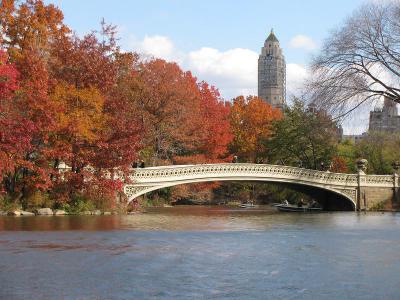
Long and low to the water, the walkway gives enough elevation to get a wide view of the park, as well as of the rowboats traveling below and the buildings of the Upper West Side skyline peeking from behind the trees.
Although exquisitely gorgeous in fall, there are few things more romantic than the Bow Bridge at any time of year. It has figured in countless romantic moments in the lives of couples from not only New York City but all over the world. Anyone who is even remotely familiar with American cinema from the past 50 years has seen it in at least a half dozen movies ("Great Expectations", "Leap of Faith", "When Harry Met Sally", "Night at the Museum", "Autumn in New York", "Highlander", etc.).
Tip:
In warm weather, rent a rowboat to paddle around the adjacent lake, or get a pic with the rowboats, bridge and San Remo building in the background. You can also have lunch/dinner at the elegant Loeb Boathouse nearby.
Long and low to the water, the walkway gives enough elevation to get a wide view of the park, as well as of the rowboats traveling below and the buildings of the Upper West Side skyline peeking from behind the trees.
Although exquisitely gorgeous in fall, there are few things more romantic than the Bow Bridge at any time of year. It has figured in countless romantic moments in the lives of couples from not only New York City but all over the world. Anyone who is even remotely familiar with American cinema from the past 50 years has seen it in at least a half dozen movies ("Great Expectations", "Leap of Faith", "When Harry Met Sally", "Night at the Museum", "Autumn in New York", "Highlander", etc.).
Tip:
In warm weather, rent a rowboat to paddle around the adjacent lake, or get a pic with the rowboats, bridge and San Remo building in the background. You can also have lunch/dinner at the elegant Loeb Boathouse nearby.
8) Shakespeare Garden
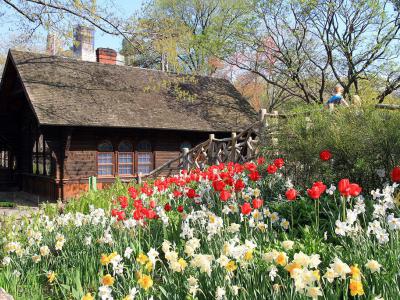
Not many tourists find this place! Roughly four acres of slightly hilly land, well landscaped with winding footpaths, sculptures, and plenty of blooms to enjoy, it's a pleasant environment for an afternoon stroll. Each of the garden's sections has flowers, plants, and trees that Shakespeare alluded to or named (mulberry, columbine, primrose, wormwood, and more). Hidden amongst these are brass plaques with corresponding quotes from Bard's plays.
You can tell the garden's value by the meticulous care Central Park employees take in making sure it is – and stays – gorgeous.
Partly on a slope, the site is adjacent to steps that in one direction lead to the unique pseudo-medieval Belvedere Castle and a fine view uptown over Turtle Pond. In a slightly different route is Delacorte Theater, famous for its outdoor stage and amphitheater that has hosted many plays by – you may have guessed – William Shakespeare. Nearby, you can also enjoy the cute Swedish Cottage which is used as a Marionette Theatre.
There are plenty of benches that blend with the natural scenery, so this is a great spot to take a break and mellow out if you've been walking through Central Park and need a sweet-smelling and quiet respite!
You can tell the garden's value by the meticulous care Central Park employees take in making sure it is – and stays – gorgeous.
Partly on a slope, the site is adjacent to steps that in one direction lead to the unique pseudo-medieval Belvedere Castle and a fine view uptown over Turtle Pond. In a slightly different route is Delacorte Theater, famous for its outdoor stage and amphitheater that has hosted many plays by – you may have guessed – William Shakespeare. Nearby, you can also enjoy the cute Swedish Cottage which is used as a Marionette Theatre.
There are plenty of benches that blend with the natural scenery, so this is a great spot to take a break and mellow out if you've been walking through Central Park and need a sweet-smelling and quiet respite!
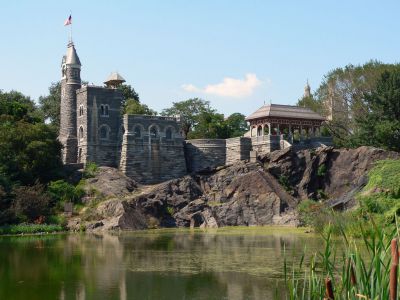
9) Belvedere Castle
New York's version of Disneyland's Sleeping Beauty castle, this picturesque building seated on what locals call the Vista Rock. It is the area's second-highest natural elevation – lives up to its name ("beautiful view" in Italian), commanding spectacular views of Central Park and the city skyline. An architectural hybrid of Gothic and Romanesque styles, it was designed in the 1860s and recently renovated to serve as a visitor center and gift shop.
While the outdoor pavilion is a popular lookout, the best views are to be found two stories up at the top of a narrow winding staircase, climbing which does not cost any money. The span of view across the park's northern part is particularly stunning: a panorama of the Turtle Pond, with softball fields of the Great Lawn and skyscrapers on the other side of 5th Ave in the background.
Free family and community programs hosted at the castle include birding and other Central Park Conservancy discovery programs as well as a variety of history and natural history programs led by NYC Urban Park Rangers, including stargazing, astronomy, and wildlife-education events.
While the outdoor pavilion is a popular lookout, the best views are to be found two stories up at the top of a narrow winding staircase, climbing which does not cost any money. The span of view across the park's northern part is particularly stunning: a panorama of the Turtle Pond, with softball fields of the Great Lawn and skyscrapers on the other side of 5th Ave in the background.
Free family and community programs hosted at the castle include birding and other Central Park Conservancy discovery programs as well as a variety of history and natural history programs led by NYC Urban Park Rangers, including stargazing, astronomy, and wildlife-education events.

10) Cleopatra's Needle
The oldest man-made object in Central Park and the oldest outdoor monument in New York City, this Egyptian monument is lumped collectively with two others in the world (one in Paris and one in London), each known as Cleopatra's Needle. But it's the obelisk in London that is its true twin, both being constructed at the same time and sourced from the same quarry for red granite.
At 68 ft and 224 tons, the obelisk and its twin were first erected in the ancient city of Heliopolis around 1450 BC, only to be later moved to Alexandria and then gifted in the late 19th century to New York and London, respectively.
After the monolithic offering's arrival in New York, 32 horses were hitched in two's and it was hauled from the Hudson River, carried across a custom-built bridge, erected right across from the Metropolitan Museum of Art, and manipulated into the exact direction it faced while in Alexandria.
Each corner of the Obelisk's base is supported by huge, 900 pound bronze replicas of sea crabs added by the Romans around 13 BC while it was still in Egypt and together with the carved symbols on all four sides make a wonderful photographic – and conversation – opportunity.
At 68 ft and 224 tons, the obelisk and its twin were first erected in the ancient city of Heliopolis around 1450 BC, only to be later moved to Alexandria and then gifted in the late 19th century to New York and London, respectively.
After the monolithic offering's arrival in New York, 32 horses were hitched in two's and it was hauled from the Hudson River, carried across a custom-built bridge, erected right across from the Metropolitan Museum of Art, and manipulated into the exact direction it faced while in Alexandria.
Each corner of the Obelisk's base is supported by huge, 900 pound bronze replicas of sea crabs added by the Romans around 13 BC while it was still in Egypt and together with the carved symbols on all four sides make a wonderful photographic – and conversation – opportunity.

11) Alexander Hamilton Monument
Central Park has quite a few interesting sculptures and statues, and one such monument is dedicated to an important figure in the U.S. history, Alexander Hamilton. This classic 19th-century era statue can be found near the Great Lawn. Unquestionably the most undervalued Founding Father, Hamilton is depicted standing firmly, dressed and posing in colonial attire (wig, ruffled collar, knickers, and buckle shoes), and appearing stately and dignified.
Appointed as the 1st United States Secretary of the Treasury on September 11, 1789, the statesman was a good friend of George Washington. He fought in the Revolutionary War, and was active in ending the legality of the international slave trade. Standing much taller than others in Central Park, the granite statue was gifted to the city by his son, John C. Hamilton in 1880.
Appointed as the 1st United States Secretary of the Treasury on September 11, 1789, the statesman was a good friend of George Washington. He fought in the Revolutionary War, and was active in ending the legality of the international slave trade. Standing much taller than others in Central Park, the granite statue was gifted to the city by his son, John C. Hamilton in 1880.
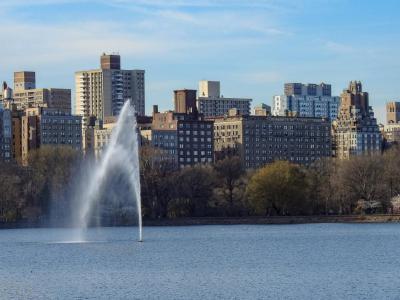
12) Jacqueline Kennedy Onassis Reservoir
In the world's most famous park, there are several artificial lakes and ponds, but all small in size when compared to the magnificent billion-gallon Reservoir. The world's largest man-made lake back in the 1860s, it's visible from up high when flying over New York City, but you're better off seeing it from the ground while walking around – or, if you feel a bit more energetic, why not take a run?
A long-time favorite for sporty uptown residents, its raised 1.6-mile running track is a neat place to get 360-degree views of the skyline and, at night, the city lights twinkling in the distance.
Even when walks get long, they're certainly not strenuous due to the flat surface. Bikes aren't allowed on the path and foot traffic moves "one-way" counter-clockwise. The outside ring is better for runners, as it's much wider and less crowded.
The landscape north of the Reservoir, in the appropriately named North Woods, feels more like upstate New York than Manhattan. The 90-acre area contains the Loch, which is more like a walking path along a stream, and the Ravine, which conceals fairly dense wood along with five small waterfalls. It is a place where even seasoned New Yorkers can lose themselves.
A long-time favorite for sporty uptown residents, its raised 1.6-mile running track is a neat place to get 360-degree views of the skyline and, at night, the city lights twinkling in the distance.
Even when walks get long, they're certainly not strenuous due to the flat surface. Bikes aren't allowed on the path and foot traffic moves "one-way" counter-clockwise. The outside ring is better for runners, as it's much wider and less crowded.
The landscape north of the Reservoir, in the appropriately named North Woods, feels more like upstate New York than Manhattan. The 90-acre area contains the Loch, which is more like a walking path along a stream, and the Ravine, which conceals fairly dense wood along with five small waterfalls. It is a place where even seasoned New Yorkers can lose themselves.
Walking Tours in New York, New York

Create Your Own Walk in New York
Creating your own self-guided walk in New York is easy and fun. Choose the city attractions that you want to see and a walk route map will be created just for you. You can even set your hotel as the start point of the walk.
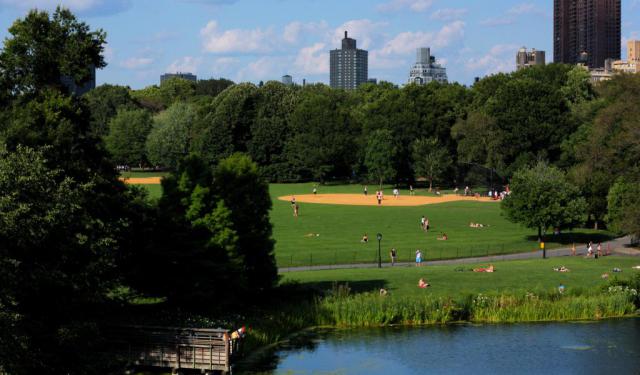
Times Square to Central Park
A leisurely self-guided stroll from Times Square to Central Park will take you to some of NYC’s prominent locations, each worth visiting in their own right.
At 49th Street, Fifth Avenue lives up to its lofty reputation with the Rockefeller Center, one of the world’s biggest business and entertainment complexes, and a triumph of Art Deco architecture. Like the neighboring Times Square, the... view more
Tour Duration: 2 Hour(s)
Travel Distance: 3.2 Km or 2 Miles
At 49th Street, Fifth Avenue lives up to its lofty reputation with the Rockefeller Center, one of the world’s biggest business and entertainment complexes, and a triumph of Art Deco architecture. Like the neighboring Times Square, the... view more
Tour Duration: 2 Hour(s)
Travel Distance: 3.2 Km or 2 Miles
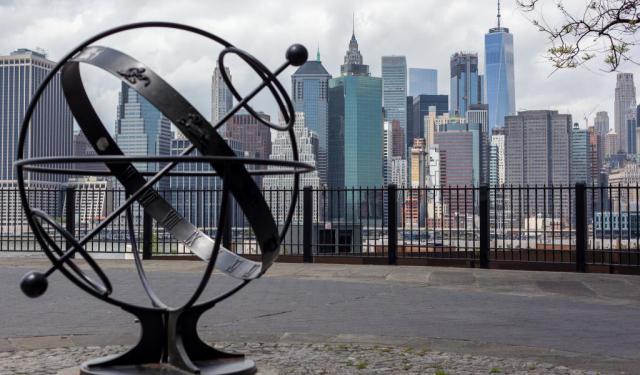
Brooklyn New York Walking Tour
Named after the Breukelen village in the Netherlands, Brooklyn, one of New York City’s five boroughs, occupies the western tip of Long Island. Its history began in the 17th century as a small Dutch settlement on the East River shore; Brooklyn Heights, or Clover Hill, is where the village was founded, in 1646.
By the 19th century, Brooklyn had grown into a sizable town. The iconic Brooklyn... view more
Tour Duration: 2 Hour(s)
Travel Distance: 3.9 Km or 2.4 Miles
By the 19th century, Brooklyn had grown into a sizable town. The iconic Brooklyn... view more
Tour Duration: 2 Hour(s)
Travel Distance: 3.9 Km or 2.4 Miles

Midtown Manhattan Shopping Tour
Midtown Manhattan, alongside other things, is also the shopping hub for New York City. Attesting to this are the ever-busy Times Square and Rockefeller Center areas replete with designer goods offerings and street vendors at every corner.
The famed Fifth Avenue has long been synonymous with a shopper's paradise where you can find every kind of store imaginable, ranging from the affordable... view more
Tour Duration: 2 Hour(s)
Travel Distance: 3.0 Km or 1.9 Miles
The famed Fifth Avenue has long been synonymous with a shopper's paradise where you can find every kind of store imaginable, ranging from the affordable... view more
Tour Duration: 2 Hour(s)
Travel Distance: 3.0 Km or 1.9 Miles
George Washington's New York
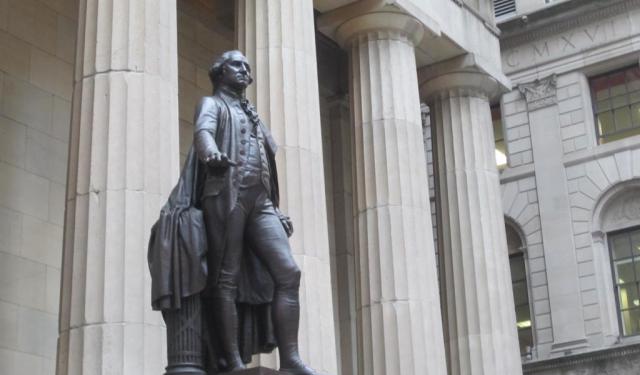
While not really a New York fan himself, George Washington held the city in high esteem, calling it “a post of infinite importance,” and is even credited with coining the term “New Yorker”. The scene of some of Washington’s greatest military trials and political triumphs, NYC is a home to several important sites associated with his life and career, such as Fraunces Tavern, Bowling Green,... view more
Tour Duration: 1 Hour(s)
Travel Distance: 1.6 Km or 1 Miles
Tour Duration: 1 Hour(s)
Travel Distance: 1.6 Km or 1 Miles
NYC Greenwich Village Walking Tour
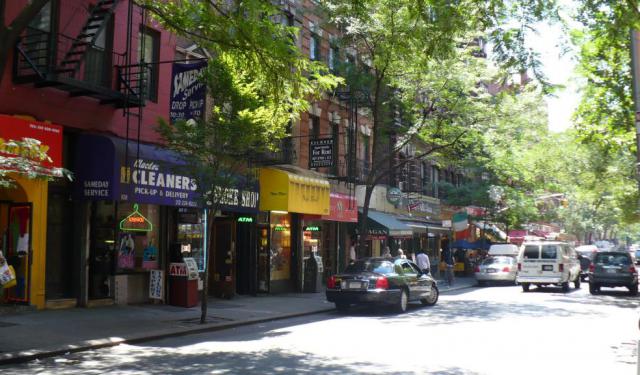
The tree-lined streets of Greenwich Village with its cafes, bars and restaurants, jazz clubs and Off-Broadway theaters amid the brownstones will enthuse you as a visitor. Writers and poets, artists and radicals, runaway socialites, and others seeking freedom from conventional lifestyles have long flocked to this spot, lit most famously by the counterculture figures of the 1950s and '60s: Jack... view more
Tour Duration: 1 Hour(s)
Travel Distance: 2.2 Km or 1.4 Miles
Tour Duration: 1 Hour(s)
Travel Distance: 2.2 Km or 1.4 Miles
Columbia University Walking Tour
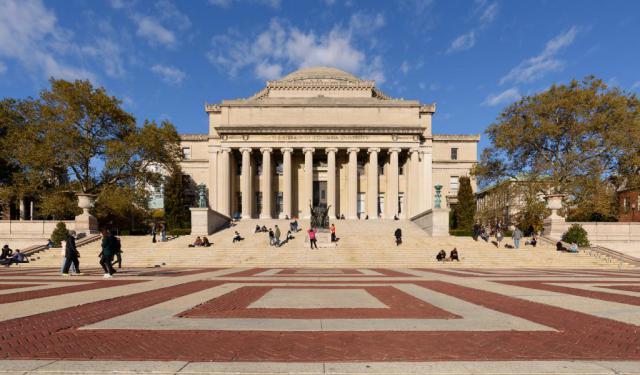
Established in 1754, Columbia University is the oldest institution of higher education in the state of New York and the fifth-oldest in the United States. A member of the prestigious Ivy League, this renowned institution boasts a diverse campus designed along Beaux-Arts planning principles. Columbia's main campus occupies more than six city blocks in Morningside Heights, New York City, and is... view more
Tour Duration: 2 Hour(s)
Travel Distance: 2.3 Km or 1.4 Miles
Tour Duration: 2 Hour(s)
Travel Distance: 2.3 Km or 1.4 Miles
Useful Travel Guides for Planning Your Trip
NYC Souvenir Guide: 15 Authentic New York City Products to Take Home
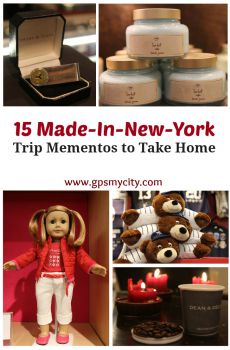
In keeping with the song, one might think that, if they can make it in New York City, they can make it anywhere. Well, not always... Some of the things made in New York City aren't made anywhere else, and you'll definitely want to try or keep at least some of them to prolong your NYC...
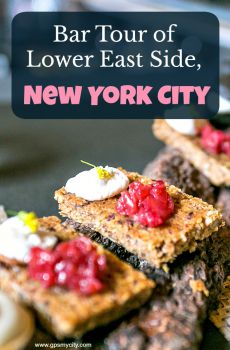
Bar Tour of Lower East Side, New York City
The Lower East Side has been described the most livable neighborhood in NYC. Unique and dynamic, LES has boutique shops, cafes and restaurants alongside great bars and museums.In this historic neighborhood, residents strive to preserve its roots. Here, you can find young professionals who challenge...

9 Best Drinking Places in Upper West Side, NY
With “Bar Tour of the Upper West Side” sample a cross section from NYC’s great gamut of drinking establishments, including a Belgian Brasserie, a wine bar, Irish pubs, and one dive — just for fun! These spots offer something a little extra, like craft beers, inspirational artwork, a chance...
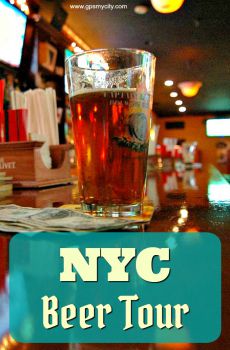
NYC Beer Tour
There are many great places to drink in New York City. Still, discerning connoisseurs are likely to find themselves awash in a sea of mediocre beer without first gaining a proper lay of the beer land. For those whose curiosity and taste buds urge them to venture beyond ubiquitious draft staples like...

NY Villages Best Tea and Coffee
This is a guide to the best tea and coffee shops and houses in the East, West, Washington Square and Greenwich Villages of Manhattan. None of these are chains, so tourists looking to avoid Starbucks can find sanctuary in this app. All of these run the gamut between W and E 14th Streets, and down 1st...
The Most Popular Cities
/ view all