Home City Search Antwerp Old City of Antwerp Tour I
Old City of Antwerp Tour I, Antwerp
Download iPhone Walking Tours Application for Antwerp
iPhone Walking Tours Application for Antwerp
Bookmark and Share
Old City of Antwerp Tour I
Guide Location: Belgium » Antwerp
Guide Type: Self-guided city tour
# of Attractions: 8
Tour Duration: 1 hour(s)
Transportation Mode: by foot
Travel Distance: 1.0 km
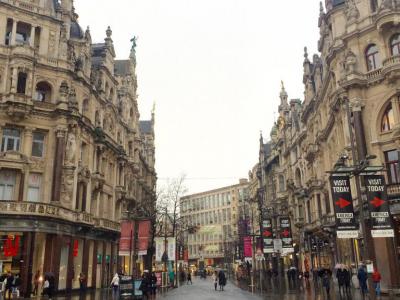
Image Courtesy of Wikimedia and G.Lanting
Author: mary
Take a walk through Vlaeykensgang and immerse yourself in the historical Middle Ages. Admire the beautiful statue of Rubens designed by Vain in 1840. Visit Plantin-Moretus Museum, inscribed on the UNESCO World Heritage list for its unique collection of typographical material. Take this tour an see the most magnificent parts of central Antwerp.
Tour Stops and Attractions
Het Steen
1) Het Steen
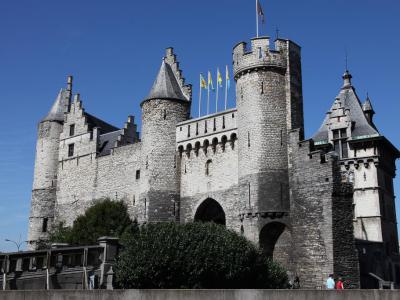
Antwerp is definitely the historians’ paradise, with each building and monument having its own tale and its slice of history to share with one and all, the Het Steen is one of them. Antwerp is Europe’s second largest seaports and through the years this has played a very critical role in the history of the city. Where at one hand Antwerp enjoyed the benefits of the sea with trade and commerce, the open blue water and its vulnerable position also attracted Vikings and other plunderers along the years. One of the oldest structures in Antwerp is the Het Steen, a castle which was once a part of a long wall of fortification around the city of Antwerp. The Het Steen is speculated to have been around since 650 AD, when the structure was only made up of clay and mud. It was however not until the 9th century that the city got its first fortified walls built of tough stone and mud protecting the interiors from the Viking plunderers. And hence crediting Otto 1, during whose reign the walls were fortified, for establishing the city of Antwerp. From serving as a military protection to a prison and finally a museum, the Het Steen has changed its role in time.
Image Courtesy of Wikimedia and Vijverln
Sight description based on wikipedia
Vleeshuis
2) Vleeshuis
Who can resist the temptation of diving into the past of a city and experiencing the tall tales and legacies of the land? And when the city in question is Antwerp, this opportunity just cannot be missed.

At the Vleeshuis Museum get the opportunity to unravel the history of Antwerp. The Museum is one of a kind and specializes in showcasing local history and artifacts that are in some way or the other connected to the land. Equally fascinating is the building that has served as home to the Vleeshuis Museum since the early 20th century. With a late Gothic façade, the building was once home to the Butcher’s Guild of the city. Although the building once sold meat and other animal produce, the structure and design is no short of an architectural treat.

Illustrating about 600 years of a rich and vibrant past, the Vleeshuis Museum displays a collection of antiquities and artifacts that stand to display the rich diversity of culture and art in the pool that is Antwerp.

With a priceless collection of ceramic, metal work and iconography unravel the past of the region along with the illustrations of dance and music. From the history of street musicians to opera singers, the section manages to portray how music and dance were an integral part of the Antwerp society.
Image Courtesy of Wikimedia and BrianKgs
Grote Markt
3) Grote Markt
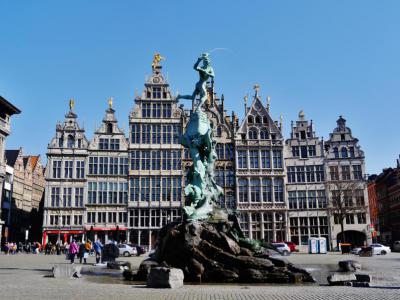
Right in the heart of the city, the Grote Markt is one of the favorite locations for locals as well as tourists. Filled with cafés and restaurant, the Grote Markt is a popular destination if you want to just kick back, bask in the sun with a chilled glass of beer or stroll around lazily admiring the architecture of the city. Dominated by the elegant and grant Renaissance style Stadhuis or the City Hall on one side and a row of guild houses and old patrician houses on the other, the Grote Markt is a magnet for those who love studying city architecture.

The center of the Square holds the magnificent fountain that bears the well sculpted statue of Brabo, the local, mythical hero. As legend has it, the water way was once governed by a giant who demanded a high toll from those who wanted to enter the city. Those failing to meet the requirements, where punished by having their hands cut off. It was Brabo, who fought the giant and cut off his hands and threw it in the Scheldt.

One of the best ways to enjoy a perfect day in Antwerp is to sit in an open terrace restaurant amidst the elegantly constructed buildings of the Grote Markt, have an authentic Belgian meal on the table and admire the city as it moves past you.
Image Courtesy of Wikimedia and Piotr Kuczyński
Cathedral of Our Lady
4) Cathedral of Our Lady
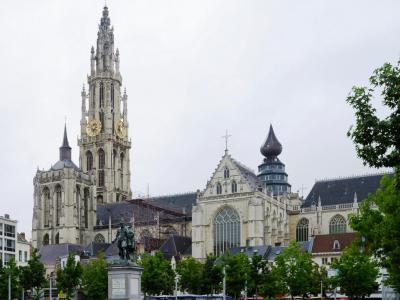
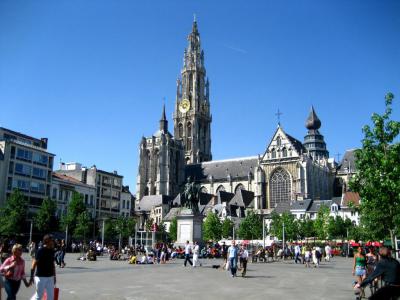
Overlooking the city of Antwerp since the 14th century is the beautiful Cathedral of Our Lady, which till date dominates the city’s skyline. Built by architects Jan and Pieter Appelmans, the Cathedral boasts a magnificent Gothic structure with hints of Baroque style complementing the interiors of the building. Whether you are a history buff or an admirer of buildings and structures, the Cathedral of Our Lady is one structure that has something to offer its every visitor. The structure stands as the epitome of the perfect combination of artistic architecture, breathtaking interiors and a dramatic past making it a tantalizing site to visit. Although the construction of the structure began in 1352, it took more than a century to complete the entire construction. The Cathedral that stands today rests on the same site where once stood a small chapel dedicated to Our Lady, dating back to the early 10th century which was subsequently followed by the construction of a Romanesque Church. The Gothic Cathedral that took its place was considered one of the most magnificent structures of its time and one of the largest cathedrals in the whole of Benelux. However despite all its glories, the Cathedral of Our Lady has faced a very turbulent past. From natural fires to raids, plunders and assault by iconoclasts, the structure has born tremendous damage over the years. It has stood the test of time and stands proudly in the city of Antwerp.
Image Courtesy of Wikimedia and Piotr Kuczyński
Sight description based on wikipedia
Vlaeykensgang
5) Vlaeykensgang
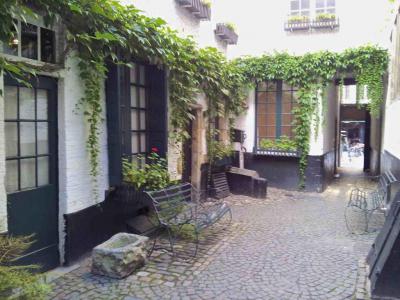
Grote Markt in itself gives you a glimpse of life in Antwerp as it was a few centuries ago. Parallel to the Square are several alleys that manage to reflect the lifestyle, ambiance and feel of the years gone by that are still preserved and untouched by the hands of time. One such place is Vlaeykensgang, and the entrance to this alley is the size of a doorway.

Easy to overlook, once found this alley will transport you to the 16th century. A perfect place to walk and get the true feel of the city, the Vlaeykensgang is filled with authentic peasant houses and residential complexes. Although today, these may seem like the perfect refuge from the urbanization and the pace of city life, back in those days, these alleys were not considered as places suitable for living. Cramped up and over populated with large families, poor sanitation are just some of the problems one faced here. However today, Vlaeykensgang is looked at as an idealistic and artistic refuge from the hectic city life.

Although there were many such alleys then existing around the city hall, they were destroyed over time. Vlaeykensgang, too was scheduled for demolition in 1960, however it was saved in time by a local antique dealer and restored to its former glory.
Image Courtesy of Wikimedia and Sergio Calleja
Groenplaats
6) Groenplaats
Antwerp is the perfect destination if you love to laze around on a warm summer’s day under the sun or enjoy watching the city from the comfort of a cozy café. Yet another famous square in Antwerp is the Groenplaats or the Green Place. Although not as green as the name suggests, the Groenplaats, is a popular destination amongst both tourists and locals during summer and on weekends.

Overlooking the Square in the north is the elegant Cathedral of Our Lady. Back in the medieval times, the Groenplaats was used as a cemetery that was attached to the Cathedral. With the Austrian occupation of Antwerp in the 18th century, Emperor Joseph II abolished cemeteries within the walls of the city. Although the premises were then converted to a square for town use, the age old name couldn’t get converted and locals still call it Groenplaats.

However, unlike other squares in the city, the Groenplaats did not start off as a center for the city. The center of the square is dominated by the statue of the much loved Flemish painter Sir P.P.Rubens. Installed in 1843, this bronze statue replaced a crucifix that overlooked the cemetery. Created by sculptor Willem Geefs, the statue commemorated death bicentenary of the city’s beloved Rubens.
Image Courtesy of Wikimedia and Wouter Hagens
Vrijdagmarkt
7) Vrijdagmarkt
Your stay in Antwerp would not be complete without visiting the Vrijdagmarkt. Bustling with life and energy, the Vrijdagmarkt has stayed the same for over 4 centuries now. This popular square has ever since the 16th century been the epicenter of street shopping and local auctions.
It is believed that a rich real estate merchant by the name of Gilbert van Schoonbeke Jr. bought a big chunk of land near the City Center in 1547. He developed a market for the street vendors who held weekly bazaars on Fridays and because buying second hand goods was a prevailing practice then, this soon became the market where people auctioned their clothes and furniture. In fact, famous Flemish painter Rubens’ clothes were also auctioned here post his death. Dominating the market is the statue of St. Catherine, who is the patron saint of ‘old clothes buyers.
Today, the Vrijdagmarkt is a popular site for both locals and tourists to enjoy the age old tradition of shopping at this historical market. Although the Vrijdagmarkt may not have the reputation of having the best in the market, if you enjoy browsing through local goods, handmade souvenirs etc., this is the perfect place to be.
Image Courtesy of Wikimedia and Sannse
Plantin-Moretus Museum
8) Plantin-Moretus Museum
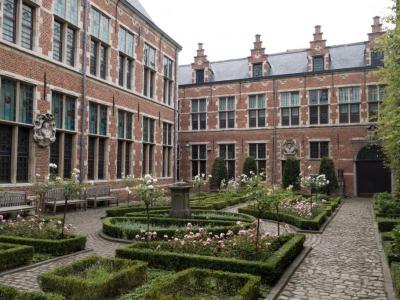
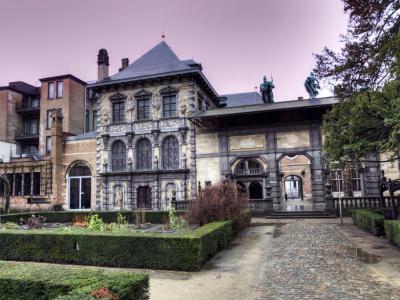
One of the most fascinating museums one can encounter in Antwerp is the Plantin- Moretus Museum. Home to one of the most prolific printing presses of the 16th and 17th century, the Platin – Moretus Museum is a must visit in Antwerp. Founded by Christoffel Plantin, a Frenchman who from being a mere bookbinder became the most noted publisher and printer of the Renaissance period, the printing press was one of the key factors in establishing Antwerp as one of Europe’s leading cities with regard to the spread of typography and inventions in printing technology. After its establishment, the printing press saw the involvement of Plantin’s son-in-law, Jan Moretus who played a vital role in bringing newer technologies and inventions to the press after the death of Plantin. After running successfully for over two centuries the company was sold to the city of Antwerp in 1876. It was not until recently that the Museum was given the title of a World Heritage site by UNESCO. The Museum houses some of the world’s oldest surviving printing presses and some extraordinary tools, dyes and matrices that were in use. However, the most prized possession of the Museum remains the extensive library and antique books that are a century or two old. Also noteworthy are the rich and elaborate interiors and the architecture that speak of the opulence of the Platin- Moretus family.
Image Courtesy of Wikimedia and Manfreeed
Sight description based on wikipedia
Attractions Map
Visitor's Comments (0)
Visitor's Gallery (0)