

Audio Guide: Jerusalem Old City Walking Tour (Self Guided), Jerusalem
Jerusalem has been around long enough to see empires rise, fall, and try again. This is one of the world’s oldest continuously inhabited cities, shaped by faith, power, and a long rhythm of destruction followed by rebuilding. Archaeology traces settlement on the site of today's Jerusalem back to the Bronze Age, when it was just a modest Canaanite stronghold.
The city’s name tells a story of layers. In Hebrew tradition, Yerushalayim enters biblical texts, and later interpretation links it to two ideas brought together: Yireh, a place of divine presence, and Shalem, a place of peace. As centuries passed, Greek, Latin, and Arabic speakers adapted the name to their own languages, until it eventually settled into the English “Jerusalem.”
Around the 10th century BC, Jerusalem stepped onto a larger political stage as the capital of the Israelite kingdom under King David, with the First Temple traditionally attributed to his son Solomon. In 586 BC, Babylonian forces destroyed the city. Persian rule later allowed restoration, followed by Hellenistic influence after Alexander the Great, and then Roman control. That period ended dramatically in 70 AD, when the Romans destroyed the Second Temple and rebuilt Jerusalem as a Roman colony.
From the 4th century onward, Jerusalem became central to Christian worship, especially after the Church of the Holy Sepulchre was built. In the 7th century, Islamic rule added another defining layer, making Jerusalem the third-holiest city in Islam and linking it to the Prophet Muhammad’s Night Journey. Crusaders, Mamluks, and Ottomans followed, each leaving marks that are still visible today. Ottoman rule from the 16th century gave the Old City much of its current form.
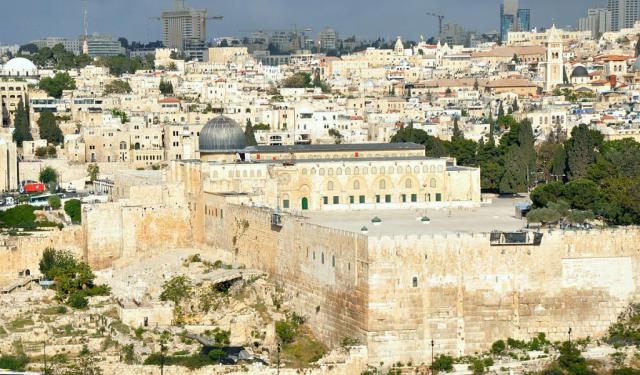
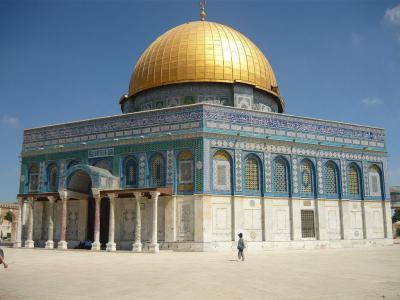
That Old City, enclosed by Ottoman walls, remains the heart of today's Jerusalem and has been recognized as a UNESCO World Heritage Site since 1981. Within a remarkably compact space divided into Jewish, Muslim, Christian, and Armenian quarters, it contains some of the world's most sacred sites to Judaism, Christianity, and Islam. Landmarks such as the Western Wall, the Temple Mount with the Al-Aqsa Mosque and Dome of the Rock, and the Church of the Holy Sepulchre coexist alongside markets, residential streets, and pilgrimage routes like the Via Dolorosa.
To fully grasp Jerusalem’s depth and complexity, it must be experienced on foot, at an unhurried pace. This is a city that does not explain itself all at once. Take time to move through the Old City's winding routes, observe how its sacred and ordinary spaces intersect, and engage directly with a place where belief, memory, and daily life have intersected for thousands of years.
The city’s name tells a story of layers. In Hebrew tradition, Yerushalayim enters biblical texts, and later interpretation links it to two ideas brought together: Yireh, a place of divine presence, and Shalem, a place of peace. As centuries passed, Greek, Latin, and Arabic speakers adapted the name to their own languages, until it eventually settled into the English “Jerusalem.”
Around the 10th century BC, Jerusalem stepped onto a larger political stage as the capital of the Israelite kingdom under King David, with the First Temple traditionally attributed to his son Solomon. In 586 BC, Babylonian forces destroyed the city. Persian rule later allowed restoration, followed by Hellenistic influence after Alexander the Great, and then Roman control. That period ended dramatically in 70 AD, when the Romans destroyed the Second Temple and rebuilt Jerusalem as a Roman colony.
From the 4th century onward, Jerusalem became central to Christian worship, especially after the Church of the Holy Sepulchre was built. In the 7th century, Islamic rule added another defining layer, making Jerusalem the third-holiest city in Islam and linking it to the Prophet Muhammad’s Night Journey. Crusaders, Mamluks, and Ottomans followed, each leaving marks that are still visible today. Ottoman rule from the 16th century gave the Old City much of its current form.
That Old City, enclosed by Ottoman walls, remains the heart of today's Jerusalem and has been recognized as a UNESCO World Heritage Site since 1981. Within a remarkably compact space divided into Jewish, Muslim, Christian, and Armenian quarters, it contains some of the world's most sacred sites to Judaism, Christianity, and Islam. Landmarks such as the Western Wall, the Temple Mount with the Al-Aqsa Mosque and Dome of the Rock, and the Church of the Holy Sepulchre coexist alongside markets, residential streets, and pilgrimage routes like the Via Dolorosa.
To fully grasp Jerusalem’s depth and complexity, it must be experienced on foot, at an unhurried pace. This is a city that does not explain itself all at once. Take time to move through the Old City's winding routes, observe how its sacred and ordinary spaces intersect, and engage directly with a place where belief, memory, and daily life have intersected for thousands of years.
How it works: Download the app "GPSmyCity: Walks in 1K+ Cities" from Apple App Store or Google Play Store to your mobile phone or tablet. The app turns your mobile device into a personal tour guide and its built-in GPS navigation functions guide you from one tour stop to next. The app works offline, so no data plan is needed when traveling abroad.
Download The GPSmyCity App



Jerusalem Old City Walking Tour Map
Guide Name: Jerusalem Old City Walking Tour
Guide Location: Israel » Jerusalem (See other walking tours in Jerusalem)
Guide Type: Self-guided Walking Tour (Sightseeing)
Tour Duration: 3 Hour(s)
Travel Distance: 5.0 Km or 3.1 Miles
Guide Location: Israel » Jerusalem (See other walking tours in Jerusalem)
Guide Type: Self-guided Walking Tour (Sightseeing)
Tour Duration: 3 Hour(s)
Travel Distance: 5.0 Km or 3.1 Miles
Sights Featured in This Walk
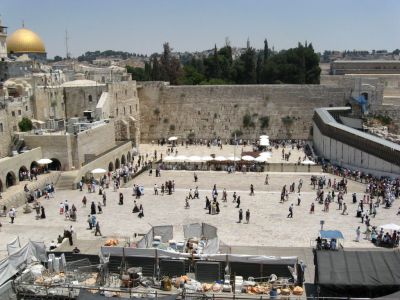
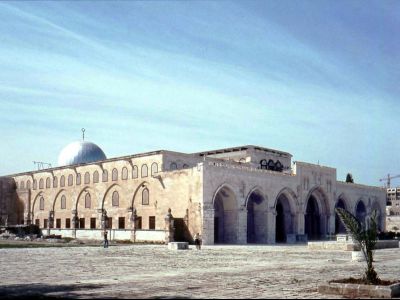
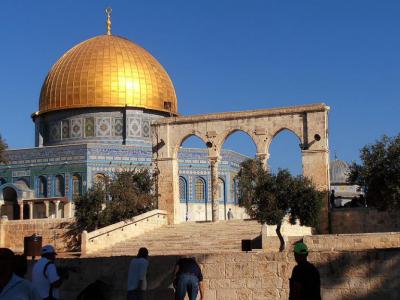
6) Temple Mount (must see)
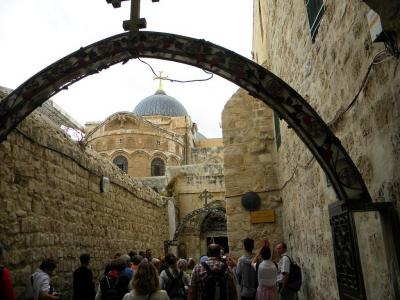
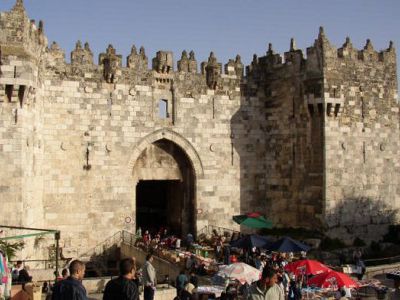
Walking Tours in Jerusalem, Israel

Create Your Own Walk in Jerusalem
Creating your own self-guided walk in Jerusalem is easy and fun. Choose the city attractions that you want to see and a walk route map will be created just for you. You can even set your hotel as the start point of the walk.
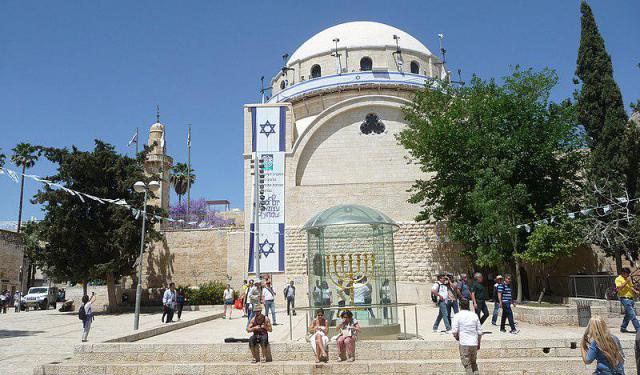
Jewish Quarter Walking Tour
Entirely rebuilt in the 1980s after having been largely destroyed during the 1948 War, the Jewish Quarter is quite distinct from the rest of the Old City. Good signposting, spacious passageways, art galleries and a somewhat less buzzing atmosphere make the area a relaxing place to spend some time.
With its rebuilt residential buildings, some almost consider this area the "New... view more
Tour Duration: 1 Hour(s)
Travel Distance: 1.3 Km or 0.8 Miles
With its rebuilt residential buildings, some almost consider this area the "New... view more
Tour Duration: 1 Hour(s)
Travel Distance: 1.3 Km or 0.8 Miles
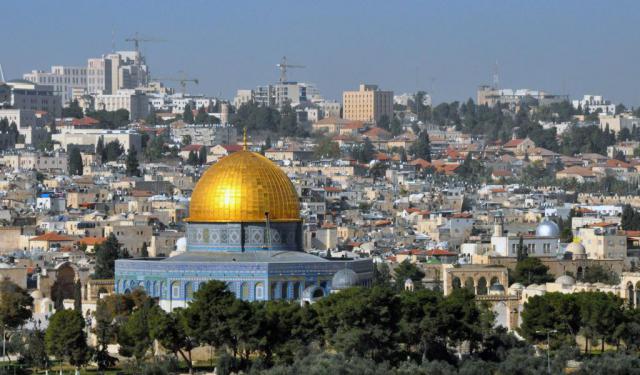
Muslim Quarter & Temple Mount Tour
The largest, most populous and perhaps most chaotic of all Jerusalem’s quarters, the Muslim Quarter is worth exploring for its unique atmosphere. Spending a day here may take you back to a simpler time, but be prepared for many sights and sounds as you pass many vendors, stores and restaurants on your way from site to site.
Some of the city’s most interesting city gates (Damascus and... view more
Tour Duration: 2 Hour(s)
Travel Distance: 2.1 Km or 1.3 Miles
Some of the city’s most interesting city gates (Damascus and... view more
Tour Duration: 2 Hour(s)
Travel Distance: 2.1 Km or 1.3 Miles
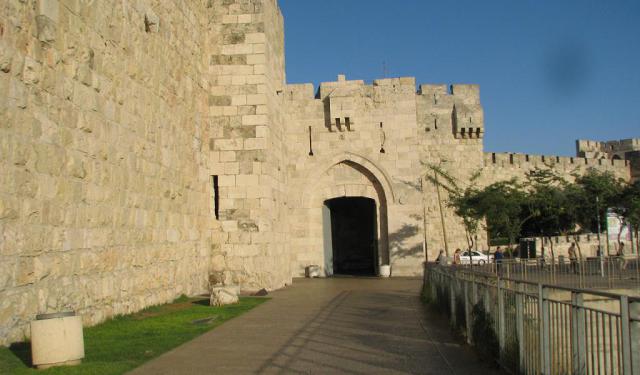
Jerusalem City Gates Walking Tour
Historians believe that the Old City of Jerusalem probably came into being more than 4,500 years ago. The defensive wall around it features a number of gates built on the order of the Ottoman sultan Suleyman the Magnificent in the first half of the 16th century, each of which is an attraction in its own right. Until as recently as 1870, they were all closed from sunset to sunrise; nowadays, just... view more
Tour Duration: 2 Hour(s)
Travel Distance: 3.7 Km or 2.3 Miles
Tour Duration: 2 Hour(s)
Travel Distance: 3.7 Km or 2.3 Miles
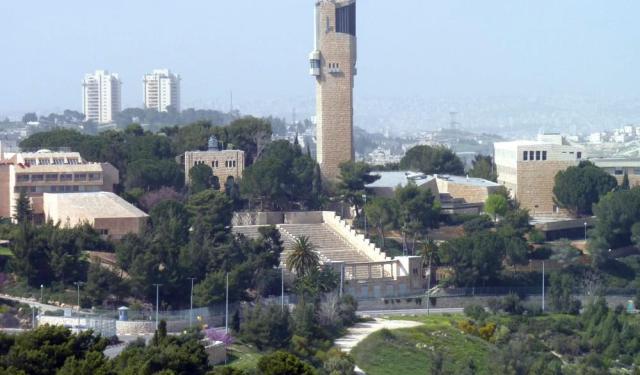
Mount Scopus Walking Tour
Dotted with many sightseeing places, Mount Scopus – translating as the “Observation Mount” from Greek – is a great place to get views over the whole Old City of Jerusalem on a nice day. The mount has been of major strategic importance since Roman times, with forces setting up camp here prior to laying the siege that culminated in the final Roman victory over Jerusalem around 70 AD.... view more
Tour Duration: 1 Hour(s)
Travel Distance: 2.3 Km or 1.4 Miles
Tour Duration: 1 Hour(s)
Travel Distance: 2.3 Km or 1.4 Miles
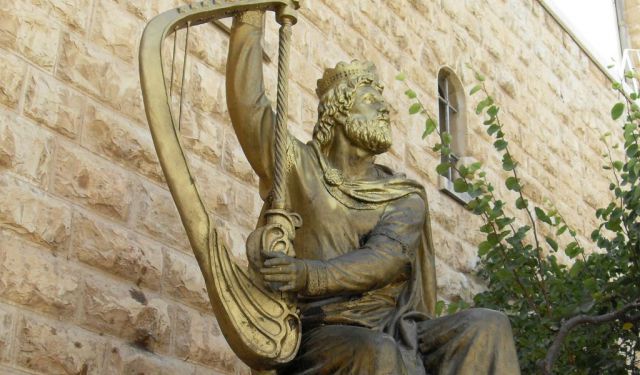
Mount Zion Walking Tour
For those interested in religion and history, Mount Zion offers several unique sights that are situated in close proximity to each other. An important place for Christians, Jews as well as Muslims, it holds important constructions dating from the 20th century as well as a compound built by the Crusaders that marks the spot of both King David’s tomb and the Room of the Last Supper. How... view more
Tour Duration: 1 Hour(s)
Travel Distance: 1.0 Km or 0.6 Miles
Tour Duration: 1 Hour(s)
Travel Distance: 1.0 Km or 0.6 Miles
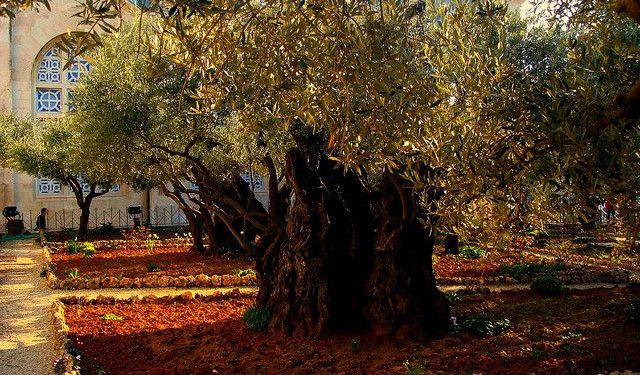
Mount of Olives Walking Tour
Rising along the eastern edge of Jerusalem, the Mount of Olives is a long limestone ridge that offers sweeping views over the Old City while holding an exceptional concentration of religious landmarks. For more than 3,000 years, it has appeared in Jewish, Christian, and later religious traditions, becoming closely associated with prophecy, grief, hope, and renewal. Figures ranging from kings and... view more
Tour Duration: 1 Hour(s)
Travel Distance: 1.7 Km or 1.1 Miles
Tour Duration: 1 Hour(s)
Travel Distance: 1.7 Km or 1.1 Miles
Useful Travel Guides for Planning Your Trip
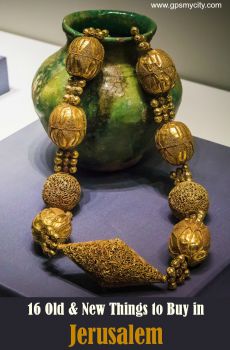
16 Uniquely Israel Things to Buy in Jerusalem
Modern day Jerusalem is a mosaic of neighborhoods, reflecting different historical periods, cultures, and religions. The influx of repatriates in recent years has made the cultural and artisanal scene of the city even more colourful and diverse. To find your way through Jerusalem's intricate...
The Most Popular Cities
/ view all