


Picasso's Barcelona Walking Tour (Self Guided), Barcelona
Pablo Picasso – the great Spanish painter and sculptor – developed his style in Barcelona where he spent the formative years of his life, from the ages of 14 to 23. It is said that when the master spoke nostalgically of home, he actually meant the Catalonian capital, despite having been born in Malaga.
This self-guided walk will take you to the Picasso Museum, the bar-restaurant and the art gallery where his works were first displayed to the public, as well as other bohemian sites associated with the artist’s life – including some of the favorite haunts of the vibrant “modernista” period.
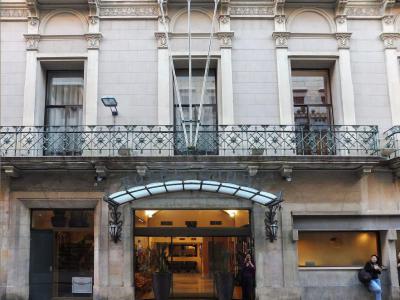
As soon as his family moved to Barcelona, the young genius enrolled in art school; thus, it only makes sense that your tour route should start off at the very building (Llotja de Barcelona) where he drew his early self-portraits, followed by the one he climbed on to initially survey the urban landscape.
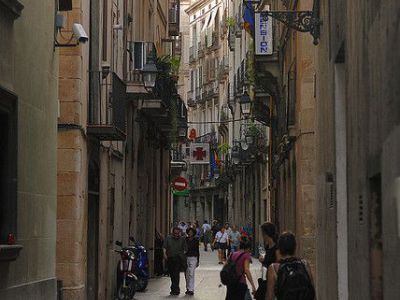
As a youth, Picasso eventually fell in with a crowd that mixed wine, women, and art. Step inside the café 4 Gats or walk along Carrer Avinyó to soak in the ambience that inspired his famous painting, ‘Les Demoiselles d'Avignon’.
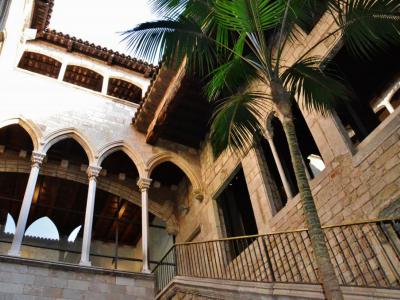
Passing alongside several buildings that housed his studios, you will see the street that bears his name, before finally reaching the dedicated museum at Carrer de Montcada, where the master was happy to add to the collection throughout his life. Scattered through several connected Gothic palaces, the artworks include two early major paintings: The First Society (1896), and Science and Charity (1897).
Take our self-guided walking tour to discover Picasso’s connections with Barcelona and the unique sights that inspired many of his works.
This self-guided walk will take you to the Picasso Museum, the bar-restaurant and the art gallery where his works were first displayed to the public, as well as other bohemian sites associated with the artist’s life – including some of the favorite haunts of the vibrant “modernista” period.
As soon as his family moved to Barcelona, the young genius enrolled in art school; thus, it only makes sense that your tour route should start off at the very building (Llotja de Barcelona) where he drew his early self-portraits, followed by the one he climbed on to initially survey the urban landscape.
As a youth, Picasso eventually fell in with a crowd that mixed wine, women, and art. Step inside the café 4 Gats or walk along Carrer Avinyó to soak in the ambience that inspired his famous painting, ‘Les Demoiselles d'Avignon’.
Passing alongside several buildings that housed his studios, you will see the street that bears his name, before finally reaching the dedicated museum at Carrer de Montcada, where the master was happy to add to the collection throughout his life. Scattered through several connected Gothic palaces, the artworks include two early major paintings: The First Society (1896), and Science and Charity (1897).
Take our self-guided walking tour to discover Picasso’s connections with Barcelona and the unique sights that inspired many of his works.
How it works: Download the app "GPSmyCity: Walks in 1K+ Cities" from Apple App Store or Google Play Store to your mobile phone or tablet. The app turns your mobile device into a personal tour guide and its built-in GPS navigation functions guide you from one tour stop to next. The app works offline, so no data plan is needed when traveling abroad.
Download The GPSmyCity App



Picasso's Barcelona Walking Tour Map
Guide Name: Picasso's Barcelona Walking Tour
Guide Location: Spain » Barcelona (See other walking tours in Barcelona)
Guide Type: Self-guided Walking Tour (Sightseeing)
Tour Duration: 2 Hour(s)
Travel Distance: 4.2 Km or 2.6 Miles
Tour Best Suited For: Art, literature and history lovers
Guide Location: Spain » Barcelona (See other walking tours in Barcelona)
Guide Type: Self-guided Walking Tour (Sightseeing)
Tour Duration: 2 Hour(s)
Travel Distance: 4.2 Km or 2.6 Miles
Tour Best Suited For: Art, literature and history lovers
Sights Featured in This Walk




Walking Tours in Barcelona, Spain

Create Your Own Walk in Barcelona
Creating your own self-guided walk in Barcelona is easy and fun. Choose the city attractions that you want to see and a walk route map will be created just for you. You can even set your hotel as the start point of the walk.

La Ribera Walking Tour
La Ribera is a culturally rich, historic area of Barcelona’s Old Town; somewhat less touristy than the Gothic Quarter (which one should really visit as well) and quite unspoiled, authentic and pretty. Centuries ago, it was a very well-to-do neighborhood inhabited by aristocrats, merchants, wealthy sailors, and Jewish money-lenders. Today, it is regarded as the Soho of Barcelona – a popular... view more
Tour Duration: 2 Hour(s)
Travel Distance: 2.8 Km or 1.7 Miles
Tour Duration: 2 Hour(s)
Travel Distance: 2.8 Km or 1.7 Miles

Barcelona Shopping Walk
A long-time prime cultural destination, Barcelona is also en route to becoming one of Europe's top shopping spots. Each new day, fashionable designer stores, from well-known international brands to local start-ups, are filling the city streets. If you're a fan of shopping, you're in for a treat when visiting this beautiful city. Here are some of the most popular shopping locations... view more
Tour Duration: 2 Hour(s)
Travel Distance: 3.4 Km or 2.1 Miles
Tour Duration: 2 Hour(s)
Travel Distance: 3.4 Km or 2.1 Miles

Montjuic Walking Tour
Montjuic is a hill in Barcelona which offers a variety of great attractions of historic, cultural, and architectural value. Here, you can watch a spectacular water show at the Magic Fountain of Montjuic, visit the place where matadors faced the bulls in the past, and explore the ancient Montjuic Castle with its breathtaking views.
A convenient start point, Placa d'Espanya is the second... view more
Tour Duration: 3 Hour(s)
Travel Distance: 5.0 Km or 3.1 Miles
A convenient start point, Placa d'Espanya is the second... view more
Tour Duration: 3 Hour(s)
Travel Distance: 5.0 Km or 3.1 Miles

La Rambla Walking Tour
One of the main streets in central Barcelona, La Rambla is popular with tourists and locals alike. Connecting the city’s old port with Plaça de Catalunya, it is filled with cultural and historic landmarks, as well as many terraces, restaurants, shops and street artists. Spanish poet, Federico García Lorca once said it was “the only street in the world which I wish never ended.”
Start... view more
Tour Duration: 1 Hour(s)
Travel Distance: 2.3 Km or 1.4 Miles
Start... view more
Tour Duration: 1 Hour(s)
Travel Distance: 2.3 Km or 1.4 Miles

Gothic Quarter Walking Tour
A walk through the Gothic Quarter – Barcelona’s oldest part, dating from the Roman era – is like a journey through time. The typical Roman grid plan is still visible in the quarter's layout. Only a few roads are open for car traffic, so there is little in the way of enjoying the narrow, atmospheric streets filled with high-quality architecture, numerous boutiques, and coffee shops.... view more
Tour Duration: 2 Hour(s)
Travel Distance: 1.8 Km or 1.1 Miles
Tour Duration: 2 Hour(s)
Travel Distance: 1.8 Km or 1.1 Miles

Barcelona Introduction Walking Tour
According to legend, Barcelona was founded by the mythological Greek hero Hercules on one of his expeditions, when a storm hit his boats. The first eight boats managed to escape without damage, but the ninth was lost at sea. Hercules found his lost friends some days later on the coast, all safe and sound. The boat's crew, taken by the beauty of the coastal landscape, decided to stay. On that... view more
Tour Duration: 3 Hour(s)
Travel Distance: 5.7 Km or 3.5 Miles
Tour Duration: 3 Hour(s)
Travel Distance: 5.7 Km or 3.5 Miles
Useful Travel Guides for Planning Your Trip

Top 10 Spanish Foods and Drinks to Try in Barcelona
In the countries like Spain, food is a national heritage and cultural attraction in its own right. The latter is even more true of Catalonia in general and Barcelona in particular. Presented here are the 10 staples of Catalan food tradition, missing which would be a gastronomical...

Barcelona Souvenir Shopping: 17 Uniquely Spanish Things to Buy
Spain, in general, and Barcelona, in particular, are a treasure trove of all things exciting. Set your foot in Barcelona and you'll be spoiled for the choice of things worth trying and taking home. Before your head starts spinning, check this guide out to put yourself in the right...
The Most Popular Cities
/ view all