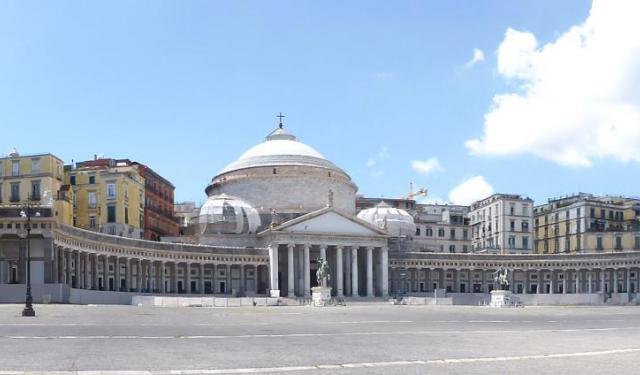
Historical Churches (Self Guided), Naples
Christianity in general and the Catholic faith in particular have always played an important role in the social and cultural life of Naples. Not everyone knows that the city boasts the highest number of churches in the world – almost 500 historic “houses of God” (1,000 in total) – accumulated over the course of 17(!) centuries. Hence the nickname – “the city of 500 domes”.
And their concentration is just as great – you can often find several of them in one street. The artistic and spiritual value of these temples is enormous. Early Christian or Gothic, Baroque or Neoclassical, the churches of Naples can mix architectural styles “diversi” and contain precious works of art fit to bring down visitors in a magical and almost pagan awe, whilst giving them a profoundly mystical, Christian experience.
Aside from their beauty, many of these churches are notable for the incredible stories they tell about the city and its roots. Here are some of the most peculiar churches in Naples worth visiting:
Duomo di Napoli – widely known as the San Gennaro (St. Januarius) Cathedral, home to the annual Miracle of Saint Januarius on September 19.
Pio Monte della Misericordia – the historic church founded in 1601; famous for its artworks, including Caravaggio's The Seven Works of Mercy.
Gesù Nuovo Church – built as a palace in 1470, converted into a church by the Jesuits in 1584; boasts the highest concentrations of paintings and Baroque sculptures by the most influential artists of the Neapolitan school.
San Francesco di Paola Church – an 1817 Neoclassic imitation of Rome's Pantheon.
Whether you are a fervent believer or enthusiastic appreciator of art seeking to explore some of the most important churches of Naples for their religious, historical or architectural heritage, take this self-guided walking tour.
And their concentration is just as great – you can often find several of them in one street. The artistic and spiritual value of these temples is enormous. Early Christian or Gothic, Baroque or Neoclassical, the churches of Naples can mix architectural styles “diversi” and contain precious works of art fit to bring down visitors in a magical and almost pagan awe, whilst giving them a profoundly mystical, Christian experience.
Aside from their beauty, many of these churches are notable for the incredible stories they tell about the city and its roots. Here are some of the most peculiar churches in Naples worth visiting:
Duomo di Napoli – widely known as the San Gennaro (St. Januarius) Cathedral, home to the annual Miracle of Saint Januarius on September 19.
Pio Monte della Misericordia – the historic church founded in 1601; famous for its artworks, including Caravaggio's The Seven Works of Mercy.
Gesù Nuovo Church – built as a palace in 1470, converted into a church by the Jesuits in 1584; boasts the highest concentrations of paintings and Baroque sculptures by the most influential artists of the Neapolitan school.
San Francesco di Paola Church – an 1817 Neoclassic imitation of Rome's Pantheon.
Whether you are a fervent believer or enthusiastic appreciator of art seeking to explore some of the most important churches of Naples for their religious, historical or architectural heritage, take this self-guided walking tour.
How it works: Download the app "GPSmyCity: Walks in 1K+ Cities" from Apple App Store or Google Play Store to your mobile phone or tablet. The app turns your mobile device into a personal tour guide and its built-in GPS navigation functions guide you from one tour stop to next. The app works offline, so no data plan is needed when traveling abroad.
Download The GPSmyCity App



Historical Churches Map
Guide Name: Historical Churches
Guide Location: Italy » Naples (See other walking tours in Naples)
Guide Type: Self-guided Walking Tour (Sightseeing)
# of Attractions: 6
Tour Duration: 2 Hour(s)
Travel Distance: 3.8 Km or 2.4 Miles
Author: vickyc
Sight(s) Featured in This Guide:
Guide Location: Italy » Naples (See other walking tours in Naples)
Guide Type: Self-guided Walking Tour (Sightseeing)
# of Attractions: 6
Tour Duration: 2 Hour(s)
Travel Distance: 3.8 Km or 2.4 Miles
Author: vickyc
Sight(s) Featured in This Guide:
- Duomo di Napoli (Naples Cathedral)
- Pio Monte della Misericordia
- San Pietro Martire Church
- Gesù Nuovo Church
- Church of the Spirito Santo
- San Francesco di Paola Church
1) Duomo di Napoli (Naples Cathedral) (must see)
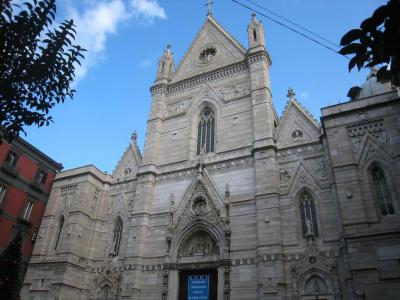
Naples Cathedral is also known as The Cathedral of the Assumption of Mary. The church is commonly called Cattedrale di San Gennaro in honor of Saint Januarius.
The construction of the cathedral began in the 13th century and was finally completed in the 14th century. The impressive Gothic cathedral was built on the ruins of previous churches' excavations. Over the years, Greek and Roman artifacts have been found underneath the cathedral.
The neo-Gothic facade wasn't completed until 1905. The interior features a gilded coffered ceiling. Artist Luca Giordano completed the baroque sections of the nave and transept.
Priest and architect Francesco Grimaldi designed the Chapel of the Treasury. Several renowned artists worked on the chapel, which was completed in 1646. Jusepe de Ribera created the stunning Saint Gennaro Escaping the Furnace Unscathed canvas. Giovanni Lanfranco created the magnificent dome fresco. Behind the altar, Saint Januarius's skull and two vials of blood are held in a silver strongbox.
The next chapel contains Saint Januarius's bones in an urn. More of the saint's remains are housed below the altar in the Cappella Carafa chapel.
Visitors will be impressed by the Basilica di Santa Restituta, originally built in the 4th century and renovated in the 17th century. This ancient church holds Europe's oldest baptistry, the Battistero di San Giovanni in Fonte. The baptistry is decorated with 4th-century mosaics.
A vial of blood belonging to revered Saint Januarius is brought out three times a year, and the dried blood usually liquefies. Legend says that when the blood doesn't liquefy, disaster will come to Naples.
Why You Should Visit:
This stunning medieval cathedral holds the miraculous blood of Saint Januarius, priceless artworks, and an early Christian basilica dating to the 4th century. It's a beautiful place to view Italian art and architecture and appreciate Naples' religious culture.
Tips:
The church is closed in the afternoon. Visit between 8:00 am and 12:30 pm, or 4:30 pm and 7:00 pm. The main cathedral is free to enter, but the baptistery charges a small fee.
The construction of the cathedral began in the 13th century and was finally completed in the 14th century. The impressive Gothic cathedral was built on the ruins of previous churches' excavations. Over the years, Greek and Roman artifacts have been found underneath the cathedral.
The neo-Gothic facade wasn't completed until 1905. The interior features a gilded coffered ceiling. Artist Luca Giordano completed the baroque sections of the nave and transept.
Priest and architect Francesco Grimaldi designed the Chapel of the Treasury. Several renowned artists worked on the chapel, which was completed in 1646. Jusepe de Ribera created the stunning Saint Gennaro Escaping the Furnace Unscathed canvas. Giovanni Lanfranco created the magnificent dome fresco. Behind the altar, Saint Januarius's skull and two vials of blood are held in a silver strongbox.
The next chapel contains Saint Januarius's bones in an urn. More of the saint's remains are housed below the altar in the Cappella Carafa chapel.
Visitors will be impressed by the Basilica di Santa Restituta, originally built in the 4th century and renovated in the 17th century. This ancient church holds Europe's oldest baptistry, the Battistero di San Giovanni in Fonte. The baptistry is decorated with 4th-century mosaics.
A vial of blood belonging to revered Saint Januarius is brought out three times a year, and the dried blood usually liquefies. Legend says that when the blood doesn't liquefy, disaster will come to Naples.
Why You Should Visit:
This stunning medieval cathedral holds the miraculous blood of Saint Januarius, priceless artworks, and an early Christian basilica dating to the 4th century. It's a beautiful place to view Italian art and architecture and appreciate Naples' religious culture.
Tips:
The church is closed in the afternoon. Visit between 8:00 am and 12:30 pm, or 4:30 pm and 7:00 pm. The main cathedral is free to enter, but the baptistery charges a small fee.
2) Pio Monte della Misericordia
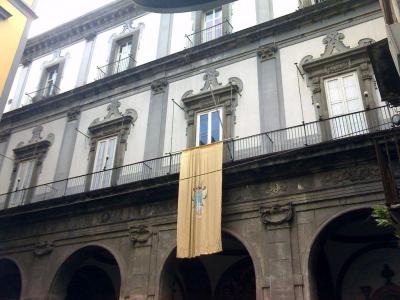
The Pio Monte della Misericordia is a small church located on the Via dei Tribunali in the historic center of Naples. It houses a small but significant art gallery that is open for public viewing.
The Pio Monte della Misericordia was founded by a group of seven Neapolitan nobles in 1602. It was called the charity brotherhood and was located in a small church near the stairs that led to the Cathedral of Naples. The brotherhood performed many charitable deeds like feeding the hungry, providing interest free loans for the poor, ransoming Christian slaves, visiting prisoners and burying the indigent dead. The church soon became too small for the charitable activities of the brotherhood and was demolished to make way for a new larger building designed by Antonio Picchiatti. It was constructed between 1658 and 1678. The brotherhood still exists and donates money to schools and hospitals, today.
The Pio Monte della Misericordia has many valuable works of art. The most famous work is Caravaggio's magnificent work called the Seven Acts of Mercy which is regarded as the single most important painting in Naples. It is found above the altar of the church. Besides this masterpiece, impressive works by Carlo Sellitto, Fabrizio Santafede, Luca Giordano and Battistello Caracciolo form part of the gallery.
The Pio Monte della Misericordia was founded by a group of seven Neapolitan nobles in 1602. It was called the charity brotherhood and was located in a small church near the stairs that led to the Cathedral of Naples. The brotherhood performed many charitable deeds like feeding the hungry, providing interest free loans for the poor, ransoming Christian slaves, visiting prisoners and burying the indigent dead. The church soon became too small for the charitable activities of the brotherhood and was demolished to make way for a new larger building designed by Antonio Picchiatti. It was constructed between 1658 and 1678. The brotherhood still exists and donates money to schools and hospitals, today.
The Pio Monte della Misericordia has many valuable works of art. The most famous work is Caravaggio's magnificent work called the Seven Acts of Mercy which is regarded as the single most important painting in Naples. It is found above the altar of the church. Besides this masterpiece, impressive works by Carlo Sellitto, Fabrizio Santafede, Luca Giordano and Battistello Caracciolo form part of the gallery.
3) San Pietro Martire Church
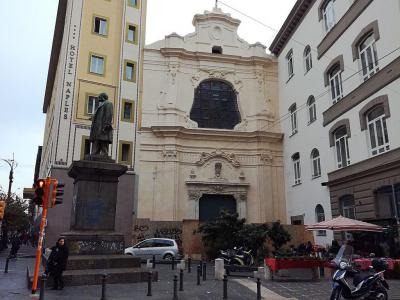
The San Pietro Martire Church is attached to a Dominican abbey and is located near the port in the downtown area of Naples. It was founded by the Angevin Dynasty to serve the poor people who lived in the neighborhood.
The San Pietro Martire Church was constructed in 1294 under the orders of Charles of Anjou. Initially it was a small building that could house about 13 monks. Later it was expanded and a belfry designed by F.A. Picchiati was added in 1650. The structure was completed only in the 1750s. When Napoleon’s brother in law, Joachim Murat ruled Naples, the abbey was closed and reopened again once the reign of the Bourbon dynasty was restored. It was finally closed during the unification of Italy in 1864. The church remains an important place of worship in the city.
The San Pietro Martire Church was badly damaged during World War II. In 1953, the grounds were converted into a tobacco processing factory. The building was completely restored in 1979. It now houses the faculty of Literature and Philosophy of the University of Naples. The church has become a university chapel and the old abbey houses university lecture halls.
The San Pietro Martire Church was constructed in 1294 under the orders of Charles of Anjou. Initially it was a small building that could house about 13 monks. Later it was expanded and a belfry designed by F.A. Picchiati was added in 1650. The structure was completed only in the 1750s. When Napoleon’s brother in law, Joachim Murat ruled Naples, the abbey was closed and reopened again once the reign of the Bourbon dynasty was restored. It was finally closed during the unification of Italy in 1864. The church remains an important place of worship in the city.
The San Pietro Martire Church was badly damaged during World War II. In 1953, the grounds were converted into a tobacco processing factory. The building was completely restored in 1979. It now houses the faculty of Literature and Philosophy of the University of Naples. The church has become a university chapel and the old abbey houses university lecture halls.
4) Gesù Nuovo Church
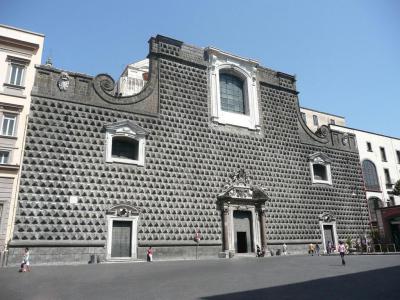
The Gesu Nuovo Church is managed by the Society of Jesus today and was initially built as a lavish residence. The unique exterior with diamond shaped stones has symbols believed to be a music score engraved upon them.
The Gesu Nuovo Church was built as the home of Roberto Sanseverino, Prince of Salerno in 1470. It was purchased by the Jesuits for 45,000 ducats in 1580 and turned into a church. Conversion of the building began in 1584 under the directions of renowned Jesuit architect, Giuseppe Valeriano and was completed in 1601. Although dedicated to Jesus and Mary of the Immaculate Conception, it has always been called the Gesu Nuovo Church.
The Gesu Nuovo Church is not only known for its unique exterior but also for its lavish interiors. It has the shape of a Greek cross with 11 chapels. The columns and altars are all covered with marble. Treasures inside the church are the fresco depicting the Expulsion of Heliodorus from the Temple by Francesco Solimena behind the façade and the frescoes depicting the life of the Virgin by Massimo Stanzione. The high altar was designed by F. Giuseppe Grossi was created by Neapolitan artists and covered with rare marbles, bronze and precious stones. Another treasure is the bas relief reproduction of Leonardo da Vinci’s Last Supper by Gennaro Calì.
The Gesu Nuovo Church was built as the home of Roberto Sanseverino, Prince of Salerno in 1470. It was purchased by the Jesuits for 45,000 ducats in 1580 and turned into a church. Conversion of the building began in 1584 under the directions of renowned Jesuit architect, Giuseppe Valeriano and was completed in 1601. Although dedicated to Jesus and Mary of the Immaculate Conception, it has always been called the Gesu Nuovo Church.
The Gesu Nuovo Church is not only known for its unique exterior but also for its lavish interiors. It has the shape of a Greek cross with 11 chapels. The columns and altars are all covered with marble. Treasures inside the church are the fresco depicting the Expulsion of Heliodorus from the Temple by Francesco Solimena behind the façade and the frescoes depicting the life of the Virgin by Massimo Stanzione. The high altar was designed by F. Giuseppe Grossi was created by Neapolitan artists and covered with rare marbles, bronze and precious stones. Another treasure is the bas relief reproduction of Leonardo da Vinci’s Last Supper by Gennaro Calì.
5) Church of the Spirito Santo
The basilica of the Holy Spirit is a small church from 1562. Previously on this spot stood the Duke of Monteleone palace, flanked on both sides by two music conservatories: one of the so-called White brotherhood (Real Compagnia and Arciconfraternita dei Bianchi dello Spirito Santo) and the other of the Green sisterhood. Their names were due to the colors of the clothing worn by the students: the former being the poor of the city, and the latter – the daughters of prostitutes.
The expansion works of 1572-1576 saw the White Convent complex, of which only the homonymous oratory remains today, incorporated into the body of the church, drastically increased.
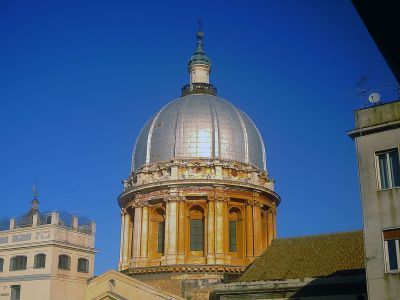
Complete with its famous dome, the church stands over 70 meters high. The dome was built in 1775 during renovation of the central basin, in order to provide illumination for the nave. Both, the nave and the dome's inside are devoid of any pictorial or otherwise decorative element, whereas the rest of the interior is lavishly decorated with sculptures by Michelangelo Naccherino and Paolo Persico.
There are also numerous paintings: of the Pentecost by Francesco de Mura; of Madonna and saints by Fedele Fischetti, of the Assumption by Francesco Celebrano; and of Madonna, saints and the Pentecost by Fabrizio Santafede – all dating back to the same period.
The expansion works of 1572-1576 saw the White Convent complex, of which only the homonymous oratory remains today, incorporated into the body of the church, drastically increased.
Complete with its famous dome, the church stands over 70 meters high. The dome was built in 1775 during renovation of the central basin, in order to provide illumination for the nave. Both, the nave and the dome's inside are devoid of any pictorial or otherwise decorative element, whereas the rest of the interior is lavishly decorated with sculptures by Michelangelo Naccherino and Paolo Persico.
There are also numerous paintings: of the Pentecost by Francesco de Mura; of Madonna and saints by Fedele Fischetti, of the Assumption by Francesco Celebrano; and of Madonna, saints and the Pentecost by Fabrizio Santafede – all dating back to the same period.
6) San Francesco di Paola Church
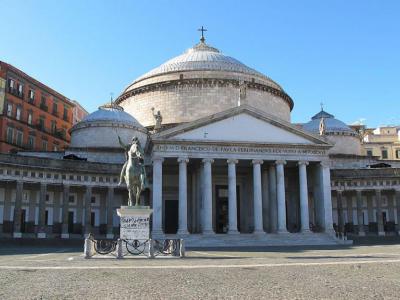
The church of San Francesco di Paola is a neoclassical style building flanking the west side of the Piazza del Plebiscito, the largest square in Naples. It lies directly opposite the royal palace.
The church of San Francesco di Paola was commissioned by Joachim Murat, King of Naples as a monument to Napoleon Bonaparte, his brother in law. It was expanded by Ferdinand I and converted into a church when he recovered the throne of Naples after the defeat of Napoleon. The building was designed by Leopoldo Lapera and was completed by the architect, Pietro Bianchi in 1846. The church was dedicated to Saint Francis of Paola who lived in an abbey on the site of the square in the 16th century.
The church of San Francesco di Paola has a 58 meter high dome resembling the pantheon of Rome. It is located above the altar and is supported by 34 thick columns that have a height of eleven meters each. The main portico is supported by a semicircular row of white Doric columns. There is another front portico with six Ionic columns supporting the roof. It is a basilica and an active place of worship today and a popular venue for weddings.
The church of San Francesco di Paola was commissioned by Joachim Murat, King of Naples as a monument to Napoleon Bonaparte, his brother in law. It was expanded by Ferdinand I and converted into a church when he recovered the throne of Naples after the defeat of Napoleon. The building was designed by Leopoldo Lapera and was completed by the architect, Pietro Bianchi in 1846. The church was dedicated to Saint Francis of Paola who lived in an abbey on the site of the square in the 16th century.
The church of San Francesco di Paola has a 58 meter high dome resembling the pantheon of Rome. It is located above the altar and is supported by 34 thick columns that have a height of eleven meters each. The main portico is supported by a semicircular row of white Doric columns. There is another front portico with six Ionic columns supporting the roof. It is a basilica and an active place of worship today and a popular venue for weddings.
Walking Tours in Naples, Italy

Create Your Own Walk in Naples
Creating your own self-guided walk in Naples is easy and fun. Choose the city attractions that you want to see and a walk route map will be created just for you. You can even set your hotel as the start point of the walk.
Naples Introduction Walking Tour
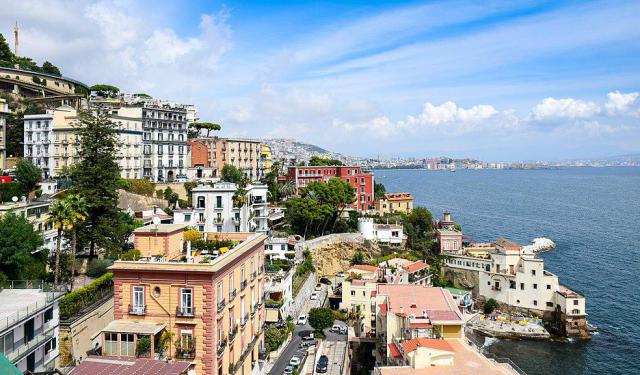
Located nearby the infamous volcano Vesuvius, Naples is a dream destination for tourists. Being Italy's third largest city, it is also one of the oldest continuously inhabited urban areas in the world – a true gem of ancient civilizations. Initially settled by Greeks as a colony, called Parthenope, in the 9th century BC, it was then re-founded as Neápolis (“New City” in Greek) three... view more
Tour Duration: 2 Hour(s)
Travel Distance: 3.6 Km or 2.2 Miles
Tour Duration: 2 Hour(s)
Travel Distance: 3.6 Km or 2.2 Miles
Naples Old Town Walk
The Old Town of Naples is a treasure trove of majestic architecture: historical monuments, mysterious churches, underground catacombs & caves, and beautiful fountains. Some of these landmarks are thousand years old and still preserved in their original condition. Owing to this, UNESCO has declared the area a World Heritage site.
Walking the maze of narrow alleyways to discover Naples’s... view more
Tour Duration: 2 Hour(s)
Travel Distance: 2.6 Km or 1.6 Miles
Walking the maze of narrow alleyways to discover Naples’s... view more
Tour Duration: 2 Hour(s)
Travel Distance: 2.6 Km or 1.6 Miles
The Most Popular Cities
/ view all