


Historical Religious Buildings (Self Guided), Cambridge
Renowned for its academic excellence, Cambridge is also steeped in religious history. It has quite a few churches dating back hundreds of years, some even predating the Anglican Church itself. These historical sanctuaries have stood the test of time and today offer a glimpse into the city's religious and architectural heritage.
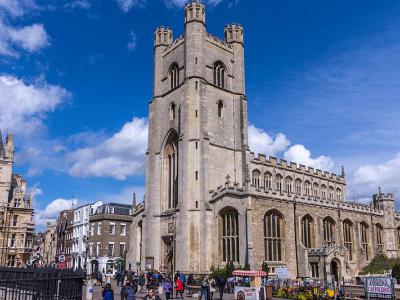
Great Saint Mary's Church, a stunning example of English Gothic architecture, has occupied the site at the heart of Cambridge, in one form or another, since the early 13th century. Its distinctive tower, a bit younger, offers breathtaking panoramic views of the city.
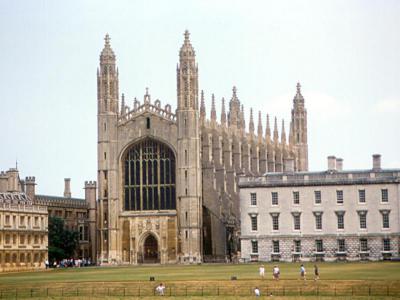
King's College Chapel is an iconic masterpiece, nestled within the prestigious King's College. Built in the 15th century, its magnificent fan-vaulted ceiling and intricate stained glass windows are a testament to the city's religious devotion and architectural prowess.
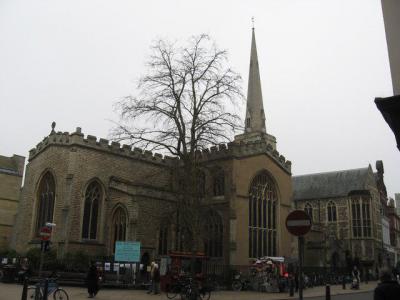
Saint Bene't's Church holds the distinction of being Cambridge's oldest standing building, with parts of it dating back to the Anglo-Saxon era. Its simple yet charming design reflects the city's early Christian history.
Saint Edward King and Martyr, a modest church, is notable for its peaceful atmosphere and historical significance. It commemorates the memory of Saint Edward, the martyred King of England.
Holy Trinity Church, situated further ahead, is an elegant Georgian-era temple known for its graceful architecture and serene ambiance. It has played an essential role in the spiritual life of Cambridge for centuries.
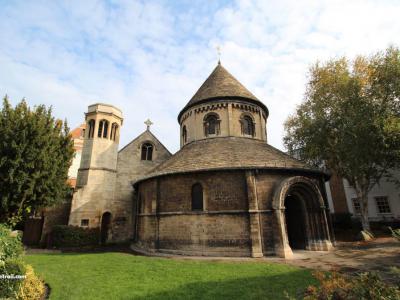
The Church of the Holy Sepulchre is an intriguing round church, one of only four in England. It's modeled after the Church of the Holy Sepulchre in Jerusalem and is an architectural gem.
All Saints' Church, with its distinctive spire, adds a touch of grandeur to the cityscape. This 19th-century church is a replacement for a medieval predecessor that had stood there for 600 years and is known for its impressive wall paintings.
The historical churches in Cambridge offer not only a glimpse into the city's past but also an opportunity for quiet reflection and spiritual connection. If you are keen on the history of Christianity, follow this self-guided walk along the streets of Cambridge and discover some of its most famous places of worship that have shaped the city's cultural identity for centuries!
Great Saint Mary's Church, a stunning example of English Gothic architecture, has occupied the site at the heart of Cambridge, in one form or another, since the early 13th century. Its distinctive tower, a bit younger, offers breathtaking panoramic views of the city.
King's College Chapel is an iconic masterpiece, nestled within the prestigious King's College. Built in the 15th century, its magnificent fan-vaulted ceiling and intricate stained glass windows are a testament to the city's religious devotion and architectural prowess.
Saint Bene't's Church holds the distinction of being Cambridge's oldest standing building, with parts of it dating back to the Anglo-Saxon era. Its simple yet charming design reflects the city's early Christian history.
Saint Edward King and Martyr, a modest church, is notable for its peaceful atmosphere and historical significance. It commemorates the memory of Saint Edward, the martyred King of England.
Holy Trinity Church, situated further ahead, is an elegant Georgian-era temple known for its graceful architecture and serene ambiance. It has played an essential role in the spiritual life of Cambridge for centuries.
The Church of the Holy Sepulchre is an intriguing round church, one of only four in England. It's modeled after the Church of the Holy Sepulchre in Jerusalem and is an architectural gem.
All Saints' Church, with its distinctive spire, adds a touch of grandeur to the cityscape. This 19th-century church is a replacement for a medieval predecessor that had stood there for 600 years and is known for its impressive wall paintings.
The historical churches in Cambridge offer not only a glimpse into the city's past but also an opportunity for quiet reflection and spiritual connection. If you are keen on the history of Christianity, follow this self-guided walk along the streets of Cambridge and discover some of its most famous places of worship that have shaped the city's cultural identity for centuries!
How it works: Download the app "GPSmyCity: Walks in 1K+ Cities" from Apple App Store or Google Play Store to your mobile phone or tablet. The app turns your mobile device into a personal tour guide and its built-in GPS navigation functions guide you from one tour stop to next. The app works offline, so no data plan is needed when traveling abroad.
Download The GPSmyCity App



Historical Religious Buildings Map
Guide Name: Historical Religious Buildings
Guide Location: England » Cambridge (See other walking tours in Cambridge)
Guide Type: Self-guided Walking Tour (Sightseeing)
Tour Duration: 1 Hour(s)
Travel Distance: 1.3 Km or 0.8 Miles
Guide Location: England » Cambridge (See other walking tours in Cambridge)
Guide Type: Self-guided Walking Tour (Sightseeing)
Tour Duration: 1 Hour(s)
Travel Distance: 1.3 Km or 0.8 Miles
Sights Featured in This Walk
2) King's College Chapel (must see)



Walking Tours in Cambridge, England

Create Your Own Walk in Cambridge
Creating your own self-guided walk in Cambridge is easy and fun. Choose the city attractions that you want to see and a walk route map will be created just for you. You can even set your hotel as the start point of the walk.

Cambridge Introduction Walking Tour
Set along the banks of the River Cam in one of the picturesque eastern shires of England, Cambridge is a place that exudes an air of academic excellence and historical charm. For those not particularly well-versed in the annals of English history, Cambridge holds a prominent spot as one of the country's most esteemed academic hubs. The University of Cambridge consistently ranks among the... view more
Tour Duration: 2 Hour(s)
Travel Distance: 1.8 Km or 1.1 Miles
Tour Duration: 2 Hour(s)
Travel Distance: 1.8 Km or 1.1 Miles

Colleges of Cambridge University
The University of Cambridge, England's second oldest learning institution, has made Cambridge famous worldwide. The collegiate university is made up of 31 self-governing and independent colleges whose grounds, apart from having been blessed with world-renowned alumni, are also beautifully decorated with lush lawns and terrific Gothic architecture.
Each of these colleges has its unique... view more
Tour Duration: 1 Hour(s)
Travel Distance: 1.1 Km or 0.7 Miles
Each of these colleges has its unique... view more
Tour Duration: 1 Hour(s)
Travel Distance: 1.1 Km or 0.7 Miles
The Most Popular Cities
/ view all